Recipe · Reverse-sear · Medium
Reverse-Sear Presa Ibérica on the Kamado, Pink at 63 °C
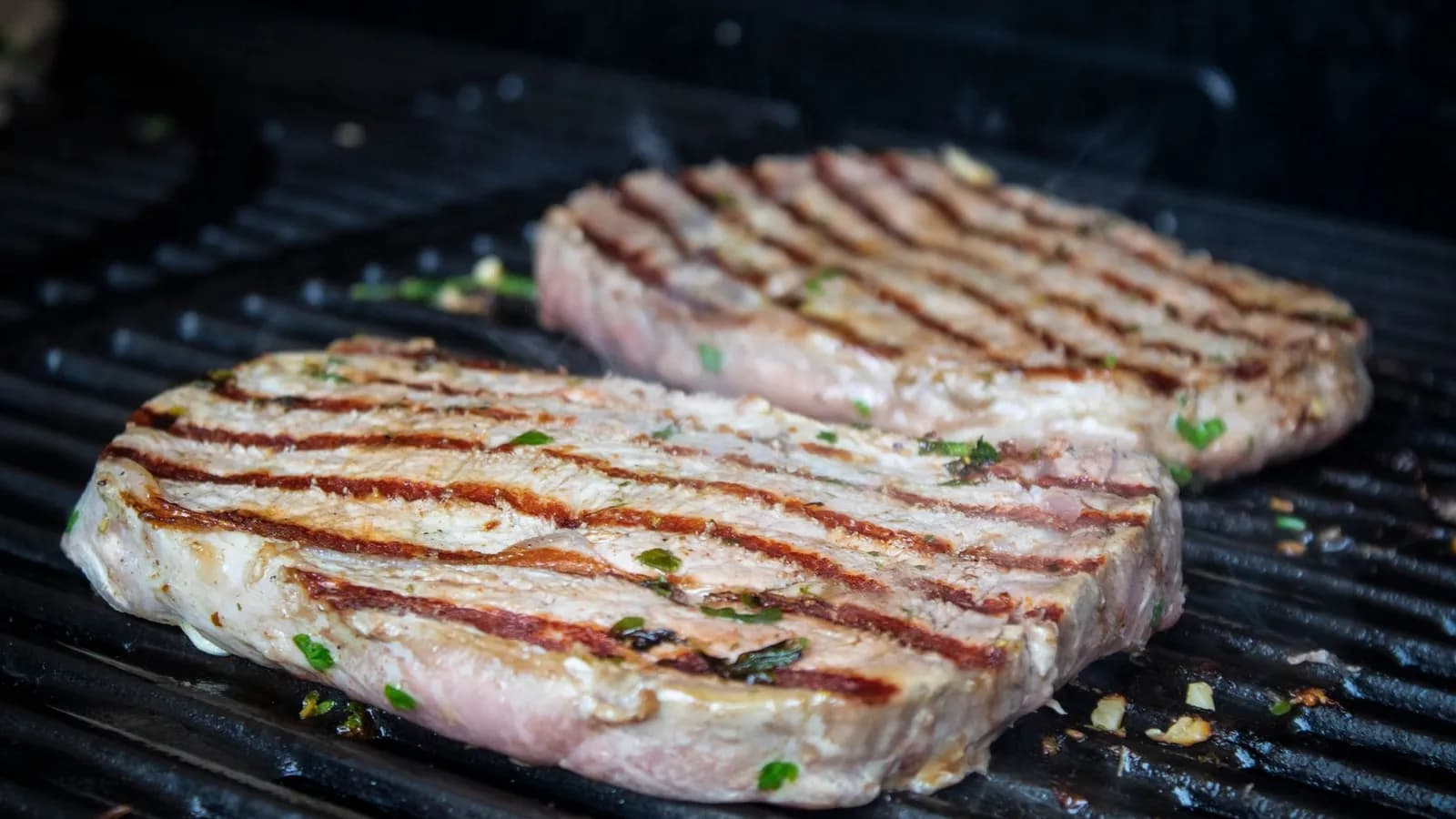
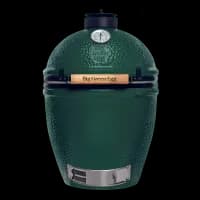
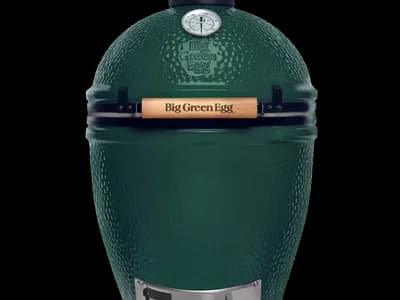
A 700 g presa ibérica, pink at 63 °C, the way I cook it on my Big Green Egg Large: indirect at 115 °C over the deflector to 56 °C, a three-minute direct sear, and a pimentón de la Vera rub made in a mortar that goes on last.
Quick answer
Salt the presa (600-800 g) an hour ahead. Kamado, indirect, 110-120 °C, 35-50 min to 55-57 °C in the centre on an instant-read thermometer. Remove the deflector, raise to 250-275 °C and sear 60-90 s per side to 63-65 °C, the pink point chosen for ibérico (71 °C if you like it well done). Spread the paprika, garlic and cumin rub on after searing; rest 5 min.
- Prep
- 20 min
- Cook
- 60 min
- Servings
- 4 servings
- Temperature
- 115 °C
Ingredients
- whole presa ibérica, acorn-fed (bellota) or free-range (cebo de campo), 600-800 g1 ud
- coarse salt10 g
- pimentón de la Vera (one sweet, one bittersweet)2 cdta
- whole cumin seeds1 cdta
- garlic cloves2 ud
- black peppercorns0.5 cdta
- dried oregano1 cdta
- extra virgin olive oil4 cda
- sherry vinegar1 cda
- chopped fresh parsley and salt flakes, to serve1 puñado
Method
- 01
Salt an hour ahead
Take the presa out of the fridge an hour ahead, pat it dry with kitchen paper and salt both sides with the coarse salt. Leave it uncovered on a rack: the salt dissolves, draws back in and the surface dries, which is what later lets the sear brown instead of steam. Do not trim the outer fat; it renders during the indirect phase and protects the meat.
- 02
Light the Egg for indirect
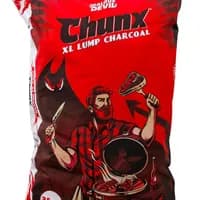
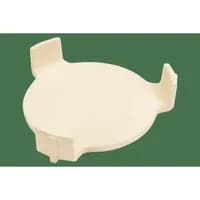
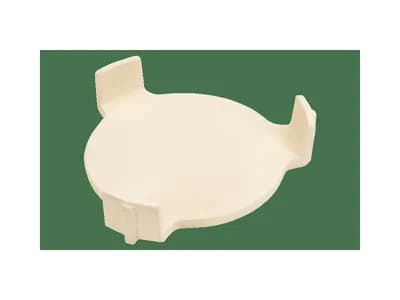
Fill the firebox of the Big Green Egg Large with Jealous Devil white quebracho charcoal up to the line where the firebox meets the fire ring, no higher, and light it in a single spot. Once the flame has caught, fit the ConvEGGtor legs up, the grate on top, and close the dome. Bottom vent open a finger's width and chimney barely open until it settles at 110-120 °C; wait for the smoke to run clean before the meat goes in.
- 03
Make the rub in the mortar
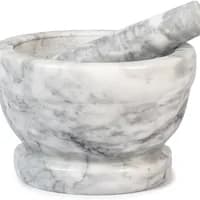
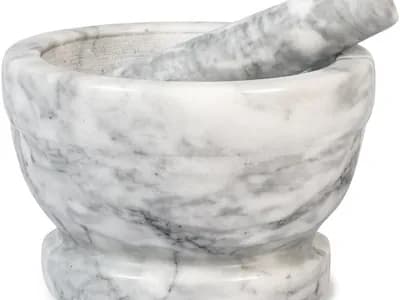
Peel the garlic and pound it in the mortar with the cumin, the pepper and a pinch of salt until you have a paste; a heavy marble mortar like the 18 cm H&H keeps the seeds inside rather than spitting them out. Add the paprika and the oregano, and bind with the oil and the sherry vinegar in a thin stream. Set it aside at room temperature: it goes on at the end, after the sear, never before.
- 04
Indirect cook to 55-57 °C
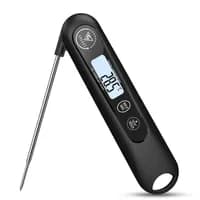
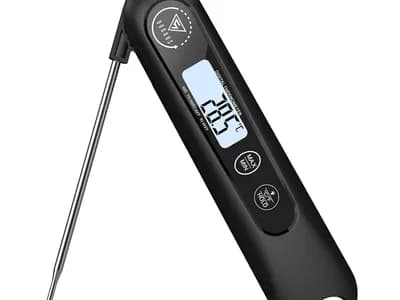
Set the presa in the centre of the grate, fat side up, and close the dome. At 110-120 °C a 700 g piece takes between 35 and 50 minutes. At 30 minutes open up, probe from the side towards the centre with the DOQAUS instant-read thermometer, read and close straight away; repeat every 5-8 minutes. Move it to a board as soon as it reads 55-57 °C at the thickest point.
- 05
Remove the deflector and climb to 250 °C
Tent the presa loosely with foil. Wearing barbecue gloves, lift out the grate and the ConvEGGtor, put the grate back and open the bottom vent and the chimney fully. While the dome of the Egg climbs to 250-275 °C on the charcoal already lit, pat the surface of the presa dry with kitchen paper: any moisture steals heat from the sear and delays the crust.
- 06
Sear with burping
Before opening above 250 °C, burp the lid: lift it five centimetres, wait three seconds and open fully. Presa on the grate, close, 60-90 seconds per side, plus a short second turn of 30-45 seconds per side: 3-4 minutes in total. Probe with the DOQAUS: between 63 and 65 °C it is at the pink point I choose for ibérico. If you prefer it well done, do not stretch the sear: pull the presa from the indirect phase at 63-65 °C and sear exactly the same; it will reach 71 °C.
- 07
Spread the rub and rest
Move the presa to the board and, with the meat still sizzling, coat both sides with the rub from the mortar using the back of a spoon. The residual heat melts the oil and opens up the paprika without toasting it, which is what would turn it bitter. Cover loosely with foil and rest five minutes: the internal temperature climbs a degree or two and the juices settle.
- 08
Slice across the grain
Look at the direction of the fibres, which in a presa run diagonally across the piece, and cut perpendicular to them in one-centimetre slices with a long, sharp knife. The centre should be pink and moist, not red or grey. Serve on the same board, with whatever rub has run off spooned over, a few salt flakes and the chopped parsley.
About this recipe
Presa ibérica is the cut I ask for when I want pork served pink, no argument. It comes from the head of the loin (cabecera del lomo), right next to the shoulder, weighs between 600 and 800 g and is so marbled that it behaves more like a rib-eye than a loin. So I treat it like a rib-eye: [reverse-sear](/glosario#reverse-sear) on my Big Green Egg Large, indirect and slow first, then a short sear over the coals. No sweet glazes as on the [ibérico tenderloin](/recetas/solomillo-iberico-glaseado-px) and no mustard crust as on the [loin](/recetas/lomo-cerdo-mostaza-miel): here the paprika rub is in charge, and it goes on at the end.
Pink at 63 °C: a choice, not an oversight
White pork goes to 71-75 °C, and that is where this site stays for neck, loin or shashlik. Acorn-fed (bellota) or free-range (cebo de campo) presa ibérica is another matter: marbled fat, a hard-working muscle and a level of traceability the rest of the pig rarely has. With that piece, pulling it at 63-65 °C in the centre is a kitchen decision, and I say it out loud: pink, juicy, the fat rendered and none of the dry texture that sets in past 70. If pork in your house is eaten well done, the same recipe works pulled from the indirect phase at 63-65 °C and seared the same way, to 71 °C; you lose a little juice and nothing else. What does not work is judging doneness by eye without a thermometer. The [temperature chart](/guias/tabla-temperaturas-tiempos-kamado) lists both thresholds.
Indirect over the ConvEGGtor, and why 115 °C
Reverse-sear flips the usual order: [indirect cooking](/glosario#indirect-cooking) first, searing second. On the Egg that means fitting the ConvEGGtor legs up, the grate on top, and settling the dome between 110 and 120 °C. At that temperature heat travels in slowly and the gap between the edge and the centre of the presa is minimal, so when the centre reads 56 °C the whole piece is at very nearly the same point. A ceramic [plate setter](/glosario#plate-setter) like the ConvEGGtor does that job because it blocks the radiant heat of the coals and lets only hot air through. With a dense charcoal such as Jealous Devil's white quebracho, in large lumps that burn slowly, the bed does not run away during the long phase and is still alive when it is time to climb to 250 °C. The presa is thin, 3 to 4 cm at its thickest, and a wired leave-in probe has nowhere to sit without poking out the far side; an instant-read thermometer with a folding probe like the DOQAUS is the better fit: open, probe from the side towards the centre, read in the three seconds the manufacturer quotes, and close. It does not stay inside with the lid shut.
Searing with burping, rub at the end
When the centre reads 55-57 °C, the presa comes out onto a board and the Egg changes role. Out comes the ConvEGGtor with barbecue gloves, bottom vent and chimney fully open, and the dome climbs to 250-275 °C. Opening the lid at that temperature, on my Egg I always burp it: lift five centimetres, count to three and open fully, so oxygen does not rush in onto a hungry fire; the [temperature troubleshooting guide](/guias/kamado-temperatura-problemas-soluciones) explains flashback. Sear 60 to 90 seconds per side, plus a short second turn, and the presa goes from 57 to 63-65 °C in three or four minutes. You measure it, you do not calculate it.
Pimentón de la Vera carries the pepper's own sugars and burns over direct heat: a rub applied before the sear ends up bitter and black. That is why the mortar comes in at the end, not before. In an 18 cm marble one like the H&H, the heavy pestle crushes garlic, whole cumin and salt to a paste without the seeds jumping out; then in go the paprika, the oregano, the oil and a thread of sherry vinegar. It is spread over the presa fresh from the sear and still hot: the residual heat wakes the aromas without toasting them. Five minutes' rest, slice across the grain in one-centimetre slices, and the pink juice stays in the meat. If you want to know what this cut is called outside Spain, the [cuts guide](/guias/cortes-de-carne-para-kamado-equivalencias-espana) places it.
In 30 seconds
Presa ibérica of 600-800 g, salted an hour ahead. Indirect at 110-120 °C over the ConvEGGtor to 55-57 °C in the centre (35-50 min), rest, deflector out, dome to 250-275 °C with burping, sear 60-90 s per side to 63-65 °C (the point chosen for ibérico; 71 °C if you want it well done). Paprika, garlic and cumin rub made in a mortar, spread on at the end. Rest 5 min and slice across the grain.
Editor's tips
- The 63-65 °C is a choice for acorn-fed or free-range presa ibérica with a clear origin; with presa from white pork or of doubtful provenance, take the piece to 71 °C without hesitation: you lose a little juice, not the recipe.
- Do not try to leave a wired probe in place: the presa measures 3-4 cm at its thickest and the tip would poke out the far side, reading hot air. Go in from the side with the instant-read thermometer and take your hand away; the DOQAUS does not stay inside with the lid shut.
- If the presa comes vacuum-packed, open it the day before and leave it uncovered in the fridge on a rack: a dry surface sears better and the packaged smell disperses.
- The rub takes variations without losing its point: half a teaspoon of hot paprika instead of bittersweet, or lemon zest added at the end. What does not change is the timing: always after the sear, never over direct heat.
Gear for this recipe
As an Amazon Associate, mikamado.es earns from qualifying purchases. At no extra cost to you.

FAQ
What internal temperature should presa ibérica be served at?
It depends on the piece and on who is eating. With good-quality presa ibérica, between 63 and 65 °C in the centre the meat is pink, juicy and its marbled fat has rendered; that is this recipe's choice and it should be made knowingly. The classic reference for pork is 71-75 °C and it still holds: the presa takes that point thanks to its marbling, though it loses some of the juice. Always measure in the centre with a thermometer, never by eye.
Which part of the pig is presa ibérica?
The presa is a muscle at the head of the loin, sitting between the shoulder and the start of the loin proper, around 600-800 g apiece, two per pig. It is sold whole, fan-shaped and with very visible marbling that sets it apart from the loin and the tenderloin. Outside Spain it comes close to "pork collar" or Italian "coppa", but does not match either exactly: it is a cut with a name of its own at the Spanish butcher's.
How long does presa ibérica take on the kamado with reverse-sear?
Allow an hour to an hour and a quarter from the moment the meat goes in: 35 to 50 minutes indirect at 110-120 °C to 55-57 °C in the centre, however long the kamado takes to climb to 250 °C without the deflector, and 3-4 minutes of direct searing. Plus the five minutes' rest with the rub. The exact time is set by the thermometer, not the clock: a 600 g presa and an 800 g one do not finish together.
Why does the paprika rub go on after searing and not before?
Because pimentón de la Vera carries the pepper's own sugars, which burn over direct heat and leave a bitter undertone and a black crust. Applied to meat fresh from the sear, the residual heat wakes it up without toasting it. If you would rather marinate beforehand, marinate the presa with garlic, cumin, salt and oil and no paprika, and add the paprika at the end all the same, when the meat comes off the grate.
Can you cook presa ibérica directly over the coals without reverse-sear?
Yes, and it comes out well if the piece is thin and even: direct heat at 220-250 °C, turning every 2-3 minutes, around 12-15 minutes in total. The problem is the presa's uneven thickness, with its fan shape: the thin end reaches 70 °C while the thick end is still at 55. Reverse-sear evens out that difference in the indirect phase and leaves the sear for the crust alone.
More kamado recipes
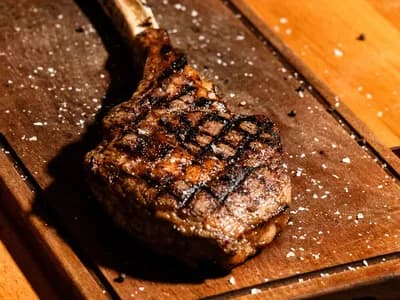
Reverse-sear tomahawk on the kamado
A 1.4 kg tomahawk, probe in the centre, ceramic at 110°C and a 90-second final sear. The Sunday centrepiece for when you want to impress without gambling on doneness.
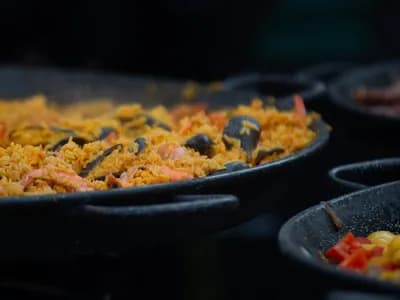
Alicante-style baked rice on the kamado in a clay cazuela
Traditional Alicante baked rice —chickpeas, pork rib, blood sausage, potato and tomato, with a whole garlic head in the centre— baked in a clay cazuela at 220°C indirect.
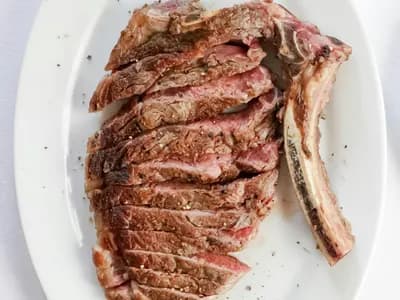
Galician ribeye on the kamado, direct sear
A one-kilo Galician ribeye, Maldon salt, embers at 350°C and not a thing more. The shortest recipe of the year and the hardest to mess up if you respect the timings.
KEEP READING
Go deeper on this dish
- Recommended kamado
Big Green Egg Large
The classic kamado that defined the category
- Editorial guide
How to light a kamado: the step-by-step method
No petrol, no weird tablets and no 45-minute waits. The cone method, airflow control and the mistakes that prevent 80% of the frustration.
- Glossary term
Heat deflector
Ceramic plate placed between the coals and the grate to turn direct fire into indirect cooking.
- Related comparison
big green egg large vs kamado joe classic iii
The classic kamado matchup: the Big Green Egg Large, the indestructible pioneer with the widest accessory network, agai…