Recipe · Indirect · Easy
Red Wine Poached Pears in an Enamelled Dutch Oven on the Kamado, with Cinnamon and Orange
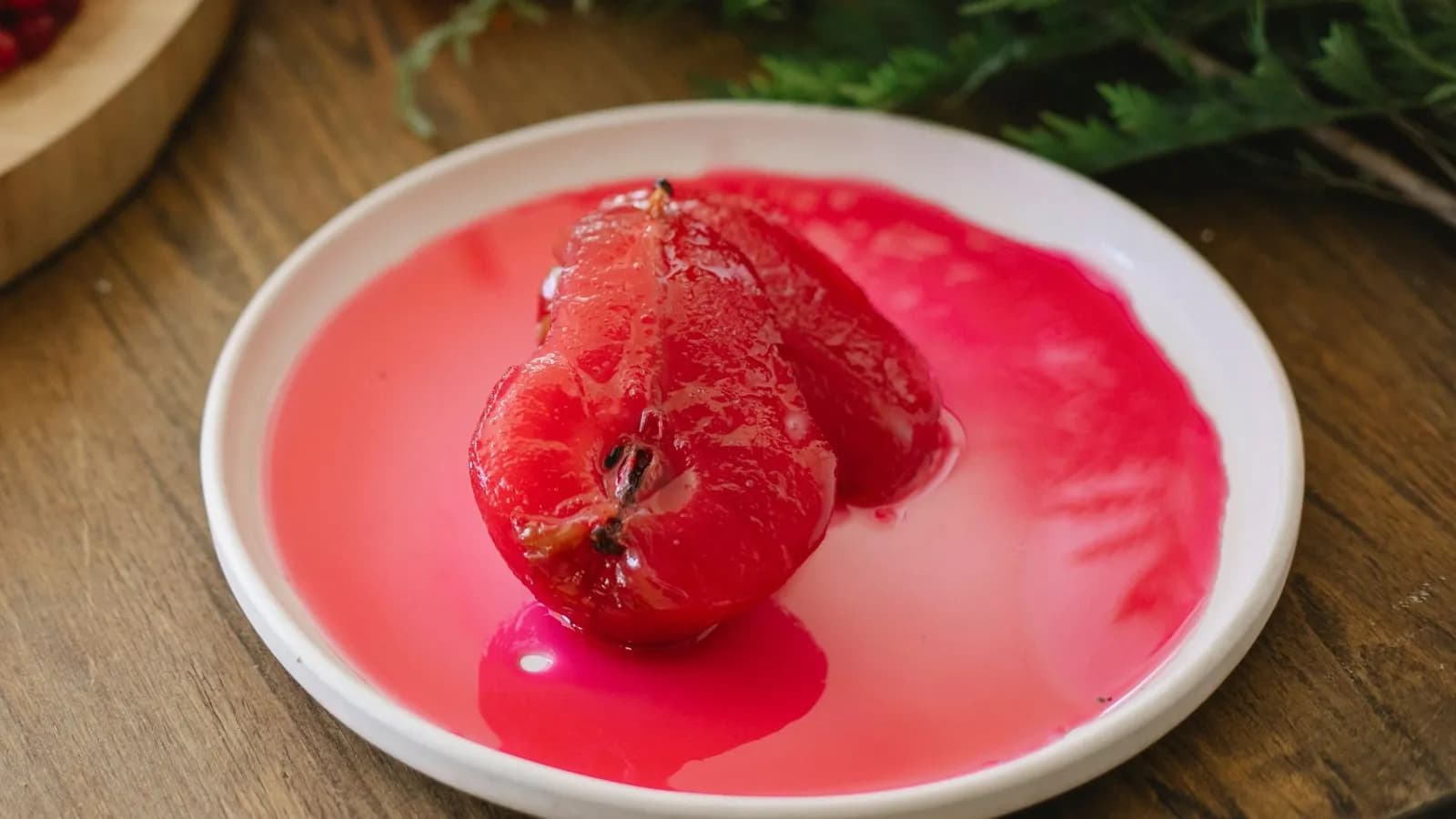
Poach Conference pears in young red wine with cinnamon and orange, in an enamelled dutch oven at 160 °C indirect in the kamado. Reduce the syrup with the lid off and chill overnight: a make-ahead dessert with no pastry.
Quick answer
Peel and halve 4 firm Conference pears. Bring 750 ml young red wine, 120 g sugar, cinnamon, clove and orange to the boil in an enamelled dutch oven; add the pears, cover and cook in the kamado at 160 °C indirect for 30-45 minutes, turning halfway. Lift out the pears, reduce the syrup uncovered at 175-180 °C and chill overnight.
- Prep
- 20 min
- Cook
- 90 min
- Servings
- 4 servings
- Temperature
- 160 °C
Ingredients
- firm Conference pears, about 200 g each4 ud
- young, fruity red wine (Garnacha/Grenache, young Tempranillo or Monastrell)750 ml
- sugar120 g
- orange (the peel in strips, without the white pith, and the juice)1 ud
- cinnamon stick1 ud
- cloves2 ud
- star anise (optional)1 ud
- lemon, for rubbing the peeled pears0.5 ud
- mascarpone or whipping cream, to serve200 g
The gear for this recipe
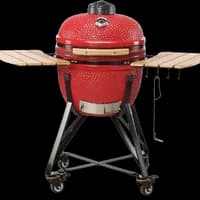 Kamado Bono Media 51 cmThis recipe asks two things of the kamado: room for a pot about 32 cm from handle to handle, and a chamber that holds 160 °C for more than an hour on very little air. The **Kamado Bono Media** does both. Its grate measures about 44.5 cm according to the manufacturer, so the dutch oven sits centred over the deflectors with room at the sides; in a kamado with a 33-34 cm grate it would be too tight. It comes with two side deflectors as standard that, together, cover all the embers, and that is what stops the embers scorching the sugar on the bottom. And the thermal mass of the ceramic lets you poach at 160 °C and then climb to 175-180 °C to reduce, without changing appliance or switching on the oven at home.
 NaturBraza marabu charcoal, pack of two 5 kg bags (10 kg)Poaching and reducing add up to more than an hour with the vents almost closed, and in that regime you want a charcoal that burns slowly. **NaturBraza marabú charcoal** comes from a very dense wood: it is heavy for its bulk, burns with a short flame and, according to the product page, leaves little ash, although it publishes no figure. With the firebox full there is plenty of fuel to reach 160 °C, hold it through the poaching and climb to 175-180 °C for the reduction without topping up while the pot is inside; the vents set the temperature, not the amount of charcoal, and whatever is left over goes out when you close them. If you are coming from a roast, the marabú left in the firebox makes a good base. The page gives neither origin nor lump size: sift the dust from the bottom of the bag before loading.
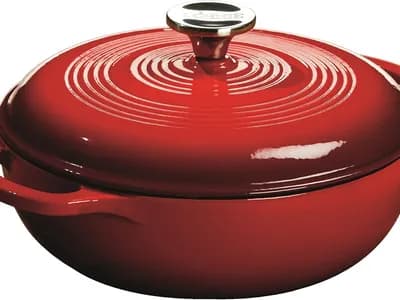
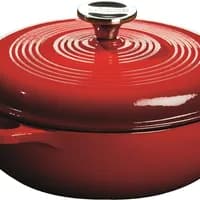 Lodge Enameled Cast Iron Dutch Oven 2.84 L (Red)Red wine is acidic and here it spends more than an hour in the pot, between poaching and reducing. That is why the piece is the **Lodge enamelled dutch oven**: the vitreous enamel does not react with the wine, there is no seasoning to lose and no metallic undertone in the syrup. Its 2.84 L holds four halved pears and the bottle of wine, and the mass of the iron stores heat and releases it steadily, which, with heat arriving from every side in the kamado, keeps the sugar from catching on the bottom. The manufacturer rates it to 260 °C, steel knob included. It goes into the kamado already hot from the hob: enamel does not tolerate sudden changes.
Method
- 01
Light the charcoal and settle at 160 °C
Fill the Kamado Bono Media firebox with NaturBraza marabú charcoal; whatever does not burn goes out when you close the vents and is ready for next time (marabú is a very dense hardwood), light one spot in the centre and fit the two side deflectors, together, with the grate on top. Let it climb with the vents open and start closing them at about 130 °C to avoid overshooting. Aim for a steady 160 °C at grate level for 10 minutes. After another roast, open by burping (lid up 5 cm, about 5 seconds, gloves on, face away), top up only what is missing and fit the deflectors.
- 02
Prepare the pears
Peel the four pears with a peeler, leaving the stalk on if they have one, and halve them lengthwise. Take out the core and pips with a teaspoon or a melon baller and rub each half with the half lemon so they do not darken while the syrup comes to the boil. Choose pieces of similar size, about 200 g: a much thicker pear is still hard when the others are already tender.
- 03
Boil the syrup on the hob
In the enamelled dutch oven, on the kitchen hob, put the wine, sugar, cinnamon, cloves, star anise, orange peel and its juice. Heat over a medium flame, stirring, until the sugar dissolves and the wine comes to the boil, about 8-10 minutes. That way the pot goes into the kamado hot, and the enamel does not take a sudden change of temperature when it meets the grate.
- 04
Poach in the kamado
Put the pear halves into the syrup cut side down, in a single snug layer; if one does not fit, it sits on top and changes places when you turn them. Cover the pot, set it in the centre of the grate over the deflectors and close the dome. Cook for 20 minutes at 160 °C without opening: with the pot covered, the wine holds a gentle simmer and the sugar does not catch on the bottom.
- 05
Turn and check
Open the kamado by burping it: raise the lid about 5 cm, wait about 5 seconds and then open fully, wearing gloves and keeping your face turned away (why). Uncover the pot, turn the pears with a spoon so the rounded side takes the colour, and cover again. Cook 10-25 minutes more. They are ready when the tip of a knife slides into the thick part without resistance and the pear keeps its shape.
- 06
Reduce with the pot uncovered
Lift the pears out onto a dish with a slotted spoon and leave the pot uncovered on the grate. Open the bottom vent a finger's width more and let the temperature climb to 175-180 °C. Reduce the syrup for 30 to 60 minutes, until it has lost about half its volume and coats the back of a spoon. Texture decides, not the clock, and do not push it to caramel: it thickens more once cold. Short of time? Finish it on the hob over a medium flame.
- 07
Cool and rest overnight
Take the pot out of the kamado wearing gloves and remove the cinnamon, cloves and star anise. Transfer the pears and syrup to a shallow glass container, because iron holds its heat and cools slowly. The pears left the heat when the reduction began: get them into the fridge, covered, within 2 hours of that moment. The next day serve them cold or left to warm for a few minutes, with mascarpone or whipped cream. They keep 3-4 days in the cold.
About this recipe
Pears in red wine are the classic pot dessert: peeled fruit cooked slowly in wine with sugar, cinnamon and orange peel until it turns garnet. Here they go in the kamado for a practical reason. After a roast the ceramic is still hot, and an enamelled cast-iron pot with the pears inside makes use of that heat in indirect cooking at 160 °C while you clear the table. The other two autumn desserts on the site, the apple crumble and the Tatin, both have a pastry or crumble topping. This one has neither: it is made the day before and fits into any Christmas menu.
What the kamado brings, and what it does not
On a hob the heat comes only from underneath, and a syrup catches on the bottom the moment your attention drifts. With the deflectors in place, the kamado works like an oven: heat reaches the pot from below, from the sides and from the dome, and the wine stays at a gentle simmer with nobody watching it. Closed ceramic holds that temperature on very little air, so the charcoal left over from an earlier roast makes a good base. If you are coming down from a hotter fire, close the vents early: bringing the temperature down takes far longer than bringing it up, as the temperature control guide explains.
What the kamado does not do is smoke the pears while the pot lid is on: no smoke gets into a covered pot. The toasty note appears in the final reduction, with the pot uncovered, and it is discreet. That is why no smoking wood goes in, just as in the tarte Tatin in a cocotte.
Enamelled iron, not bare
Red wine is acidic, and between poaching and reducing it spends more than an hour in the pot. In bare cast iron that eats the seasoning and can leave a metallic undertone in the syrup; the guide to cast iron and dutch ovens sums it up: anything wet, acidic or long goes in enamel. The pot for this recipe is the Lodge enamelled dutch oven, 2.84 L, whose enamel does not react with the wine. It measures about 32 cm handle to handle and needs a mid-size kamado: in the Kamado Bono Media, with about 44.5 cm of grate according to the manufacturer, it fits with room to spare on the deflectors. In a kamado with a 33-34 cm grate it is too tight a fit.
The pear and the wine
The pear has to survive about three quarters of an hour of gentle simmering without falling apart. Conference, long and dense-fleshed, is the autumn and winter pear: it is picked in September and keeps in cold store for months. Buy it firm, so that it gives nothing when pressed beside the stalk. The ercolini (a small, sweet Italian-type pear) is a summer fruit; if you find it hard it will do, but December is not its season. For the wine, a young red with fruit and little oak: Garnacha (Grenache), young Tempranillo or an Alicante Monastrell. As the syrup reduces, tannins and oak concentrate, and a wine you would not drink will not improve in the pot.
Alcohol and making it ahead
Cooking does not remove all the alcohol. The USDA retention tables put it at around 25% of the alcohol after one hour of cooking and 10% after two, so this dessert is not for children or for anyone who should not drink. For them there is a version with red grape must (mosto tinto, unfermented juice), which brings its own sugar. It is also best made the day before: in the fridge, submerged in its syrup, the colour keeps working towards the centre of the pear. Serve cold or lukewarm, with a spoonful of mascarpone.
In 30 seconds
Bring 750 ml young red wine to the boil on the hob with 120 g sugar, cinnamon, clove and orange in an enamelled dutch oven, and add four firm Conference pears, peeled and halved. Cook them in the kamado indirect at 160 °C with the pot covered for 30-45 minutes, turning them halfway. Reduce the syrup uncovered at 175-180 °C until it coats a spoon and chill overnight. It contains alcohol: for children, make it with grape must.
Editor's tips
- For children or anyone who does not drink, swap the wine for red grape must and add no sugar, or 20 g at most: the must already carries around 14-15 g of sugar per 100 ml, almost as much as the 120 g of the wine version. Add the juice of another half lemon for acidity. Cooking the wine version for longer does not make it suitable: alcohol falls with time but never disappears.
- Do not use a bare cast-iron dutch oven for this recipe: more than an hour of acidic wine strips the seasoning and can give a metallic taste. Keep that iron for dry, very hot jobs such as bread; for the syrup, use enamel.
- If the kamado is coming from a roast at 200 °C or more, close the vents almost completely as soon as the meat comes off. To fit the deflectors, open the lid by burping: lift it about 5 cm, wait about 5 seconds and then open fully, wearing gloves and keeping your face away, because with the vents closed a sudden rush of air can throw back a flare (flashback). With the pot covered, a few degrees extra only shorten the poaching: start testing with the knife 10 minutes after turning the pears.
- No smoking wood. With the pot covered the smoke does not reach the pears, and in the uncovered reduction a heavy smoke settles in the sugar of the syrup. With well-lit charcoal, what reaches the open pot is fairly clean combustion gas: at most, a discreet toasty note.
Gear for this recipe
As an Amazon Associate, mikamado.es earns from qualifying purchases. At no extra cost to you.
Kamado Bono Media 51 cm
This recipe asks two things of the kamado: room for a pot about 32 cm from handle to handle, and a chamber that holds 160 °C for more than an hour on very little air. The **Kamado Bono Media** does both. Its grate measures about 44.5 cm according to the manufacturer, so the dutch oven sits centred over the deflectors with room at the sides; in a kamado with a 33-34 cm grate it would be too tight. It comes with two side deflectors as standard that, together, cover all the embers, and that is what stops the embers scorching the sugar on the bottom. And the thermal mass of the ceramic lets you poach at 160 °C and then climb to 175-180 °C to reduce, without changing appliance or switching on the oven at home.
€923

NaturBraza marabu charcoal, pack of two 5 kg bags (10 kg)
Poaching and reducing add up to more than an hour with the vents almost closed, and in that regime you want a charcoal that burns slowly. **NaturBraza marabú charcoal** comes from a very dense wood: it is heavy for its bulk, burns with a short flame and, according to the product page, leaves little ash, although it publishes no figure. With the firebox full there is plenty of fuel to reach 160 °C, hold it through the poaching and climb to 175-180 °C for the reduction without topping up while the pot is inside; the vents set the temperature, not the amount of charcoal, and whatever is left over goes out when you close them. If you are coming from a roast, the marabú left in the firebox makes a good base. The page gives neither origin nor lump size: sift the dust from the bottom of the bag before loading.
€47
Lodge Enameled Cast Iron Dutch Oven 2.84 L (Red)
Red wine is acidic and here it spends more than an hour in the pot, between poaching and reducing. That is why the piece is the **Lodge enamelled dutch oven**: the vitreous enamel does not react with the wine, there is no seasoning to lose and no metallic undertone in the syrup. Its 2.84 L holds four halved pears and the bottle of wine, and the mass of the iron stores heat and releases it steadily, which, with heat arriving from every side in the kamado, keeps the sugar from catching on the bottom. The manufacturer rates it to 260 °C, steel knob included. It goes into the kamado already hot from the hob: enamel does not tolerate sudden changes.
€170
FAQ
Does the alcohol cook off when you make pears in red wine?
Not entirely. According to the USDA nutrient retention tables, a dish simmered gently keeps around 40% of the alcohol at 15 minutes, 25% at one hour and 10% at two hours. This recipe adds up to a little over an hour of heat, so the pears contain alcohol and are not for children, pregnant women or anyone who should not drink. For them, the version with red grape must.
Which pears are best for pears in red wine?
Firm-fleshed ones, which hold up to the simmer without collapsing. In autumn and winter, Conference: long, brown-skinned and dense, picked in September and kept in cold store for months. Choose it firm, giving nothing when pressed beside the stalk. The ercolini, small and sweet, is a summer pear and will do if it is hard. Avoid very ripe pears of any variety: they end up as compote.
What red wine do you use for poached pears?
A young, fruity red with little or no oak: Garnacha (Grenache), young Tempranillo or Monastrell, the main grape of the Alicante DO (protected designation of origin). As the syrup reduces, tannins and oak notes concentrate and can turn bitter, so a powerful crianza (oak-aged red) does not improve the dessert. You do not need an expensive wine, but you do need one you would drink, because its faults concentrate in the pot too.
How many days do pears in red wine keep in the fridge?
Three or four days, covered and submerged in their syrup. That is the period the US Department of Agriculture (USDA) gives for cooked leftovers in the refrigerator, and they should go in the fridge within 2 hours of leaving the heat. They improve from one day to the next, because the colour works its way to the centre. Serve them with a clean spoon and never return to the syrup anything that has sat on the table.
Can you make pears in red wine without alcohol?
Yes, with red grape must instead of wine. The must already carries almost as much sugar as is added to the wine version, so add no sugar, or 20 g at most, and put in the juice of half a lemon so the syrup has some acidity. The flavour is closer to grape than to wine, and the spices and orange come forward. The kamado works the same, 160 °C covered and 175-180 °C uncovered, but watch the reduction sooner: it thickens faster.
More kamado recipes
Burnt Basque cheesecake on the kamado, creamy inside
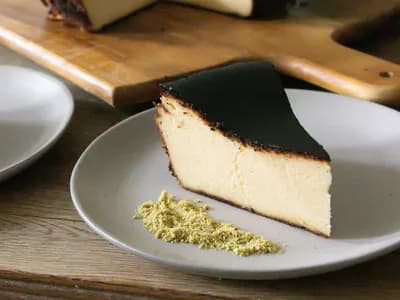
La Viña on the kamado: a near-burnt mahogany top and a wobbly, creamy centre. Indirect at 210°C, the Basque cheesecake that beats the home-oven version.

Apple tarte Tatin in a dutch oven on the kamado, golden caramel
Caramelised apples in a cast-iron dutch oven, golden puff pastry and an amber caramel that runs as you flip it. Indirect at 190°C: the tarte Tatin that earns applause.
Smoked skillet brownie on the kamado, fudgy centre
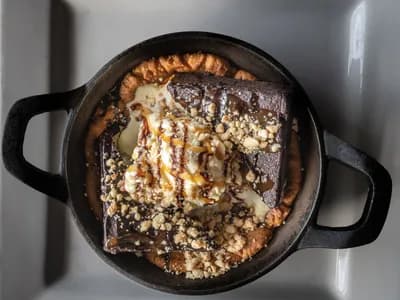
Chocolate brownie baked in a cast-iron skillet over indirect heat, with a veil of apple-wood smoke. Crackled crust, fudgy centre and a hint of orange. Serves 10.
KEEP READING
Go deeper on this dish
- Recommended kamado
Kamado Bono Media 51 cm
This recipe asks two things of the kamado: room for a pot about 32 cm from handle to handle, and a chamber that holds 160 °C for more than an hour on very little air. The Kamado Bono Media does both. Its grate measures about 44.5 cm according to the manufacturer, so the dutch oven sits centred over the deflectors with room at the sides; in a kamado with a 33-34 cm grate it would be too tight. It comes with two side deflectors as standard that, together, cover all the embers, and that is what stops the embers scorching the sugar on the bottom. And the thermal mass of the ceramic lets you poach at 160 °C and then climb to 175-180 °C to reduce, without changing appliance or switching on the oven at home.
- Editorial guide
How to light a kamado: the step-by-step method
No petrol, no weird tablets and no 45-minute waits. The cone method, airflow control and the mistakes that prevent 80% of the frustration.
- Glossary term
Heat deflector
Ceramic plate placed between the coals and the grate to turn direct fire into indirect cooking.
- Related comparison
big green egg large vs kamado joe classic iii
The classic kamado matchup: the Big Green Egg Large, the indestructible pioneer with the widest accessory network, agai…