Recipe · Indirect · Medium
Kamado pita bread that puffs itself on the stone
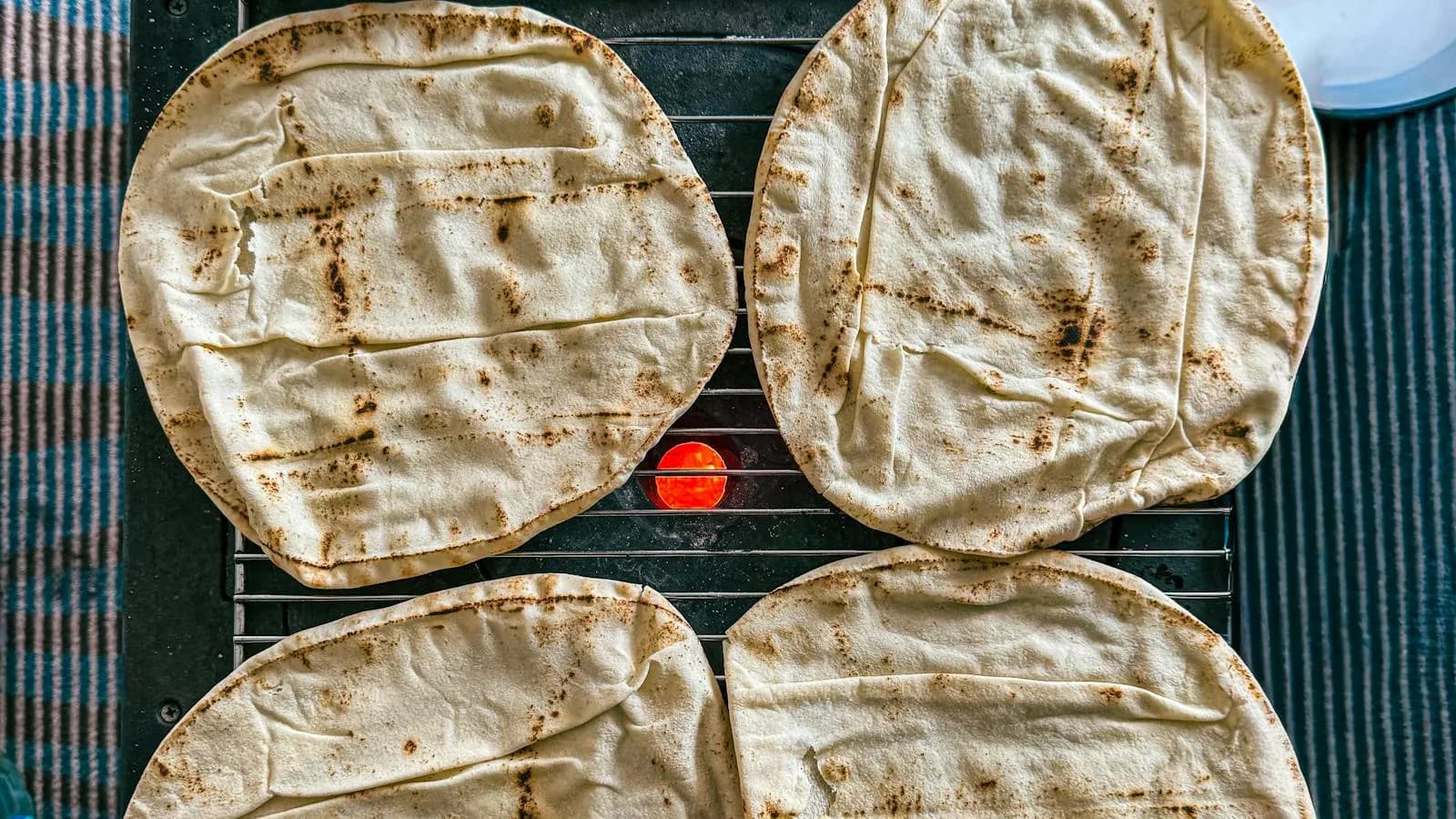
Individual pita breads that balloon up into a perfect pocket on cordierite stone at 300°C, cooked indirect. Fresh, golden and steaming from the pocket: the party trick I pull on my Torrevieja terrace whenever there is hummus.
Season:All yearCuisine:Eastern Mediterranean
Quick answer
Pita bread on the kamado bakes on a cordierite stone at 300 °C in indirect heat with a deflector. Even 3-4 mm discs balloon up in 60-90 seconds from the steam; flip them and give another 60-90 seconds (2-4 minutes total). Bake them one at a time and check the stone with an infrared reader: 290-310 °C.
One big step at a time, screen kept on and built-in timers.
- Prep
- 90 min
- Cook
- 4 min
- Servings
- 6 servings
- Temperature
- 300 °C
What time do you want to eat?
Pick a time and we'll tell you when to start.
11:46
Start the prep
13:16
Light the kamado
13:46
Onto the kamado
14:00
Serve
Estimate: it includes lighting and settling the kamado plus a margin for large cuts. If the recipe asks you to marinate or salt ahead, add that time.
Fire setupStone or steel
- Dome
- 300 °C
- Deflector
- Yes
- Grate
- Standard height
- Setup
- Deflector and cordierite stone; peel
Temperature curve
0:52 h from lighting
Kamado dome
| # | From | Phase | Dome |
|---|---|---|---|
| 1 | 0:00 | Light the charcoalDeflector and cordierite stone on the grid | 20 → 300 °C |
| 2 | 0:30 | StabiliseStone at 290-310 °C by infrared thermometer | 300 °C |
| 3 | 0:40 | BakeOne pita at a time: puffs in 60-90 s, then flip | 300 → 260 °C |
| 4 | 0:44 | Recover temperatureLet the stone recover before the next one | 260 → 300 °C |
| 5 | 0:47 | RestStacked in a cloth, soft | 300 → 280 °C |
| 6 | 0:52 | Serve | off |
0:00 is the moment you light the charcoal. Internal temperatures are the ones the recipe gives; without a probe, go by the times. Turn these times into clock times with the planner
For this recipe
Ingredients
- bread flour W250-280 (you can swap 50 g for wholemeal)500 g
- warm water at about 30°C (60% hydration)300 ml
- dried baker's yeast (or 21 g fresh)7 g
- fine sea salt10 g
- extra-virgin olive oil from the Comunidad Valenciana (dough + finish)2 tbsp
- sugar or honey (to wake up the yeast)1 tsp
- fine semolina or flour for rollingas needed
- za'atar or sesame and flaky salt (to serve, optional)1 pinch
Allergens
- Gluten
- Sesame
Za'atar and sesame are optional; the hummus served alongside also contains sesame (tahini).
Based on the recipe's ingredients. Always check the label of every product you buy.
The gear for this recipe
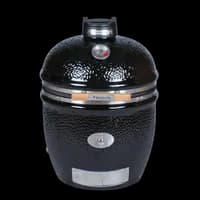 Monolith Classic Pro 2.0
 Kamado Joe Big Block XL lump charcoal 9.1 kg
 Onlyfire cordierite pizza stone 38 × 30 cmCordierite stone that stores heat and makes the pitta puff up in one go.
 Ooni Digital Infrared Pizza Oven ThermometerCheck the stone is at 300 °C before laying down each pitta.
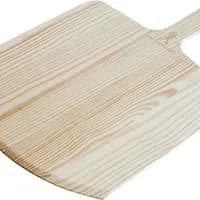 Kamado Joe Wooden Pizza Peel
Method
- 01
Wake the yeast and knead
Dissolve the yeast and sugar in the warm water (30°C, no hotter) and wait 10 minutes for it to foam. Mix with the flour, add the salt and oil, and knead 10 minutes by hand until the dough passes the windowpane test: a piece stretches thin without tearing. It should be smooth and only slightly tacky.
- 02
Bulk ferment 60-90 min
Shape the dough into a ball, set it in an oiled bowl and cover. Ferment at 24-26°C for 60-90 minutes, until doubled in volume. On the terrace in summer it goes faster; in winter give it time or use the oven, off, with the light on. The dough is ready when a press springs back slowly.
- 03
Divide and final rest 20-30 min
Gently degas, divide into 6 balls of about 135 g and ball each one up with tension. Set them apart on a floured tray, cover with a cloth and rest 20-30 minutes. This rest relaxes the gluten: without it the dough springs back when you roll it and won't form a pocket.
- 04
Set deflector and preheat the stone
Light the kamado, set the deflector for indirect heat and place the cordierite stone on the grate. Stabilise at 300°C and preheat the stone for at least 30-40 minutes. Check the surface with an infrared thermometer: it should read 290-310°C. The lid thermometer only measures chamber air and will mislead you.
- 05
Roll thin and even
On a semolina-dusted bench, roll each ball with a pin or your fingertips into a disc 18-20 cm across and 3-4 mm thick, evenly. No thick edges or folds: any uneven spot lets the steam escape and ruins the pocket. Only roll the ones you're about to bake.
- 06
Bake 2-4 min and puff
Shake off the excess semolina and slide the pita onto the stone with a peel. Close the lid. In 60-90 seconds it will start to balloon. Flip it once it's puffed and golden underneath, another 60-90 seconds. Total 2-4 minutes. Bake one at a time so the stone keeps its heat.
- 07
Rest covered with a cloth
Take each pita off and stack them wrapped in a clean cloth while you bake the rest. The steam trapped under the cloth keeps them soft and pliable, stopping the crust from hardening. Finish with a drizzle of Valencian EVOO, za'atar or sesame and flaky salt. Serve warm with hummus.
About this recipe
Pita in a kamado puffs because you bake a thin dough on a very hot surface —cordierite stone at around 300°C, indirect with the deflector in— and the water in the dough flashes to steam. That steam has no way out through the already-sealed crust, so it pushes the two layers of dough apart and forms the pocket. The whole recipe revolves around one idea: a blazing surface and a dough thin and elastic enough to puff in 90 seconds.
Why it puffs (and why sometimes it doesn't)
The pocket is physics, not luck. You need three things at once: a very hot stone to generate steam instantly, a well-stretched dough of even thickness (3-4 mm, with no thick spots that hold the steam back) and a developed, rested gluten that is elastic and seals over the top instead of cracking. If the stone is cold, the steam comes off slowly and the pita stays flat. If the dough has a thick edge or a fold, the steam escapes there. And if the dough hasn't rested, the gluten is tight, it tears and lets the steam out before it can inflate. When all three line up, the pita balloons in under a minute.
The kamado setup: indirect and a preheated stone
Set the deflector for indirect, radiant heat and put the grate on top with a cordierite stone. Stabilise the kamado at 300°C and preheat the stone for at least 30-40 minutes: the pita does not cook on chamber air, it cooks on the stone beneath it. The lid thermometer reads the air, so check the stone surface with an infrared gun — you want 290-310°C before the first pita goes on. Bake one or two at a time; loading the stone all at once cools it and the next batch won't puff.
The dough: flour, EVOO and an unhurried rest
It's a simple bread dough: bread flour, warm water, yeast, salt and a glug of extra-virgin olive oil that adds elasticity and a Mediterranean flavour that suits everything you'll dip it into. Knead 10 minutes until it passes the windowpane test, bulk-ferment 60-90 minutes until doubled, divide into six balls and rest them covered for 20-30 minutes so the gluten relaxes. That final rest is what lets you roll thin without the dough springing back or tearing — and relaxed gluten is what seals the steam on top and forms the pocket.
In 30 seconds
Bread dough with EVOO, kneaded 10 min, bulk-fermented 60-90 min and divided into 6 balls with a final 20-30 min rest. Kamado indirect with the deflector, cordierite stone preheated 30-40 min at 300°C and verified at 290-310°C with an infrared gun. Roll each pita to 3-4 mm of even thickness and bake one at a time for 2-4 min, flipping once it puffs. It comes out golden, pocketed and steaming. Serves 6.
Will it fit your kamado?
Small
33-40 cm · Joe Jr, MiniMax
Tight
The 38x30 stone won't fit; with a ~33 cm round one, one pita at a time, as the recipe says.
Medium
46-51 cm · Classic, Large
Fits
The 38x30 stone is probably a snug fit; pitas go one at a time.
Large
56-61 cm · Big Joe, XL
Fits
Two pitas would fit at once, though the recipe advises one at a time.
What to serve with it
Sides
- Ember-roasted aubergine baba ganoush
- Homemade hummus with olive oil
- Wine
- Navarra rosé or Rueda white
- Beer
- Wheat beer or light lager
- Alcohol-free
- Ayran or mint lemonade
Leftovers and storage
- In the fridge
- 1-2 days at room temperature in a sealed bag; the fridge makes them stale.
- Freezing
- Freeze very well interleaved with paper, 2-3 months. Thaw and do not refreeze.
- Reheating
- Hot griddle or pan for 20-30 seconds per side, or wrapped in foil in the oven.
- Using them up
- Oven-baked triangles with oil and za'atar as chips, or in a fattoush salad.
Cool and refrigerate within 2 hours. When in doubt, throw it out.
Leftover embers
You still have embers: what to do with the leftover heat
For 4 min at 300 °C in a classic kamado you load about 1.25 kg of charcoal and burn 900 g: when you serve, about 350 g of live embers remain. Before you shut the vents, that is still enough for:
Without touching the vents
300 °Cfull heat, direct
20 minof embers
- Iberian pork tenderloin grilled with Pedro Ximénez glaze8 min · 280 °C
- Red prawns over live fire on the kamado in 6 minutes6 min · 280 °C
- Sesame-Crusted Seared Bluefin Tuna on the Kamado (Tataki)4 min · 280 °C
No recipe needed
- Pita or naan from shop dough, on the grate (2 min each)
- Whole peppers until the skin blackens, for peeling (8 min)
- Pineapple or peach slices, char-marked (3 min)
Closing the vents a little and waiting for it to drop
210-270 °Cgrilled vegetables
20 minof embers
- Kamado-Grilled Apricots with Honey and Rosemary10 min · 230 °C
- Bacon-Wrapped Dates on the Grill14 min · 210 °C
- Saffron Milk Caps on a Steel Griddle with Garlic and Parsley10 min · 250 °C
No recipe needed
- Strips of courgette and aubergine, char-marked (5 min)
- Pita or naan from shop dough, on the grate (3 min each)
- Halved tomatoes, cut side down, for a sauce (10 min)
Before opening the lid, crack it open for a few seconds first; if you raise the heat, stir the ash so the coals can breathe. And if you are not going to use them: once the food is out, close the bottom and top vents. The charcoal that does not burn (about 350 g) can be used next time. Different size of kamado? Work out your load for 1 h of fire, lighting included.
Editor's tips
- Thickness matters more than the recipe. An even 3-4 mm pita puffs; a 6 mm one with a thick edge won't. Roll calmly over semolina and, if a ball fights back and shrinks, let it rest 5 more minutes instead of wrestling the pin: the gluten needs to relax.
- The stone cools with every pita you load. Bake one at a time (two at most if your stone is big) and leave 1-2 minutes between batches so it recovers 300°C. An infrared thermometer tells you exactly when it's ready again; by eye you're always short on temperature.
- If a pita doesn't puff, don't bin it: it may still be delicious, it just missed the pocket. Check the usual suspects in order: stone too cold, uneven dough or under-rested gluten. Usually it's the stone. Add 10-15 more minutes of preheat and the next batch will come good.
Gear for this recipe
As an Amazon Associate, mikamado.es earns from qualifying purchases. At no extra cost to you.

Monolith Classic Pro 2.0
€2,000
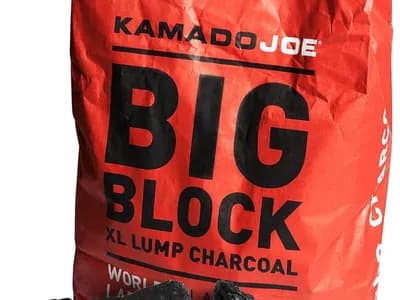
Kamado Joe Big Block XL lump charcoal 9.1 kg
€67

Onlyfire cordierite pizza stone 38 × 30 cm
Cordierite stone that stores heat and makes the pitta puff up in one go.
€35
Ooni Digital Infrared Pizza Oven Thermometer
Check the stone is at 300 °C before laying down each pitta.
€29
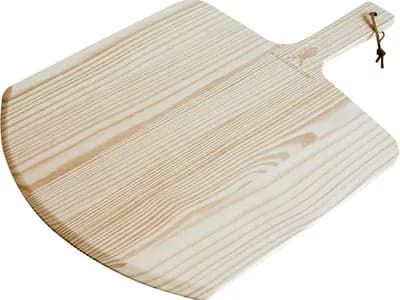
Kamado Joe Wooden Pizza Peel
€46
Have you made it?
Tell us how it turned out on your kamado. We review every rating before publishing it.
No published ratings yet. Be the first!
FAQ
Why does pita puff and why does it sometimes fail to form a pocket?
It puffs because the dough's water, hitting a very hot stone, flashes to steam; that steam can't escape through the already-sealed crust and separates the two layers into a pocket. It fails to puff for three reasons, in this order: the stone was too cold (the most common), the dough was uneven or had a thick edge where steam escaped, or the gluten didn't rest enough and tore. Fix the stone first.
What stone temperature does pita need in the kamado?
The stone surface should sit at 290-310°C, with the kamado stabilised at 300°C of air in indirect heat. What matters is the stone temperature, not the air: the pita cooks by contact with the surface, and that's where the steam that inflates it is generated. Preheat the stone for at least 30-40 minutes and check it with an infrared thermometer pointed at the surface. The lid thermometer only reads the air and tends to mislead.
How long do you knead and rest pita dough?
Knead about 10 minutes by hand, until the dough passes the windowpane test (a piece stretches thin and translucent without tearing): that signals well-developed gluten, which is what seals the steam on top. Then two rests: a 60-90 minute bulk ferment until doubled, and a final 20-30 minute rest after dividing into balls. That second rest relaxes the gluten so you can roll thin without the dough shrinking.
Pizza stone or steel for making pita?
For pita, the cordierite stone wins. Unlike thin-crust pizza, you're not after searing a base in seconds but a stable, enveloping radiant heat that inflates the pita without scorching its underside before the pocket sets. Steel conducts so much, so fast, that it tends to over-toast the base too early and dry the pita out. The stone, more forgiving, gives even browning and a clean pocket. If you only have steel, drop to 280°C and shorten the first side a touch.
How do you store pitas and reheat them without drying out?
Straight off the stone, stack them wrapped in a clean cloth: the trapped steam keeps them soft and pliable. Once cool, store in an airtight bag for up to 2 days, or freeze them layered with paper. To reheat without drying out, spritz with a few drops of water and pass them 30-40 seconds over the hot stone or a pan; the burst of steam revives them. Avoid a long microwave: it turns them shoe-leather tough.
What do I do with the embers left after making Kamado pita bread that puffs itself on the stone?
After 4 min at 300 °C in a classic kamado about 350 g of live embers remain: 20 min more at 300 °C without touching the vents or 20 min at 210-270 °C closing the vents. If you are not going to use them, close both vents and keep the charcoal for next time.
More kamado recipes


KEEP READING
Go deeper on this dish
- Recommended kamado
Monolith Classic Pro 2.0
The German alternative to the Kamado Joe Classic III
- Editorial guide
How to light a kamado: the step-by-step method
No petrol, no weird tablets and no 45-minute waits. The cone method, airflow control and the mistakes that prevent 80% of the frustration.
- Glossary term
Heat deflector
Ceramic plate placed between the coals and the grate to turn direct fire into indirect cooking.
- Related comparison
kamado joe classic iii vs monolith classic pro 2 cart
The comparison every European cook eventually makes: the Kamado Joe Classic III, the US reference with SlōRoller, again…