Recipe · Smoked · Advanced
Smoked Beef Short Ribs on the Kamado, 8-9 Hours at 120 °C over Oak
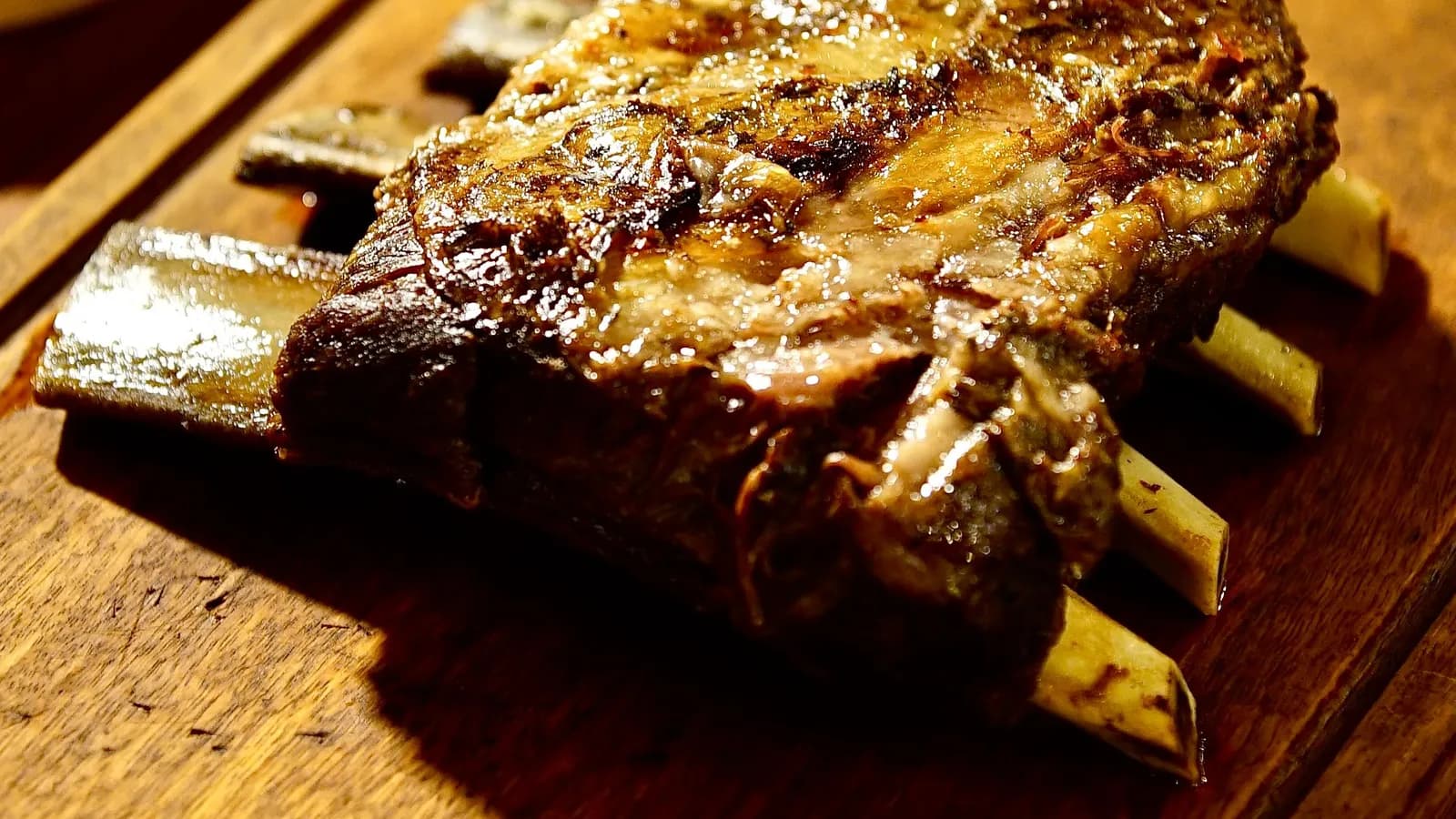
Three bones of beef short rib, salt, pepper and oak smoke at 120-125 °C. Eight or nine hours later the collagen has melted, the bark is dark and the probe slides in like butter.
Quick answer
With the deflector in, a 120-125 °C chamber and oak chunks, smoke the 3-bone rib for 8-9 h to about 95 °C internal: what matters is that the probe goes in with no resistance. Optionally wrap in butcher paper around 75 °C and rest 45-60 min.
One big step at a time, screen kept on and built-in timers.
- Prep
- 40 min
- Cook
- 540 min
- Servings
- 6 servings
- Temperature
- 120 °C
What time do you want to eat?
Pick a time and we'll tell you when to start.
02:35
Start the prep
03:15
Light the kamado
04:00
Onto the kamado
13:00
Take it off and rest
14:00
Serve
Estimate: it includes lighting and settling the kamado plus a margin for large cuts. If the recipe asks you to marinate or salt ahead, add that time.
Fire setupIndirect
- Dome
- 120 °C
- Deflector
- Yes
- Grate
- Standard height
- Bottom vent
- A crack
- Top vent
- Half open
- Fuel
- Lump charcoal for a long cook, full firebox
- Wood
- 4 holm oak or oak chunks
- Setup
- Wireless probe and butcher paper
Ingredients
- slabs of 3-bone beef short rib, about 1.6-2 kg each2
- coarse salt30 g
- coarsely ground black pepper3 tbsp
- garlic powder1 tbsp
- sweet paprika (optional)1 tbsp
- mild mustard, as a binder for the rub3 tbsp
- apple cider vinegar cut with water, in a spray bottle200 ml
- fist-sized oak or holm-oak chunks4
- lump charcoal for a long fire1 load
- sheets of butcher paper (optional)2
Allergens
- Mustard
Based on the recipe's ingredients. Always check the label of every product you buy.
The gear for this recipe
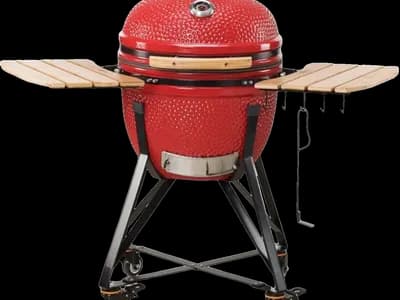
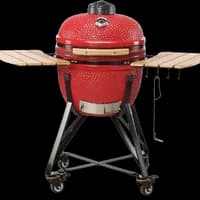 Kamado Bono Media 51 cmA three-bone rib takes up a lot of room: the Kamado Bono Media is 51 cm according to its listing, room for two slabs over the deflector, which comes in its six-accessory bundle. Its 70-400 °C range comfortably covers the 120-125 °C this recipe needs. Honest drawback: it is not a premium brand with official European spares, and over 8-9 hours you still have to watch charcoal and vents; with two slabs, swap them round halfway to even out the heat.
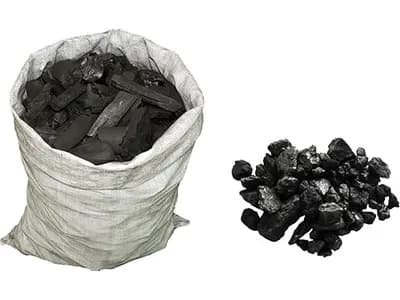
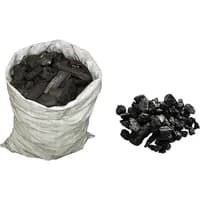 Orework Spanish Holm Oak Charcoal 15 kgOrework is Spanish holm-oak charcoal (Quercus ilex) produced in Cáceres. Holm oak is a dense hardwood with a long burn and a subtle aroma, which suits an 8-9 hour low-temperature fire without heavy ash or strong flavour. Drawback: it is charcoal, not smoke wood, and does not give as much smoke as chunks, so you still need smoking wood for the profile.
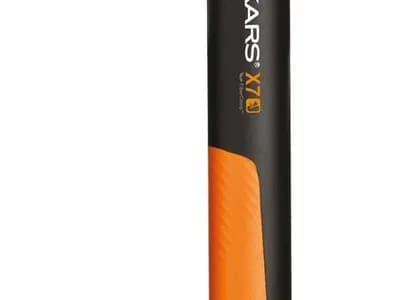
 Fiskars X7-XS: 35.5 cm small axe for fine woodTo split oak or holm-oak chunks to fit the firebox, the Fiskars X7-XS is a small hatchet of 35.5 cm and about 640 g, with a fibreglass-reinforced plastic handle and a sheath included; the listing rates it for branches up to 7 cm in diameter. It is comfortable for chunks and fine kindling. Drawback: it is not a woodcutter's axe, and thick or very dry logs are better left to a heavier one.
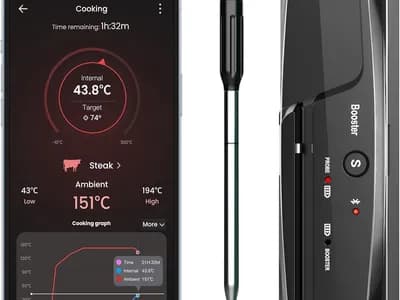
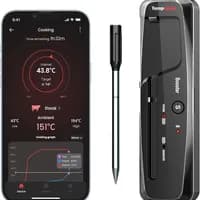 ThermoPro TempSpike TP961: 150 m wireless Bluetooth probeOn an 8-9 hour cook the TempSpike TP961 (TempPro brand, formerly ThermoPro) reads both the meat's internal temperature (up to 100 °C) and the chamber temperature (up to 300 °C) with a single wireless probe and 150 m Bluetooth 5.2, and alerts through the app. It is water resistant (IP67) and the booster takes 2 AAA batteries. Drawback: the internal sensor tops out at 100 °C, just above the 95 °C of this recipe, and with two slabs a single probe only watches one: put it in the thicker slab.
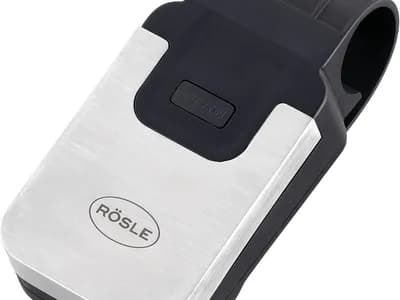
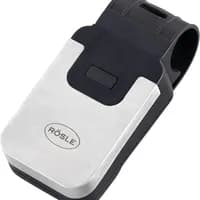 Rösle 25448: universal LED light for the lid handleWith eight or nine hours ahead, part of the cook falls after dark. The Rösle universal LED light attaches to the lid handle with a silicone strap and offers two brightness levels for reading the thermometer, the smoke and the meat without a torch. Drawback: it needs 3 AAA batteries not included and the listing gives about 4 hours of run time, so keep spare batteries and switch it on only when needed.
Method
- 01
Prep and season the rib
Take the rib out of the fridge 30-40 minutes ahead. Pat it dry, trim any hard fat and remove only the membrane on the bone side. Brush on a thin coat of mustard, mix the salt, pepper, garlic and paprika and cover the whole slab with it. Let it sit while you light the kamado; if you do it the night before, season with salt only and keep it uncovered in the fridge.
- 02
Light and stabilise at 120-125 °C
Fill the firebox with charcoal, light a single spot and let the fire spread slowly. Bury the oak chunks among the coals, fit the deflector and grate and close the lid with the vents almost closed: bottom vent open a couple of fingers and the top vent at half. Allow 30-45 minutes for the chamber to settle at 120-125 °C and the smoke to thin out. Adjust in small steps: the ceramic is slow to react.
- 03
Add the meat and the probe
With gloves on, open by burping the lid: lift it about 5 cm, wait about 5 seconds, then open fully with your face turned away. Insert the probe into the thickest part of the first slab without touching bone and set the slabs meat-side up on the grate, over the deflector. Close and recover 120-125 °C. Note the time: from here it is 8-9 hours, but doneness rules, not the clock.
- 04
Smoke and first bark
For the first 3-4 hours keep the lid shut: read the temperature on the thermometer and the probe. After that, if the surface looks dry, spray the vinegar-water mix on the darkest areas, always opening with burping and gloves. If the chamber climbs past 130 °C, close the bottom vent a little more; if it drops below 115 °C, open it half a finger. Do not add chunks mid-cook: you would have to lift out meat, grate and deflector, and late smoke turns bitter.
- 05
The stall and optional wrap
Around 65-75 °C internal the climb stops for hours: that is the stall. If the crust is firm and mahogany-coloured, you can wrap each slab tightly in two turns of butcher paper and return it to the grate pushing the probe back through the paper into the thickest part. Unwrapped it also gets there, just with more waiting. Do not raise the fire to shorten it.
- 06
Check doneness by probe
From 93 °C internal start checking. The meat is ready when the probe goes in between the ribs and into the centre with almost no resistance, usually around 93-96 °C; if it still feels tight, wait another 30-45 minutes and test again. For a whole cut of beef this size, tenderness and time sit well above the minimum safe temperature, so there is no need to worry about falling short on degrees.
- 07
Rest, wrapped
With gloves and both hands, lift the slabs out, wrap them if they were not already and rest them 45-60 minutes in a warm place, covered with a thick cloth. Close both vents fully to put out the coals and save the remaining charcoal. The long rest is part of the recipe: cut earlier and the meat bleeds juice.
- 08
Slice and serve
Cut between the bones with a long knife and serve each rib with its crust, a little flaky salt and strong mustard, pickles or a sharp cabbage slaw. Pour the juices left in the paper or tray over the top. Leftovers keep well covered and are reheated with a splash of stock.
About this recipe
The beef short rib, a three-bone slab sold in Spanish butcher shops as costillar de ternera or costilla de vaca, is one of the most rewarding cuts for long smoke. It carries bone, marbling and plenty of collagen, and all of that asks for the opposite of fast grilling: low heat, clean smoke and patience. On the kamado that means the deflector in, vents nearly closed and a steady chamber around 120-125 °C for eight or nine hours. The result is meat that falls apart on the tongue yet keeps its shape and juice, under a dark crust of salt and pepper.
What to ask the butcher for
Ask for the whole three-bone slab, uncut, with the long bone underneath and a thick layer of meat on top, around 1.6-2 kg each; it comes from the lower rib section (see the cut equivalents in the guide to beef cuts for the kamado). Do not let them chop it into thin stewing pieces or cross-cut strips: the point is for the bone to hold the meat together. Look for a pale layer of fat at least a finger thick and avoid thin slabs, because they dry out before the collagen gives way. If needed, remove only the silvery membrane on the bone side, using a kitchen cloth to grip it.
A long fire and clean smoke
For eight or nine hours the sensible approach is to fill the firebox to the top and light the fire at one spot, not the whole charcoal bed, with the minion and snake method or a simple variant. A holm oak charcoal such as Orework copes well with that regime and leaves little ash. Smoking wood goes in as oak or holm-oak chunks the size of a fist, tucked among the coals rather than on top of the live fire; the guide to smoking woods explains why oak gives a mild smoke that does not drown the beef. A small hatchet such as the Fiskars X7-XS is handy for splitting chunks to size. Once the smoke turns thin and blue-white instead of thick and white, it is time to put the meat in.
The deflector and the temperatures
This recipe is always indirect: the deflector keeps dripping fat off the coals and stops radiant heat from scorching the underside. Hold the chamber at 120-125 °C with the bottom vent open a couple of fingers and the top vent about half; adjust in small steps, because the ceramic reacts with a delay, as the temperature control guide describes. The internal temperature climbs fast to about 65-70 °C and then slows on the plateau, or stall, which can last two or three hours: do not raise the fire, it is moisture evaporating and it passes on its own.
To wrap or not to wrap, and when it is done
When the crust has taken a dark mahogany colour and does not smear when brushed, around 72-78 °C internal, you can wrap the rib in butcher paper (not foil if you want to keep the bark): it shortens the stall and holds on to juices without softening the outside as much as foil does. It is optional, and the cut comes out fine unwrapped, only slower. Doneness is not read off a thermometer but felt: from 93-96 °C internal it starts to give, and it is ready when a probe slides between the ribs and into the centre of the meat with almost no resistance, like soft butter. A wireless probe such as the TempSpike saves opening the lid every hour. Then rest it for 45-60 minutes wrapped and warm so the juices go back into the meat. As a whole cut of beef cooked for many hours, safety is not at stake: the final temperature is far above any food-safety reference.
In 30 seconds
With the deflector in and the chamber at 120-125 °C, smoke the 3-bone beef short rib for 8-9 hours, seasoned with coarse salt and pepper, using oak or holm-oak chunks. Wrap in butcher paper around 75 °C to shorten the stall if you like, and take it off when the probe goes in with no resistance, at about 95 °C internal. Rest 45-60 minutes before cutting between the bones.
Will it fit your kamado?
Small
33-40 cm · Joe Jr, MiniMax
Tight
Probably only one 3-bone rack fits; the second needs another cook.
Medium
46-51 cm · Classic, Large
Fits
Both 3-bone racks fit together on 51 cm, probably without touching.
Large
56-61 cm · Big Joe, XL
Fits
Both racks fit easily; a third would probably fit.
What to serve with it
Sides
- Cast-iron skillet cornbread
- Ember-roasted potatoes with bacon and dill
- Pickles and quick-pickled red onion
- Wine
- Crianza red from Ribera del Duero or Toro
- Beer
- Dry stout or brown ale
- Alcohol-free
- Iced black tea with lemon
Leftovers and storage
- In the fridge
- Within 2 hours, wrapped with its juices in an airtight container: 3-4 days in the fridge.
- Freezing
- Freezes well for 2-3 months, in pieces with its juices and air-free; thaw in the fridge.
- Reheating
- Wrapped in paper or foil with a little stock, oven at 150 °C until 74 °C in the centre.
- Using them up
- Shredded into tacos, a ragù for pasta, or a sandwich with pickled onion.
Cool and refrigerate within 2 hours. When in doubt, throw it out.
Editor's tips
- Season with more salt than seems right: a slab this thick needs salt to carry flavour to the centre. Coarse salt and coarse pepper in similar parts give a marked crust that is not bitter.
- If the crust looks black too early, that is not a bad sign by itself; it is pepper and fat. A thick white smoke is the bad sign: see the guide to bitter smoke and creosote and let the fire breathe.
- This is a cook of over eight hours: check the charcoal level before starting and do not keep opening up. If you cook after dark, a light fixed to the handle lets you read the thermometer and the smoke without a torch in your hand.
- Every opening with a hot chamber risks flashback: always burp the lid, lift it about 5 cm, wait about 5 seconds and open fully with your face turned away.
Gear for this recipe
As an Amazon Associate, mikamado.es earns from qualifying purchases. At no extra cost to you.
Kamado Bono Media 51 cm
A three-bone rib takes up a lot of room: the Kamado Bono Media is 51 cm according to its listing, room for two slabs over the deflector, which comes in its six-accessory bundle. Its 70-400 °C range comfortably covers the 120-125 °C this recipe needs. Honest drawback: it is not a premium brand with official European spares, and over 8-9 hours you still have to watch charcoal and vents; with two slabs, swap them round halfway to even out the heat.
€785
Orework Spanish Holm Oak Charcoal 15 kg
Orework is Spanish holm-oak charcoal (Quercus ilex) produced in Cáceres. Holm oak is a dense hardwood with a long burn and a subtle aroma, which suits an 8-9 hour low-temperature fire without heavy ash or strong flavour. Drawback: it is charcoal, not smoke wood, and does not give as much smoke as chunks, so you still need smoking wood for the profile.
€45
Fiskars X7-XS: 35.5 cm small axe for fine wood
To split oak or holm-oak chunks to fit the firebox, the Fiskars X7-XS is a small hatchet of 35.5 cm and about 640 g, with a fibreglass-reinforced plastic handle and a sheath included; the listing rates it for branches up to 7 cm in diameter. It is comfortable for chunks and fine kindling. Drawback: it is not a woodcutter's axe, and thick or very dry logs are better left to a heavier one.
€42
ThermoPro TempSpike TP961: 150 m wireless Bluetooth probe
On an 8-9 hour cook the TempSpike TP961 (TempPro brand, formerly ThermoPro) reads both the meat's internal temperature (up to 100 °C) and the chamber temperature (up to 300 °C) with a single wireless probe and 150 m Bluetooth 5.2, and alerts through the app. It is water resistant (IP67) and the booster takes 2 AAA batteries. Drawback: the internal sensor tops out at 100 °C, just above the 95 °C of this recipe, and with two slabs a single probe only watches one: put it in the thicker slab.
€47
Rösle 25448: universal LED light for the lid handle
With eight or nine hours ahead, part of the cook falls after dark. The Rösle universal LED light attaches to the lid handle with a silicone strap and offers two brightness levels for reading the thermometer, the smoke and the meat without a torch. Drawback: it needs 3 AAA batteries not included and the listing gives about 4 hours of run time, so keep spare batteries and switch it on only when needed.
€24
Have you made it?
Tell us how it turned out on your kamado. We review every rating before publishing it.
No published ratings yet. Be the first!
FAQ
Can it be done in a small kamado?
Yes, but with a single slab, well fitted, and a deflector that leaves room. A three-bone piece of about 25-30 cm can lie on a 33-34 cm grate; two slabs will not fit. Expect less charcoal capacity and refuel carefully, and watch the temperature because a long fire has less margin in a small firebox.
What if I have no butcher paper?
No problem: it is not essential. You can smoke it unwrapped the whole time, which is slower but gives the crispest bark. If you want to shorten the stall, use thick parchment or foil, knowing that foil softens the crust more and traps steam.
Why is it not tender if it reached 95 °C?
Temperature is a guide, not a guarantee: each piece has more or less collagen and softens at its own pace. If the probe still meets resistance, give it another half hour or an hour and test again. A poorly calibrated thermometer or a probe touching the bone also misleads, and bone reads hotter than meat.
Which smoking wood is best for short ribs?
Oak and holm oak are the classic choice for beef: a mild smoke that supports without taking over. Hickory or pecan give a stronger, American-barbecue profile; cherry softens and adds colour. Avoid resinous woods such as pine, and watch the quantity: three or four fist-sized chunks are enough for the whole cook.
How do I store and reheat it?
Let it cool to room temperature for two hours at most and store it well covered in the fridge for 3-4 days. Reheat in the oven or the kamado at about 120 °C, wrapped with a splash of stock, until hot through; in the microwave it dries out. Smoked beef also freezes well in portions.
More kamado recipes
Lamb Lyulya Kebab on the Kamado
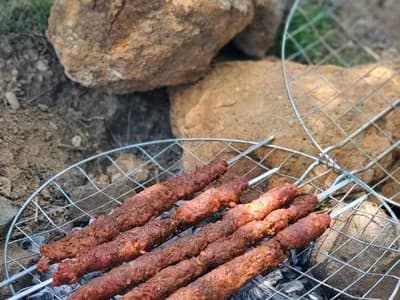
The question is never how to season it, but why it falls off the skewer. The answer is fat, a hand-chopped grain and real kneading: juicy lamb that holds together over direct fire.
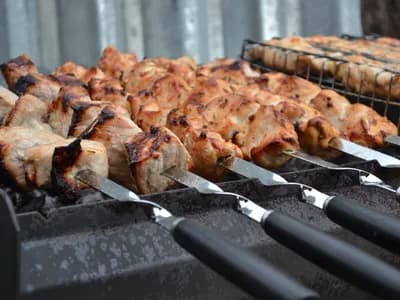
Pork Neck Shashlik on the Kamado, Onion Marinade
The skewer of the Russian-speaking world, cooked as I make it on my Big Green Egg Large: pork neck in 3 cm cubes, a grated onion marinade with not a drop of vinegar, and twenty minutes of steady direct fire.
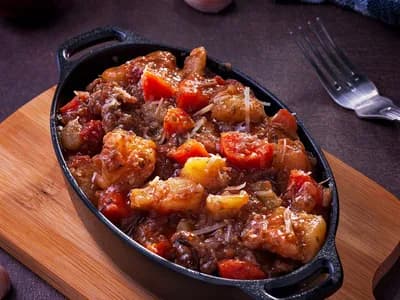
Beef Cheeks in Red Wine, Braised in a Dutch Oven on the Kamado
Three hours of red wine, cast iron and a thread of olive-wood smoke your kitchen oven simply cannot make. The braise that justifies lighting the kamado in midwinter.
KEEP READING
Go deeper on this dish
- Recommended kamado
Kamado Bono Media 51 cm
A three-bone rib takes up a lot of room: the Kamado Bono Media is 51 cm according to its listing, room for two slabs over the deflector, which comes in its six-accessory bundle. Its 70-400 °C range comfortably covers the 120-125 °C this recipe needs. Honest drawback: it is not a premium brand with official European spares, and over 8-9 hours you still have to watch charcoal and vents; with two slabs, swap them round halfway to even out the heat.
- Editorial guide
How to light a kamado: the step-by-step method
No petrol, no weird tablets and no 45-minute waits. The cone method, airflow control and the mistakes that prevent 80% of the frustration.
- Glossary term
Oak
Mediterranean hardwood with balanced, long-burning smoke; the European brisket and beef standard.
- Related comparison
big green egg large vs kamado joe classic iii
The classic kamado matchup: the Big Green Egg Large, the indestructible pioneer with the widest accessory network, agai…