Recipe · Direct · Easy
Charcoal-Roasted Baba Ganoush on the Kamado, with Tahini and Pita
Whole aubergines on the coals until the skin chars: the flesh turns creamy and smoky, and with tahini, lemon, garlic and cumin it becomes the baba ganoush you scoop up with pita.
Season:Summer ·AutumnCuisine:Eastern Mediterranean
Quick answer
With the chamber at 250-280 °C and no deflector, put whole, pricked aubergines on the coals or on the grate very close, and turn them every 6-8 minutes for 25-35 minutes until the skin is black and the flesh collapses. Drain the flesh, chop it and mix with tahini, lemon, garlic and cumin. Always burp the lid.
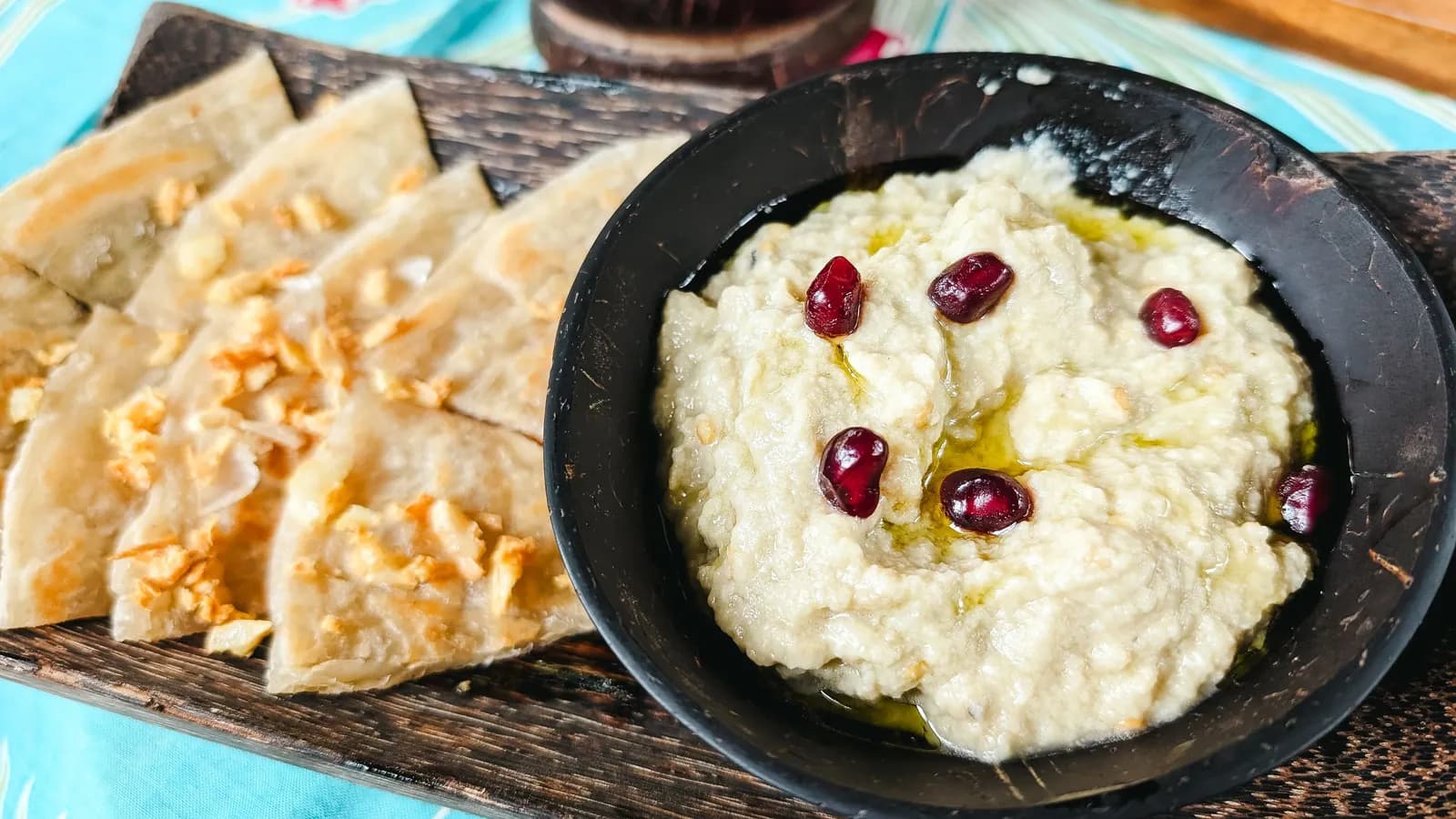
One big step at a time, screen kept on and built-in timers.
- Prep
- 25 min
- Cook
- 45 min
- Servings
- 6 servings
- Temperature
- 260 °C
What time do you want to eat?
Pick a time and we'll tell you when to start.
12:20
Start the prep
12:45
Light the kamado
13:05
Onto the kamado
14:00
Serve
Estimate: it includes lighting and settling the kamado plus a margin for large cuts. If the recipe asks you to marinate or salt ahead, add that time.
Fire setupDirect heat
- Dome
- 260 °C
- Deflector
- No
- Grate
- On the coals
- Bottom vent
- Half open
- Top vent
- Open
- Fuel
- Quebracho lump charcoal, full firebox
- Setup
- Ash rake and long tongs
Ingredients
- medium aubergines (about 1.2 kg), skin on4
- tahini (sesame paste)4 tbsp
- lemon, juiced (about 40-50 ml), plus optional zest1
- garlic clove, crushed with the salt1 clove
- ground cumin1 tsp
- fine salt, to taste1 tsp
- extra virgin olive oil, plus a splash to serve3 tbsp
- fresh parsley, chopped1 bunch
- sweet paprika or sumac, to sprinkleto taste
- pita breads, to serve6
Allergens
- Gluten
- Sesame
Based on the recipe's ingredients. Always check the label of every product you buy.
The gear for this recipe
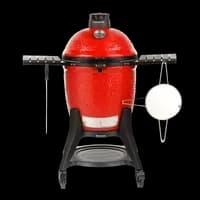 Kamado Joe Classic III 18"This recipe asks little of the kamado, just a chamber that reaches 250-280 °C on lump charcoal and sits the aubergine a few centimetres from the coals. The Kamado Joe Classic III is a mid-size ceramic kamado with plenty of room for three or four good-sized aubergines on the grate. At 46 cm across, there is no need to work in batches. Honest drawback: with no deflector and the lid opened every 6-8 minutes, you have to watch the draught, because the coals flare each time air gets in.
 Jealous Devil 100% White Quebracho lump charcoal 15.8 kgThe aubergine sits on or beside the charcoal, so the fuel is part of the flavour. Jealous Devil is quebracho blanco lump charcoal, a very dense wood, and the manufacturer describes it as low in ash with a long burn. Large lumps settle well and leave a steady bed to rest the aubergines on; the fine ash of a poor charcoal would end up stuck to the skin. Drawback: its listing quotes up to 1170 °F (about 630 °C), so with the bottom vent wide open it easily overshoots 280 °C; start closing the vents before you reach temperature.
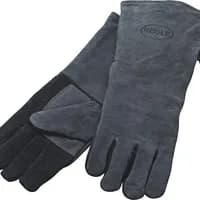 Rösle leather barbecue gloves: long, one sizeTurning aubergines over the coals means opening the kamado at 250-280 °C every 6-8 minutes and working with your hands near the rim. The Rösle gloves are leather, 41.5 cm long and universal size 24/XL according to their listing, so they also cover the wrist and part of the forearm against sparks and flare-ups. Drawback: the listing says they are not washable, and the leather gets marked with ash and grease, but for this job that is just what is needed.
 onlyfire F-FPA5069: 43 cm ash rake for kamadoCooking directly over the coals demands free air at the bottom: old ash blocks the bottom vent and the temperature will not climb. The onlyfire ash tool is 43.2 cm long, has an insulated wooden handle and is for raking ash out through the kamado's bottom door. In this recipe it is used before loading the charcoal and, once cold, to empty what has built up. Drawback: it is a long, simple piece, not a shovel, so clearing a lot of ash takes several passes.
Method
- 01
Prepare the aubergines
Wash and dry the aubergines and prick each one with a fork in three or four places; without those holes the steam inside can burst the skin as it heats. Do not peel or salt them: the whole skin is the vessel that is going to burn. Leave them at room temperature while you light the fire.
- 02
Light and clear the ash
Before loading, clear the old ash through the bottom door with the onlyfire ash tool, so air flows freely. Fill the firebox with lump charcoal and light it. With no deflector and the grate at its normal height, bring the kamado to 250-280 °C with the bottom vent open about three fingers and the top vent at three-quarters. Wait 15 minutes with the temperature steady.
- 03
Place the aubergines
With the Rösle leather gloves on, open by burping the lid: lift it about 5 cm, wait about 5 seconds, then open fully with your face turned away, because of the flare-up risk. Place the aubergines directly on the steadiest pieces of charcoal, or on the grate as close to the coals as possible, spaced apart. Close the lid.
- 04
Turn until charred
Every 6-8 minutes, open with burping and gloves and turn the aubergines a quarter turn with long tongs. Look for black, dry, wrinkled skin all round and flesh that gives when pressed: 25-35 minutes in total. If the skin catches in flame, close the bottom vent a little; it does not matter if it burns, but it must not be raw inside.
- 05
Remove and rest
Lift the aubergines out with the tongs, wearing gloves, into a bowl or dish. Cover with cling film or a plate and rest 10 minutes: the steam softens the flesh and loosens the skin. Meanwhile close both kamado vents to put out the coals or, if you are going to warm the pitas, leave the fire as it is.
- 06
Peel and drain
Split each aubergine and scoop the flesh out with a spoon, avoiding pieces of burnt skin, although a few black specks are normal and add flavour. Put it in a sieve for 10 minutes and press gently so it releases the bitter liquid.
- 07
Mix the dip
Chop the flesh with a large knife. In a bowl, beat the tahini with the lemon juice and the garlic crushed with salt until it turns pale. Add the aubergine, cumin and oil and mix with a fork. Taste and adjust salt and lemon.
- 08
Serve with pita
Spread the dip in a shallow bowl, make a well with the spoon and pour in oil. Sprinkle with paprika or sumac and parsley. Serve with warm pitas, heated a minute on the grate if the fire is still lit.
About this recipe
Baba ganoush (بابا غنوج) is the roasted aubergine dip of Levantine cooking, and its soul is smoke. An aubergine cooked in an oven comes out sweet and soft; one that has burned over live coals ends up with creamy flesh and a smoky depth you cannot get any other way. The kamado is a very good place to do it: the ceramic holds heat, lump charcoal gives a clean fire and the blackened skin acts as a natural wrapper, so smoke gets into the flesh without drying it out. It is a summer and early-autumn starter, when aubergines are at their best and you want something cool to scoop up with bread.
Aubergine straight on the coals
There is no deflector and no pot here: the whole aubergine, skin on and pricked in three or four places, goes straight onto the lit charcoal or onto the grate very close to the coals. This is direct cooking at its most aggressive. The chamber is taken to 250-280 °C with well-lit lump charcoal (if lighting is the doubtful part, the guide to lighting a kamado walks through it) and the aubergine is turned every 6-8 minutes until the skin is black and wrinkled and the flesh collapses when pressed, 25 to 35 minutes depending on thickness. Placed directly on the embers, the skin chars before the inside overcooks; on the grate without contact it takes a few minutes longer and the result is a little less smoky but easier to control. The difference between the two is covered in the guide to direct versus indirect cooking. One important point: use lump charcoal and not briquettes, because binders and ash stick to the skin and taste chemical if any bit of skin ends up in the dip.
Tahini, lemon, garlic and cumin
The dip is made with very little: drained aubergine flesh, tahini (sesame paste, found in Spain in big supermarkets, health-food shops and Arab groceries), lemon juice, garlic and ground cumin. The flesh is drained for ten minutes in a sieve because aubergine gives off a lot of bitter liquid, and if it is not drained the dip turns watery. Chop it with a knife rather than blitzing it completely: good baba ganoush keeps strands, it is not a blender purée. The garlic, very little and raw, is crushed with salt so it does not bite too much; the tahini is beaten first with the lemon and garlic until it turns pale and binds, and then the aubergine goes in. Adjust salt and lemon to taste, because every tahini is different: some are more bitter and ask for more acidity. To serve, a splash of good extra virgin olive oil, paprika or sumac if you have it, and chopped parsley.
Pita bread and what else to serve
Baba ganoush asks for warm bread. If you also want to bake the bread on the same fire, the recipe for pita bread on the kamado with a stone uses the same hot chamber: aubergine first, then the stone. Otherwise, supermarket pitas warmed a minute on the grate do the job. For a fuller table, the dip goes well with the kamado escalivada, with grilled vegetables and a little lamb. It keeps covered in the fridge for up to three days, better with a thread of oil on top; take it out a while beforehand so the tahini is not stiff.
In 30 seconds
Whole, pricked aubergines straight on the coals or very close, chamber at 250-280 °C, turned every 6-8 minutes for 25-35 minutes until the skin is black and the flesh collapses. Burp the lid and wear gloves. Drain the flesh for ten minutes, chop it and mix with tahini, lemon, garlic and cumin. Serve with pita and oil.
Will it fit your kamado?
Small
33-40 cm · Joe Jr, MiniMax
Fits
The 4 aubergines probably fit together on the coals, a little tighter.
Medium
46-51 cm · Classic, Large
Fits
The 4 aubergines fit well spaced on the coals.
Large
56-61 cm · Big Joe, XL
Fits
Room to spare: double the aubergines could be charred.
What to serve with it
Sides
- Freshly baked pita bread
- Cucumber, carrot and radish sticks
- Wine
- Rosé from Navarra or white Verdejo from Rueda
- Beer
- Pale ale or lager
- Alcohol-free
- Mint lemonade
Leftovers and storage
- In the fridge
- Airtight, with a film of oil on top, chilled within 2 hours: 3-4 days.
- Freezing
- Does not freeze well: the tahini splits and the dip turns watery when thawed.
- Reheating
- Not reheated: serve it cold or 20 minutes out of the fridge, stirred, with fresh oil.
- Using them up
- Spread in a roasted-vegetable sandwich or as the base of a chicken wrap.
Cool and refrigerate within 2 hours. When in doubt, throw it out.
Editor's tips
- The blacker the skin, the more smoke in the flesh, but separate the burnt part: a piece of charred skin that ends up in the dip adds bitterness. When in doubt, remove more.
- Do not whizz the dip to a purée: a knife and a fork leave strands and the result is closer to the original. If you want it smoother, pulse just two or three times.
- It is a good moment to use the fire: after the aubergines you can roast peppers or warm the pitas. The escalivada uses the same burnt-skin logic.
- With aubergines straight on the coals, do not leave them alone long: charcoal shifts and an aubergine can drop between lumps. Better to turn them often.
Gear for this recipe
As an Amazon Associate, mikamado.es earns from qualifying purchases. At no extra cost to you.
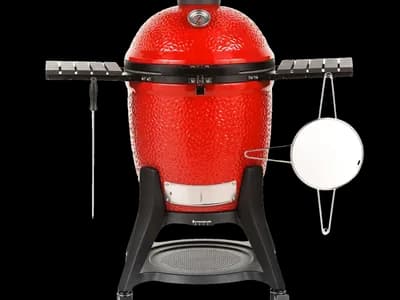
Kamado Joe Classic III 18"
This recipe asks little of the kamado, just a chamber that reaches 250-280 °C on lump charcoal and sits the aubergine a few centimetres from the coals. The Kamado Joe Classic III is a mid-size ceramic kamado with plenty of room for three or four good-sized aubergines on the grate. At 46 cm across, there is no need to work in batches. Honest drawback: with no deflector and the lid opened every 6-8 minutes, you have to watch the draught, because the coals flare each time air gets in.
€2,399

Jealous Devil 100% White Quebracho lump charcoal 15.8 kg
The aubergine sits on or beside the charcoal, so the fuel is part of the flavour. Jealous Devil is quebracho blanco lump charcoal, a very dense wood, and the manufacturer describes it as low in ash with a long burn. Large lumps settle well and leave a steady bed to rest the aubergines on; the fine ash of a poor charcoal would end up stuck to the skin. Drawback: its listing quotes up to 1170 °F (about 630 °C), so with the bottom vent wide open it easily overshoots 280 °C; start closing the vents before you reach temperature.
€234
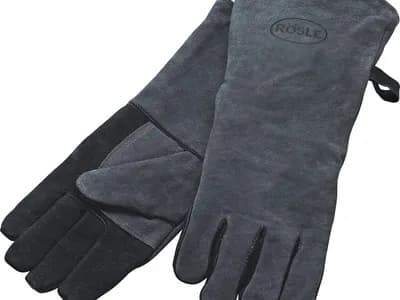
Rösle leather barbecue gloves: long, one size
Turning aubergines over the coals means opening the kamado at 250-280 °C every 6-8 minutes and working with your hands near the rim. The Rösle gloves are leather, 41.5 cm long and universal size 24/XL according to their listing, so they also cover the wrist and part of the forearm against sparks and flare-ups. Drawback: the listing says they are not washable, and the leather gets marked with ash and grease, but for this job that is just what is needed.
€22
onlyfire F-FPA5069: 43 cm ash rake for kamado
Cooking directly over the coals demands free air at the bottom: old ash blocks the bottom vent and the temperature will not climb. The onlyfire ash tool is 43.2 cm long, has an insulated wooden handle and is for raking ash out through the kamado's bottom door. In this recipe it is used before loading the charcoal and, once cold, to empty what has built up. Drawback: it is a long, simple piece, not a shovel, so clearing a lot of ash takes several passes.
€20
Have you made it?
Tell us how it turned out on your kamado. We review every rating before publishing it.
No published ratings yet. Be the first!
FAQ
Can you make baba ganoush in a small kamado?
Yes, and it is one of the best options: there is no pot and no deflector, just the aubergine on the coals. A 33-34 cm kamado takes two or three aubergines at a time; if you have more, do two batches and keep the first ones covered, which holds the heat.
How do I know the aubergine is done?
The skin is black and wrinkled, the aubergine collapses completely when pressed with the tongs and gives off juice. If it is still firm inside, it needs more time; if the stem gives, it is ready. Between 25 and 35 minutes, depending on thickness.
What can I use if I have no tahini?
Without tahini the dish changes name: the version with oil, lemon and garlic instead is a roasted aubergine salad or purée, good but different. You can use unsweetened peanut butter in a small amount, but the flavour differs. The best answer is to buy tahini, which keeps for months in the pantry.
Can it be made with the kamado at a lower temperature?
Yes, at 200 °C it takes about 45 minutes and the result is softer and less smoky. The skin wrinkles but does not char in the same way. At 250 °C or more the smoke reaches the flesh before it overcooks.
How long does baba ganoush keep, and can it be frozen?
Up to three days in the fridge, covered with a thread of oil. Frozen, the texture changes and it weeps water on thawing, so it is not recommended.
More kamado recipes
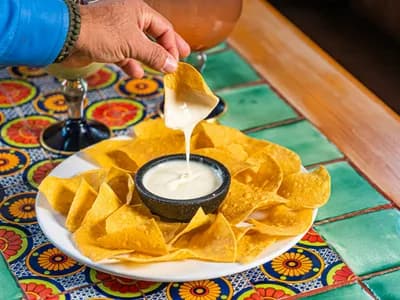
Smoked Loaded Nachos on the Kamado
The ultimate sharing starter: layers of tortilla chips, melted cheese, beans and jalapeños in a cast-iron pan, kissed by 10-12 minutes of gentle olive-wood smoke and topped with fresh pico de gallo.
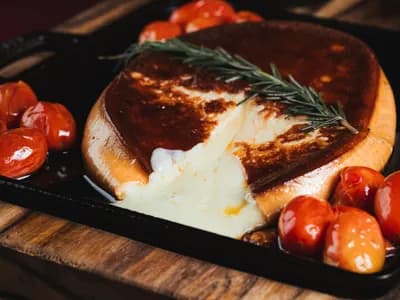
Grilled provolone on the kamado with tomato, oregano and olive oil, in a cast-iron skillet
Argentine-style provoleta over direct heat: a wheel of provolone in a cast-iron skillet at 230°C until you get a golden crust and a molten centre. Tomato, oregano, olive oil and bread. A starter in 12 minutes. Serves 4.
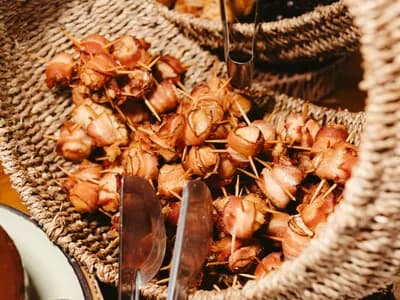
Bacon-Wrapped Dates on the Grill
The sweet-and-savory bite that vanishes first: Medjool dates stuffed with blue cheese, hugged in crisp bacon and lacquered with Pedro Ximénez, caramelized over the kamado's direct fire.
KEEP READING
Go deeper on this dish
- Recommended kamado
Kamado Joe Classic III 18"
This recipe asks little of the kamado, just a chamber that reaches 250-280 °C on lump charcoal and sits the aubergine a few centimetres from the coals. The Kamado Joe Classic III is a mid-size ceramic kamado with plenty of room for three or four good-sized aubergines on the grate. At 46 cm across, there is no need to work in batches. Honest drawback: with no deflector and the lid opened every 6-8 minutes, you have to watch the draught, because the coals flare each time air gets in.
- Editorial guide
How to light a kamado: the step-by-step method
No petrol, no weird tablets and no 45-minute waits. The cone method, airflow control and the mistakes that prevent 80% of the frustration.
- Glossary term
Heat deflector
Ceramic plate placed between the coals and the grate to turn direct fire into indirect cooking.
- Related comparison
big green egg large vs kamado joe classic iii
The classic kamado matchup: the Big Green Egg Large, the indestructible pioneer with the widest accessory network, agai…