Recipe · Direct · Easy
Galician-Style Gratinated Scallops on the Kamado, in the Shell over a Hot Fire
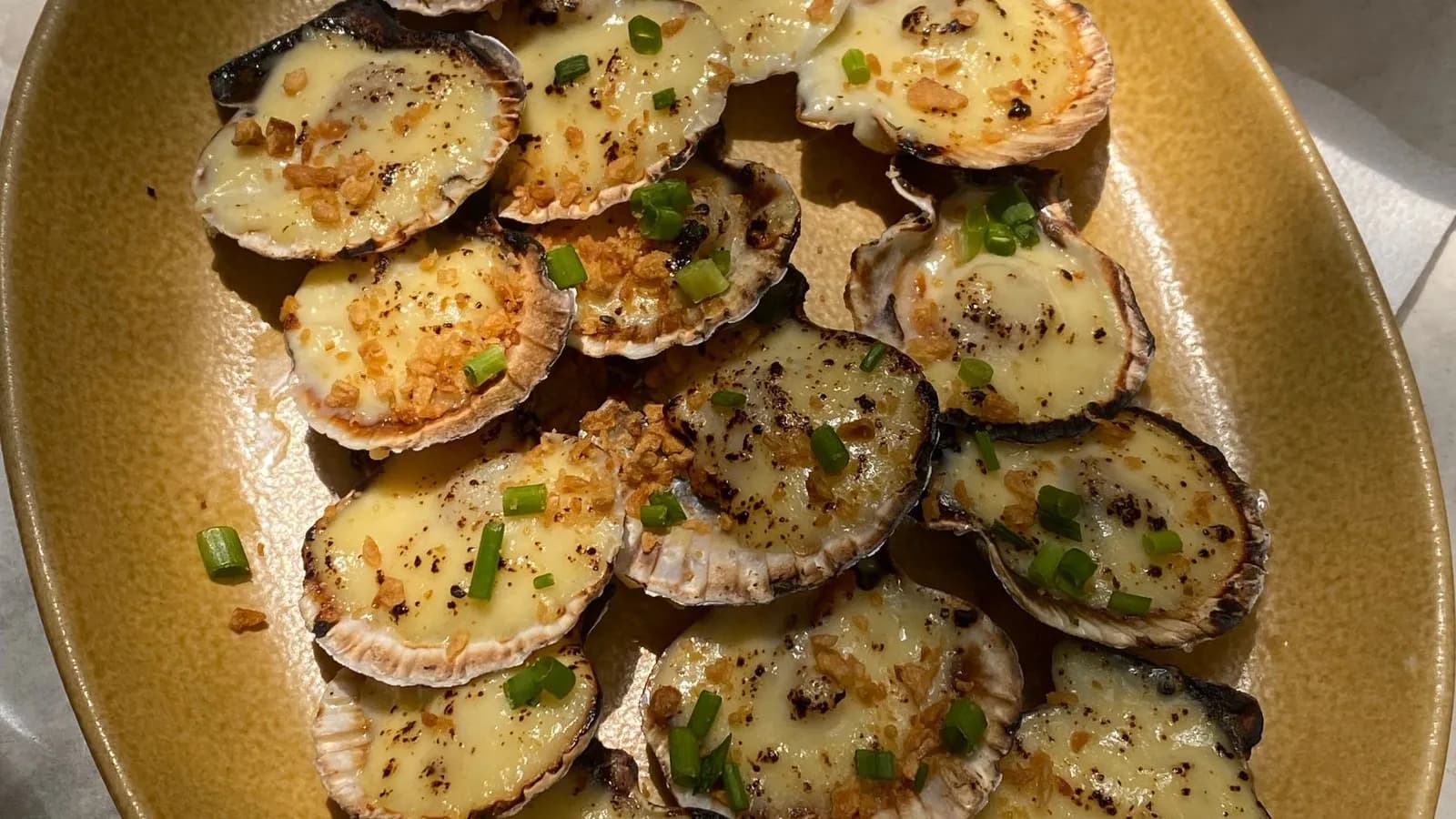
Galicia's Christmas Eve starter, no grill element needed: the kamado dome at 240 °C finishes browning the crumb and the onion, ham and white wine filling from above while the coals heat the shell from below.
Quick answer
Fill each scallop in its shell with softened onion, ham and reduced white wine, cover with toasted breadcrumbs and prop the shells on crumpled foil. Gratinate on the kamado over direct heat at 230-250 °C, lid closed, 6-8 minutes (4-5 if small), until just opaque, 55-60 °C in the centre.
- Prep
- 30 min
- Cook
- 35 min
- Servings
- 4 servings
- Temperature
- 240 °C
Ingredients
- large fresh, cleaned scallops (vieiras) on the deep shell (or 16 frozen on the half shell)8 ud
- onion300 g
- jamón serrano (Spanish cured ham), finely diced80 g
- dry Galician white wine (albariño or ribeiro)100 ml
- garlic cloves2 ud
- sweet paprika (pimentón dulce)1 cdta
- breadcrumbs40 g
- fresh parsley, chopped10 g
- extra virgin olive oil5 cda
- coarse salt (to stand the shells on when serving; optional)500 g
The gear for this recipe
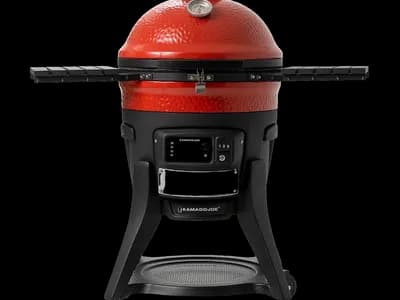
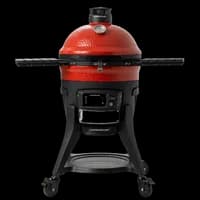 Kamado Joe Konnected JoeThis gratin asks two things of a kamado: a ceramic dome that gives heat back by radiation onto the breadcrumbs and a grate with room for the propped shells. The Kamado Joe Konnected Joe has a ceramic body and a 46 cm grate, the diameter of the Classic, where 8 scallops of 12-13 cm just fit and the 16 small ones fit with room to spare. Its fan and digital control light themselves and hold the 240 °C setpoint without touching the vents: they matter here because the recipe opens the lid twice (assembling and checking) and each opening cools the dome that browns the crumb; the controller brings the chamber back to 240 °C so you do not have to work the vents with the shells on the grate. What does the gratinating is the ceramic of the dome with the lid closed.
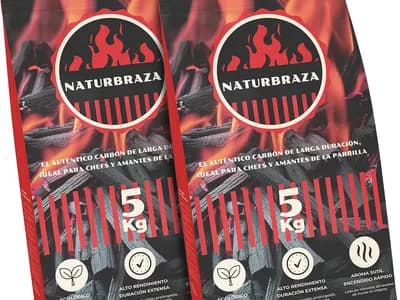
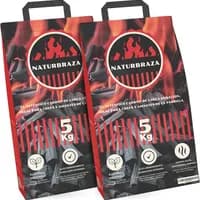 NaturBraza marabu charcoal, pack of two 5 kg bags (10 kg)The gratin is short, but it demands a stable chamber at 230-250 °C and coals lit evenly, because the shell takes heat directly from below and a cooler side leaves raw scallops next to overdone ones. NaturBraza marabú charcoal is very dense wood, and the manufacturer's listing promises long-lasting embers and little ash. In this recipe that means a full firebox, with no basket, holds the temperature for a second batch too, with no topping up while the shells are on the grate. Before you put them on, let the white lighting smoke clear: scallops are delicate.
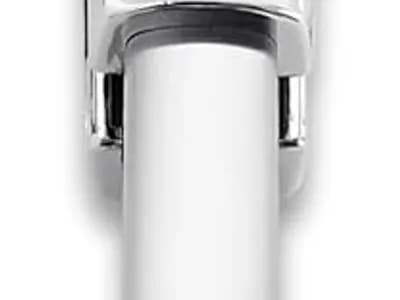
 Weber Precision Tongs 46 cm (6760)A shell full of bubbling filling is slippery, has no handle and tips easily. The Weber Precision 46 cm tongs let you take it by the rim with your hand well away from the coals, with the chamber at 240 °C, and they also place the foil rings on the grate and remove them afterwards. Length counts in a kamado: the grate sits sunk inside the ceramic and, to reach the shells at the back, you have to reach over the others. At 46 cm, the same measure as the grate, you reach them without resting your forearm on the hot rim or brushing the shells with your gloves.
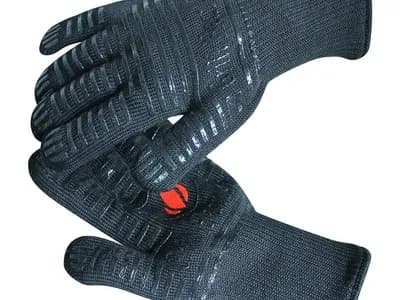
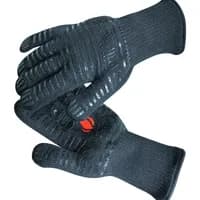 Grill Heat Aid – Heat-Resistant Aramid/Kevlar BBQ GlovesThe recipe opens the lid two or three times with the chamber at 230-250 °C, close to the 250 °C mark above which the risk of flare-up rises, and every opening is a burp: lift the lid about 5 cm, wait about 5 seconds and open, with your hands beside the gap the hot air escapes through. The Grill Heat Aid gloves are aramid, the Kevlar fibre, and protect the hands in that manoeuvre and when moving the grate if you do a second batch. Their limit matters too: they are fabric, and soaked in scallop juice they let heat through as steam. Hence the clear split of jobs: dry gloves for the lid and the grate, tongs for the shells.
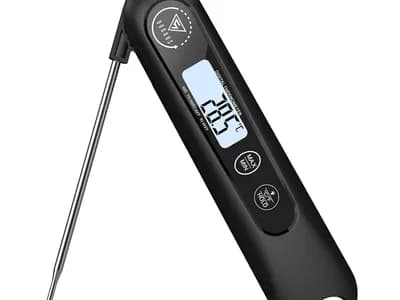
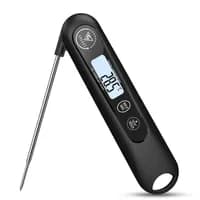 DOQAUS instant-read thermometer, folding probe, 3-second readThis recipe is decided by degrees: the scallop is juicy at 55-60 °C in the centre and rubbery a few degrees above, and the muscle is only 2-3 cm thick. The DOQAUS instant-read thermometer has a thin folding probe, and the manufacturer's listing gives a reading in 3 seconds. The thin probe lets you go into the scallop horizontally, from the side, without touching the hot shell, which would skew the reading. The fast reading means the lid is open only briefly before you close it again, so the heat of the dome does not escape. If pregnant women, small children or immunocompromised people are eating, it is also how you confirm the 63 °C.
Method
- 01
Prepare the scallops
If the fresh ones come closed in both valves (already eviscerated by the seller, as they are sold in Galicia), slide a thin knife along the flat valve, cut the muscle free and keep the deep shell. Keep the white muscle and the coral; trim off any frill left behind. Wash the shells and dry them. If you are using frozen scallops on the half shell, thaw them overnight in the fridge on a rack. Pat the flesh dry with kitchen paper: thaw water floods the filling.
- 02
Soften the filling
Finely dice the onion and soften it in a frying pan with 3 tablespoons of oil over a low heat for about 20 minutes, until soft and golden. Add the chopped garlic for 1 minute and the ham for 2 more. Take off the heat, stir in the paprika, return to the heat, add the wine and reduce for 3-4 minutes until almost no liquid is left. Separately, toast the breadcrumbs with 1 tablespoon of oil for 2 minutes and mix in the parsley.
- 03
Light for direct heat
While the onion softens, fill the firebox of the Kamado Joe Konnected Joe, which has no charcoal basket, with NaturBraza marabú charcoal (marabú is a tropical shrub with very dense wood) up over the automatic igniter, and set the grate in place with no deflector. Light it with the automatic ignition and set 240 °C on the controller; with the lid closed, wait for the white lighting smoke to clear. From then on the fan brings the chamber back to 240 °C after every opening (there are two here: assembling and checking).
- 04
Fill the shells
Place a scallop with its coral in each deep shell, season lightly and cover it with a heaped spoonful of the cooled filling, enough to hide it completely, so the flesh is not hit directly by the dome's heat. Finish with the toasted breadcrumbs and a drizzle of oil. You can leave them assembled in the fridge for up to 1 hour and take them out a few minutes before gratinating.
- 05
Prop the shells
Make one ring of crumpled aluminium foil per shell, about the size of a clenched fist, so each shell sits on the grate without rocking. Eight 12-13 cm shells just fit on a 46 cm grate; if yours are bigger or will not sit flat, gratinate in two batches of 4. The 16 small frozen ones fit with room to spare. Also prepare a dish of coarse salt, which will make a stable base for carrying the shells to the table.
- 06
Gratinate
Burp the lid first: lift it about 5 cm, wait about 5 seconds and open it fully, wearing the Grill Heat Aid gloves and keeping your face turned away. With the Weber Precision 46 cm tongs, set the rings on the grate and the shells on top, holding them by the rim. Close and gratinate without opening for 6-8 minutes for large scallops and 4-5 for small ones: every opening lets out the heat from the dome that browns the crumb.
- 07
Check and serve
Burp again and look: the filling bubbles at the edge and the crumb is golden. Slide the DOQAUS instant-read thermometer into a scallop from the side: 55-60 °C in the centre, or 63 °C if pregnant women, small children or immunocompromised people are eating. If it is short, close the lid for 1 more minute. Move the shells with the tongs to the dish of coarse salt, wait 1 minute because the shell is scorching, and serve with bread for the juices.
About this recipe
Gratinated scallops (vieiras gratinadas) are the Christmas Eve starter across much of Galicia: the scallop in its shell, a filling of softened onion, ham and white wine, a layer of breadcrumbs and a few minutes of fierce heat from above. At home they go in the oven under the grill element. The kamado gets the same result without one, provided you respect two things: the scallop is set, not cooked, and the shell has to stay put. This is not a variant of Galician-style octopus or of red prawns on the coals: a different shellfish and a different technique, gratinating.
The dome does the work of an oven grill
A kitchen oven gratinates with an element in the roof. The kamado has none, but at 230-250 °C over direct heat, with no heat deflector, the ceramic of the dome stores heat and gives it back by radiation onto the tops of the shells. At the same time the coals beneath heat the shell, which acts as a little dish and cooks the scallop from below. It is a two-sided gratin: the breadcrumbs, which go in already toasted, finish browning through the Maillard reaction while the filling bubbles at the bottom. That is why the lid stays closed throughout; open, the heat from above escapes, only the coals work and the crumb comes out pale. In a 46 cm kamado such as the Kamado Joe Konnected Joe, the grate takes eight 12-13 cm shells with no room to spare; if yours are nearer 15 cm, do them in two batches of 4. The guide to direct and indirect cooking explains when the deflector is surplus to requirements, and this is one of those cases.
Fresh or frozen, scallop or zamburiña
The Galician vieira (Pecten maximus, the king scallop) is the big one: the shell reaches about 15 cm, with one flat valve and one deep one, and the deep one is the one you fill. Fresh, it is sold cleaned, with the white muscle and the orange coral (roe), because the digestive gland, the part that accumulates marine toxins such as domoic acid, is removed before sale. Harvesting depends on checks by INTECMAR, the Xunta de Galicia body that monitors those toxins in the water, so there are weeks with no fresh scallops. If someone offers you whole, uncleaned Galician scallops, be wary.
Most frozen scallops on the half shell are a different species, the Peruvian (Pacific) scallop (Argopecten purpuratus), farmed in Peru and Chile: smaller, with less meat and a shell of about 5-7 cm. They gratinate well, but need less time, thawing in the fridge and a thorough drying. The zamburiña (Mimachlamys varia, the variegated scallop) is something else: a pectinid no more than 6 cm across, with a stronger flavour, cooked on the plancha (griddle) in a couple of minutes. Many frozen "zamburiñas" are in fact Peruvian scallops; the label has to carry the scientific name, and that is where you can tell.
Just set, never overcooked
A scallop goes from juicy to rubbery very quickly. It is ready when the edge has turned opaque white and the centre has only just lost its sheen, at 55-60 °C on an instant-read thermometer; if pregnant women, small children or immunocompromised people are eating, use the reference of the US Food and Drug Administration (FDA): 63 °C, or opaque, firm flesh. To get there without overcooking, the filling is made beforehand and the breadcrumbs go in already toasted, so the kamado minutes only have to set the scallop and brown the top. Two safety details complete the dish. Prop the shells on rings of crumpled aluminium foil: a shell that tips pours juice and oil onto the coals. And open the lid with burping: lift about 5 cm, wait about 5 seconds, then open fully, wearing gloves and keeping your face turned away.
In 30 seconds
Scallop in its shell with softened onion, ham and reduced white wine, and toasted breadcrumbs on top. Kamado over direct heat at 230-250 °C with no deflector, shells propped on foil, lid closed 6-8 minutes (4-5 for small frozen ones) and out when just opaque, at 55-60 °C. Burp the lid every time you open it.
Editor's tips
- Keep the gloves dry, always. A fabric glove soaked in scallop juice lets heat through in the form of steam. Split the jobs: gloves for the lid and the grate, tongs for the shells.
- If the crumb comes out pale, do not stretch the time in the kamado: the scallop would overcook before the crumb browns. Toasting the breadcrumbs in the pan before assembling is what guarantees the colour.
- Cook with the same white you are going to serve, an albariño or a ribeiro. Reduced almost to dryness, it adds flavour without leaving the filling sharp or watery.
- Do not throw away the coral: in the Galician recipe it stays attached to the muscle and goes inside the shell. The deep shells, washed, make little dishes for next time.
Gear for this recipe
As an Amazon Associate, mikamado.es earns from qualifying purchases. At no extra cost to you.
Kamado Joe Konnected Joe
This gratin asks two things of a kamado: a ceramic dome that gives heat back by radiation onto the breadcrumbs and a grate with room for the propped shells. The Kamado Joe Konnected Joe has a ceramic body and a 46 cm grate, the diameter of the Classic, where 8 scallops of 12-13 cm just fit and the 16 small ones fit with room to spare. Its fan and digital control light themselves and hold the 240 °C setpoint without touching the vents: they matter here because the recipe opens the lid twice (assembling and checking) and each opening cools the dome that browns the crumb; the controller brings the chamber back to 240 °C so you do not have to work the vents with the shells on the grate. What does the gratinating is the ceramic of the dome with the lid closed.
€3,140
NaturBraza marabu charcoal, pack of two 5 kg bags (10 kg)
The gratin is short, but it demands a stable chamber at 230-250 °C and coals lit evenly, because the shell takes heat directly from below and a cooler side leaves raw scallops next to overdone ones. NaturBraza marabú charcoal is very dense wood, and the manufacturer's listing promises long-lasting embers and little ash. In this recipe that means a full firebox, with no basket, holds the temperature for a second batch too, with no topping up while the shells are on the grate. Before you put them on, let the white lighting smoke clear: scallops are delicate.
€47
Weber Precision Tongs 46 cm (6760)
A shell full of bubbling filling is slippery, has no handle and tips easily. The Weber Precision 46 cm tongs let you take it by the rim with your hand well away from the coals, with the chamber at 240 °C, and they also place the foil rings on the grate and remove them afterwards. Length counts in a kamado: the grate sits sunk inside the ceramic and, to reach the shells at the back, you have to reach over the others. At 46 cm, the same measure as the grate, you reach them without resting your forearm on the hot rim or brushing the shells with your gloves.
€33
Grill Heat Aid – Heat-Resistant Aramid/Kevlar BBQ Gloves
The recipe opens the lid two or three times with the chamber at 230-250 °C, close to the 250 °C mark above which the risk of flare-up rises, and every opening is a burp: lift the lid about 5 cm, wait about 5 seconds and open, with your hands beside the gap the hot air escapes through. The Grill Heat Aid gloves are aramid, the Kevlar fibre, and protect the hands in that manoeuvre and when moving the grate if you do a second batch. Their limit matters too: they are fabric, and soaked in scallop juice they let heat through as steam. Hence the clear split of jobs: dry gloves for the lid and the grate, tongs for the shells.
€93
DOQAUS instant-read thermometer, folding probe, 3-second read
This recipe is decided by degrees: the scallop is juicy at 55-60 °C in the centre and rubbery a few degrees above, and the muscle is only 2-3 cm thick. The DOQAUS instant-read thermometer has a thin folding probe, and the manufacturer's listing gives a reading in 3 seconds. The thin probe lets you go into the scallop horizontally, from the side, without touching the hot shell, which would skew the reading. The fast reading means the lid is open only briefly before you close it again, so the heat of the dome does not escape. If pregnant women, small children or immunocompromised people are eating, it is also how you confirm the 63 °C.
€8
FAQ
How long do scallops take to gratinate?
On the kamado, over direct heat at 230-250 °C with the lid closed, 6-8 minutes for large scallops and 4-5 for small frozen ones. In an oven with an overhead grill, the time depends on the power and the distance from the element, so trust the doneness more than the clock: filling bubbling, crumb golden and the scallop just opaque, 55-60 °C in the centre. Going past that makes it rubbery.
Can you gratinate frozen scallops without thawing them?
It is not advisable. From frozen, the breadcrumbs brown before the centre warms through and the ice melts inside the shell, flooding the filling. Thaw them overnight in the fridge on a rack so they drain, and dry them with kitchen paper before assembling. The ones sold on the half shell are usually Peruvian scallops, which are smaller: give them 4-5 minutes at 230-250 °C.
What is the difference between a vieira and a zamburiña?
The vieira (Pecten maximus, the king scallop) is large, with a shell of up to about 15 cm, one flat valve and one deep one. The zamburiña (Mimachlamys varia, the variegated scallop) is no more than 6 cm, has a more oval shell and a stronger flavour. Many frozen "zamburiñas" are really Peruvian scallops (Argopecten purpuratus), farmed in Peru and Chile; the scientific name on the label tells you which one you are buying.
Do Galician-style scallops have béchamel or cheese?
The traditional recipe relies on softened onion, ham, white wine and breadcrumbs, with no béchamel or cheese. Both versions are common at home and work on the kamado: a spoonful of thick béchamel over the onion mixture, or a little grated cheese that melts well, such as tetilla (a mild Galician cow's-milk cheese), over the crumb. Cheese browns quickly at 240 °C: take 1 minute off the time (5-7 for large ones) and burp the lid when you open it.
What internal temperature should a scallop reach?
For a juicy scallop, 55-60 °C in the centre: edge opaque white and the heart just set. For shellfish the US FDA gives 63 °C, or opaque, firm flesh, and that is the reference to use if pregnant women, small children or immunocompromised people are eating. Measure by inserting an instant-read thermometer from the side, so the hot shell does not skew the reading.
More kamado recipes
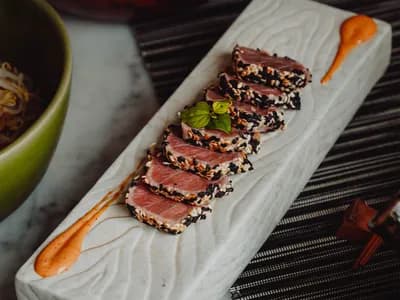
Sesame-Crusted Seared Bluefin Tuna on the Kamado (Tataki)
A bluefin tuna loin rolled in sesame and seared 30-45 seconds per side over a screaming-hot kamado: a toasted crust outside, a raw, juicy core, and a soy, ginger and lime sauce that wakes it all up.
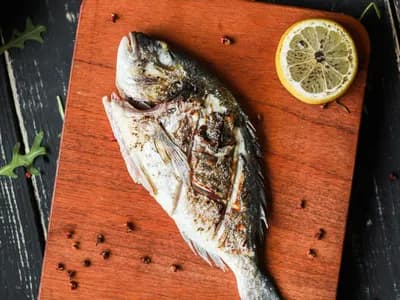
Butterflied sea bream on the kamado, with garlic, chilli and lemon refrito
Sea bream butterflied open over direct coals, skin down first, finished with a hot garlic, chilli and lemon refrito. Mediterranean fish off Torrevieja, ready in 18 minutes. Serves 2.
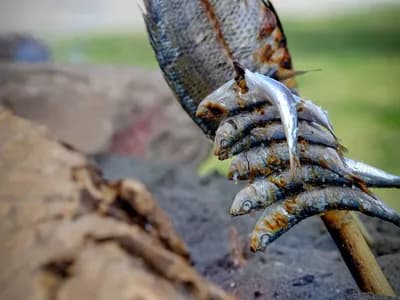
Skewered Sardines al Espeto on the Kamado
The icon of the Mediterranean summer at home: fresh sardines with coarse salt, roasted by the side heat of the kamado's embers without touching the grate. Charred skin, juicy flesh, bread and lemon.
KEEP READING
Go deeper on this dish
- Recommended kamado
Kamado Joe Konnected Joe
This gratin asks two things of a kamado: a ceramic dome that gives heat back by radiation onto the breadcrumbs and a grate with room for the propped shells. The Kamado Joe Konnected Joe has a ceramic body and a 46 cm grate, the diameter of the Classic, where 8 scallops of 12-13 cm just fit and the 16 small ones fit with room to spare. Its fan and digital control light themselves and hold the 240 °C setpoint without touching the vents: they matter here because the recipe opens the lid twice (assembling and checking) and each opening cools the dome that browns the crumb; the controller brings the chamber back to 240 °C so you do not have to work the vents with the shells on the grate. What does the gratinating is the ceramic of the dome with the lid closed.
- Editorial guide
How to light a kamado: the step-by-step method
No petrol, no weird tablets and no 45-minute waits. The cone method, airflow control and the mistakes that prevent 80% of the frustration.
- Glossary term
Heat deflector
Ceramic plate placed between the coals and the grate to turn direct fire into indirect cooking.
- Related comparison
kamado joe classic iii vs kamado joe konnected joe
Same Kamado Joe, two opposite philosophies. The Classic III is the classic kamado you light by hand and watch with your…