Recipe · Indirect · Medium
Galician-style octopus on the kamado
The classic Galician "á feira" octopus with a twist: after the traditional boil, the tentacles hit the hot kamado and pick up charcoal aroma.
Quick answer
Galician-style octopus on the kamado is first boiled for about 30-35 minutes for a 2 kg piece, unsalted, until a fork goes in without resistance. It then spends 5-7 minutes on the kamado at 200 °C indirect to crisp the skin, finished with smoked Pimentón de la Vera and a generous drizzle of oil.

One big step at a time, screen kept on and built-in timers.
- Prep
- 15 min
- Cook
- 60 min
- Servings
- 4 servings
- Temperature
- 200 °C
What time do you want to eat?
Pick a time and we'll tell you when to start.
12:05
Start the prep
12:20
Light the kamado
12:50
Onto the kamado
14:00
Serve
Estimate: it includes lighting and settling the kamado plus a margin for large cuts. If the recipe asks you to marinate or salt ahead, add that time.
Fire setupIndirect
- Dome
- 200 °C
- Deflector
- Yes
- Setup
- Deflector and clay dish
Temperature curve
0:38 h from lighting
Kamado dome
| # | From | Phase | Dome |
|---|---|---|---|
| 1 | 0:00 | Light the charcoalWhile the octopus is scared and boiled in the kitchen | 20 → 200 °C |
| 2 | 0:30 | Put the food in1 cm tentacle slices in a clay dish with the potatoes | 200 → 170 °C |
| 3 | 0:32 | Cook5-7 min for a gentle smoke | 170 → 195 °C |
| 4 | 0:38 | Serve | off |
0:00 is the moment you light the charcoal. Internal temperatures are the ones the recipe gives; without a probe, go by the times. Turn these times into clock times with the planner
For this recipe
Ingredients
- octopus, 2 kg raw, frozen for 48 h and thawed1
- Galician potato or cachelos500 g
- Pimentón de la Vera (equal sweet and hot)2 tbsp
- extra-virgin olive oil (Galician or picual)4 tbsp
- coarse salt1 tbsp
- bay leaf1 leaf
Another cut
Got a different cut? Here is how the recipe changes
For 4 people the recipe uses 1.5 kg of octopus: indirect at 150 °C, 1 h 30 min plus 10 min rest. If the shop had something else:
- CuttlefishBuy 1.5 kg
- Fire
- Direct · 260 °C
- Time
- 7 min
- Rest
- no rest
Light 1 h 45 min later
The closest in texture, but over direct heat at 260 °C with no long cook. Cleaned and opened, grilled until white and firm. Paprika and oil, as for the octopus.
- Large prawns (gambones)Buy 1.44 kg (24 pieces)
- Fire
- Direct · 250 °C
- Time
- 5 min
- Rest
- no rest
Light 1 h 45 min later
It becomes a different dish: grilled shellfish. Whole prawns, heads on, direct at 250 °C and very quick, until the flesh is opaque with a hint of raw in the centre.
Times are a guide, based on the How much to buy figures; follow the recipe first. Full fire plan for 4 people: Cuttlefish, Large prawns (gambones).
Allergens
- Molluscs
Based on the recipe's ingredients. Always check the label of every product you buy.
The gear for this recipe
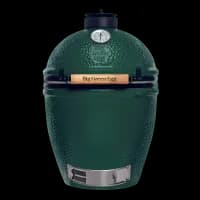 Big Green Egg LargeA comfortable size to brown the tentacles over the hot ceramic at 200 °C.
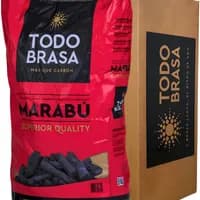 TODOBRASA Premium Marabú Charcoal 10 kgClean-burning marabú that gives the tentacles their charcoal aroma.
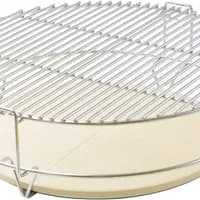 Onlyfire GCG-8552 Cooking System (2 grates + rack + 2 deflectors) for Large Kamado
Method
- 01
Scare the octopus
In a large pot of boiling water with bay leaf, dunk the octopus three times by the head (the "scare"). This curls and sets the legs.
- 02
Boil
Drop it in, lower to a gentle simmer and cook 30-35 minutes. Probe the thickest part — a skewer should slide in without resistance.
- 03
Cachelos
In the last 15 minutes add the peeled potatoes cut into thick slices to the same broth so they absorb the flavour.
- 04
Stabilise at 200°C
While the boil finishes, bring the kamado to 200°C indirect with the deflector.
- 05
Finish on the kamado
Cut the tentacles with scissors into 1 cm rounds. Arrange on a terracotta plate with the cachelos. Load the plate into the kamado for 5-7 min to pick up gentle smoke.
- 06
Dress
Pull the plate, sprinkle coarse salt, Pimentón de la Vera (half sweet, half hot) and dress with generous oil just before serving.
About this recipe
The base cook is still the pot: 30-35 min in boiling water. The kamado enters at the end, 200°C indirect, to finish with Pimentón de la Vera and a generous drizzle of oil.
Will it fit your kamado?
Small
33-40 cm · Joe Jr, MiniMax
Tight
A clay dish up to ~30 cm fits; for 4 servings, perhaps two 5-7 min batches.
Medium
46-51 cm · Classic, Large
Fits
The dish with octopus and potatoes fits in one go.
Large
56-61 cm · Big Joe, XL
Fits
Fits with room to spare; even two dishes at once.
What to serve with it
- Wine
- Albariño white from Rías Baixas or Ribeiro
- Beer
- Light, well-chilled lager
- Alcohol-free
- Sparkling water with lemon
Leftovers and storage
- In the fridge
- Cooked octopus: airtight within 2 h, 1-2 days in the fridge.
- Freezing
- Octopus freezes well for 2-3 months; the potatoes don't, they turn mealy. Never refreeze.
- Reheating
- In hot water or 3-5 min in the kamado at 180 °C until piping hot (74 °C); dress again.
- Using them up
- Cold octopus salad with pepper, onion and vinaigrette.
Cool and refrigerate within 2 hours. When in doubt, throw it out.
Leftover embers
You still have embers: what to do with the leftover heat
For 1 h at 200 °C in a classic kamado you load about 800 g of charcoal and burn 400 g: when you serve, about 380 g of live embers remain. Before you shut the vents, that is still enough for:
Without touching the vents
200 °Cdessert while you eat
1 h 20 minof embers
- Apple tarte Tatin in a dutch oven on the kamado, golden caramel45 min · 190 °C
- Kamado-roasted figs with goat cheese and honey7 min · 200 °C
- Cornbread in an Iron Skillet on the Kamado, with Brown Butter45 min · 200 °C
No recipe needed
- Yesterday's bread with oil and garlic, on the grate (10 min)
- Corn cobs in their husks (30 min)
- Whole apples with a slit in the skin (45 min)
Closing the vents almost fully and waiting for it to drop
100-130 °Ca short smoke
2 h 25 minof embers
- Hot-Smoked Whole Mackerel on the Kamado45 min · 120 °C
No recipe needed
- Coarse salt on a tray, with a wood chunk: smoked salt for months (1-2 h)
- Almonds or walnuts on a rack (45 min)
- Whole heads of garlic, for spreading (1 h)
Opening the vents almost fully
210-270 °Cgrilled vegetables
30 minof embers
- Grilled peaches with honey and vanilla ice cream on the kamado8 min · 210 °C
- Grilled provolone on the kamado with tomato, oregano and olive oil, in a cast-iron skillet12 min · 230 °C
- Coca de recapte on the kamado, escalivada and sardine25 min · 250 °C
No recipe needed
- Strips of courgette and aubergine, char-marked (5 min)
- Pita or naan from shop dough, on the grate (3 min each)
- Halved tomatoes, cut side down, for a sauce (10 min)
Before opening the lid, crack it open for a few seconds first; if you raise the heat, stir the ash so the coals can breathe. And if you are not going to use them: once the food is out, close the bottom and top vents. The charcoal that does not burn (about 380 g) can be used next time. Different size of kamado? Work out your load for 1 h 30 min of fire, lighting included.
History of the dish
- Origin
- Galicia (O Carballiño, Ourense); a Maragato origin (León) is disputed
- Period
- Medieval roots; O Carballiño octopus festival since 1962
- Where it is cooked today
- Fairs and pilgrimages in Galicia, El Bierzo, Maragatería, Sanabria, Aliste and La Carballeda; also on tapas menus across Spain.
Pulpo á feira is a festive Galician dish tied to inland fairs rather than to the ports. Turismo de Galicia traces this apparent paradox to the Middle Ages: octopus was part of the payment in kind received by the monastery of Oseira for its harbour holdings in the Rías Baixas, and the people of the parishes of San Xoán and Santa María de Arcos, in O Carballiño, were responsible for transporting, preparing and selling it at market.
The origin is nonetheless disputed. Some food researchers place it in the Maragatería district of León: its muleteers travelled north along the Vía de la Plata carrying paprika from Extremadura and olive oil from Andalusia, returning with sun-dried octopus that they rehydrated with that mixture. What endures is the technique: the octopus is boiled whole, usually in copper pots, then sliced and served on wooden plates with olive oil, coarse salt and paprika.
Since 1962, O Carballiño has held the Festa do Polbo every August, now a Festival of International Tourist Interest, where the pulpeiras of Arcos cook around 40,000 kilos. The dish appears at fairs in Galicia, El Bierzo, Maragatería, Sanabria, Aliste and La Carballeda, and has spread throughout Spain.
Sources
- Festa do Polbo en O Carballiño — Turismo de Galicia (Xunta de Galicia) (turismo.gal)
- Investigadores aseguran que el pulpo á feira no es en realidad gallego — El Debate (eldebate.com)
- Pulpo: Galicia's Atlantic treasure — Foods & Wines from Spain (ICEX) (foodswinesfromspain.com)
- Pulpo a la gallega — Wikipedia (apoyo; cita a Cunqueiro y Pascual) (es.wikipedia.org)
Editor's tips
- If you buy raw octopus, freeze it 48h beforehand — it breaks the fibres and saves the mallet.
- Paprika scorches easily — always add it off the heat.
Gear for this recipe
As an Amazon Associate, mikamado.es earns from qualifying purchases. At no extra cost to you.
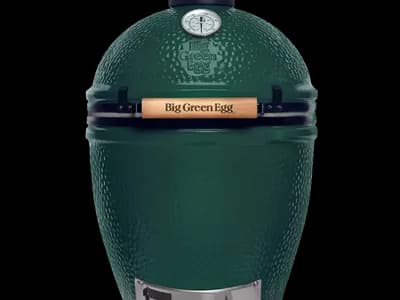
Big Green Egg Large
A comfortable size to brown the tentacles over the hot ceramic at 200 °C.
€2,099
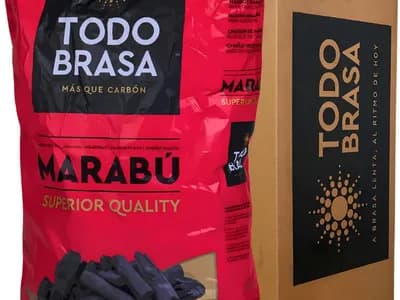
TODOBRASA Premium Marabú Charcoal 10 kg
Clean-burning marabú that gives the tentacles their charcoal aroma.
€49
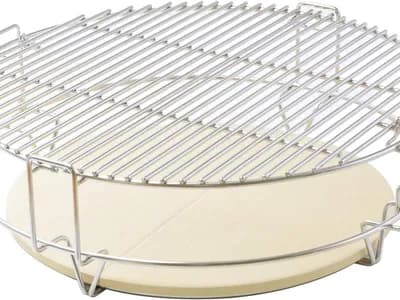
Onlyfire GCG-8552 Cooking System (2 grates + rack + 2 deflectors) for Large Kamado
€95
Have you made it?
Tell us how it turned out on your kamado. We review every rating before publishing it.
No published ratings yet. Be the first!
FAQ
Frozen or fresh octopus?
Frozen, almost always. Freezing breaks the fibres and skips the classic "scare-the-octopus" or hand-pounding step. Flavour is the same. If buying fresh, freeze it at home 48 hours and thaw in the fridge. Galician grandmother trick: three quick dips in boiling water before the cook. Same result.
How long do you boil before moving to the kamado?
30-35 minutes on gentle heat for a 2 kg piece, less if it is smaller. When a fork goes in without resistance, done. Turn off, rest 15 minutes in the water — finishes tenderising. No salt in the water: the octopus has its own sea-salt inside. An onion and a bay leaf for perfume, yes.
Why finish in the kamado if it is already cooked?
For the coals. The kamado at 200°C for the last 5-7 minutes browns the outer skin and adds a subtle smoke flavour the pot cannot give you. Call it Galician 2.0. Result: same tender inside, browned crust, smoke aroma. Real upgrade over the classic boiled version.
Can I make this recipe with a different cut instead of octopus?
No alternative keeps the octopus's long, low cook: cuttlefish and large prawns move to hot direct heat and are done in minutes. The dressing stays the same. The texture of the flesh decides, not the clock.
What do I do with the embers left after making Galician-style octopus on the kamado?
After 1 h at 200 °C in a classic kamado about 380 g of live embers remain: 1 h 20 min more at 200 °C without touching the vents, 2 h 25 min at 100-130 °C closing the vents or 30 min at 210-270 °C opening the vents. If you are not going to use them, close both vents and keep the charcoal for next time.
More kamado recipes
KEEP READING
Go deeper on this dish
- Recommended kamado
Big Green Egg Large
A comfortable size to brown the tentacles over the hot ceramic at 200 °C.
- Editorial guide
How to light a kamado: the step-by-step method
No petrol, no weird tablets and no 45-minute waits. The cone method, airflow control and the mistakes that prevent 80% of the frustration.
- Glossary term
Heat deflector
Ceramic plate placed between the coals and the grate to turn direct fire into indirect cooking.
- Related comparison
big green egg large vs kamado joe classic iii
The classic kamado matchup: the Big Green Egg Large, the indestructible pioneer with the widest accessory network, agai…