Recipe · Direct · Easy
Young Broad Beans Grilled in the Pod on the Kamado, with Coarse Salt and Mint
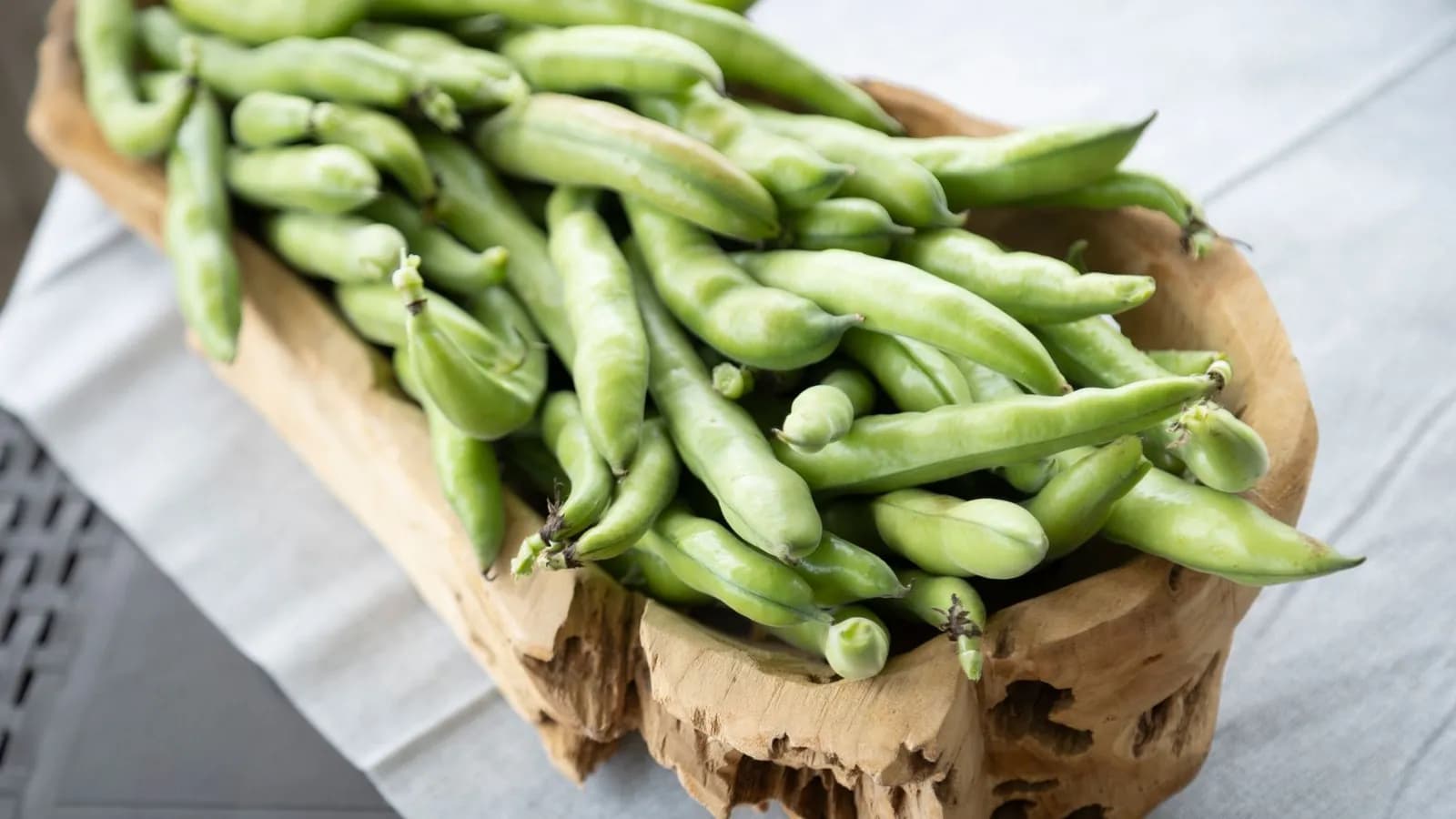
Young broad beans, pod and all, seared on cast iron at 300 °C until the skin blisters and the beans steam inside. Eat them with your fingers, with coarse salt and a pounded garlic and mint dressing. No podding, no boiling.
Quick answer
Wash and dry 1 kg of young broad beans in the pod. Heat the kamado to 300 °C with a cast iron skillet inside from lighting. Spread the pods in a single layer, lid closed, 4 minutes; turn with tongs and give them 3-4 minutes more until the skin blisters and blackens in patches. Dress with garlic, mint and oil pounded in a mortar, coarse salt and lemon.
- Prep
- 15 min
- Cook
- 35 min
- Servings
- 4 servings
- Temperature
- 300 °C
Ingredients
- young broad beans in the pod, green and small-seeded1 kg
- extra virgin olive oil60 ml
- garlic cloves2 ud
- fresh mint leaves (about 30 leaves)20 g
- coarse salt (10 g for the mortar, 5 g to finish)15 g
- black peppercorns1 cdta
- lemon (zest and juice)1 ud
- small dried guindilla chilli, optional1 ud
Method
- 01
Choose and dry the beans
Buy beans with green, smooth, pliable pods, 10 to 15 cm long, that bend without snapping and show the beans only faintly through the skin. If the pod is bulging, yellowing or cracks when you bend it, the beans are already floury and this recipe will not suit them. Rinse the pods under the tap, snip off the stalk and dry them completely with a cloth: surface water cools the iron and boils instead of toasting.
- 02
Light with the skillet inside
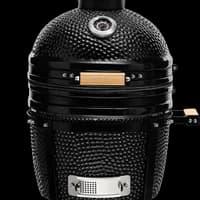
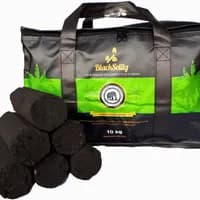
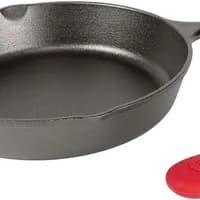
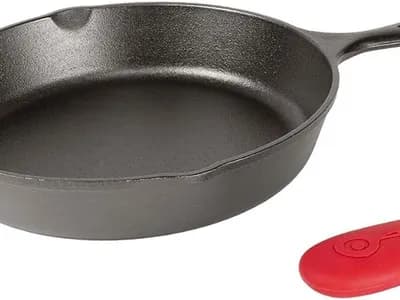
Half-fill the kamado's firebox with coconut briquettes, tuck a natural firelighter under three or four briquettes in the centre, light it and leave the lid open for ten minutes, until those briquettes have a grey edge. Set the grate in place and, on top of it, the cold 26 cm Lodge skillet, centred and with the silicone handle sleeve removed; check that the lid closes without touching the handle. Close it with both vents fully open and wait for the dome thermometer to read 300 °C: with briquettes allow 30-45 minutes, longer than with lump charcoal. The skillet comes up to temperature along with the cooker.
- 03
Pound the dressing
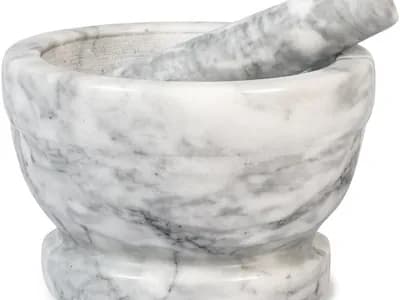
While the temperature climbs, put the peeled garlic cloves in the mortar with 10 g of coarse salt, the peppercorns and the chilli if you are using it, and pound to a paste. Add the mint leaves in two lots and keep pounding until they stain the mixture green. Work in the oil little by little, stirring with the pestle, and finish with the lemon zest. Keep the juice back for the end.
- 04
First batch, lid closed
At 300 °C, burp the kamado: open the lid five centimetres, count two seconds and open it fully. Spread a quarter of the pods over the dry skillet in a single layer, with no oil and no overlapping. Close the lid as soon as they are in place and leave them 4 minutes untouched. You will hear crackling inside: that is the water in the pods turning to steam against the iron.
- 05
Turn and finish
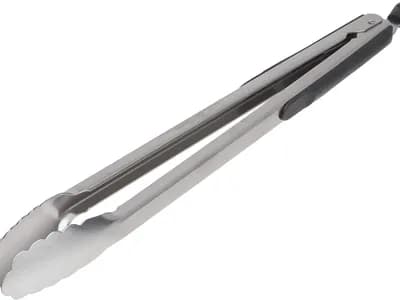
Open again with a burp and turn each pod with the long tongs. The side that was against the iron should show brown blisters and black patches; if it is still an even green, the skillet had not reached temperature. Close and give them 3-4 minutes more. A pod is ready when it puffs up, wrinkles and gives when you squeeze it with the tongs. Move them to a serving dish and cover with a cloth.
- 06
Repeat the batches
Repeat with the rest of the beans in three more batches, leaving the lid closed for a minute between them so the skillet recovers its temperature. In all, 1 kg of beans means about 35 minutes of cooking. If the skillet starts to smoke with a burnt smell, push the scraps of skin to one side with the tongs before the next batch; never cool it with water.
- 07
Dress in the hot skillet
With the last batch out, close the bottom vent and the top vent completely so the briquettes start to die down. Open with a burp, lift the skillet out by its handle with a barbecue glove and set it on a trivet on the table. Wait three or four minutes, then pour in the pounded dressing: it should sizzle without smoking. Move it about for twenty seconds with the pestle, until the garlic smells sweet and the mint darkens a little, then pour it over the beans in the dish. Toss so every pod is coated.
- 08
Serve with salt and lemon
Scatter over the remaining 5 g of coarse salt, squeeze the lemon juice on top and serve the beans hot, in the same dish, with an empty bowl for the pods. Eat them with your fingers: split the pod along the seam, push the beans out with your thumb and, if the pod is one of the really tender ones, dip it in the oil at the bottom of the dish and eat that too. Leave the kamado closed: the leftover briquettes go out on their own.
About this recipe
Between March and May, broad beans reach the markets of the Costa Blanca with pods that are green, smooth and about as thick as a finger. That short window is the only time this recipe works: the whole pod goes into a cast iron skillet at 300 °C, the skin blisters and blackens in patches, and the beans steam inside their own packaging. You eat them with your fingers, splitting the pod open the way you would an edamame, with coarse salt and a pounded dressing of garlic, mint and oil. No podding, no boiling.
The pod is the cooking vessel
The pod, fleshy and full of water, touches metal at 300 °C: the surface dries in seconds, the skin lifts into blisters and the [Maillard reaction](/glosario#maillard) that gives the toasted flavour gets under way. Inside, the pod's own water turns to steam and cooks the beans in 7-8 minutes without them touching metal or boiling water, so they keep the green colour and the sweet note that a saucepan takes away. This only happens with young broad beans: a green, pliable pod with no strings, and beans the size of your little fingernail. With old beans, in a bulging pod with thick-skinned seeds, the outside burns before the inside softens and the recipe fails. In that case, cook them longer with the lid closed and eat only the beans, or change plan.
Cast iron and a closed lid on a terrace kamado
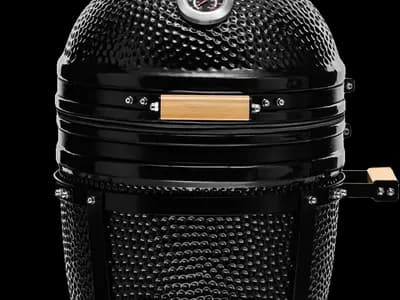
This recipe is built for a small kamado, the kind that fits on the terrace of a flat. The Kamado Bono Minimo 40 carries 40 cm in its name, but that is the body measurement: the cooking grate is 34 cm across according to the manufacturer's specifications. That is why the pan here is not a 28 cm square griddle, which at 39.6 cm on the diagonal will not sit flat on that grate, but a [26 cm Lodge cast iron skillet](/accesorios/lodge-sarten-hierro-fundido-26cm), which sits centred with four centimetres to spare on every side for the heat to rise through. If your kamado has a grate of 40 cm or more, the square griddle works just as well and saves you a batch. The [guide to cast iron in a kamado](/guias/hierro-fundido-y-dutch-oven-en-kamado) explains why the iron goes in cold and heats up with the cooker, with no thermal shock.
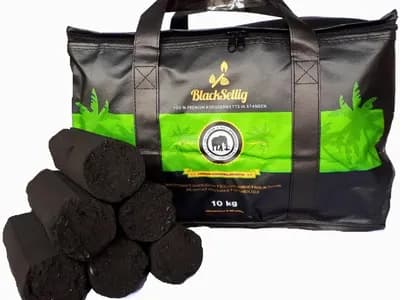
Fuel matters on a shared terrace. BlackSellig coconut briquettes burn without sparks, with little smoke once they are lit, and hold the 300 °C dome temperature the iron calls for; what they do not give you is a tall flame, and none is needed here. The cooking is always done with the lid closed. Opening above 300 °C means burping: lift the lid five centimetres, wait two seconds and then open fully, as the [guide to temperature problems](/guias/kamado-temperatura-problemas-soluciones) sets out. And before you light anything, a look at the [rules for kamados on terraces](/guias/kamado-en-terraza-normativa-comunidad-vecinos) saves awkward conversations with the residents' association.
The mortar rules: garlic, mint, coarse salt and residual heat
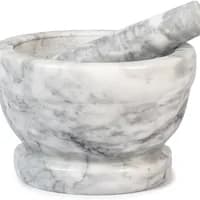
The dressing is pounded, not chopped. In an 18 cm H&H marble mortar the coarse salt works as an abrasive: two garlic cloves break down to a paste in a minute, the pepper cracks without jumping out of the bowl, and the mint leaves release their oil as they are crushed against the stone. It is bound with extra virgin olive oil and lemon zest. The recipe's trick is the iron: when the last beans come off, the skillet comes out of the kamado with an oven glove, rests for three or four minutes on a trivet and then takes the pounded dressing for twenty seconds, no longer smoking. The garlic loses its rawness, the mint toasts just slightly and the oil picks up whatever the pods left stuck behind. Pour it over the beans and serve.
A spring pairing, and how to eat them
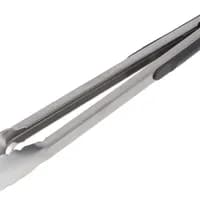
Grilled broad beans are the natural starter before [grilled trigueros (Spanish green asparagus)](/recetas/esparragos-trigueros-brasa-kamado): same season, same direct cooking, and the hot skillet serves both, beans first and asparagus after. To move the pods without burning yourself you need long tongs; the 40 cm OXO Good Grips keep your hand clear of the lid opening and grip a thin pod without crushing it. At the table, everyone splits their pod along the seam, pushes the beans out with a thumb and dips the pod in the dressing if it is truly tender.
In 30 seconds
Young broad beans in the pod, 1 kg for four. Kamado at 300 °C with the cast iron skillet inside from lighting. Pods in a single layer, lid closed 4 minutes, turn with tongs, 3-4 minutes more until they blister. Garlic, mint, coarse salt and oil pounded in a mortar, then twenty seconds in the skillet, once it is out of the kamado. Coarse salt, lemon and fingers.
Editor's tips
- No oil in the skillet while it is inside the kamado: at 300 °C it smokes and turns bitter in seconds. The pod carries its own water and will not stick if the iron is up to temperature; the oil comes afterwards, in the dressing, once the skillet is out.
- A size test at the market: if the beans stand out in relief through the pod, the bean is already too big to eat pod and all. It works best when the pod feels almost empty in the hand.
- Always a single layer. Piled on top of each other, the ones above steam without toasting and the ones below burn. Four batches of 4 plus 3-4 minutes give a better result than one crowded batch.
- Lit coconut briquettes give off little smoke, but the moment of lighting always does. On a terrace, light with the wind blowing towards the courtyard or the street, not towards the neighbour's window, and with the lid open only for those ten minutes.
Gear for this recipe
As an Amazon Associate, mikamado.es earns from qualifying purchases. At no extra cost to you.
FAQ
Can you eat broad beans in the pod?
Yes, as long as they are young: a green, thin, pliable pod with small beans inside. At that age the pod has no strings and no parchment lining, and after 7-8 minutes on iron at 300 °C it turns soft and toasted, with a flavour close to a grilled green bean. With thick, bulging pods, split the pod open and eat only the beans.
Which broad beans are right for grilling?
Early-season ones, March to May on the Mediterranean coast, with pods 10 to 15 cm long that bend without snapping. The beans should show only faintly through the skin; if they stand out in relief, the bean is already too big and its skin will be thick. Reject pods that are yellowing, black-spotted or crack when bent: the outside will burn before the beans soften.
How long do grilled broad beans take?
Between 7 and 8 minutes per batch on cast iron with the kamado at 300 °C on the dome: 4 minutes on one side, lid closed, and 3-4 minutes after turning. A kilo of beans will not fit in a 26 cm skillet, so that is four batches and about 35 minutes in total, plus the 30-45 minutes the kamado takes to come up with the skillet inside.
Do you need to boil broad beans before grilling them?
No. Boiling them first leaves the pod soft and waterlogged, and on the iron it only reheats instead of blistering. The whole point of the recipe is that the raw pod touches very hot metal: the skin toasts on the outside and the water inside steams the beans. Just wash and dry them well, because surface water cools the iron and boils instead of toasting.
Can you use a cast iron griddle instead of the skillet?
Yes, if your kamado's grate allows it. A 28 cm square griddle measures 39.6 cm corner to corner and needs a grate of 40 cm or more to sit flat; on the Kamado Bono Minimo 40, whose cooking grate is 34 cm, it does not fit. A griddle takes more pods per batch, so you get three batches instead of four. Nothing else changes: 300 °C on the dome, lid closed, 4 plus 3-4 minutes per batch, and the dressing in the iron once it is out of the kamado.
More kamado recipes
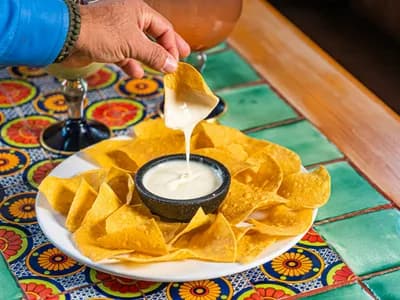
Smoked Loaded Nachos on the Kamado
The ultimate sharing starter: layers of tortilla chips, melted cheese, beans and jalapeños in a cast-iron pan, kissed by 10-12 minutes of gentle olive-wood smoke and topped with fresh pico de gallo.
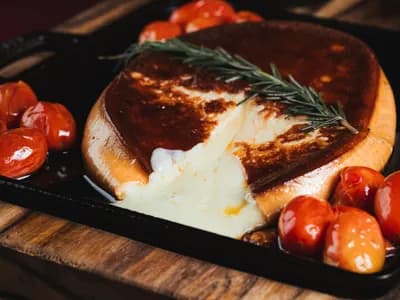
Grilled provolone on the kamado with tomato, oregano and olive oil, in a cast-iron skillet
Argentine-style provoleta over direct heat: a wheel of provolone in a cast-iron skillet at 230°C until you get a golden crust and a molten centre. Tomato, oregano, olive oil and bread. A starter in 12 minutes. Serves 4.
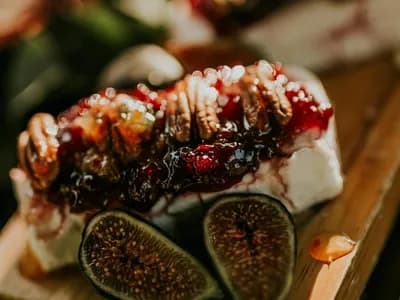
Kamado-roasted figs with goat cheese and honey
Figs scored into a cross, stuffed with melting goat cheese, glazed with honey and rosemary. Seven minutes over direct heat and you have the kamado's late-summer dessert.
KEEP READING
Go deeper on this dish
- Recommended kamado
Kamado Bono Minimo 40 cm
The small Bono for terraces, with a starter accessory set
- Editorial guide
How to light a kamado: the step-by-step method
No petrol, no weird tablets and no 45-minute waits. The cone method, airflow control and the mistakes that prevent 80% of the frustration.
- Glossary term
Heat deflector
Ceramic plate placed between the coals and the grate to turn direct fire into indirect cooking.
- Related comparison
big green egg large vs kamado joe classic iii
The classic kamado matchup: the Big Green Egg Large, the indestructible pioneer with the widest accessory network, agai…