Recipe · Indirect · Medium
Mixed-berry cobbler in a dutch oven on the kamado, golden crust
Strawberries, raspberries and blueberries bubbling in a cast-iron dutch oven under a buttery golden crust with a hint of orange. Indirect at 190°C: the Sunday barbecue dessert.
Quick answer
Berry cobbler bakes in a cast-iron pot at 190 °C indirect with a deflector, 40 minutes without lifting the lid. The fruit is tossed with cornstarch so it thickens without lumps and topped with rough spoonfuls of a cold-butter and buttermilk batter. Done when the juices bubble and the topping is golden and firm. Rest it for 15 minutes and serve hot.
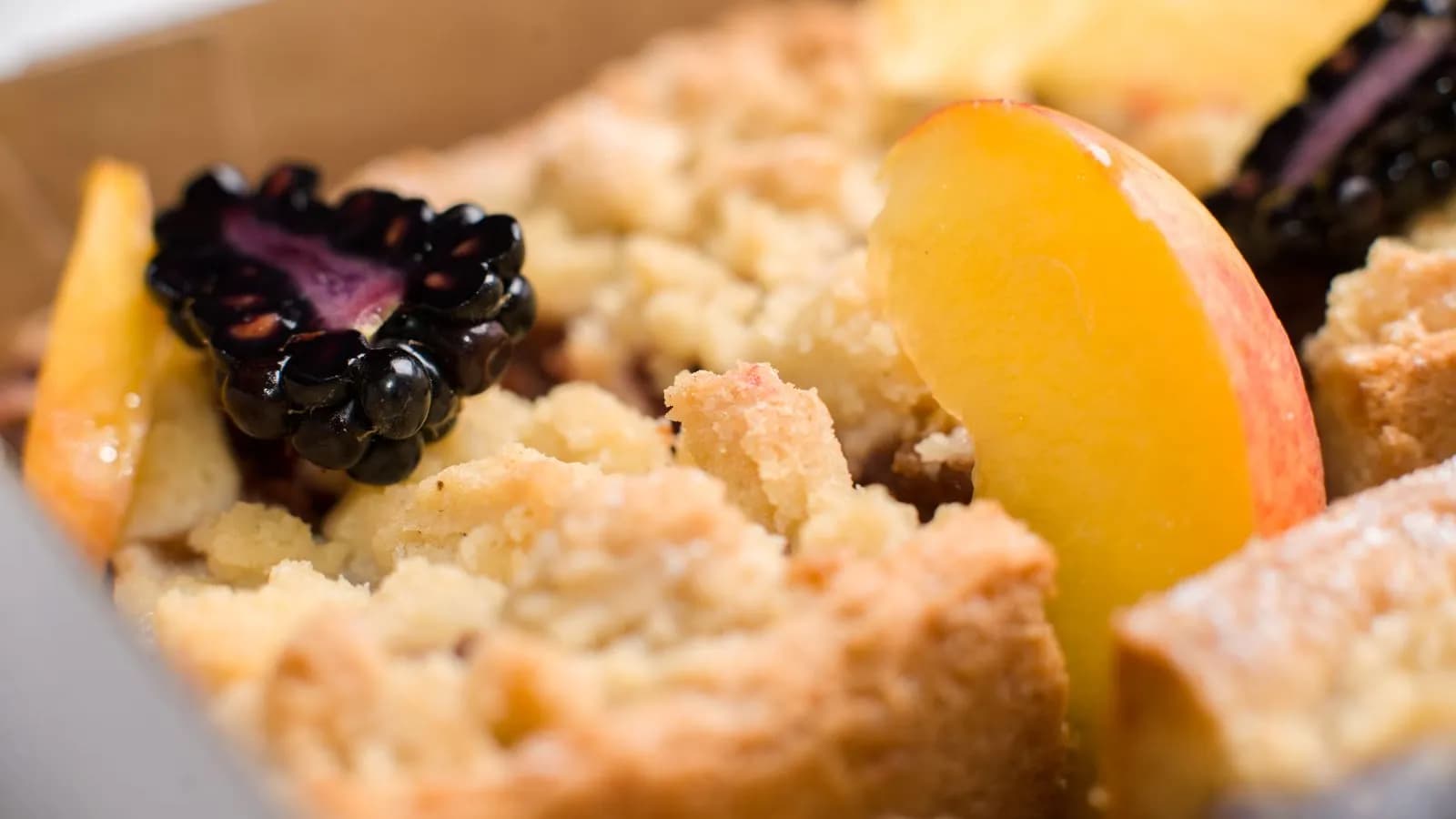
One big step at a time, screen kept on and built-in timers.
- Prep
- 20 min
- Cook
- 40 min
- Servings
- 8 servings
- Temperature
- 190 °C
What time do you want to eat?
Pick a time and we'll tell you when to start.
12:20
Start the prep
12:40
Light the kamado
13:10
Onto the kamado
14:00
Serve
Estimate: it includes lighting and settling the kamado plus a margin for large cuts. If the recipe asks you to marinate or salt ahead, add that time.
Fire setupIndirect
- Dome
- 190 °C
- Deflector
- Yes
- Grate
- Standard height
- Setup
- Deflector and enamelled cast-iron Dutch oven
Temperature curve
1:30 h from lighting
Kamado dome
| # | From | Phase | Dome |
|---|---|---|---|
| 1 | 0:00 | Light the charcoalDeflector in, chamber at 190 °C indirect | 20 → 190 °C |
| 2 | 0:25 | StabiliseHold 190 °C for 10 min before the cocotte goes in | 190 °C |
| 3 | 0:35 | Put the food inCocotte uncovered on the grate | 190 → 165 °C |
| 4 | 0:36 | BakeDo not open; done when bubbling with a golden topping | 165 → 190 °C |
| 5 | 1:15 | RestRest 15 min: the juice thickens with the cornstarch | 190 → 150 °C |
| 6 | 1:30 | Serve | off |
0:00 is the moment you light the charcoal. Internal temperatures are the ones the recipe gives; without a probe, go by the times. Turn these times into clock times with the planner
For this recipe
Ingredients
- strawberries, halved (seasonal, Levante market garden)400 g
- raspberries250 g
- blueberries250 g
- white sugar for the fruit120 g
- white sugar for the topping60 g
- cornflour (thickens the syrup)2 tbsp
- orange (zest + 2 tbsp juice)1
- lemon juice1 tbsp
- plain flour for the topping220 g
- very cold butter, diced110 g
- buttermilk (or milk with 1 tbsp lemon)180 ml
- ground almond (for the topping dough)1 tbsp
- brown sugar to dust the surface35 g
Allergens
- Gluten
- Milk
- Tree nuts
The ice cream or cream for serving add dairy, and the ice cream may contain egg.
Based on the recipe's ingredients. Always check the label of every product you buy.
The gear for this recipe
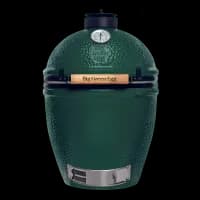 Big Green Egg LargeThe Large has room to spare for the casserole indirect at 190 °C for 8 servings.
 Orework Spanish Holm Oak Charcoal 15 kg
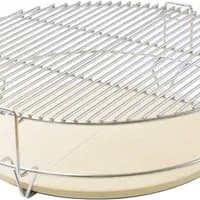 Onlyfire GCG-8552 Cooking System (2 grates + rack + 2 deflectors) for Large Kamado
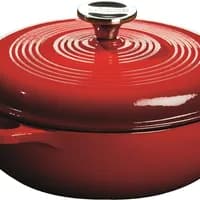 Lodge Enameled Cast Iron Dutch Oven 2.84 L (Red)The fruit bubbles and the topping browns inside the enamelled cast-iron casserole.
 Inkbird IBBQ-4T WiFi Thermometer with 4 Probes
Method
- 01
Set the deflector and stabilise 190°C
Light the kamado, set the deflector (plate-setter) and stabilise the chamber at 190°C indirect. It takes 20-25 minutes. Do not load the pot until the dome thermometer holds at 190°C for 10 minutes; an oven still climbing bakes the cobbler unevenly.
- 02
Macerate the fruit
Toss the strawberries, raspberries and blueberries with the white sugar, cornflour, orange zest and juice and the lemon juice. Let it sit 10 minutes: the fruit releases juice and the cornflour hydrates, so it thickens evenly in the oven with no lumps.
- 03
Make the topping dough
Mix the flour, ground almond, 60 g sugar and a pinch of salt. Rub in the very cold butter with your fingertips until you have pea-sized crumbs; visible lumps are good. Pour in the buttermilk and fold with a fork just until it comes together: a sticky, shaggy dough, no kneading. Cold butter is what gives you flaky layers.
- 04
Build the cobbler in the dutch oven
Butter the cast-iron pot lightly. Tip in the macerated fruit with its juice. Drop ragged spoonfuls of dough over the top, leaving gaps —do not spread it into a smooth sheet, those gaps let steam escape. Dust generously with brown sugar across the surface for a crisp crust.
- 05
Bake 40 min without lifting the lid
Place the uncovered pot on the grate over the deflector and close the kamado. Bake 40 minutes at 190°C without lifting the lid. The cobbler is done when the fruit juice bubbles at the edges and the topping is golden and firm to the touch. If it still looks pale at 35 minutes, push to 200°C for the last 5.
- 06
Rest 15 min and serve hot
Pull the pot with gloves and let it rest 15 minutes: the juice, very runny straight off the heat, thickens as it cools thanks to the cornflour. Serve hot, straight from the pot to the table, with a scoop of vanilla ice cream or whipped cream on top.
About this recipe
A mixed-berry cobbler in a dutch oven is real baking done on the kamado: set the deflector for a stable 190°C indirect oven, pile the fruit into the enamelled cast-iron pot, drop spoonfuls of biscuit dough on top and bake for 40 minutes until the filling bubbles at the edges and the topping is golden and set. No raw seam, no scorched base. The iron spreads the heat and the kamado holds it pinned.
Why the kamado bakes desserts so well
The kamado's ceramic is a huge thermal mass: once stabilised at 190°C with the deflector in, it behaves like a gentle convection oven and does not swing like a home oven every time the element kicks in. That is exactly what a cobbler wants, where the topping needs 35-40 minutes of even heat to set inside. The Lodge enamelled cast-iron dutch oven adds its own thermal inertia: it starts baking from below and spreads the deflector's radiant heat through the whole dough. The one golden rule is not to lift the lid every five minutes: each opening drops the chamber from 190°C to 150°C and adds ten minutes to the bake.
Fruit and dough: a Mediterranean balance
I use seasonal strawberries and raspberries from the Levante market gardens plus blueberries, with orange zest and juice and a spoonful of cornflour to thicken the syrup without turning it gluey. The topping is an American scone-style dough: flour, very cold butter, sugar, a little buttermilk and half a teaspoon of ground almond, which adds a toasted note that feels like home. Drop it on in ragged spoonfuls over the fruit —cobbler, from to cobble, like cobblestones— and dust with brown sugar for a crisp crust. No smooth sheet of dough: the gaps let steam escape and keep the topping from baking raw.
Sweet wood? Only if it earns its place
In a cobbler smoke is optional and runs away fast. If you want a smoky wink, a single small chunk of cherry or apple on the coals is plenty: it lends a sweet backdrop that flatters the berries without burying them. More than that and the dessert tastes of ashtray. Most of the time I do it without smoke at all: the browned butter and orange already give all the complexity it needs.
In 30 seconds
Deflector in, kamado a stable 190°C indirect oven. Strawberries, raspberries and blueberries in a cast-iron dutch oven with sugar, cornflour, orange and lemon. Spoon scone dough (very cold butter + almond) on top, dust with brown sugar. Bake 40 minutes without lifting the lid until it bubbles at the edges and the topping is golden and firm. Rest 15 min. Serve hot with vanilla ice cream. Serves 8.
Will it fit your kamado?
Small
33-40 cm · Joe Jr, MiniMax
Tight
A 2.8 L Dutch oven probably just fits; check the lid closes. Otherwise make half the recipe in a smaller dish.
Medium
46-51 cm · Classic, Large
Fits
The Dutch oven fits over the deflector easily: 8 servings in one batch.
Large
56-61 cm · Big Joe, XL
Fits
Plenty of room; a second Dutch oven could fit to double the recipe.
What to serve with it
Sides
- Vanilla ice cream
- Greek yogurt with a drizzle of honey
- Wine
- Sweet red Monastrell from Alicante or Jumilla
- Beer
- Red berry fruit sour
- Alcohol-free
- Strawberry and basil lemonade
Leftovers and storage
- In the fridge
- 2-3 days in the fridge, covered and airtight, chilled within 2 h of baking.
- Freezing
- Up to 2-3 months in portions; thaw in the fridge, never refreeze. The topping loses its crunch.
- Reheating
- Oven or kamado at 170 °C uncovered for 10-12 min, until the juices bubble and the topping crisps.
- Using them up
- Warm the leftover fruit and spoon it over pancakes or yogurt.
Cool and refrigerate within 2 hours. When in doubt, throw it out.
Leftover embers
You still have embers: what to do with the leftover heat
For 40 min at 190 °C in a classic kamado you load about 800 g of charcoal and burn 400 g: when you serve, about 380 g of live embers remain. Before you shut the vents, that is still enough for:
Without touching the vents
190 °Cdessert while you eat
1 h 20 minof embers
- Chestnuts and Sweet Potato Roasted in the Kamado Embers45 min · 180 °C
- Reina Pepiada Arepas on a Budare in the Kamado, Crisp Outside1 h · 200 °C
- Garlic-stuffed portobello mushrooms grilled in the kamado22 min · 190 °C
No recipe needed
- Yesterday's bread with oil and garlic, on the grate (10 min)
- Corn cobs in their husks (30 min)
- Whole apples with a slit in the skin (45 min)
Closing the vents almost fully and waiting for it to drop
100-130 °Ca short smoke
2 h 25 minof embers
- Hot-Smoked Whole Mackerel on the Kamado45 min · 120 °C
No recipe needed
- Coarse salt on a tray, with a wood chunk: smoked salt for months (1-2 h)
- Almonds or walnuts on a rack (45 min)
- Whole heads of garlic, for spreading (1 h)
Opening the vents almost fully
210-270 °Cgrilled vegetables
30 minof embers
- Charcoal-Roasted Brussels Sprouts with Panceta on the Kamado, Seared on Cast Iron25 min · 230 °C
- Kamado-Grilled Apricots with Honey and Rosemary10 min · 230 °C
- Grilled provolone on the kamado with tomato, oregano and olive oil, in a cast-iron skillet12 min · 230 °C
No recipe needed
- Strips of courgette and aubergine, char-marked (5 min)
- Pita or naan from shop dough, on the grate (3 min each)
- Halved tomatoes, cut side down, for a sauce (10 min)
Before opening the lid, crack it open for a few seconds first; if you raise the heat, stir the ash so the coals can breathe. And if you are not going to use them: once the food is out, close the bottom and top vents. The charcoal that does not burn (about 380 g) can be used next time. Different size of kamado? Work out your load for 1 h 30 min of fire, lighting included.
Editor's tips
- An independent chamber thermometer (Inkbird) is more reliable than the dome gauge, which reads the air under the lid, not next to the pot. Clip a probe at grate height and tune the vents to that number.
- If the fruit is very tart, taste the macerated juice before assembling and adjust with an extra spoon of sugar. Hothouse blueberries usually need it; seasonal June ones almost never.
- For a subtle smoky wink, add a single small chunk of cherry or apple to the coals when you set the deflector. More than one and the dessert tastes of smoke; with just one, the sweet backdrop lifts the berries.
Gear for this recipe
As an Amazon Associate, mikamado.es earns from qualifying purchases. At no extra cost to you.
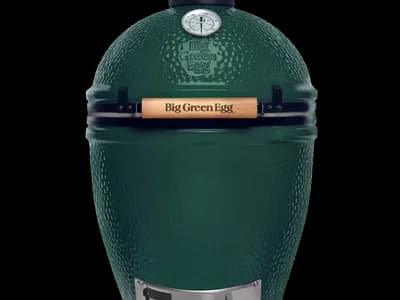
Big Green Egg Large
The Large has room to spare for the casserole indirect at 190 °C for 8 servings.
€2,099
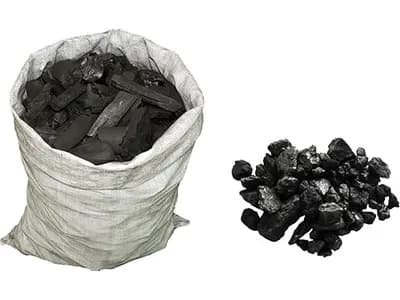
Orework Spanish Holm Oak Charcoal 15 kg
€45
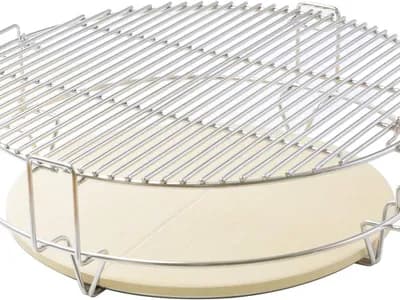
Onlyfire GCG-8552 Cooking System (2 grates + rack + 2 deflectors) for Large Kamado
€95
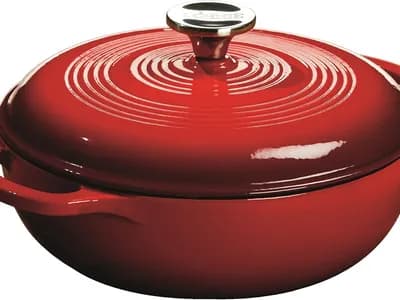
Lodge Enameled Cast Iron Dutch Oven 2.84 L (Red)
The fruit bubbles and the topping browns inside the enamelled cast-iron casserole.
€170

Inkbird IBBQ-4T WiFi Thermometer with 4 Probes
€23
Have you made it?
Tell us how it turned out on your kamado. We review every rating before publishing it.
No published ratings yet. Be the first!
FAQ
What is the difference between a berry cobbler, crumble and crisp?
All three are baked fruit with a topping, but the topping changes. A cobbler uses a cake- or scone-like dough dropped in spoonfuls that bakes fluffy inside and crisp on top, like cobblestones (hence the name). A crumble uses a sandy mix of flour, butter and sugar crumbled over. A crisp is a crumble with oats or nuts added for extra crunch. On the kamado the cobbler is the most forgiving: the dough sets well in the even heat of an indirect oven.
Can you use frozen fruit for the cobbler, and how do you adjust the liquid?
Yes, and it works well out of season. The key is that frozen fruit releases far more water, so bump the cornflour from 2 to 3 tablespoons to compensate and do not drain the fruit: the ice crystals provide the juice that thickens. Do not thaw it; add it frozen straight to the pot already tossed with sugar and cornflour. Add 5-8 minutes to the bake because the filling starts colder. If the juice still looks too loose when you pull it, rest 20 minutes instead of 15: it thickens as it cools.
How do you set the deflector so the base does not scorch?
The deflector (plate-setter / conveggtor) goes legs-up between the coals and the grate, to block the charcoal's direct radiant heat and turn the kamado into an indirect oven. The pot sits on the grate above it, never directly on the hot deflector. If your kamado runs hot or you find the base browning too fast, add a riser grate or a second plate to create an air gap. Always stabilise at 190°C with the deflector already in: dropping it in cold and ramping up later leaves the base exposed for the first minutes.
Why does the topping stay raw inside, and how do you avoid it?
It is almost always one of three things. First: a dough layer too thick or smooth that traps steam; keep it in ragged spoonfuls with gaps so it breathes. Second: lifting the lid, which drops the chamber from 190 to 150°C and throws off the bake; resist the urge to peek. Third: an oven that was not stable at 190°C when the pot went in. Test the centre of a dough mound with a toothpick: it should come out clean. If the surface browns but the inside is still raw, drop to 175°C and add 8-10 minutes so it sets without scorching the crust.
What do you serve a hot cobbler with: whipped cream or ice cream?
Both are classics and the choice is about texture. Vanilla ice cream is my favourite: the cold scoop melts over the hot cobbler and mingles with the berry juice into a warm sauce that is the best part of the dish. Whipped cream is lighter and airier, ideal if the berries are very sweet and you want contrast. Either way, add it at the last moment over the served portion, not over the whole pot: the heat melts it at once. A splash of cold pouring cream also works if you want something simpler.
What do I do with the embers left after making Mixed-berry cobbler in a dutch oven on the kamado, golden crust?
After 40 min at 190 °C in a classic kamado about 380 g of live embers remain: 1 h 20 min more at 190 °C without touching the vents, 2 h 25 min at 100-130 °C closing the vents or 30 min at 210-270 °C opening the vents. If you are not going to use them, close both vents and keep the charcoal for next time.
More kamado recipes

KEEP READING
Go deeper on this dish
- Recommended kamado
Big Green Egg Large
The Large has room to spare for the casserole indirect at 190 °C for 8 servings.
- Editorial guide
How to light a kamado: the step-by-step method
No petrol, no weird tablets and no 45-minute waits. The cone method, airflow control and the mistakes that prevent 80% of the frustration.
- Glossary term
Heat deflector
Ceramic plate placed between the coals and the grate to turn direct fire into indirect cooking.
- Related comparison
big green egg large vs kamado joe classic iii
The classic kamado matchup: the Big Green Egg Large, the indestructible pioneer with the widest accessory network, agai…