Recipe · Smoked · Advanced
Carolina-style smoked pulled pork
Eight hours of patience, a five-and-a-half-kilo pork shoulder and North-Carolina vinegar — this is what a kamado does better than any other fire.
Quick answer
Carolina-style pulled pork is smoked at 110 °C indirect for about 8 hours with cherry and walnut wood, using a 5-6 kg shoulder. Wrap it in butcher paper at the stall (70 °C) and pull it at 96 °C internal. Rest it for an hour and shred with two forks, dressed with a Carolina vinegar sauce.

One big step at a time, screen kept on and built-in timers.
- Prep
- 30 min
- Cook
- 480 min
- Servings
- 8 servings
- Temperature
- 110 °C
What time do you want to eat?
Pick a time and we'll tell you when to start.
03:45
Start the prep
04:15
Light the kamado
05:00
Onto the kamado
13:00
Take it off and rest
14:00
Serve
Estimate: it includes lighting and settling the kamado plus a margin for large cuts. If the recipe asks you to marinate or salt ahead, add that time.
Fire setupIndirect
- Dome
- 110 °C
- Deflector
- Yes
- Grate
- Standard height
- Fuel
- Lump charcoal lit in one spot (Minion method)
- Wood
- 3 cherry and 2 hickory chunks
- Setup
- Ceramic deflector and butcher paper
Temperature curve
9:45 h from lighting
Kamado domeInside the meat (probe)
| # | From | Phase | Dome | Internal |
|---|---|---|---|---|
| 1 | 0:00 | Light the charcoalMinion method, 30 min stable until blue smoke | 20 → 110 °C | no probe |
| 2 | 0:45 | SmokeFat side up, closed until the stall (70-75 °C) | 110 °C | 8 → 72 °C |
| 3 | 6:15 | WrapButcher paper, wrapped tight | 110 → 95 °C | 72 °C |
| 4 | 6:25 | SmokeTo 96 °C: the probe slides in like butter | 95 → 110 °C | 72 → 96 °C |
| 5 | 8:45 | RestWrapped, in an empty cooler with towels | 110 → 60 °C | 96 → 90 °C |
| 6 | 9:45 | Serve | off | no probe |
0:00 is the moment you light the charcoal. Internal temperatures are the ones the recipe gives; without a probe, go by the times. Turn these times into clock times with the planner
For this recipe
Ingredients
- whole bone-in pork shoulder with fat cap5.5 kg
- yellow mustard (binder)3 tbsp
- kosher coarse salt3 tbsp
- brown sugar2 tbsp
- smoked Pimentón de la Vera2 tbsp
- coarse-ground black pepper1 tbsp
- ground cumin1 tsp
- garlic powder1 tsp
- cherry wood chunks3 pieces
- hickory wood chunks2 pieces
- cider vinegar (Carolina sauce)250 ml
- brioche buns8
Another cut
Got a different cut? Here is how the recipe changes
For 8 people the recipe uses 3 kg of pork shoulder: smoked at 120 °C, 10 h 30 min plus 30 min rest. If the shop had something else:
- Fresh pork belly (skinless)Buy 2.5 kg
- Fire
- Smoked · 120 °C
- Time
- 6 h 15 min
- Rest
- 30 min
Light 4 h 15 min later
Same dome, more fat. Smoke at 120 °C and pull at 93-95 °C in the thickest part. It will not shred: serve it in cubes or thick slices.
- Pork ribs (St. Louis and baby back)Buy 3.5 kg
- Fire
- Smoked · 120 °C
- Time
- 4 h 30 min
- Rest
- 15 min
Light 6 h 15 min later
Same smoke, eaten off the bone. Smoke at 120 °C; they are done at 93 °C, when the probe slides between the bones almost freely. Slice, do not pull.
- Beef brisketBuy 3.5 kg
- Fire
- Smoked · 110 °C
- Time
- 9 h 20 min
- Rest
- 1 h
Light 40 min later
Beef, slightly lower dome. Smoke at 110 °C and pull at 95 °C in the centre of the flat, when the probe goes in like butter. Serve it sliced.
- Pork collar (neck)Buy 2.25 kg
- Fire
- Indirect · 160 °C
- Time
- 3 h 45 min
- Rest
- 15 min
Light 7 h 45 min later
Quicker, sliced. Switch to indirect at 160 °C and take the centre to 85 °C so it stays tender; slice it about 1 cm thick instead of pulling it.
Times are a guide, based on the How much to buy figures; follow the recipe first. Full fire plan for 8 people: Fresh pork belly (skinless), Pork ribs (St. Louis and baby back), Beef brisket, Pork collar (neck).
Allergens
- Gluten
- Eggs
- Milk
- Mustard
Brioche buns usually contain wheat, egg and butter; check the labels of the buns and mustard.
Based on the recipe's ingredients. Always check the label of every product you buy.
The gear for this recipe
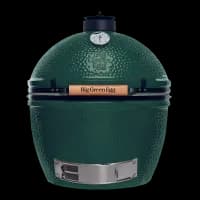 Big Green Egg XLThe XL takes a 6 kg shoulder with room and fuel to spare for an 8 h low-and-slow.
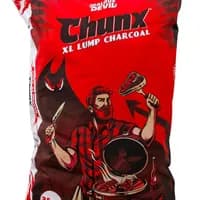 Jealous Devil 100% White Quebracho lump charcoal 15.8 kgExtra-dense quebracho for 8 h without refuelling.
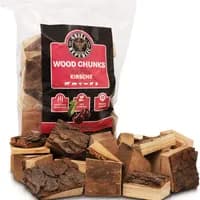 Grill Republic premium cherry wood chips 1.5 kg
 Inkbird IBT-26S WiFi + Bluetooth thermometerDual chamber and core readings to ride out the stall with the chamber at 110 °C.
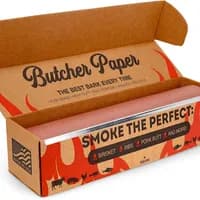 Bryco Goods: untreated pink butcher paper, 45.7 cm × 53.3 m with dispenser box
Method
- 01
Step 1 · Rub the night before
Combine salt, brown sugar, paprika, pepper, cumin and garlic powder. Brush the shoulder with yellow mustard — only as a binder — and coat generously with the rub on every side. Wrap in cling film and refrigerate 12-24 hours.
- 02
Step 2 · Stabilise the kamado at 110 °C
Light only one zone of charcoal (Minion method) and install the ceramic deflector for indirect cooking. Stabilise at 110 °C for 30 minutes, until the smoke runs clear and blue — never white or thick. Pull the shoulder from the fridge while you wait.
- 03
Step 3 · First smoke
Place the cherry and hickory chunks on the coals. Sit the shoulder fat-side up on the grate, push the probe into the thickest part without touching the bone, close the lid and forget about it for the first 4-5 hours.
- 04
Step 4 · Spot the stall
When the core hits 70-75 °C (around hour 5-6) the temperature flatlines for 1-2 hours. That is the famous stall: surface evaporation is cooling the meat. Do not panic and do not open the lid — this is the cue to prep the wrap.
- 05
Step 5 · Wrap in butcher paper
Pull the shoulder onto two sheets of unwaxed butcher paper and wrap tightly, sealing the seams underneath. Return to the kamado fat-side up. The internal temperature will start climbing again.
- 06
Step 6 · Pull at 96 °C
Cook for another 2-3 hours until the probe reads 96 °C internal and slides in like through butter in several spots. If you feel resistance, give it 30 more minutes. The surface should carry a dark, firm bark.
- 07
Step 7 · One-hour rest
This is non-negotiable. Pull the wrapped shoulder, sit it in an empty cooler with a couple of towels and rest for 60 minutes. The juices redistribute and the fibre relaxes — skip it and the meat will be dry no matter how well you cooked it.
- 08
Step 8 · Shred and serve
Open the paper over a tray to catch every drop of juice. Pull out the bone (it slides clean) and shred with two forks or heat-resistant gloves. Toss with the Carolina vinegar sauce and serve on brioche buns with a quick cabbage slaw.
About this recipe
Carolina-style pulled pork is a pork shoulder cooked low & slow at 110 °C for 8 hours over cherry and hickory smoke, until the fibre yields under two forks. The kamado trick: lock the airflow so the chamber never climbs past 115 °C, then wrap in butcher paper when the stall hits.
Why the kamado nails this cook
A 5-6 kg pork shoulder is an unforgiving cut: too lean and it dries out, too hot and the bark turns to charcoal. The ceramic kamado fixes both with one virtue — thermal stability. Once the coals settle, the chamber holds 110 °C very steadily for hours. Against an electric (no smoke), a gas (no smoke) or an offset (smoke, but you stoke it every 40 minutes), the kamado stands out for how little it asks: light it and forget it.
The mustard rub and the vinegar
In North Carolina the sauce has no tomato. It is cider vinegar, salt, pepper and a hit of red pepper flakes. It cuts through the fat of the shoulder instead of competing with it. The rub is dry — yellow mustard as a binder, smoked paprika, brown sugar, kosher salt and cumin — applied the night before so the salt penetrates. When you pull the meat from the fridge, you have 30 minutes to bring it to room temperature while you stabilise the kamado.
The stall, the wrap and the rest
Around 70 °C internal the temperature stops climbing. That is the stall: fat is rendering and surface evaporation cools the meat. Enter unwaxed butcher paper. A tight wrap traps moisture, breaks the stall and lets the cook push on to 96 °C internal — the point at which a probe slides in like through butter. After that, a mandatory one-hour rest in an empty cooler. Skip this and every drop of juice ends up on the paper, leaving the meat stringy.
The Torrevieja twist
Instead of the classic white American bun, it goes better on bakery brioche, with a quick cabbage slaw and the Carolina vinegar sauce on top. Pork fat, vinegar acid and brioche sweetness balance out perfectly. If you have guests over, double the recipe: this dish rarely goes to waste.
In 30 seconds
Pork shoulder 5-6 kg, rub the night before, kamado at 110 °C indirect with cherry and hickory, wrap in butcher paper at 70 °C internal, pull at 96 °C, one-hour rest and shred with two forks. A Sunday dish, eight hours of glory.
Will it fit your kamado?
Small
33-40 cm · Joe Jr, MiniMax
Tight
A 5.5 kg shoulder probably fits tightly and nears the dome; a 3-4 kg piece is better.
Medium
46-51 cm · Classic, Large
Fits
The whole shoulder fits well on the grate.
Large
56-61 cm · Big Joe, XL
Fits
Fits with room to spare; probably two shoulders at once.
What to serve with it
Sides
- Brioche burger buns
- Quick-pickled cabbage
- Cast-iron skillet cornbread
- Wine
- Navarra rosé or Cariñena Garnacha red
- Beer
- Pale ale or amber lager
- Alcohol-free
- Cider-vinegar and honey lemonade (switchel)
Leftovers and storage
- In the fridge
- Pulled with its juices, airtight within 2 h: 3-4 days in the fridge.
- Freezing
- Freezes very well in portions with juice, 2-3 months; thaw in the fridge, never refreeze.
- Reheating
- Covered pan or pot with a splash of stock or vinegar, stirring until 74 °C.
- Using them up
- Tacos, nachos, quesadillas or pulled pork croquettes.
Cool and refrigerate within 2 hours. When in doubt, throw it out.
Leftover embers
You still have embers: what to do with the leftover heat
For 8 h at 110 °C in a classic kamado you load about 1.75 kg of charcoal and burn 1.3 kg: when you serve, about 490 g of live embers remain. Before you shut the vents, that is still enough for:
Without touching the vents
110 °Ca short smoke
3 h 25 minof embers
- Hot-Smoked Whole Mackerel on the Kamado45 min · 120 °C
No recipe needed
- Coarse salt on a tray, with a wood chunk: smoked salt for months (1-2 h)
- Almonds or walnuts on a rack (45 min)
- Whole heads of garlic, for spreading (1 h)
Opening the vents halfway
140-200 °Cdessert while you eat
1 h 30 minof embers
- Smoked Loaded Nachos on the Kamado12 min · 185 °C
- Reina Pepiada Arepas on a Budare in the Kamado, Crisp Outside1 h · 200 °C
- Kamado-Roasted Squash with Honey and Pimentón de la Vera45 min · 200 °C
No recipe needed
- Yesterday's bread with oil and garlic, on the grate (10 min)
- Corn cobs in their husks (30 min)
- Whole apples with a slit in the skin (45 min)
Before opening the lid, crack it open for a few seconds first; if you raise the heat, stir the ash so the coals can breathe. And if you are not going to use them: once the food is out, close the bottom and top vents. The charcoal that does not burn (about 490 g) can be used next time. Different size of kamado? Work out your load for 9 h of fire, lighting included.
History of the dish
- Origin
- North Carolina (United States)
- Period
- Colonial era; documented from the 18th century
- Where it is cooked today
- North Carolina: whole hog on the Coastal Plain, home of the "pig pickin'", and Lexington-style shoulder in the Piedmont
Carolina pork barbecue has no birth certificate, but its name leaves a trail: "barbecue" entered English through Spanish, from the Taino word "barbacoa", a frame of wooden sticks for drying meat over a fire. English speakers ended up using it for the wooden grill that Native Americans used.
By 1728, North Carolinians had probably already discovered the usefulness of that grill for cooking pork: that year William Byrd wrote that "the only business here" was raising hogs. Many of the earliest barbecuers in what would become the United States were enslaved Africans brought from the Caribbean sugar islands, who combined their own techniques with local know-how.
North Carolinians have argued for generations over which style is the true one. On the Coastal Plain, barbecue means its simplest and eldest form: a split hog roasted over coals, basted with cider vinegar, red pepper and salt, then boned and chopped or shredded. In Lexington, the centre of Piedmont style, chopped or sliced shoulders with a thin tomato-based sauce are preferred. Even so, vinegar remains the state's preferred sauce base.
Sources
- Barbecue — Encyclopedia of North Carolina (NCpedia, State Library of North Carolina) (ncpedia.org)
- A Brief History of Barbecue — Atlanta History Center (atlantahistorycenter.com)
Editor's tips
- If you cannot find unwaxed butcher paper, double-layered parchment works as a stand-in, but you lose about 10 °C of bark crispness.
- Do not mix more than three different woods. Cherry plus hickory works; adding mesquite is too much and turns the bark bitter.
- Budget 4 kg of briquettes or 5 kg of lump charcoal for an 8-hour cook on a 21-inch kamado.
- The Carolina sauce takes 5 minutes: 250 ml cider vinegar, 1 tbsp brown sugar, 1 tsp red pepper flakes, salt and pepper. Better on day two.
- Leftovers keep 4 days in the fridge in a sealed container with the paper juices, and steam-reheat beautifully.
Gear for this recipe
As an Amazon Associate, mikamado.es earns from qualifying purchases. At no extra cost to you.
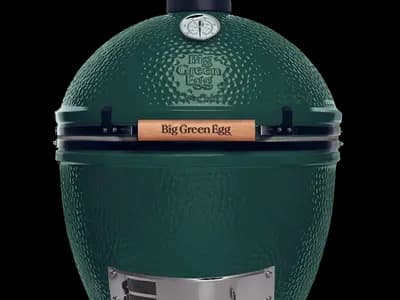
Big Green Egg XL
The XL takes a 6 kg shoulder with room and fuel to spare for an 8 h low-and-slow.
€3,299
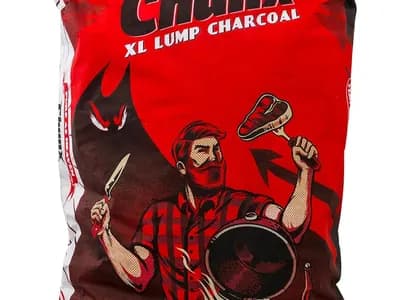
Jealous Devil 100% White Quebracho lump charcoal 15.8 kg
Extra-dense quebracho for 8 h without refuelling.
€206
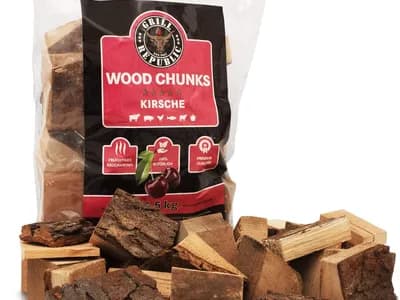
Grill Republic premium cherry wood chips 1.5 kg
€17

Inkbird IBT-26S WiFi + Bluetooth thermometer
Dual chamber and core readings to ride out the stall with the chamber at 110 °C.
€90
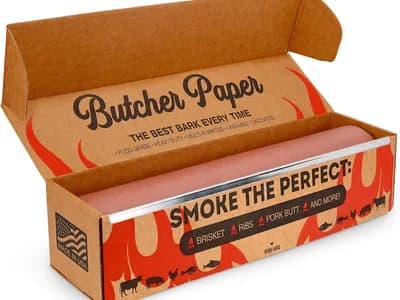
Bryco Goods: untreated pink butcher paper, 45.7 cm × 53.3 m with dispenser box
€39
Have you made it?
Tell us how it turned out on your kamado. We review every rating before publishing it.
No published ratings yet. Be the first!
FAQ
What exactly is the pulled pork stall?
It is a thermal plateau around 70-75 °C internal: surface moisture evaporates faster than heat can compensate, so the temperature flatlines for 1-2 hours. It is not a fire problem — it is physics. You break it by wrapping in butcher paper, which blocks evaporation.
How much charcoal do I need for 8 hours of cooking?
For a 21-inch kamado, plan on 4 kg of quality briquettes or 5 kg of lump charcoal. Fill the firebox basket to the top and light only one zone — the Minion method. The fuel lasts the whole cook with no refills.
Can I do it without wrapping in butcher paper?
Yes, but add 3-4 hours to the total time and the bark turns coarser. This is the "no wrap" method — more smoke, more crust, but also more risk of drying out. Wrapping is the recommended option unless you have a whole day and want a stronger smoke note.
What is the best wood for pulled pork?
The classic combo is cherry (sweet, gives mahogany bark colour) plus hickory (deep, bacon-like). Use 3 cherry chunks and 2 hickory chunks for a 21" kamado. Skip mesquite — too aggressive for pork and leaves a bitter aftertaste.
Can I make this recipe with a different cut instead of pork shoulder?
Pork belly, ribs and brisket keep the low smoke, though they are served cubed or sliced rather than pulled. Pork collar moves to hotter indirect heat and is sliced. The probe decides, not the clock.
What do I do with the embers left after making Carolina-style smoked pulled pork?
After 8 h at 110 °C in a classic kamado about 490 g of live embers remain: 3 h 25 min more at 110 °C without touching the vents or 1 h 30 min at 140-200 °C opening the vents. If you are not going to use them, close both vents and keep the charcoal for next time.
More kamado recipes
KEEP READING
Go deeper on this dish
- Recommended kamado
Big Green Egg XL
The XL takes a 6 kg shoulder with room and fuel to spare for an 8 h low-and-slow.
- Editorial guide
How to light a kamado: the step-by-step method
No petrol, no weird tablets and no 45-minute waits. The cone method, airflow control and the mistakes that prevent 80% of the frustration.
- Glossary term
Low & slow
Cooking at low temperature (95-130 °C) for many hours to tenderise tough cuts and develop deep smoke.
- Related comparison
big green egg xl vs kamado joe big joe iii
The XL derby: 61 cm grate on both, same vocation of cooking for 10-12, but opposite philosophies. The Big Joe III ships…