Analysis by Valery Grin · · updated September 11, 2026
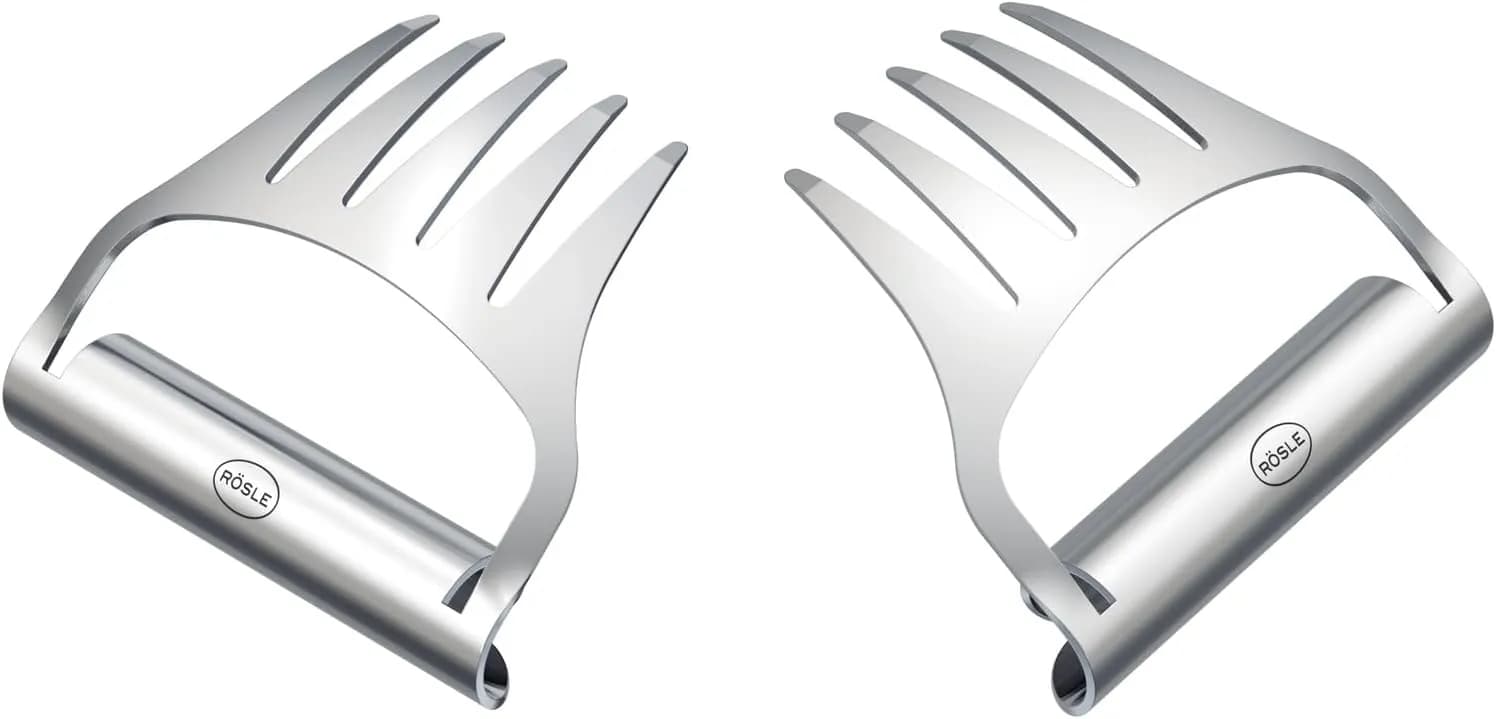
Rösle Pulled Pork Forks in 18/10 Stainless Steel
Matte 18/10 stainless steel, dishwasher safe, 10.6 × 11.7 × 2.9 cm
From€18
Price verified on Amazon on September 12, 2026 · may change
As an Amazon Associate, mikamado.es earns from qualifying purchases. At no extra cost to you.
- Material
- 18/10 stainless steel, matt finish
Quick answer
Yes, if you smoke pork shoulder more than two or three times a year. They cook nothing: they are the last-minute tool, for the moment the shoulder leaves the kamado at around 95 °C and has to be pulled into strands before it cools. Rösle publishes no weight, but does publish the material — matte 18/10 stainless steel, dishwasher safe — and today they sit among the ten best sellers in their barbecue-fork category on Amazon.es. If you only shred the odd chicken, two table forks will do.
Short, wide tines for pulling a twelve-hour pork shoulder into strands instead of mush. Matte 18/10 stainless steel, dishwasher safe; the maker's listing gives 10.6 × 11.7 × 2.9 cm and says nothing about weight.
A pulled pork fork is nothing like a carving fork: instead of two long prongs for holding, it has a short, wide comb that goes into the meat and opens it along the grain. Rösle's are matte 18/10 stainless steel, dishwasher safe, and the manufacturer's listing gives 10.6 cm long, 11.7 wide and 2.9 high. The weight is published nowhere.
The real work is done by the kamado: twelve or fourteen hours with the deflector in, the dome shut between 105 and 135 °C and the vents barely cracked so the smoke stays clean. These forks come in afterwards, when the shoulder is around 95 °C inside, the bone slides out and the whole thing has to travel from grill to board in one piece. That is the exact last step of our Carolina-style smoked pulled pork recipe. They are a board tool, not a grill tool: a 10.6 cm handle gives you no business inside a hot dome.
What shows over the years is the material. On the coast, cheap stainless ends up pitted by salt air; 18/10, with its nickel, handles sea air and dishwasher cycles far better. They currently sit among the ten best sellers in their barbecue-fork category on Amazon.es, which mostly tells you that this particular drawer of the catalogue has few serious rivals.
They do one job and do it well. 18/10 steel that shrugs off salt air, but a 10.6 cm handle: a board tool, never a grill tool.
Editorial rating from spec sheet, measurements and kamado fit · not a hands-on test
Pros
- Matte 18/10 stainless steel: resists salt air better than cheap stainless
- Short, wide tines: they open the grain instead of mashing it
- Dishwasher safe; twelve hours of rendered fat comes off on its own
- Also good for moving a whole joint from the kamado to the board
- Among the ten best sellers in their barbecue-fork category on Amazon.es
Cons
- A 10.6 cm solid-steel handle: useless inside a hot dome
- The steel warms up if you leave them stuck in meat straight off the grill
- A single-job tool: beyond shredding it does very little
Who it's for
For anyone who pulls pork or chicken with some regularity and wants a steel tool that survives the dishwasher and the sea air.
Not for
If you want something to turn meat inside the kamado, this is not it: the handle is 10.6 cm of solid steel, so your hand ends up over the coals.
Specifications
- Material
- 18/10 stainless steel, matt finish
As an Amazon Associate, mikamado.es earns from qualifying purchases. At no extra cost to you.
Goes well with
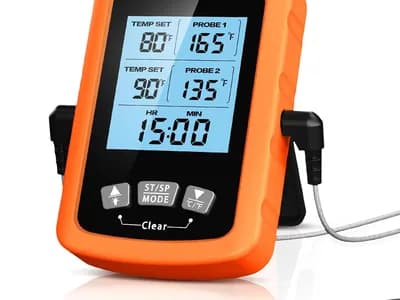
CIRYCASE Dual-Probe Thermometer, 16.3 cm Probes and Timer
The forks only come out once the meat is actually there. A probe left in the shoulder tells you when 95 °C has arrived and, more usefully, when it hasn't yet.
€19
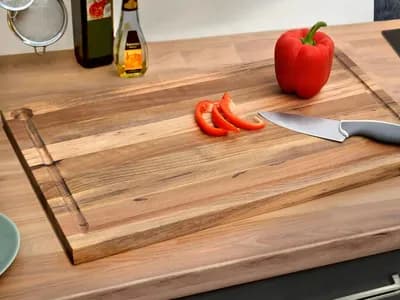
Naturehome Walnut Cutting Board 58x36x3 cm
Pulling a whole shoulder needs surface: on a small board you end up with strands across the whole worktop. This walnut one, 58 by 36 cm, leaves room to actually work.
€53
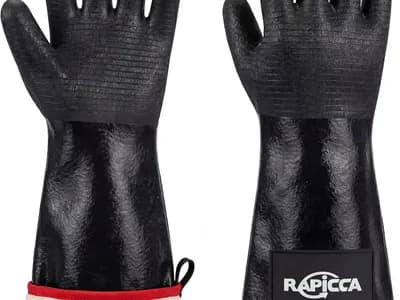
Rapicca XL Barbecue Gloves 43 cm
Before any shredding you have to get the joint out of the dome. Long gloves let you take it from underneath without scorching a forearm; the forks do the rest on the board.
€40
FAQ
Can you use them inside the kamado to turn meat?
No. The published handle is 10.6 cm of solid steel, so your hand sits a palm's width from the coals and the metal carries heat straight up it. Manoeuvring inside a closed dome needs a long pair of tongs; these forks start working once the joint is already out, on the board.
Will they hold a whole shoulder as it comes off the kamado?
The manufacturer also presents them for carrying and serving large joints, and that is their second-best use: one in each hand, in under the meat, with a tray waiting alongside. After twelve hours in the kamado the joint gives way on its own, so move it as little as possible and set it down fast.
Are they better than plastic bear claws?
It depends on what bothers you. Plastic won't scratch a pot or a board and usually costs less; 18/10 steel won't deform against meat at 95 °C, won't go rough with use and goes in the dishwasher without a thought. On the meat itself there is no meaningful difference: both open the grain the same way.
Will they rust if I live on the coast?
18/10 carries roughly ten per cent nickel and is among the more corrosion-resistant stainless grades, so salt air should not pit it. Even so, the usual rule applies: dry them as they come out of the dishwasher and don't leave them soaking in salt or in an acidic marinade for hours.