TÉCNICA
Using your kamado in winter and Levante wind
Dense ceramic makes the kamado the best cold-weather grill there is, but Levante wind and damp air demand real adjustments. Here they are, drawn from our experience on the Torrevieja terrace and from the ceramic's specs.
Quick answer
Yes: a kamado works perfectly in winter — in fact it is when it performs best, because its 2-3 cm refractory ceramic walls insulate against the cold and hold temperature on little charcoal. It only asks three adjustments: slightly more fuel, more patience while heating up, and shielding the air intake from gusty wind like the Levante.
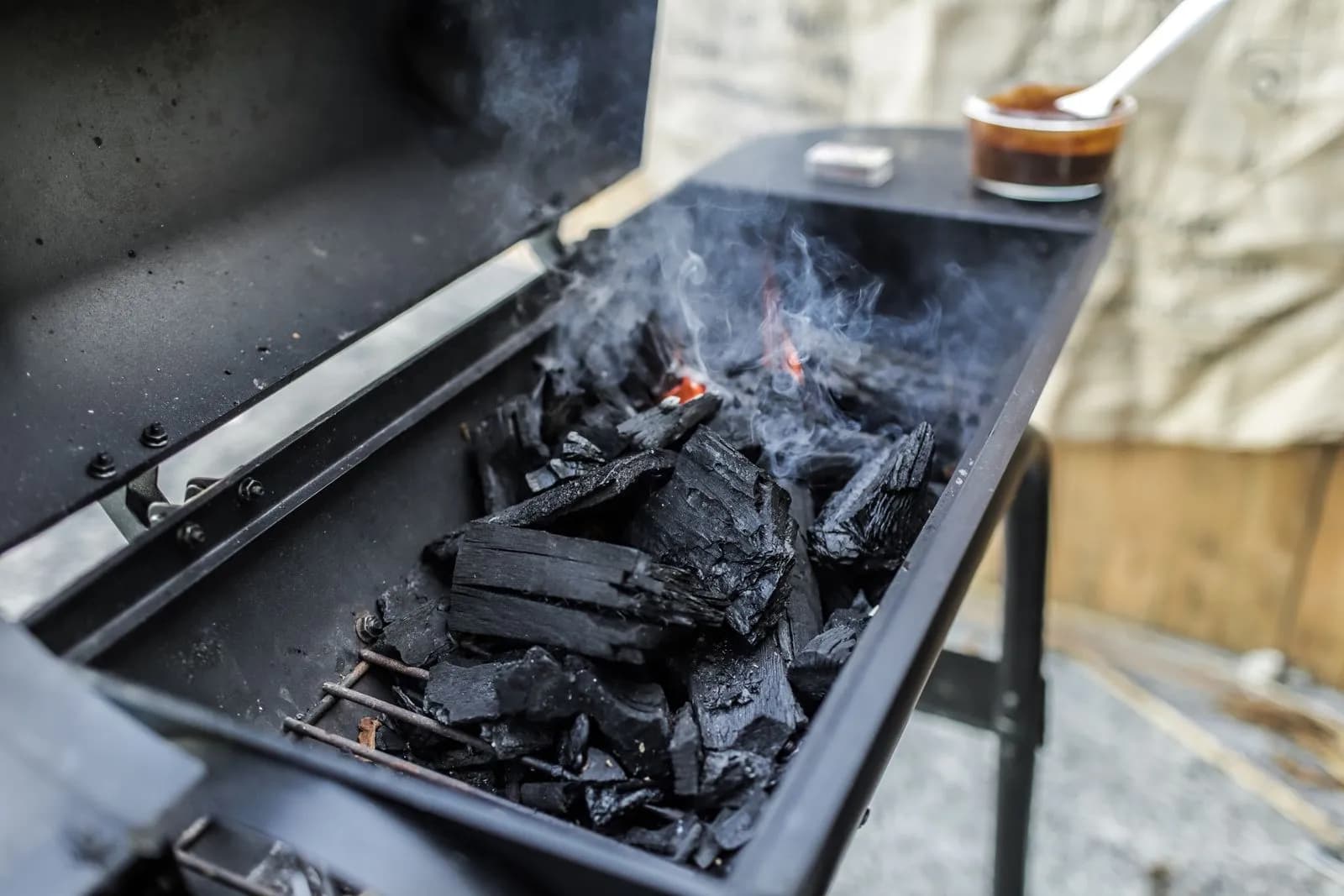
Yes, you can use a kamado in winter —and it's actually when it performs best: its refractory ceramic walls, two to three centimetres thick, hold heat so well that the outside cold barely registers, keeping temperature on a handful of coals. That same thermal mass is exactly what changes the rules once the thermometer drops.
On the Costa Blanca winter is no Siberia —in Torrevieja we rarely fall below 6-8 °C before dawn— but we do face two serious enemies: coastal humidity and, above all, the Levante wind, that gusty easterly off the sea that can wreck a low-and-slow smoke in fifteen minutes if the cooker isn't oriented properly.
We cook every winter on our terrace with a probe in hand, paying attention to how the Big Green Egg Large behaves when the Levante picks up; what follows combines that experience with the physics of ceramic and what the community reports. This guide gathers it: why ceramic beats steel in the cold, how to adjust fuel, how to stand up to the wind, what to cook when it's chilly, and how to protect the cooker so condensation and salt air don't eat it alive.
Why ceramic beats steel in the cold
The physics are unforgiving: a three-millimetre steel wall loses heat to the outside almost as fast as it takes it from the coals. In winter a Weber or a gas grill becomes a radiator that heats the garden air instead of your food, and the temperature lurches every time you lift the lid or a gust rolls through.
The kamado works the other way around. Its two or three centimetres of refractory ceramic are an insulator, not a conductor. Once the wall comes up to temperature —which does take longer in the cold, more on that shortly— it behaves like a thermos: heat stays inside, the cook is stable, and the freezing outdoor air barely touches it. On our Torrevieja terrace the cooker holds within about 10 °C whether you cook at 110 °C on an August day or at 6 °C in January, once it's settled — a gap the kamado community sees too.
That translates into something very practical: in the cold a kamado burns proportionally far less charcoal than any steel grill to hold the same temperature, because it isn't fighting heat loss. The ceramic mass is the insurance policy that makes winter the cooker's finest season.
How cold and damp affect fuel and timing
The most common misconception is that a kamado guzzles fuel in winter. It doesn't, once stabilised —but two moments genuinely change: the initial warm-up and, above all, humidity.
In the cold, all that ceramic mass that later becomes your ally has to be brought up to temperature first, and that takes time. Where in summer we reach 110 °C in around 20-25 minutes, on a 7 °C morning we count a solid 35-45 minutes before the ceramic stops stealing heat from the coals. The trap is opening the vents wider out of impatience: you overshoot, and then it takes hours to come back down. Patience and modest vent settings win.
Humidity is the factor that truly penalises you. On the Costa Blanca, charcoal stored on the porch soaks up the sea air and, once damp, lights worse, smokes more and yields less. Damp charcoal can push consumption up noticeably —the smoking community puts it at around 15-20 % more— and perform worse. The fix is trivial: keep the bag sealed indoors or in an airtight bin, never out in the open. Good dry quebracho or holm-oak lump lights the same in January as in July. This table sums up the pattern we see winter after winter cooking at 110 °C on our terrace, as a guide:
| Variable | Summer (28 °C) | Winter (7 °C, no wind) | Winter + Levante |
|---|---|---|---|
| Warm-up to 110 °C | 20-25 min | 35-45 min | 45-60 min |
| Charcoal for a 6 h cook | ~2.0 kg | ~2.5 kg | ~3.0-3.5 kg |
| Temperature stability | Very high | High | Medium (watch it) |
| Bottom vent opening | Minimal | Slightly wider | Wider + shield from wind |
The figures are indicative and depend on model and fuel, but the pattern repeats winter after winter: longer start-up, a little more charcoal, and if the Levante sets in, another step up again.
Levante wind on the Costa Blanca: orientation and air intake
The Levante is the easterly —humid and gusty— that blows in off the sea on the Costa Blanca and rules much of the winter. For a kamado it's the single most destabilising factor, far more than the cold, because it acts directly on the heart of the cooker: airflow.
A kamado regulates temperature by controlling how much oxygen enters through the bottom vent. When a Levante gust hits that intake head-on, it forces in more oxygen than you've set and the temperature spikes; when it eases, it drops. The result is the sawtooth pattern that ruins a smoke. The rule of thumb we apply in Torrevieja is simple: orient the bottom vent perpendicular to the wind, never facing into it. Rotate the cooker (most sit on a cart or castors) until the intake sits side-on to the gusts.
And one counterintuitive but important warning: never cook in the lee of a wall. The temptation is to shelter the kamado against a wall with the wind behind it, but that's exactly where return turbulence and eddies form, pushing air down the top chimney chaotically —worse than out in the open. Leave the clearance your model's manual asks for all round (between 2 and 3 metres in the manuals consulted), use a low windbreak if needed, and when the Levante really blows, postpone the cook: no brisket is worth fighting the forecast for.
Winter cooking on the kamado: braises, long roasts and bread
Winter calls for long, spoon-and-oven dishes —and that's exactly where the kamado shines. Its thermal stability makes it the best outdoor oven you can own, and the hot ceramic lends an ambient moisture and a base of glowing coal that no kitchen oven can match.
Our flagship January dish is a braise in a cast-iron dutch oven. Sear the meat straight on the grate over a live fire, fit the heat deflector to switch to indirect, slide in the covered pot at 150-160 °C and forget it for three or four hours. The result, with that smoky undertone, simply can't be had on an induction hob. Long roasts —lamb shoulder, pork belly, a good top round— are the kamado's natural winter ground: at 120-130 °C for hours, the ceramic mass holds the temperature dead steady while you stay indoors.
And bread. A kamado at 230-250 °C with a stone is essentially a wood-fired oven: the thermal mass radiates an enveloping heat that gives a spectacular crust and oven spring. A sourdough loaf or a proper focaccia on a grey winter Sunday justifies the cooker on its own. Tip: preheat generously, because in the cold the stone takes longer to charge with heat than you'd expect.
Cold-weather upkeep: condensation, gasket, cover and damp ash
Cold and coastal damp don't harm the ceramic, but they do call for four upkeep habits you can get away with skipping in summer. First is condensation. After shutting the kamado down on a humid night, the interior vapour condenses against the cold walls and can leave the inside wet. It's not serious —it evaporates on the next light— but it pays to leave the top chimney and vent slightly open at shutdown so the cooker breathes instead of staying soaked inside.
The fibre gasket (the felt that seals lid to base) is the most delicate part in winter. Slam it shut with condensation or accumulated salt and it cakes and loses its seal. Check it once a season, keep it dry, and if it no longer closes airtight, replace it: a worn gasket in the cold means air leaks and uncontrollable temperatures —exactly what you don't want with the Levante blowing.
The cover stops being optional. On the Costa Blanca, salt air and slanting rain attack the metal parts —hinge, bands, fittings— and a breathable cover after every use is the cooker's life insurance. Fit it only once the ceramic is cold, never hot. Finally, the ash: in winter it soaks up moisture and cakes into a paste that corrodes the ash pan's metal. Empty it cold and often; don't leave it brewing acidic mud inside all season.
Winter safety: snow, rain, stable footing and clearances
The kamado is safe in winter if you respect its one specific risk: thermal shock. Hot ceramic can't take an abrupt swing to extreme cold. Here on the Costa Blanca it doesn't snow, but if you live inland or up in the sierra, never throw snow or cold water on hot ceramic to put it out: the crack can be instant and permanent. A kamado is always extinguished by closing the vents and chimney and letting it starve itself out.
Rain itself is no problem —ceramic cooks perfectly while wet on the outside— but the ground is. In winter the terrace gets wet and slippery, and here comes rule number one: stable, level footing. A loaded kamado is extremely heavy (large models top 80 kg with the cart), so make sure the castors are locked and the cart can't skid on wet tile. Never place it on a wooden deck, soft grass or anything that could give way.
And clearances, which get neglected in winter as people cook tucked under the awning or against the terrace screen. Always keep the clearance your model's manual specifies from any combustible material (awnings, cane screens, outdoor curtains, furniture): in the manuals consulted it is 2 to 3 metres around and above (3 for Kamado Joe's Joe Jr, 2 for Aldi's Kamado L). If in doubt, go with the larger figure. The kamado does radiate less heat through its body than a steel grill, true, but the top chimney throws out very hot air, and a winter awning too close is an accident waiting to happen.
Winter is, without question, the best season to get the most out of a kamado, and on the Costa Blanca it's better still: it's never cold enough to suffer, yet cold enough for ceramic to show its clear edge over any steel grill. The line between loving it and cursing it comes down to two things: respecting the Levante by orienting the cooker and shielding its air intake, and accepting that in the cold you'll need a little more charcoal and a little more patience on warm-up.
We cook on the terrace right through a Torrevieja winter with no more fuss than throwing the cover on afterwards and emptying damp ash before it cakes. Get yourself a dual-probe thermometer, keep an eye on the Levante forecast, let the ceramic do its job, and you'll find that a six-hour braise on a grey January day, with the sea in the background, is one of the great pleasures of owning a kamado on the coast.
Gear featured in this guide
Recipes to get started
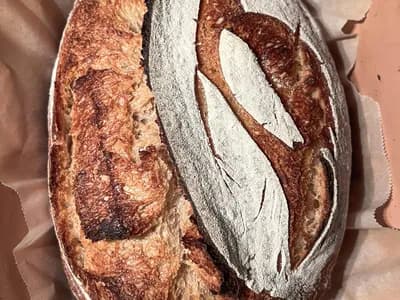
Rustic sourdough loaf in a dutch oven on the kamado
The definitive loaf: 24 hours of fermentation with active starter, cold retard in a banneton and a dutch oven that turns the kamado into a pro bakery oven.
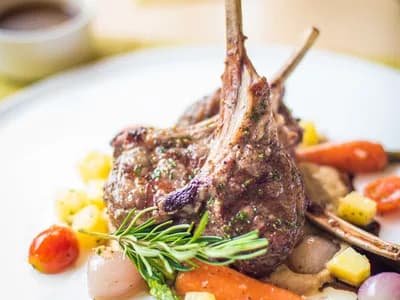
Levante-style smoked leg of lamb
A boneless leg of lamb, marinated in rosemary, lemon and Costa Blanca olive oil, smoked over local almond wood. The kamado paying tribute to the Alicante countryside.
GO DEEPER
Continue with these
- Related guide
How to maintain and clean a ceramic kamado
Ceramic almost cleans itself: burn-off, grates, gaskets and rust, explained with no miracle products and no needless chemicals.
- Related guide
What charcoal to use in a kamado (and which to avoid)
Quebracho or holm-oak lump wins; supermarket briquettes and chemical lighter fluid stay out. Here is what to load and why.
- Recipe to practice
Rustic sourdough loaf in a dutch oven on the kamado
The definitive loaf: 24 hours of fermentation with active starter, cold retard in a banneton and a dutch oven that turns the kamado into a pro bakery oven.
- Recipe to practice
Levante-style smoked leg of lamb
A boneless leg of lamb, marinated in rosemary, lemon and Costa Blanca olive oil, smoked over local almond wood. The kamado paying tribute to the Alicante countryside.
- Editorial comparison
big green egg large vs kamado joe classic iii
The classic kamado matchup: the Big Green Egg Large, the indestructible pioneer with the widest accessory network, again
- Glossary term
Refractory ceramic
High-density ceramic that absorbs, stores and radiates heat between 70 and 400 °C without cracking.
- Glossary term
Heat deflector
Ceramic plate placed between the coals and the grate to turn direct fire into indirect cooking.
- Glossary term
Bottom vent (damper)
Air-intake vent at the kamado's base; controls how much oxygen reaches the coals.
Frequently asked questions
Can you use a kamado in winter, or does the cold damage it?
Yes, you can —and it's actually the best season for it. The refractory ceramic insulates and holds heat, so the outside cold barely affects it once it's stabilised. The only real risk is thermal shock: never throw cold water or snow onto hot ceramic. Always shut it down by closing the vents and chimney, and let it cool on its own.
How much more charcoal does a kamado use in winter?
Less than people think. On a six-hour cook at 110 °C we go from about 2 kg in summer to roughly 2.5 kg on a cold, still day. With strong Levante it climbs to 3-3.5 kg. The biggest culprit is usually damp charcoal, which pushes consumption up 15-20 %: keep it dry and the gap from summer stays minimal.
How do you protect a kamado from the Levante wind on the Costa Blanca?
Orient the bottom vent perpendicular to the wind, never facing into it, by rotating the cooker on its cart. Don't tuck it in the lee of a wall: that's where turbulence forms and pushes air chaotically down the chimney. Respect the clearance the manual asks for (between 2 and 3 metres in the manuals consulted), use a low windbreak if needed, and with very strong gusts, postpone the cook.
Why does the kamado take longer to heat up when it's cold?
Because all the ceramic mass that later holds the heat has to be brought up to temperature first, and that takes longer in the cold. Where in summer we hit 110 °C in 20-25 minutes, on a 7 °C morning we count 35-45 minutes. The key is patience: don't open the vents too far, or you'll overshoot and then spend hours bringing it back down.
Should you cover the kamado in winter?
On the Costa Blanca, absolutely. The ceramic shrugs off rain, but salt air and coastal damp attack the metal parts (hinge, bands, fittings) and rust the ash pan. A breathable cover after every use is the cooker's best insurance. Always fit it once the ceramic is cold, never hot, and empty damp ash often so it can't cake and corrode the metal.