Recipe · Direct · Medium
Double Oklahoma Onion Smash Burger on an Iron Griddle in the Kamado
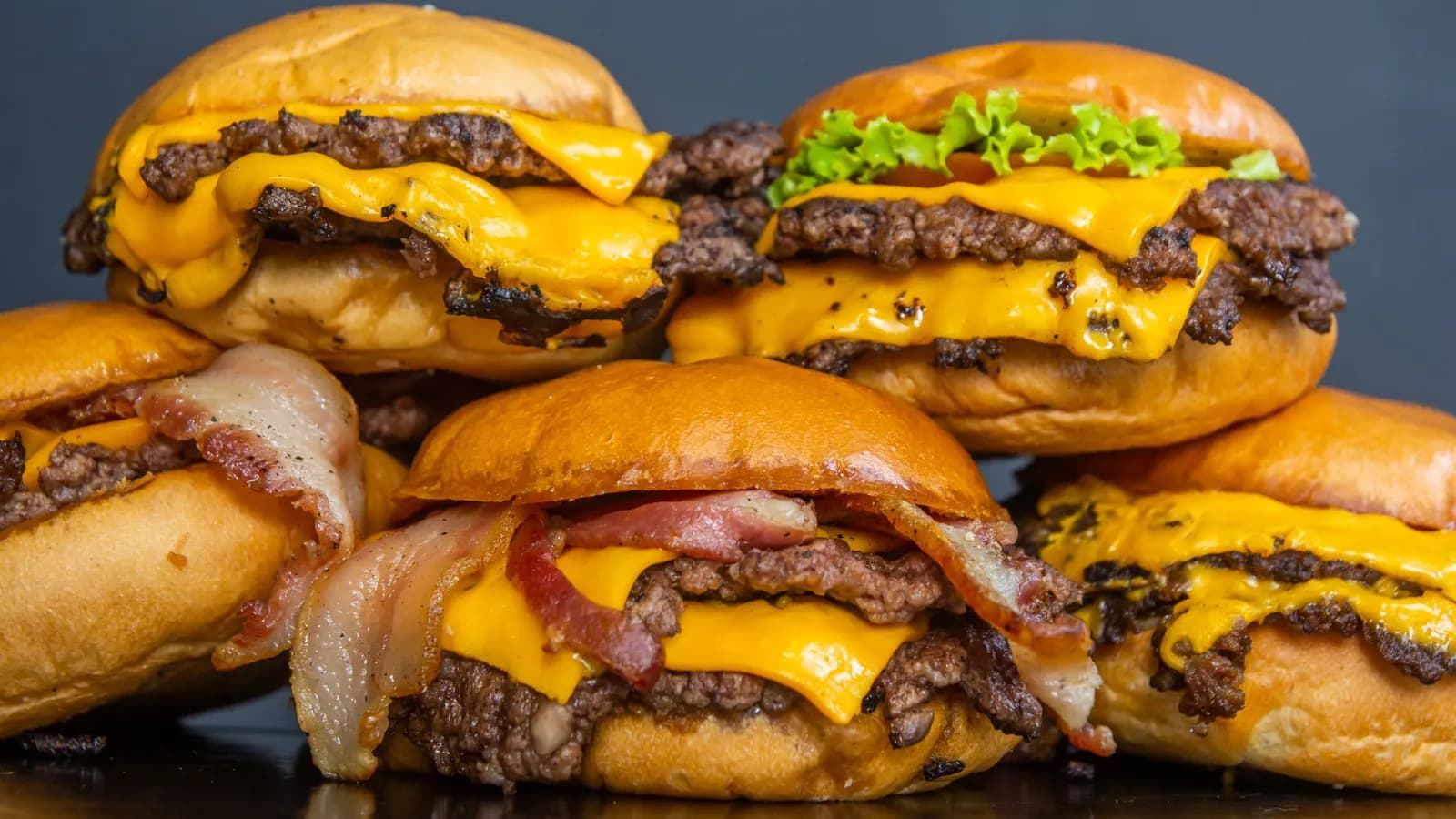
The Oklahoma onion burger smashes the meat into thinly sliced onion on iron at 250-300 °C. Here it goes double, with melted cheese between the layers and a brioche bun, over direct heat in the kamado.
Quick answer
With no deflector and the chamber at about 280 °C, preheat an iron pan or griddle for 20 minutes to 250-300 °C on the surface, measured with an infrared thermometer. Smash 75 g balls onto thinly sliced onion, salt, flip after 90 seconds, melt the cheese and stack two layers. Minced beef: 71 °C.
One big step at a time, screen kept on and built-in timers.
- Prep
- 25 min
- Cook
- 45 min
- Servings
- 4 servings
- Temperature
- 280 °C
What time do you want to eat?
Pick a time and we'll tell you when to start.
12:20
Start the prep
12:45
Light the kamado
13:05
Onto the kamado
14:00
Serve
Estimate: it includes lighting and settling the kamado plus a margin for large cuts. If the recipe asks you to marinate or salt ahead, add that time.
Fire setupDirect heat
- Dome
- 280 °C
- Deflector
- No
- Grate
- Standard height
- Bottom vent
- Half open
- Top vent
- Open
- Fuel
- Quebracho lump charcoal, full firebox
- Setup
- 30 cm cast-iron grill pan and smash press
Ingredients
- minced beef with 20% fat, in 8 balls of 75 g600 g
- large onions, in 1-2 mm slices (mandoline)2
- brioche burger buns4
- slices of cheddar or American-style processed cheese8
- butter, for toasting the buns30 g
- neutral oil, for greasing the surface1 tbsp
- fine salt and freshly ground black pepperto taste
- pickles, mustard and ketchup, to assembleto taste
Allergens
- Gluten
- Eggs
- Milk
- Mustard
Brioche buns and processed cheese may contain soy or sesame: check the label.
Based on the recipe's ingredients. Always check the label of every product you buy.
The gear for this recipe
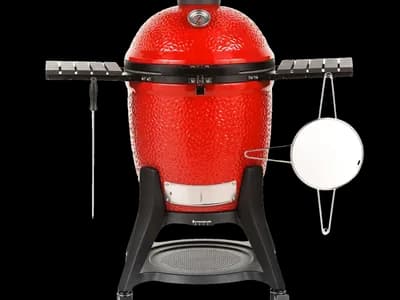
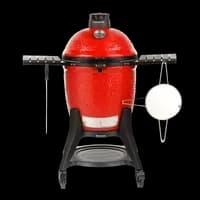 Kamado Joe Classic III 18"This recipe needs a kamado that holds 280 °C with an iron surface on top and gets back there between batches. The Kamado Joe Classic III is built from dense ceramic that holds heat well as the lid opens and closes, and its grate is 46 cm across. Neither the deflector nor the SlōRoller is used here: the burger needs the coals underneath. Honest drawback: it weighs 127 kg with its cart, and the Staub measures 51.5 cm with its handle, so check cold that the lid closes with it inside.
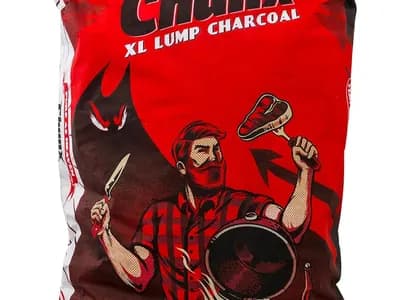
 Jealous Devil 100% White Quebracho lump charcoal 15.8 kgJealous Devil is Paraguayan white quebracho lump charcoal, a very dense wood, with around 3% ash according to its listing. To reach 280 °C and hold it through the preheat and four batches without refuelling, you want a charcoal that burns hot and clean. Drawback: the listing talks about burns of more than 20 hours in a smoker, far more than this short recipe needs; close both vents when you finish and the leftover charcoal will do for next time.
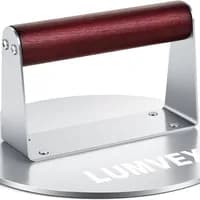 LUMVEX LUM-1: 16 cm stainless steel smash burger pressThe press smashes the ball onto the onion in one go, which is what gives the crust. The Lumvex is thick stainless steel, 16 cm and about 590 g according to its listing, with a wooden handle; that weight does the work for you. Real drawback: the handle is wood, so it cannot rest on the hot iron, and the 16 cm covers one ball, not two at once.
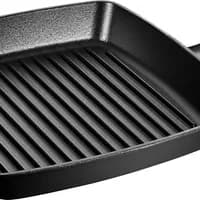 Staub 40501-107-0: 30 cm enamelled cast iron grill panThis is the cooking surface: enamelled cast iron that, according to its listing, absorbs and stores heat well, just what you need so it does not cool when the meat goes on. The Staub 30 cm has a 25 x 25 cm base and weighs about 4.9 kg. Clear drawback: the ridges leave the crust in stripes, with less contact than a flat griddle, the base only takes two balls per batch, and with its handle it measures 51.5 cm, so check that it fits your kamado with the lid closed.
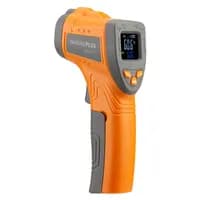 Inkbird INK-IFT01: surface infrared thermometer up to 550 °CIt measures the surface of the iron so you know it is at 250-300 °C before the meat goes on. The Inkbird IFT01 reads from -50 to 550 °C, with an accuracy of 2% or 2 °C and adjustable emissivity according to its listing. Honest drawback: it measures only the surface, never the inside of the meat, and for that you need a separate probe.
Method
- 01
Balls and onion
Divide the meat into 8 balls of 75 g, without kneading or salting them, and keep them in the fridge. Slice the onion 1-2 mm thick on a mandoline: thicker will not soften in time. Have the press, a wide metal spatula, the cheese, the opened buns and the plates within reach.
- 02
Light with no deflector
Fill the firebox with Jealous Devil quebracho lump charcoal, light it and set the grate with no deflector. Put the iron grill pan in the centre (check beforehand, cold, that the lid closes with it inside) and bring the kamado to about 280 °C with the bottom vent about three fingers open and the top vent at three-quarters. Allow 20 minutes with the chamber steady so the iron heats right through.
- 03
Measure the surface
With gloves on, open by burping: lift the lid about 5 cm, wait about 5 seconds, then open fully with your face turned away. Aim the Inkbird IFT01 at the base of the iron, not at the ash or the rim, and look for 250-300 °C. If it reads lower, close the lid and wait 5 minutes; if higher, close the bottom vent a little. Wipe the surface with the oil.
- 04
Toast the buns
Butter the cut side of the buns and toast them on the iron for 30-60 seconds, in two batches, until golden. Lift them out with tongs and set them on the plates. Close the lid straight away so the heat is not lost.
- 05
Smash onto the onion
Put 2 balls on the iron, well apart: the Staub's 25 x 25 cm base takes two, just. Cover each with a handful of onion and smash with the Lumvex press in one go, with your full weight, for 10 seconds, to about 5-6 mm thick. Close the lid and burp it every time you open it again. The press has a wooden handle: do not leave it resting on the hot iron.
- 06
Season and flip
Season the patties with salt and pepper and close the lid for 80-90 seconds, until the edges are brown and lacy. Scrape with the spatula held flat against the iron to lift the whole crust and flip with the onion side down. Give it another 20 seconds so the onion caramelises.
- 07
Cheese and stack
Put a slice of cheese on each patty and close the lid for 20 seconds. Stack one patty onto the other so there is cheese in between and on top. Check the first stack with an instant probe: the centre must reach 71 °C. Repeat with the remaining 6 balls, two at a time, with 2 minutes of closed lid between batches.
- 08
Assemble and shut down
Set each stack on its bottom bun, add pickle, mustard and ketchup, cap and serve at once. Close both vents fully to put out the coals. Let the iron cool before washing it, with no cold water on the hot enamel.
About this recipe
The Oklahoma onion burger was born in the diners of El Reno, Oklahoma, during the Great Depression, when beef was scarce and someone had the idea of smashing the ball of meat into a heap of thinly sliced onion on the griddle. The onion caramelises in the fat, sticks to the meat and ends up being half the flavour. Here it is made double, two thin patties stacked with cheese between them, on an iron surface at 250-300 °C inside the kamado.
This is not the other smash: what changes
If you want the basic version, there is the smash burger on the kamado. This recipe differs in three things. First, the onion: a generous handful of 1-2 mm slices pressed onto the raw ball, so it is embedded in the meat and, once flipped, caramelises against the iron in the fat. Second, the double format: two 75 g balls per burger, each with its own crust, instead of a single thicker patty. Third, the order: nothing is salted before smashing, and the cheese melts between the two layers so the stack holds together. The result is sweeter, crunchier at the edges and juicier inside than a smash without onion.
The surface: iron, heat and a thermometer
The whole trick is contact: thin meat only browns properly if the iron is very hot and it is smashed in one go. The Staub 30 cm grill pan is enamelled cast iron, copes with direct fire and stores heat, but it has ridges: the crust comes out in stripes and uneven. If you have a flat griddle such as the reversible Lodge plancha, use its flat side, which takes four balls at once; with the Staub you still get a good burger, just with less crust surface. Do not guess the temperature: measure it. An infrared thermometer such as the Inkbird IFT01 reads surfaces up to 550 °C and lets you adjust emissivity, so you know the iron is at 250-300 °C before anything goes on. Below that, the meat leaks juice and stews instead of browning; above it, the onion burns before it softens.
The kamado over direct heat
This is pure direct cooking: no deflector, the iron surface on the grate and the chamber at about 280 °C, which gives 250-300 °C on the iron after a 20-minute preheat. The bottom vent about three fingers open and the top vent at three-quarters is usually enough; the temperature control guide explains how to correct without overshooting. Fat from the meat can cause flare-ups: always open by burping (lift the lid 5 cm, wait a few seconds, then open fully) and wear gloves, because the chamber is very hot. Cooking time is short, about 3 minutes per batch plus 2 to recover, so the hard part is organisation: toasted buns, cheese and plates ready before the first ball goes on.
Beef, cheese and bun
Ask the butcher for minced beef with 20% fat (chuck, or chuck with skirt) or have it minced to order; lean meat dries out as soon as the crust forms. Keep the balls cold until the last moment. For cheese, sliced cheddar or American-style processed cheese melts in seconds; brioche, toasted in butter, holds the juice without falling apart. See the cuts and equivalents guide if you are unsure of the Spanish name of a cut. As it is minced meat, the safe point is 71 °C in the centre; with patties 5-6 mm thick and this heat it is reached in seconds, but it is worth checking on the first stack.
In 30 seconds
Kamado with no deflector at about 280 °C and an iron grill pan preheated 20 minutes to 250-300 °C on the surface (checked with an infrared thermometer). 75 g balls two at a time, thinly sliced onion on top, smash with the press for 10 seconds, salt, and flip after 80-90 seconds. A slice of cheese per patty, 20 seconds with the lid down, stack and into a toasted brioche bun. Minced beef: 71 °C in the centre.
Will it fit your kamado?
Small
33-40 cm · Joe Jr, MiniMax
Won't fit
The 30 cm pan with handle probably stops the lid closing; with a 24 cm one, one ball per batch.
Medium
46-51 cm · Classic, Large
Fits
The pan fits in the centre; 2 balls per batch, 4 batches for all 8.
Large
56-61 cm · Big Joe, XL
Fits
Fits easily; with a bigger griddle probably 4 balls per batch.
What to serve with it
- Wine
- Young red Monastrell from Jumilla or Garnacha from Calatayud
- Beer
- Pilsner-style lager or pale ale
- Alcohol-free
- Homemade lemonade over plenty of ice
Leftovers and storage
- In the fridge
- Patties apart from the buns, airtight, chilled within 2 h: 3-4 days. Buns 1-2 days, wrapped.
- Freezing
- Cooked patties freeze 2-3 months separated with paper; not assembled, the bun goes soggy.
- Reheating
- Griddle or covered pan with a few drops of water to 74 °C in the centre; fresh cheese at the end.
- Using them up
- Crumble the meat with the onion into a quesadilla or a pasta sauce.
Cool and refrigerate within 2 hours. When in doubt, throw it out.
Editor's tips
- Keep the balls in the fridge until the last moment: a cold ball smashes without sticking to the press and the fat does not melt before it reaches the iron. If it sticks, put a piece of baking paper between the press and the meat.
- With the Staub, cook two at a time (one double burger per batch); a large flat griddle takes four. Each ball cools the iron and a crowded surface does not recover. Between batches close the lid for 2-3 minutes and measure again with the infrared before continuing.
- Fat and onion can catch fire: if you see flames, close the lid and the bottom vent and wait. For other temperature problems, see the problems and solutions guide.
Gear for this recipe
As an Amazon Associate, mikamado.es earns from qualifying purchases. At no extra cost to you.
Kamado Joe Classic III 18"
This recipe needs a kamado that holds 280 °C with an iron surface on top and gets back there between batches. The Kamado Joe Classic III is built from dense ceramic that holds heat well as the lid opens and closes, and its grate is 46 cm across. Neither the deflector nor the SlōRoller is used here: the burger needs the coals underneath. Honest drawback: it weighs 127 kg with its cart, and the Staub measures 51.5 cm with its handle, so check cold that the lid closes with it inside.
€2,399
Jealous Devil 100% White Quebracho lump charcoal 15.8 kg
Jealous Devil is Paraguayan white quebracho lump charcoal, a very dense wood, with around 3% ash according to its listing. To reach 280 °C and hold it through the preheat and four batches without refuelling, you want a charcoal that burns hot and clean. Drawback: the listing talks about burns of more than 20 hours in a smoker, far more than this short recipe needs; close both vents when you finish and the leftover charcoal will do for next time.
€234
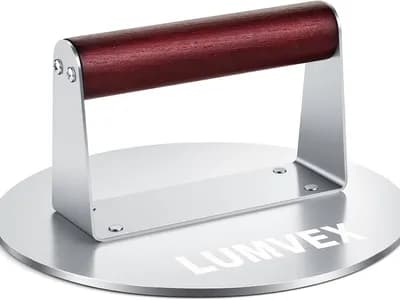
LUMVEX LUM-1: 16 cm stainless steel smash burger press
The press smashes the ball onto the onion in one go, which is what gives the crust. The Lumvex is thick stainless steel, 16 cm and about 590 g according to its listing, with a wooden handle; that weight does the work for you. Real drawback: the handle is wood, so it cannot rest on the hot iron, and the 16 cm covers one ball, not two at once.
€22
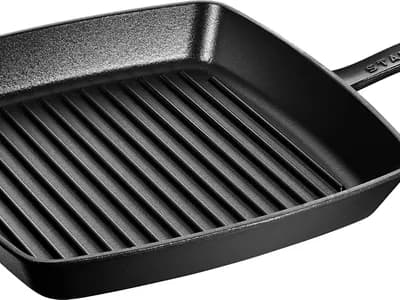
Staub 40501-107-0: 30 cm enamelled cast iron grill pan
This is the cooking surface: enamelled cast iron that, according to its listing, absorbs and stores heat well, just what you need so it does not cool when the meat goes on. The Staub 30 cm has a 25 x 25 cm base and weighs about 4.9 kg. Clear drawback: the ridges leave the crust in stripes, with less contact than a flat griddle, the base only takes two balls per batch, and with its handle it measures 51.5 cm, so check that it fits your kamado with the lid closed.
€160
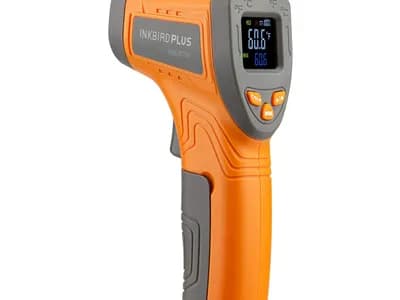
Inkbird INK-IFT01: surface infrared thermometer up to 550 °C
It measures the surface of the iron so you know it is at 250-300 °C before the meat goes on. The Inkbird IFT01 reads from -50 to 550 °C, with an accuracy of 2% or 2 °C and adjustable emissivity according to its listing. Honest drawback: it measures only the surface, never the inside of the meat, and for that you need a separate probe.
€26
Have you made it?
Tell us how it turned out on your kamado. We review every rating before publishing it.
No published ratings yet. Be the first!
FAQ
How does it differ from a regular smash burger?
A classic smash is flattened on its own on the iron. This one has thinly sliced onion pressed onto the ball, which caramelises against the crust, and goes double with cheese in the middle. It comes out sweeter and crunchier at the edges.
Can I make it in a small kamado or without a griddle?
Yes. Any iron or steel pan that fits your grate will do, and in a compact kamado it is enough to make one stack at a time. If the pan has a long handle, check that the lid still closes. What matters is reaching 250-300 °C on the surface.
What if I do not have an infrared thermometer?
You can go by the chamber at 280 °C and 20 minutes of preheating, and test with a drop of water: it should evaporate instantly. But the infrared saves guessing and repeating. Keep in mind it measures only the surface.
What doneness is the meat?
As it is minced meat, it is cooked through: 71 °C in the centre, with no raw pink part. At 5-6 mm thick on iron at 250-300 °C that happens in seconds, and the onion and cheese keep it juicy.
Can it be prepared ahead?
The balls and onion can be prepared a few hours ahead and kept separately in the fridge. A cooked burger loses its crust when reheated, so it is better made fresh. Leftovers keep a day in the fridge.
More kamado recipes
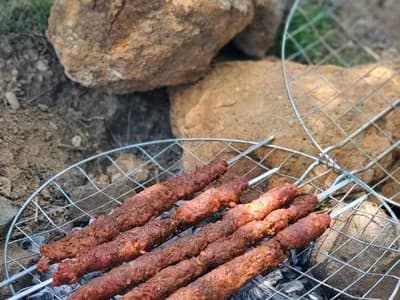
Lamb Lyulya Kebab on the Kamado
The question is never how to season it, but why it falls off the skewer. The answer is fat, a hand-chopped grain and real kneading: juicy lamb that holds together over direct fire.
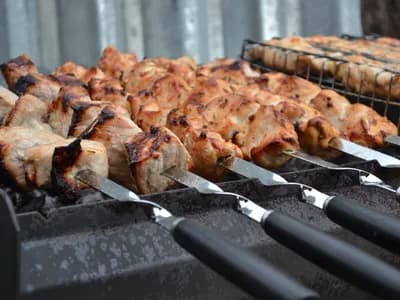
Pork Neck Shashlik on the Kamado, Onion Marinade
The skewer of the Russian-speaking world, cooked as I make it on my Big Green Egg Large: pork neck in 3 cm cubes, a grated onion marinade with not a drop of vinegar, and twenty minutes of steady direct fire.
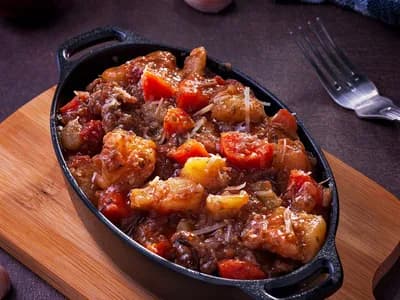
Beef Cheeks in Red Wine, Braised in a Dutch Oven on the Kamado
Three hours of red wine, cast iron and a thread of olive-wood smoke your kitchen oven simply cannot make. The braise that justifies lighting the kamado in midwinter.
KEEP READING
Go deeper on this dish
- Recommended kamado
Kamado Joe Classic III 18"
This recipe needs a kamado that holds 280 °C with an iron surface on top and gets back there between batches. The Kamado Joe Classic III is built from dense ceramic that holds heat well as the lid opens and closes, and its grate is 46 cm across. Neither the deflector nor the SlōRoller is used here: the burger needs the coals underneath. Honest drawback: it weighs 127 kg with its cart, and the Staub measures 51.5 cm with its handle, so check cold that the lid closes with it inside.
- Editorial guide
How to light a kamado: the step-by-step method
No petrol, no weird tablets and no 45-minute waits. The cone method, airflow control and the mistakes that prevent 80% of the frustration.
- Glossary term
Heat deflector
Ceramic plate placed between the coals and the grate to turn direct fire into indirect cooking.
- Related comparison
big green egg large vs kamado joe classic iii
The classic kamado matchup: the Big Green Egg Large, the indestructible pioneer with the widest accessory network, agai…