Recipe · Indirect · Easy
Monkfish en papillote with fennel and orange on the kamado
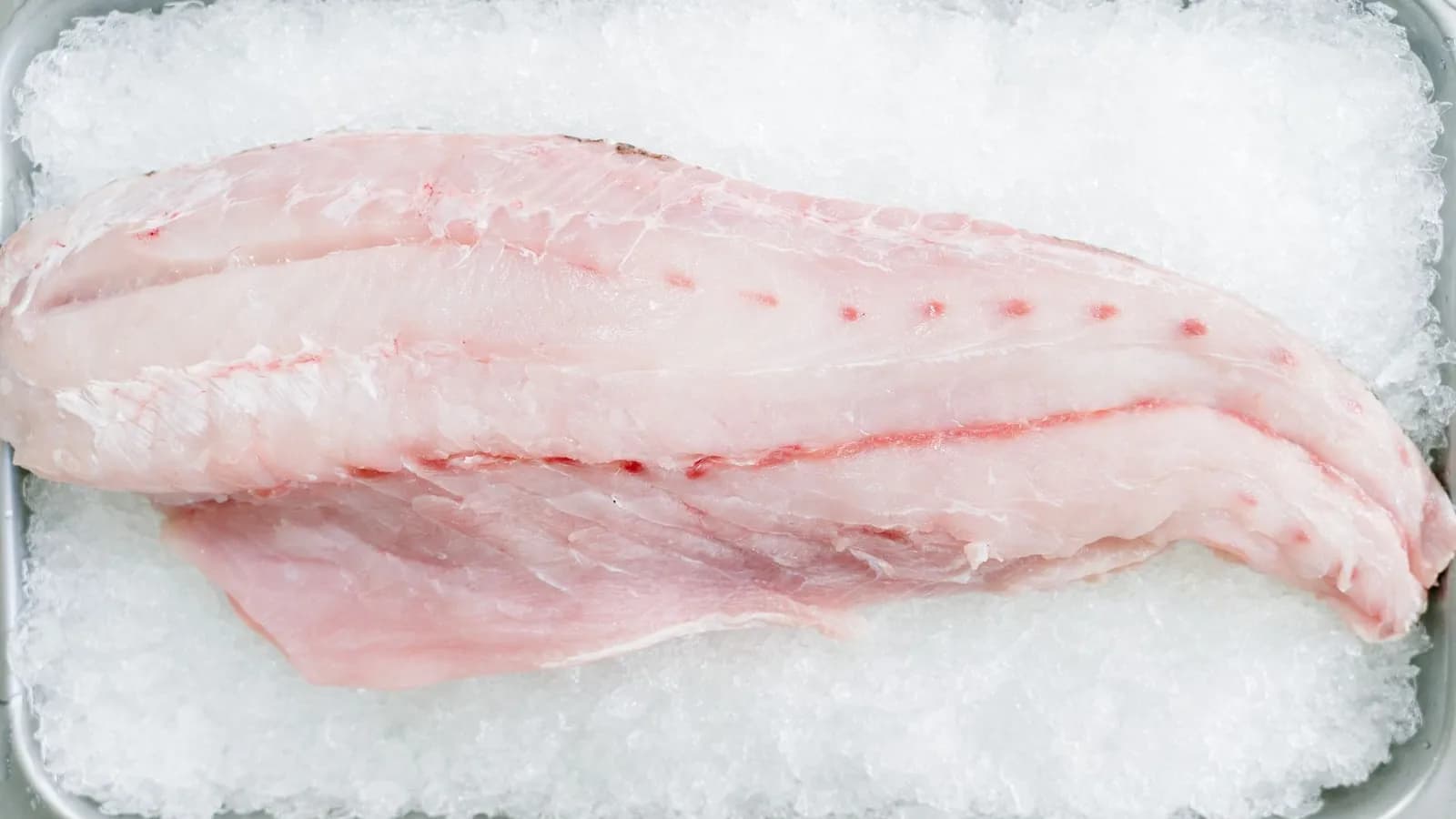
Twenty-five minutes, a sealed paper parcel and little else: monkfish steams in its own juices on a bed of fennel, with orange rounds on top. You open it at the table and it smells of winter.
Quick answer
Monkfish en papillote cooks on a kamado set up indirect at 195 °C for 20-25 minutes. Build a bed of finely sliced fennel, sit 200 g monkfish medallions on top, cover with orange rounds and fold the parchment shut without peeking: it is done when the core reads 52-54 °C.
- Prep
- 15 min
- Cook
- 25 min
- Servings
- 4 servings
- Temperature
- 195 °C
Ingredients
- monkfish tail, skinned and membrane removed (4 medallions of about 200 g)800 g
- fennel bulbs, with their green fronds2 ud
- eating oranges (one sliced, one for juice)2 ud
- spring onion, finely shredded1 ud
- garlic cloves, thinly sliced2 ud
- dry white wine60 ml
- extra virgin olive oil4 cda
- fennel seeds, lightly crushed1 cdta
- sprigs of fresh thyme4 ud
- pink peppercorns8 ud
- flaky sea salt1 cdta
- freshly ground black pepper1 pizca
Method
- 01
Set up indirect
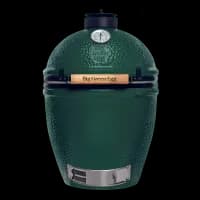
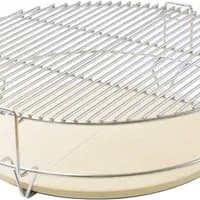
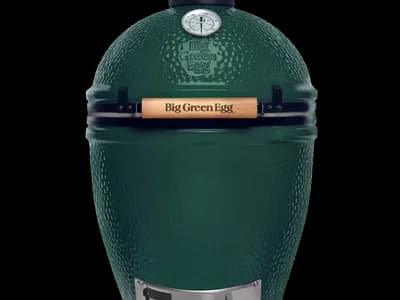
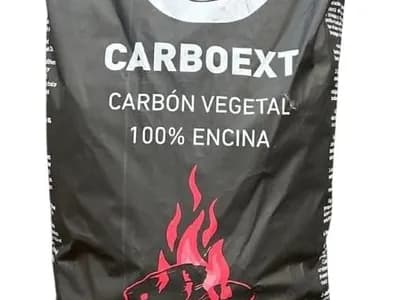
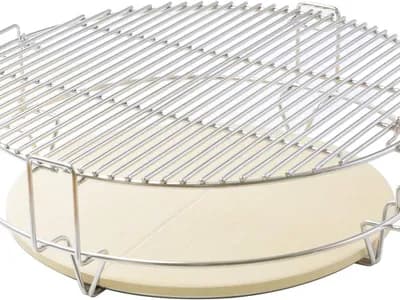
Light the kamado with the charcoal in a central mound and fit the Big Green Egg ConvEGGtor plate setter (Large) legs up, grate on top. Settle the dome at 195 °C for at least 15 minutes: the ceramic itself has to be properly hot, not just the air. If you want that smoky scent on the paper, add one small chunk of orange wood now.
- 02
Prep the monkfish
Ask for the monkfish tail skinned and, above all, stripped of the bluish membrane that wraps it: leave it on and it contracts in the heat and curls the medallion. Cut the tail into four medallions of about 200 g, pat them thoroughly dry with kitchen paper and salt them on both sides. Leave them 10 minutes at room temperature while you prepare the rest.
- 03
Slice the fennel
Peel away the tough outer layers of the fennel and slice it 2-3 mm thick on a mandoline or with a very sharp knife; any thicker and it will not soften in 25 minutes. Add the shredded spring onion, the sliced garlic, the fennel seeds, two tablespoons of the oil and the zest of half an orange. Toss with your hands and season.
- 04
Slice the orange
Wash one orange and cut it into rounds about 5 mm thick, skin on: the peel stands up to the heat and perfumes without collapsing into the juices. Juice the second orange and mix it with the white wine and the remaining oil; that is all the moisture going into the parcel. Keep the green fennel fronds back, they go in raw at the end.
- 05
Build the parcel
Cut four sheets of baking parchment about 40 cm long. Pile the fennel in the middle of each to make a bed two fingers deep, sit a monkfish medallion on top, cover with two orange rounds, a few pink peppercorns and a thyme sprig. Spoon over two tablespoons of the wine mixture and seal by folding the edges over on themselves several times, without cinching it against the fish: the steam needs room.
- 06
Twenty-five minutes shut
Set the four parcels on the grate with the Weber Pinza Precision 46 cm tongs, spaced apart, and close the lid. Twenty to twenty-five minutes at 195 °C and not a single peek: every time you lift the lid you lose temperature and the paper deflates. Around the fifteen-minute mark they will be ballooning, which is the sign that steam is doing its work inside.
- 07
Check the core
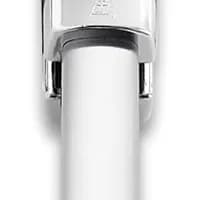
At 20 minutes, push the Lavatools Javelin PRO Duo straight through the paper into the thickest part of the medallion. You are after 52-54 °C: the monkfish stays firm and juicy, still pearly at the centre. If it reads 48 °C, pinch the hole shut with the paper itself and give it another 3-4 minutes. Past 60 °C the flesh turns cottony.
- 08
Open at the table
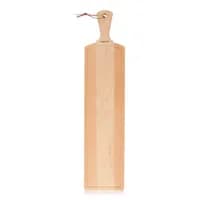
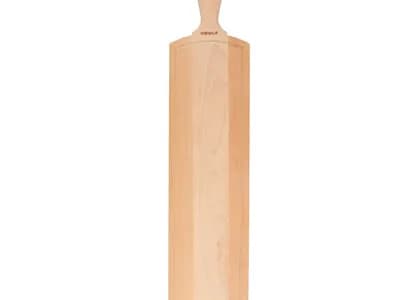
Lift the parcels out and let them rest 3 minutes still sealed: residual heat finishes the job. Carry them whole on the Boska Amigo L Tabla de Servir Haya 51 cm and open them in front of your guests, tearing the paper in a cross; the burst of orange and fennel steam is half the recipe. Finish with the green fennel fronds and a thread of raw olive oil.
About this recipe
En papillote is the most classic kamado technique we had never written up here, and it is also the weeknight recipe missing among all those six-hour cooks. A sealed paper parcel turns ceramic into something very close to a steam oven: the monkfish cooks in the steam of its own juices, losing nothing, on a bed of fennel that keeps it clear of the heat below. Fifteen minutes of knife work, twenty-five with the lid shut.
Why papillote suits ceramic so well
A kamado with the deflector in place is a closed, humid, remarkably steady chamber: at 195 °C it barely wavers, and that stillness is exactly what a parcel you cannot open to peek into demands. The paper inflates because there is vapour pressure inside, and while it stays puffed the fish is cooking at little over 100 °C even though the dome reads nearly double. That is why monkfish comes out firm rather than dry.
Monkfish, fennel and orange, a December-to-March trio
Monkfish tail off the market slab is at its best in winter, precisely when Vega Baja oranges arrive sharp and free of bitterness. The fennel does two jobs at once: it perfumes, and sliced to 2-3 mm it lifts the fish off the bottom of the parcel so it neither sticks nor toasts underneath. The orange goes on top in thin rounds, skin on, releasing its essential oils over the fillet as it cooks.
Smoke scents the paper, not the fish
Worth saying plainly: inside a sealed papillote the fish does not take on smoke. Smoke does not cross the paper, it settles on the outer face instead, and that aroma hits you all at once when you tear the parcel open at the table. If you want that detail, one small chunk of orange wood is more than enough. Load the coals with wood and all you get is soot on the paper.
In 30 seconds
Indirect with the deflector at 195 °C. A bed of sliced fennel, monkfish medallions on top, orange rounds, a splash of white wine and oil, parchment folded tight. 20-25 minutes unopened, to a core of 52-54 °C. Rest 3 minutes and bring it to the table still in its parcel.
Editor's tips
- The monkfish membrane is non-negotiable: the bluish sheath around the tail shrinks in the heat and leaves the medallion curled and leathery on the outside, so strip it off completely before you cut.
- Use baking parchment rather than foil: with orange and wine in there it is better to keep acid off metal for that long, and paper visibly inflates, confirming from the outside that the parcel is working.
- If your fennel ends up thicker than 3 mm, give it a quick two-minute sauté before building the parcel; 25 minutes of papillote will not soften it and it stays crunchy under the fish.
- One small chunk of orange wood is plenty, since the smoke only scents the outer face of the paper; load the coals with wood and you end up with soot and a parcel that smells of ash when you open it.
Gear for this recipe
As an Amazon Associate, mikamado.es earns from qualifying purchases. At no extra cost to you.
FAQ
What temperature and time for monkfish en papillote on a kamado?
Indirect with the deflector, dome at 195 °C, between 20 and 25 minutes for medallions of around 200 g. The clock does not decide doneness, the thermometer does: 52-54 °C at the centre. A thinner medallion can be ready in 18 minutes, while a 250 g one will want closer to 28.
Baking parchment or foil for the papillote?
Baking parchment. Foil works, but with citrus and white wine inside it is better to avoid long contact between acid and metal. Parchment also inflates visibly once the steam gets going, which tells you from the outside that the parcel is properly sealed without opening it.
Does the fish take on smoke inside the papillote?
No. Smoke does not cross the sealed paper: it stays on the outer face and scents the parcel, not the fish. It is a pleasant detail when you open it at the table, but if you genuinely want smoked monkfish you have to cook it uncovered over low indirect heat, not in a parcel.
Which other fish work in this papillote?
Any firm-fleshed fish that survives 25 minutes without falling apart: thick hake loins, desalted salt cod, meagre or grouper. Slim oily fish such as sardines or anchovies overcook far too quickly and are poor candidates here. Adjust the time to the thickness of the piece, not to the species.
What core temperature is safe for monkfish, and what about anisakis?
For pearly flesh, 52-54 °C is the professional kitchen's point. But below 60 °C the heat does not kill anisakis, and freshness has nothing to do with it: either the monkfish has spent 5 days at −20 °C in a home freezer (24 h at −35 °C in a blast chiller), or you take the core to 60 °C. With pregnant women, small children or immunocompromised guests at the table, 60 °C always.
More kamado recipes
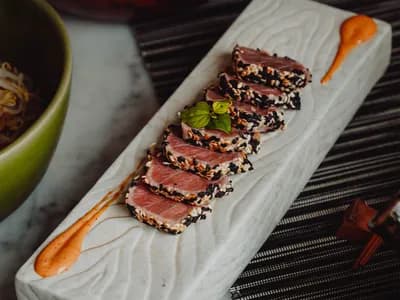
Sesame-Crusted Seared Bluefin Tuna on the Kamado (Tataki)
A bluefin tuna loin rolled in sesame and seared 30-45 seconds per side over a screaming-hot kamado: a toasted crust outside, a raw, juicy core, and a soy, ginger and lime sauce that wakes it all up.
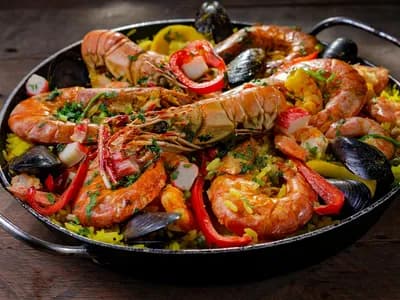
Arroz a banda on the kamado, fisherman's socarrat
Alicante-style arroz a banda in a paella pan over the kamado grate: a rockfish fumet, a long sofrito and a textbook final socarrat.
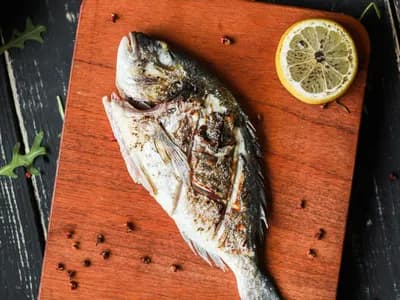
Butterflied sea bream on the kamado, with garlic, chilli and lemon refrito
Sea bream butterflied open over direct coals, skin down first, finished with a hot garlic, chilli and lemon refrito. Mediterranean fish off Torrevieja, ready in 18 minutes. Serves 2.
KEEP READING
Go deeper on this dish
- Recommended kamado
Big Green Egg Large
The classic kamado that defined the category
- Editorial guide
How to light a kamado: the step-by-step method
No petrol, no weird tablets and no 45-minute waits. The cone method, airflow control and the mistakes that prevent 80% of the frustration.
- Glossary term
Heat deflector
Ceramic plate placed between the coals and the grate to turn direct fire into indirect cooking.
- Related comparison
big green egg large vs kamado joe classic iii
The classic kamado matchup: the Big Green Egg Large, the indestructible pioneer with the widest accessory network, agai…