Recipe · Indirect · Advanced
Kamado Pan de Cristal (Glass Bread)
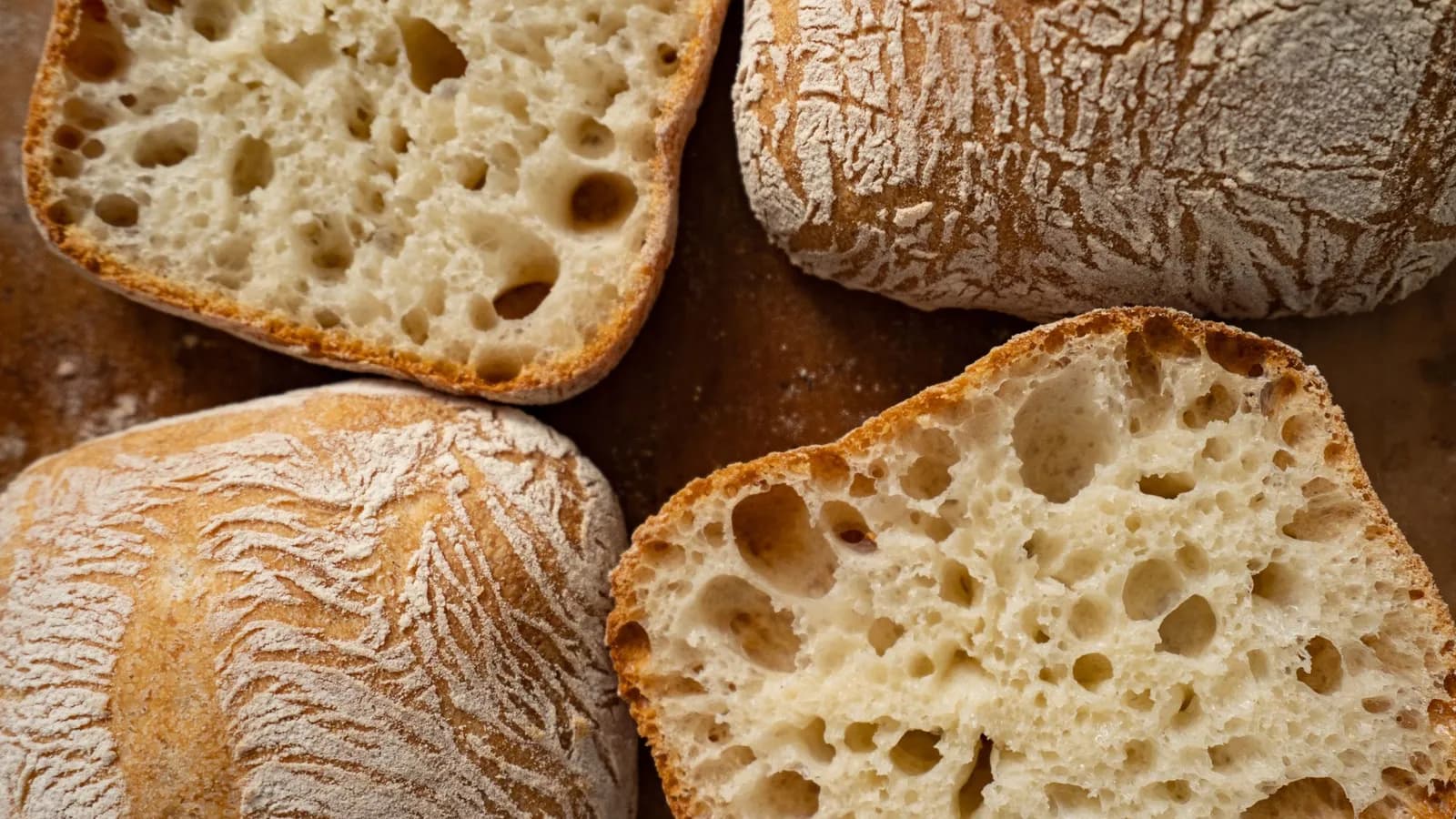
Catalan pan de cristal pushes hydration to the edge: an almost pourable dough that, baked on a stone with steam inside the kamado, turns into a glossy, wide-open crumb beneath a crust so thin it shatters like glass.
Quick answer
Pan de cristal bakes on a stone inside the kamado at 250 °C using indirect heat and steam. Mix strong bread flour at 80-85% hydration, cold-ferment for 18-24 hours, cut into rectangles without degassing, and bake for 20-25 minutes until the crust turns thin, golden and shatteringly crisp like glass.
One big step at a time, screen kept on and built-in timers.
- Prep
- 50 min
- Cook
- 25 min
- Servings
- 6 servings
- Temperature
- 250 °C
What time do you want to eat?
Pick a time and we'll tell you when to start.
12:05
Start the prep
12:55
Light the kamado
13:25
Onto the kamado
14:00
Serve
Estimate: it includes lighting and settling the kamado plus a margin for large cuts. If the recipe asks you to marinate or salt ahead, add that time.
Fire setupStone or steel
- Dome
- 250 °C
- Deflector
- Yes
- Fuel
- Holm oak lump charcoal
- Setup
- Deflector, stone on spacers and an iron tray for steam
Temperature curve
1:20 h from lighting
Kamado dome
| # | From | Phase | Dome |
|---|---|---|---|
| 1 | 0:00 | Light the charcoal | 20 → 245 °C |
| 2 | 0:30 | StabiliseStone fully hot, 240-250 °C | 245 → 250 °C |
| 3 | 0:48 | Put the food inIce in the hot tray, close at once | 250 → 215 °C |
| 4 | 0:49 | BakeWith steam, lid closed | 215 → 250 °C |
| 5 | 1:00 | BakeOpen briefly to release steam | 240 → 250 °C |
| 6 | 1:10 | RestOn a rack, recipe asks at least 20 min | 250 → 100 °C |
| 7 | 1:20 | Serve | off |
0:00 is the moment you light the charcoal. Internal temperatures are the ones the recipe gives; without a probe, go by the times. Turn these times into clock times with the planner
For this recipe
Ingredients
- strong bread flour (W≥250)500 g
- cold water (≈82% hydration)410 ml
- fine sea salt10 g
- instant dry yeast3 g
- extra virgin olive oil15 ml
- fine semolina or rice flour (for handling)30 g
- ice cubes (for steam)150 g
- extra bread flour for the bench20 g
Allergens
- Gluten
Based on the recipe's ingredients. Always check the label of every product you buy.
The gear for this recipe
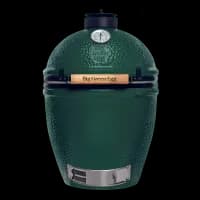 Big Green Egg LargeThe Big Green Egg Large is the ideal base for this bread: its thick ceramic walls store heat and return it steadily, exactly what an 82% dough needs for a strong oven spring. The Large size comfortably fits the stone plus two or three glass-bread rectangles at once, and closing the dome traps steam far better than a home oven, which is the other secret behind the thin crust.
 Carboext 100% Holm Oak Lump Charcoal, 15 kg Sack
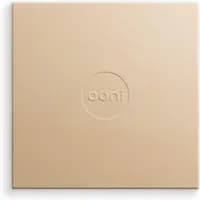 Ooni Cordierite Pizza Baking StoneOoni's cordierite stone is the surface that triggers the thermal shock: properly preheated over the deflector, it delivers to the base of the dough the burst of heat that opens the crumb and kicks off the oven spring. Cordierite easily handles this recipe's 250 °C and, being porous, wicks a little moisture from the base so the bread isn't gummy underneath. Set it on spacers so you don't choke the airflow.
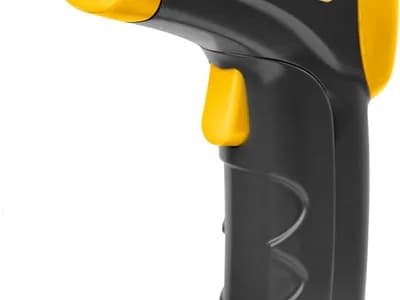
 Ooni Digital Infrared Pizza Oven ThermometerReading the kamado's air temperature isn't enough here: it's the stone that bakes the bread. Ooni's infrared thermometer lets you aim straight at the stone surface and confirm it's truly at 240-250 °C before you load the dough. That's the difference between a thin, crystalline crust and a flat, pale loaf; check several spots, since a kamado's ceramic doesn't heat perfectly evenly.
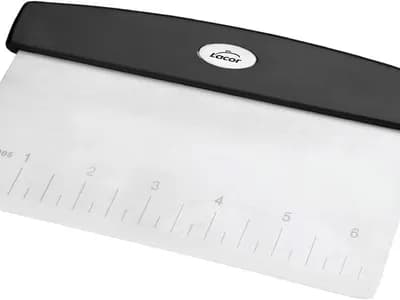
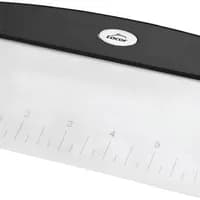 Lacor 67029: stainless steel bench scraper with a handle
Method
- 01
Mix and autolyse
In a large bowl dissolve the yeast in the cold water (hold back 2 tablespoons of water). Add the flour and mix with your hand or a scraper just until combined, without kneading; the dough will be very wet and sticky. Cover and rest for 30-40 minutes to autolyse so the gluten develops on its own.
- 02
Stretch and folds
Dissolve the salt in the reserved 2 tablespoons of water and work it in along with the oil. Instead of kneading, do stretch and folds: with a wet hand, pull one side of the dough up and over the centre, turn the bowl and repeat 6-8 times. Do 3 rounds of folds spaced 30 minutes apart. The dough will go from soupy to silky and elastic.
- 03
Cold ferment
Cover the bowl tightly and refrigerate for 18-24 hours. The cold slows fermentation, multiplies flavour and, above all, makes the dough far easier to handle. Take it out when it has nearly doubled and the surface is full of bubbles. Do not knock it back.
- 04
Set up the kamado
Set the kamado for indirect cooking: light the charcoal, fit the deflector and, on top over spacers, the stone. Place an iron tray to one side for steam. Close it and stabilise the dome at 240-250 °C for at least 30-40 minutes: the stone must be properly hot, not just the air.
- 05
Shape and load
Tip the dough gently onto a bench well dusted with semolina, without touching the centre. Dust the top and, with the scraper, cut it into 2-3 rectangles, stretching them slightly. Work fast and decisively so you do not degas it. Move them to a floured peel and slide them onto the stone. Drop the ice into the hot tray and close immediately.
- 06
Bake and cool
Bake indirect with the lid closed for 10-12 minutes with steam; then crack it open for a second to release the moisture and finish another 8-12 minutes until the crust is golden and sounds hollow when tapped. Take the loaves out and cool them on a rack for at least 20 minutes: as it cools, the thin crust finishes crystallising and crackles.
About this recipe
Pan de cristal —pa de vidre in Catalan— is arguably the most spectacular Spanish bread to slice and one of the hardest to master. Its signature is a translucent crumb full of enormous holes wrapped in a crust so thin and brittle it breaks with the sound of glass. It all starts from a dough of extreme hydration that frightens you the first time you touch it.
It is not sourdough, focaccia or coca: it is pure geometry of water and time.
Unlike a rustic loaf, the goal here is not height but an open, glossy network of holes. The keys are a hydration of 80-90% (professional bakeries reach 100%), a long cold ferment that builds flavour and extensibility, and minimal shaping: the whole point is to not degas the dough so it keeps every bubble it has trapped.
Hot stone, ceramic walls and a hit of steam.
A kamado is essentially a miniature wood-fired bakery oven. The ceramic stores heat and returns it steadily, the stone delivers the thermal shock that drives the oven spring, and as a sealed chamber it traps steam far better than a home oven. That steam keeps the crust supple for the first minutes so the dough can expand before it crystallises.
The trick is to work indirect: deflector in, stone on top over spacers, and the dome stabilised at 240-250 °C. A small iron tray with water, or a few ice cubes added as you load the bread, gives you just enough steam. The sticky dough is handled with semolina, a bench scraper and plenty of conviction: the less you touch it, the better.
In 30 seconds
Dough at 80-85% hydration, built with folds and 18-24 h of cold proof. Stabilise the kamado indirect at 250 °C with a stone and a tray for steam. Cut into rectangles without degassing, load onto the stone, add steam and bake 20-25 min until the crust rings like glass. Cool on a rack.
Will it fit your kamado?
Small
33-40 cm · Joe Jr, MiniMax
Tight
Probably 1-2 loaves per batch; the 2-3 rectangles in two batches.
Medium
46-51 cm · Classic, Large
Fits
The 2-3 loaves probably fit at once, alongside the steam tray.
Large
56-61 cm · Big Joe, XL
Fits
The loaves and the tray fit comfortably.
What to serve with it
Sides
- Grated tomato with olive oil and salt
- Escalivada of peppers and aubergine
- Cold-smoked butter and salt
- Wine
- Brut nature Cava or a white Xarel·lo from Penedès
- Beer
- Pilsner or pale lager
- Alcohol-free
- Sparkling water with lemon and spearmint
Leftovers and storage
- In the fridge
- 1-2 days at room temperature in a paper bag; the fridge makes it stale.
- Freezing
- Freeze 2-3 months sliced and well wrapped; thaw in the fridge or toast straight from frozen.
- Reheating
- About 5 minutes on the kamado or in the oven at 200 °C so the crust crackles again.
- Using them up
- Tomato toasts, croutons for soups or homemade breadcrumbs.
Cool and refrigerate within 2 hours. When in doubt, throw it out.
Leftover embers
You still have embers: what to do with the leftover heat
For 25 min at 250 °C in a classic kamado you load about 800 g of charcoal and burn 600 g: when you serve, about 250 g of live embers remain. Before you shut the vents, that is still enough for:
Without touching the vents
250 °Cgrilled vegetables
25 minof embers
- Garlic Butter Naan on the Kamado18 min · 260 °C
- Saffron Milk Caps on a Steel Griddle with Garlic and Parsley10 min · 250 °C
- Grilled peaches with honey and vanilla ice cream on the kamado8 min · 210 °C
No recipe needed
- Strips of courgette and aubergine, char-marked (5 min)
- Pita or naan from shop dough, on the grate (3 min each)
- Halved tomatoes, cut side down, for a sauce (10 min)
Closing the vents halfway and waiting for it to drop
140-200 °Cdessert while you eat
35 minof embers
- Brioche Burger Buns on the Kamado18 min · 190 °C
- Garlic-stuffed portobello mushrooms grilled in the kamado22 min · 190 °C
- Smoked Loaded Nachos on the Kamado12 min · 185 °C
No recipe needed
- Yesterday's bread with oil and garlic, on the grate (10 min)
- Corn cobs in their husks (30 min)
Before opening the lid, crack it open for a few seconds first; if you raise the heat, stir the ash so the coals can breathe. And if you are not going to use them: once the food is out, close the bottom and top vents. The charcoal that does not burn (about 250 g) can be used next time. Different size of kamado? Work out your load for 1 h of fire, lighting included.
Editor's tips
- Weigh water and flour on a scale: in a bread at 82% hydration, an extra 20 ml turns the dough unmanageable. Precision is the only thing separating pan de cristal from a puddle.
- Do not be shy with the semolina: dust the bench, your hands and the peel generously. The dough is so wet that semolina is your safety net so it neither sticks nor loses air.
- Measure the stone temperature, not the air. An infrared thermometer aimed at the surface tells you whether it is truly at 240-250 °C; that is the secret behind the oven spring and the thin crust.
Gear for this recipe
As an Amazon Associate, mikamado.es earns from qualifying purchases. At no extra cost to you.
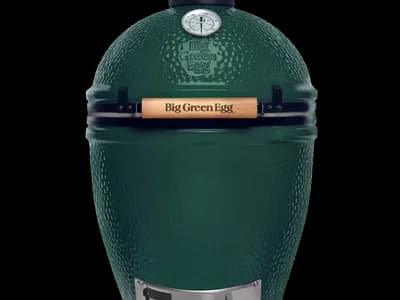
Big Green Egg Large
The Big Green Egg Large is the ideal base for this bread: its thick ceramic walls store heat and return it steadily, exactly what an 82% dough needs for a strong oven spring. The Large size comfortably fits the stone plus two or three glass-bread rectangles at once, and closing the dome traps steam far better than a home oven, which is the other secret behind the thin crust.
€2,099
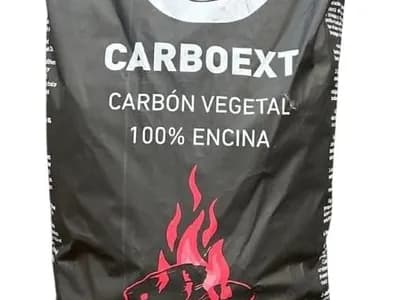
Carboext 100% Holm Oak Lump Charcoal, 15 kg Sack
€38
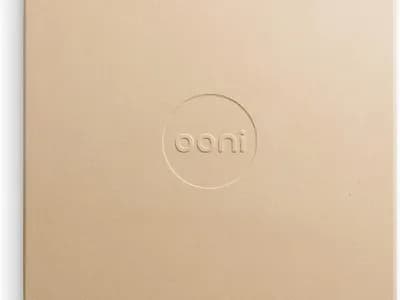
Ooni Cordierite Pizza Baking Stone
Ooni's cordierite stone is the surface that triggers the thermal shock: properly preheated over the deflector, it delivers to the base of the dough the burst of heat that opens the crumb and kicks off the oven spring. Cordierite easily handles this recipe's 250 °C and, being porous, wicks a little moisture from the base so the bread isn't gummy underneath. Set it on spacers so you don't choke the airflow.
€68
Ooni Digital Infrared Pizza Oven Thermometer
Reading the kamado's air temperature isn't enough here: it's the stone that bakes the bread. Ooni's infrared thermometer lets you aim straight at the stone surface and confirm it's truly at 240-250 °C before you load the dough. That's the difference between a thin, crystalline crust and a flat, pale loaf; check several spots, since a kamado's ceramic doesn't heat perfectly evenly.
€29
Lacor 67029: stainless steel bench scraper with a handle
€12
Have you made it?
Tell us how it turned out on your kamado. We review every rating before publishing it.
No published ratings yet. Be the first!
FAQ
What hydration does pan de cristal need?
Between 80% and 90%, and professional bakeries reach 100%. At home, starting at 80-82% already gives a very open crumb and is far easier to handle. The more water, the more open the crumb, but the harder it is to shape.
Can I make pan de cristal without a stone in the kamado?
A stone is strongly recommended because it gives the thermal shock that opens the crumb. If you do not have one, use a well-preheated iron or steel tray over the deflector, though the oven spring will be a little smaller.
Why isn't my crust thin and crisp?
Almost always from a lack of steam or baking with a cold stone. The steam in the first minutes keeps the crust supple so it can expand, and it only crystallises thin if the stone was at 240-250 °C. Cooling on a rack is also key.
Do I need sourdough starter?
No. Classic pan de cristal is made with baker's yeast and a long cold ferment, which brings flavour and extensibility. If you prefer sourdough, swap out the yeast and lengthen the times, but it is not the traditional way.
How long does it keep and how do I store it?
It is at its best the same day, freshly cooled. It keeps 1-2 days in a paper bag; to revive the crust, give it 3-4 minutes in a hot kamado or oven. Do not store it in plastic or it will lose its crunch.
What do I do with the embers left after making Kamado Pan de Cristal (Glass Bread)?
After 25 min at 250 °C in a classic kamado about 250 g of live embers remain: 25 min more at 250 °C without touching the vents or 35 min at 140-200 °C closing the vents. If you are not going to use them, close both vents and keep the charcoal for next time.
More kamado recipes

KEEP READING
Go deeper on this dish
- Recommended kamado
Big Green Egg Large
The Big Green Egg Large is the ideal base for this bread: its thick ceramic walls store heat and return it steadily, exactly what an 82% dough needs for a strong oven spring. The Large size comfortably fits the stone plus two or three glass-bread rectangles at once, and closing the dome traps steam far better than a home oven, which is the other secret behind the thin crust.
- Editorial guide
How to light a kamado: the step-by-step method
No petrol, no weird tablets and no 45-minute waits. The cone method, airflow control and the mistakes that prevent 80% of the frustration.
- Glossary term
Heat deflector
Ceramic plate placed between the coals and the grate to turn direct fire into indirect cooking.
- Related comparison
big green egg large vs kamado joe classic iii
The classic kamado matchup: the Big Green Egg Large, the indestructible pioneer with the widest accessory network, agai…