Recipe · Reverse-sear · Medium
Whole Picanha Reverse-Seared on the Kamado with Homemade Chimichurri
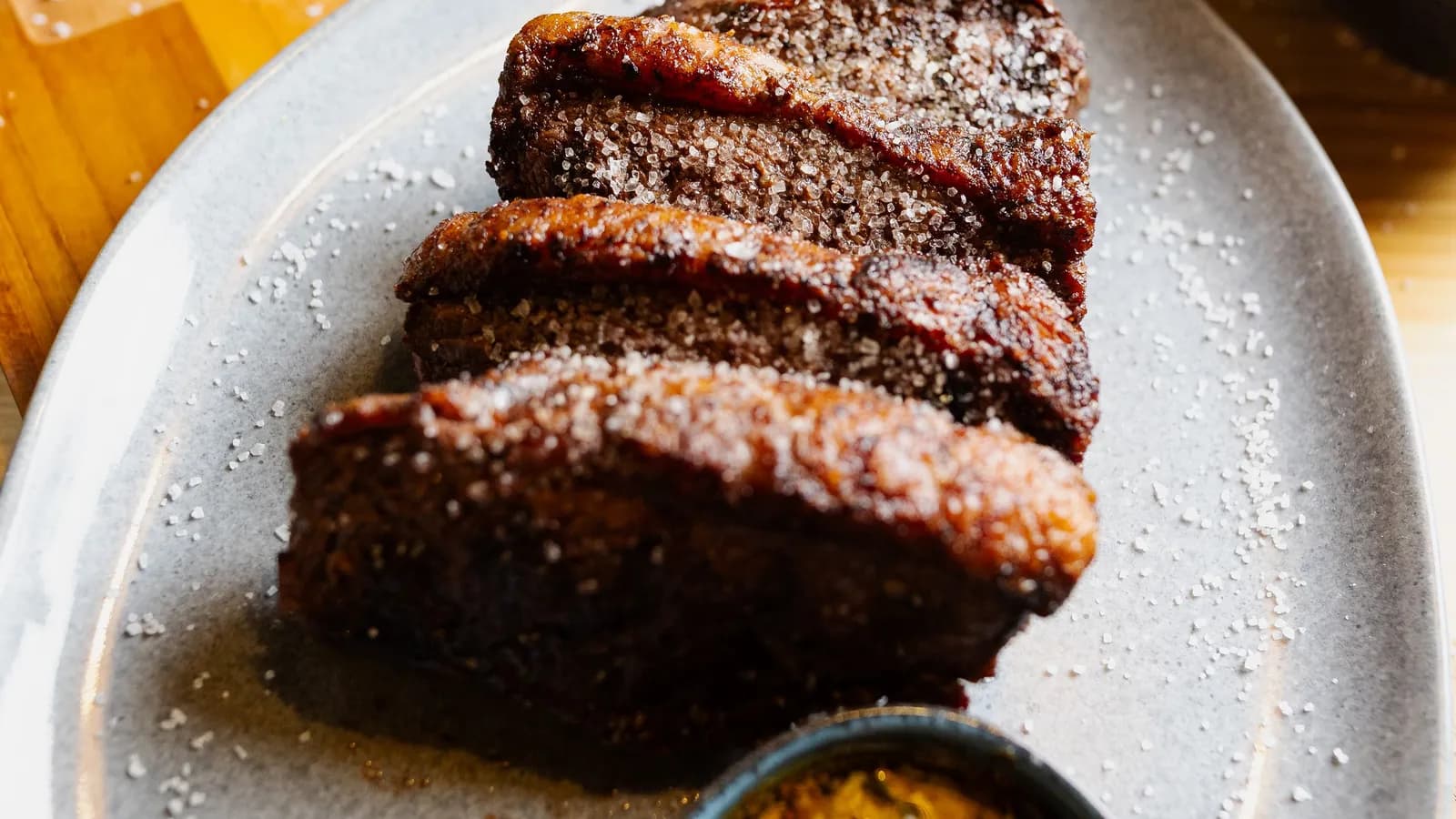
Picanha (rump cap) is Brazil's star cut: a fat cap over tender beef. Here it cooks indirect at 120 °C to 50 °C inside, is seared over a hot fire and served with chimichurri.
Season:All yearCuisine:Latin American
Quick answer
With the deflector in and the chamber at 120 °C, cook the whole picanha, fat on, to 50 °C inside (about 60-80 min depending on thickness). Take it out, remove the deflector, raise to 250 °C or more and sear 1-2 min per side. Rest 10 min, slice against the grain and serve with chimichurri.
One big step at a time, screen kept on and built-in timers.
- Prep
- 30 min
- Cook
- 100 min
- Servings
- 6 servings
- Temperature
- 120 °C
What time do you want to eat?
Pick a time and we'll tell you when to start.
11:10
Start the prep
11:40
Light the kamado
12:10
Onto the kamado
14:00
Serve
Estimate: it includes lighting and settling the kamado plus a margin for large cuts. If the recipe asks you to marinate or salt ahead, add that time.
Fire setupIndirect, then direct
- Dome
- 120 °C
- Deflector
- Yes
- Grate
- Standard height
- Bottom vent
- A crack
- Top vent
- A crack
- Fuel
- Quebracho lump charcoal, full firebox
- Setup
- Wireless probe; deflector removed for the sear
Ingredients
- picanha (rump cap, tapa de cuadril), whole, with its fat cap1.2 kg
- coarse salt (plus a pinch for the chimichurri)15 g
- freshly ground black pepper1 tsp
- fresh flat-leaf parsley, leaves and tender stalks only1 bunch
- garlic, finely chopped4 cloves
- dried oregano2 tbsp
- red wine vinegar4 tbsp
- extra virgin olive oil150 ml
- dried chilli flakes1 pinch
- hot water, for the chimichurri2 tbsp
Allergens
- Sulphites
Based on the recipe's ingredients. Always check the label of every product you buy.
The gear for this recipe
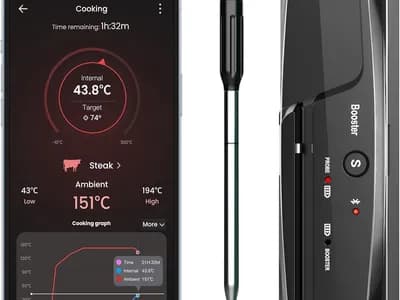
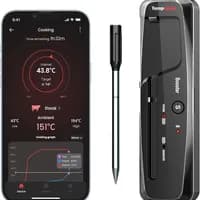 ThermoPro TempSpike TP961: 150 m wireless Bluetooth probeThe recipe runs on internal temperature, and the TempPro TempSpike TP961 lets you follow the 50 °C from your phone without opening the lid. Per its listing the probe has two sensors (meat from -10 to 100 °C and chamber from -10 to 300 °C), the Booster repeater runs on 2 AAA batteries and the Bluetooth range reaches 150 m. The catch: it has to come out before the sear, as flare-ups can top that 300 °C.
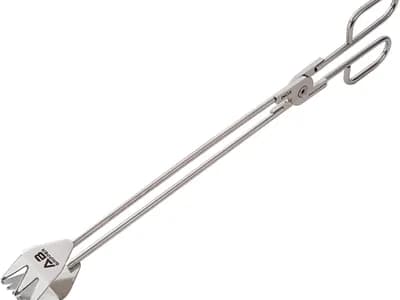
 AB Gripper XL 46 cm: stainless steel hinged tongsLifting the picanha out at 50 °C and turning it during the sear are moves over coals at 250 °C or more. The AB Gripper XL tongs are 46 cm long, 304 stainless steel with a hinge, and keep your hand away from the fire without piercing the meat. The catch: with over a kilo of meat, grip it by the body, not the fat, which tears; and tongs this long give less feel on small bites.
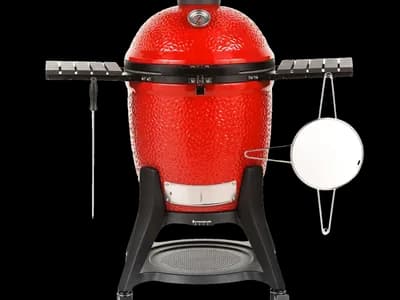
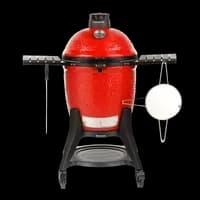 Kamado Joe Classic III 18"The reverse sear needs a kamado that holds 120 °C steadily and climbs to 250 °C or more within minutes once the deflector is out. The Kamado Joe Classic III has a 46 cm grate, dense ceramic that holds heat well and the Divide & Conquer system for setting up the deflector and grate; the whole picanha fits with room to spare. The catch: it weighs 108 kg without the cart (127 with it), so it is not a kamado you move around easily.
 Jealous Devil 100% White Quebracho lump charcoal 15.8 kgThat is about two hours of fire, with a gentle stage at 120 °C and another climbing to 250 °C or more. Jealous Devil is 100 % Paraguayan quebracho blanco lump charcoal, a very dense wood, with only about 3 % ash according to its listing and a neutral aroma that lets the meat and any smoking chunks come through. The catch: the pieces are very large and, if you light with a small chimney starter, you will want to split them first.
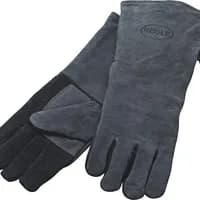 Rösle leather barbecue gloves: long, one sizeRemoving the hot deflector with the chamber above 120 °C and opening the lid at 250 °C calls for real protection. The Rösle gloves are leather with a cotton-polyester lining and 41.5 cm long according to their listing, so they cover the forearm too. The catch: they cannot be washed, and leather is not ideal for handling greasy meat; that is what the tongs are for.
Method
- 01
Salt the picanha
Pat the piece dry and, with a very sharp knife, score the fat in a 1 cm crosshatch without cutting into the meat. Season all over with the coarse salt and pepper and leave it 30-45 minutes at room temperature while you light the kamado. Do not leave it out of the fridge for more than an hour.
- 02
Light with the deflector
Fill the firebox with charcoal, light it and set the deflector in with the grate on top. Leave the vents wide open until you reach 100 °C, then close the bottom vent down to a finger-width gap and the top vent to a quarter open: the chamber should settle at 120 °C. Allow 15-20 minutes of stability before the meat goes in.
- 03
Insert the probe
Push the wireless probe into the centre of the thickest part, horizontally and clear of the fat; the handle end, which holds the chamber sensor, must stay outside the meat. Set the picanha fat side up on the grate, away from the edge, and pair the probe with your phone with the target at 50 °C.
- 04
Cook indirect
Close the lid and leave it shut. Hold the chamber at 120 °C by adjusting only the bottom vent in small steps and watch the internal temperature on your phone. Depending on thickness it takes 60-80 minutes to reach 50 °C. If the chamber drifts above 140 °C, close the vent a little more and wait.
- 05
Make the chimichurri
Meanwhile chop the parsley by knife, not in a blender. Mix it with the garlic, oregano, chilli, vinegar, oil, hot water and a pinch of salt. Leave it at room temperature for at least 30 minutes; the sauce improves as the garlic softens in the vinegar.
- 06
Pull and set up the sear
At 50 °C inside, put on heat-resistant gloves and burp the lid (5 cm, about 5 seconds, face turned away). Lift the picanha out with the tongs, remove the probe and set it on a board. Still gloved, lift the grate, take out the hot deflector and put the grate back; open the vents fully and let the chamber climb to 250 °C or more, about 10 minutes.
- 07
Sear over a hot fire
With the clean grate over the coals, lay the picanha fat side down for 1-2 minutes, until it browns and crackles; watch for flare-ups from the dripping fat. Turn and sear the meat side for 1 minute and the edges for 30 seconds. Close the lid between turns, always burping it when you open.
- 08
Rest, slice and serve
Move the piece to a board and rest it 10 minutes, uncovered. Slice 1-1.5 cm thick against the grain, fat side up, and serve at once with the chimichurri. Close both vents fully to put out the coals.
About this recipe
Picanha is the cut that defines Brazilian grilling, and in a Spanish butcher's it is asked for as tapa de cuadril or rabillo de cadera, depending on the region: the triangular piece that covers the rump, with a layer of white fat a finger or two thick on top. That fat is the whole point: it renders slowly, bastes the meat and leaves a crust that a fillet or a skirt steak simply does not have. If you do not see it at the counter, ask for it whole and untrimmed; the guide to beef cuts for the kamado and their Spanish equivalents helps you ask for it by the right name.
Why the reverse sear
The reverse sear flips the classic order: first a slow cook with indirect heat, then the sear. On a piece of 1 to 1.5 kg that gives an even pink from edge to edge, without the grey band a searing-first method leaves, and a dry surface that browns in a minute. The fat also has time to warm through and start rendering without burning. It is the same logic as the reverse-seared tomahawk, but with a lower, easier-to-portion piece.
Indirect heat at 120 °C and a probe
For the first stage set the deflector, hold the chamber around 120 °C and close the vents down until the temperature settles; how to manage the bottom intake and the top outlet is covered in the temperature control guide. Meat is cooked by internal temperature, not by the clock, which is why the recipe uses a wireless probe such as the TempPro TempSpike TP961: the stem goes into the centre of the piece and stays there while the lid is closed, with no cable running through the lid gasket. Take it out before the sear: direct heat and flare-ups can exceed the 300 °C its listing gives as the maximum for the chamber sensor. If you are unsure where to insert it or which probe to pick, there is the guide to thermometers and probes for the kamado.
The doneness: 50 °C and a hot sear
Pull the picanha at 50 °C inside: after the sear and the rest it climbs a few degrees and ends up pink, between medium-rare and medium, around 54-57 °C in the centre. If you want it more done, pull at 55 °C and accept a less juicy result. It is a whole piece of beef and, unlike ground meat, bacteria sit mostly on the surface, which the final sear takes care of; even so, anyone who needs to take extra care (pregnant women, small children, the immunocompromised) should cook it to 71 °C. For the sear, remove the deflector, open the vents and let the chamber climb to 250 °C or more; the fat drips onto the coals and can cause flare-ups, so always burp the lid, lifting it about 5 cm for a few seconds before opening fully.
Homemade chimichurri and slicing against the grain
Chimichurri is the Argentine sauce for this cut: plenty of parsley, garlic, oregano, red wine vinegar, oil and a pinch of chilli, chopped by knife and not in a blender, so it does not turn to paste. Make it while the meat cooks; it improves after half an hour. Picanha has a pronounced, layered grain; slice it 1-1.5 cm thick against the grain, fat side up, and serve at once. To move the piece between the kamado and the board without piercing it or tearing the fat, long 46 cm tongs such as the AB Gripper XL keep your hand away from the heat, which helps when the chamber is at 250 °C.
In 30 seconds
Deflector in, chamber at 120 °C and a probe in the centre: cook the whole picanha, fat on, to 50 °C inside. Take it out, remove the deflector, raise to 250 °C or more and sear 1-2 minutes per side. Rest 10 minutes, slice against the grain and serve with knife-chopped chimichurri.
Will it fit your kamado?
Small
33-40 cm · Joe Jr, MiniMax
Fits
A 1.2 kg picanha probably fits whole; less margin from the edge when searing.
Medium
46-51 cm · Classic, Large
Fits
Fits whole with room, away from the edge.
Large
56-61 cm · Big Joe, XL
Fits
Plenty of room; two picanhas would probably fit on the same charcoal.
What to serve with it
Sides
- Wine
- Crianza red from Ribera del Duero or Toro
- Beer
- IPA or amber ale
- Alcohol-free
- Rosemary lemonade
Leftovers and storage
- In the fridge
- Within 2 hours, into the fridge airtight: 3-4 days. Keep the chimichurri separately in a jar.
- Freezing
- Freezes well for 2-3 months, sliced and air-tight; thaw in the fridge and do not refreeze.
- Reheating
- Covered pan with a splash of stock over medium heat until piping hot in the centre (74 °C).
- Using them up
- Thin slices in a sandwich with chimichurri, or in tacos with pickled onion.
Cool and refrigerate within 2 hours. When in doubt, throw it out.
Editor's tips
- Do not trim the fat: what you eat is the crust it forms in the sear. If the fat cap is very thick (over 2 cm), trim it to 1 cm so it renders properly and does not turn rubbery.
- If the chamber overshoots 140 °C at the start, the picanha reaches 50 °C sooner than planned and loses its margin for the sear. Stabilise before the meat goes in, and see the temperature problems guide if the fire runs away.
- A touch of gentle smoke works well: two or three chunks of cherry or holm oak spread through the coals when you light them, before the chamber settles, so the heavy early smoke clears before the meat goes in. Put the picanha in over clean, thin smoke, never thick and white.
- Dry the surface well just before the sear: any moisture makes the meat steam instead of brown. A few seconds with kitchen paper make the difference.
Gear for this recipe
As an Amazon Associate, mikamado.es earns from qualifying purchases. At no extra cost to you.
ThermoPro TempSpike TP961: 150 m wireless Bluetooth probe
The recipe runs on internal temperature, and the TempPro TempSpike TP961 lets you follow the 50 °C from your phone without opening the lid. Per its listing the probe has two sensors (meat from -10 to 100 °C and chamber from -10 to 300 °C), the Booster repeater runs on 2 AAA batteries and the Bluetooth range reaches 150 m. The catch: it has to come out before the sear, as flare-ups can top that 300 °C.
€47
AB Gripper XL 46 cm: stainless steel hinged tongs
Lifting the picanha out at 50 °C and turning it during the sear are moves over coals at 250 °C or more. The AB Gripper XL tongs are 46 cm long, 304 stainless steel with a hinge, and keep your hand away from the fire without piercing the meat. The catch: with over a kilo of meat, grip it by the body, not the fat, which tears; and tongs this long give less feel on small bites.
€35
Kamado Joe Classic III 18"
The reverse sear needs a kamado that holds 120 °C steadily and climbs to 250 °C or more within minutes once the deflector is out. The Kamado Joe Classic III has a 46 cm grate, dense ceramic that holds heat well and the Divide & Conquer system for setting up the deflector and grate; the whole picanha fits with room to spare. The catch: it weighs 108 kg without the cart (127 with it), so it is not a kamado you move around easily.
€2,399

Jealous Devil 100% White Quebracho lump charcoal 15.8 kg
That is about two hours of fire, with a gentle stage at 120 °C and another climbing to 250 °C or more. Jealous Devil is 100 % Paraguayan quebracho blanco lump charcoal, a very dense wood, with only about 3 % ash according to its listing and a neutral aroma that lets the meat and any smoking chunks come through. The catch: the pieces are very large and, if you light with a small chimney starter, you will want to split them first.
€234
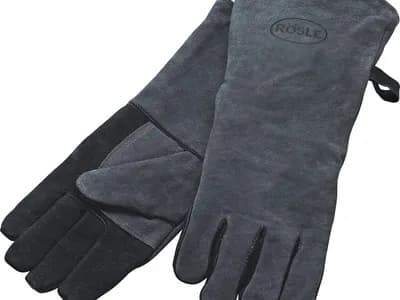
Rösle leather barbecue gloves: long, one size
Removing the hot deflector with the chamber above 120 °C and opening the lid at 250 °C calls for real protection. The Rösle gloves are leather with a cotton-polyester lining and 41.5 cm long according to their listing, so they cover the forearm too. The catch: they cannot be washed, and leather is not ideal for handling greasy meat; that is what the tongs are for.
€22
Have you made it?
Tell us how it turned out on your kamado. We review every rating before publishing it.
No published ratings yet. Be the first!
FAQ
Which Spanish cut is the equivalent of picanha?
Ask for it as tapa de cuadril or rabillo de cadera, depending on the region. It is the triangular rump piece with a fat cap on top. Ask for it whole, 1 to 1.5 kg, with the fat untrimmed; if the butcher has already cut it into steaks, cook them the same way but for less time.
What if my kamado is small?
A 13-inch grate (about 33 cm) takes a 1 kg picanha placed diagonally; if it does not fit, cut it into two pieces and cook them together with the probe in the thicker one. With the deflector in, leave at least 3-4 cm between the meat and the dome. Thinner pieces reach 50 °C sooner, so watch the probe from 40 minutes on.
What temperature for each doneness?
Pull at 45 °C for rare, 50 °C for pink medium-rare (a final 54-57 °C), 55 °C for medium and 60 °C for medium-well. The temperature climbs about 4-6 °C with the sear and rest. It is a whole piece, so doneness is a matter of taste, with the recipe's warning for anyone who must take extra care.
Can I do it without a wireless probe?
Yes, with an instant-read thermometer, but you will have to open the lid to check, losing heat and stability. A 1.2 kg piece at 120 °C takes 60-80 minutes: start checking at 50 and repeat every 10, always burping the lid.
How do I store leftovers?
Cool the meat within an hour, keep it in a closed container in the fridge up to 3 days and eat it cold in sandwiches or gently reheated, without cooking it further. The chimichurri keeps 3-4 days in the fridge in a closed jar, with the oil covering the herbs.
More kamado recipes
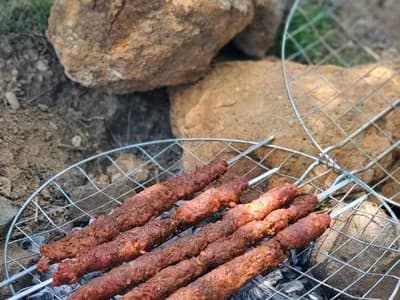
Lamb Lyulya Kebab on the Kamado
The question is never how to season it, but why it falls off the skewer. The answer is fat, a hand-chopped grain and real kneading: juicy lamb that holds together over direct fire.
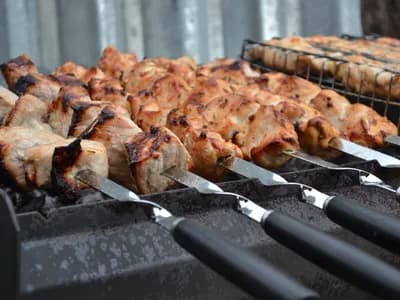
Pork Neck Shashlik on the Kamado, Onion Marinade
The skewer of the Russian-speaking world, cooked as I make it on my Big Green Egg Large: pork neck in 3 cm cubes, a grated onion marinade with not a drop of vinegar, and twenty minutes of steady direct fire.
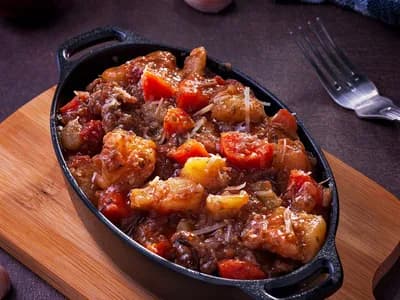
Beef Cheeks in Red Wine, Braised in a Dutch Oven on the Kamado
Three hours of red wine, cast iron and a thread of olive-wood smoke your kitchen oven simply cannot make. The braise that justifies lighting the kamado in midwinter.
KEEP READING
Go deeper on this dish
- Recommended kamado
Kamado Joe Classic III 18"
The reverse sear needs a kamado that holds 120 °C steadily and climbs to 250 °C or more within minutes once the deflector is out. The Kamado Joe Classic III has a 46 cm grate, dense ceramic that holds heat well and the Divide & Conquer system for setting up the deflector and grate; the whole picanha fits with room to spare. The catch: it weighs 108 kg without the cart (127 with it), so it is not a kamado you move around easily.
- Editorial guide
How to light a kamado: the step-by-step method
No petrol, no weird tablets and no 45-minute waits. The cone method, airflow control and the mistakes that prevent 80% of the frustration.
- Glossary term
Heat deflector
Ceramic plate placed between the coals and the grate to turn direct fire into indirect cooking.
- Related comparison
big green egg large vs kamado joe classic iii
The classic kamado matchup: the Big Green Egg Large, the indestructible pioneer with the widest accessory network, agai…