Recipe · Smoked · Medium
Smoked Pork Belly Burnt Ends on the Kamado, Butter and Honey Glazed Cubes
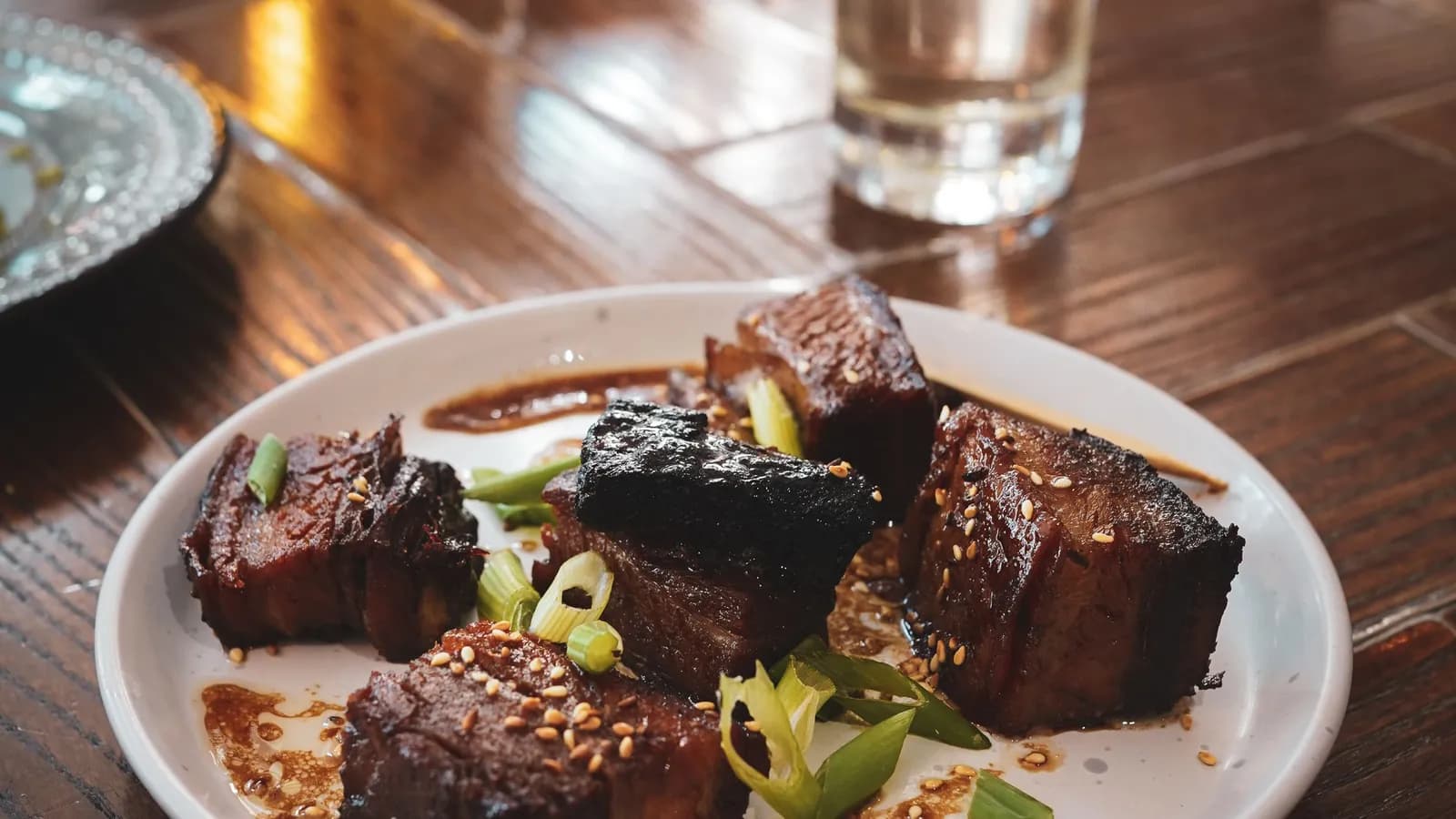
Cubes of fresh pork belly with a dry rub, smoked at 120 °C with fruitwood, then braised covered in butter, honey and barbecue sauce. The last stage, uncovered, leaves them lacquered.
Quick answer
Cut 1.5 kg of skinless belly into 3 cm cubes, rub and smoke indirect at 120 °C with cherry for about 3 hours until mahogany bark. Move them to a pan with butter, honey and barbecue sauce, cover with foil and braise 60-75 min until a probe slides in with no resistance (93-96 °C). Uncover 15-20 min to glaze.
One big step at a time, screen kept on and built-in timers.
- Prep
- 30 min
- Cook
- 300 min
- Servings
- 6 servings
- Temperature
- 120 °C
What time do you want to eat?
Pick a time and we'll tell you when to start.
06:45
Start the prep
07:15
Light the kamado
08:00
Onto the kamado
13:00
Take it off and rest
14:00
Serve
Estimate: it includes lighting and settling the kamado plus a margin for large cuts. If the recipe asks you to marinate or salt ahead, add that time.
Fire setupIndirect
- Dome
- 120 °C
- Deflector
- Yes
- Grate
- Standard height
- Bottom vent
- A crack
- Top vent
- Half open
- Fuel
- Lump charcoal, full firebox
- Wood
- 3 cherry or apple wood chunks
- Setup
- Deep-sided steel pan and probe
Ingredients
- skinless fresh pork belly, one piece of even thickness1.5 kg
- sweet smoked paprika (pimentón dulce de la Vera)2 tbsp
- brown sugar2 tbsp
- fine salt1 tbsp
- garlic powder1 tbsp
- ground black pepper1 tsp
- mustard powder or ground cumin1 tsp
- Dijon mustard, to bind the rub1 tbsp
- butter, diced80 g
- honey4 tbsp
- barbecue sauce200 ml
- chunks of cherry or apple wood, about fist size3
- lump charcoal, to fill the fireboxto taste
Allergens
- Milk
- Mustard
Shop-bought barbecue sauce may contain gluten, soy or sulphites: check the label.
Based on the recipe's ingredients. Always check the label of every product you buy.
The gear for this recipe
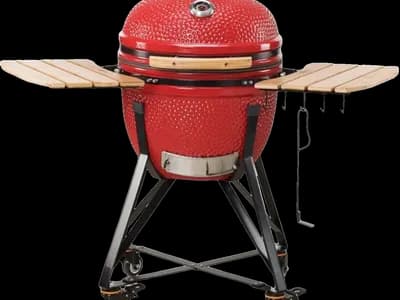
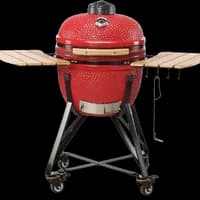 Kamado Bono Media 51 cmThis recipe needs a kamado that holds a steady 120 °C for about five hours and can fit a 41 cm pan with the deflector in. The Kamado Bono Media is 51 cm across according to its listing, so the Rösle pan, about 47 cm on the diagonal, fits with room to spare. The ceramic mass holds temperature without checking every five minutes, which is what the first two stages require. Honest drawback: at 120 °C the vents sit barely open and a small overshoot at start-up takes time to correct; climb slowly.
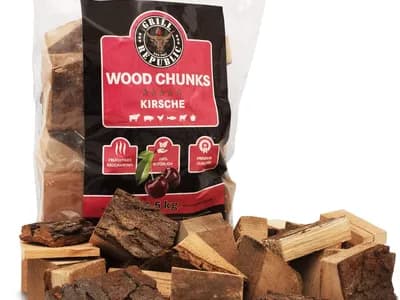
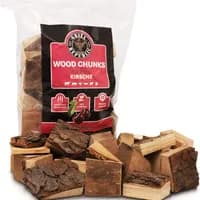 Grill Republic premium cherry wood chips 1.5 kgSmoke is half the flavour of burnt ends, and pork rewards a gentle fruitwood. The Grill Republic cherry chunks come in a 1.5 kg bag and smoke without overpowering: three fist-sized chunks on the coals are enough for the three-hour smoke stage. Honest drawback: they are chunks, not charcoal, and you need a separate lump charcoal base to hold 120 °C; and if you put them all in at once you get a white, bitter smoke.
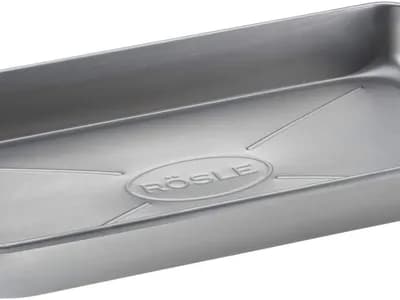
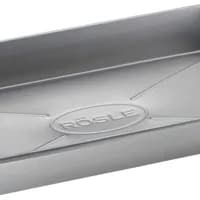 Rösle 25233: high-sided 18/10 stainless steel trayThe cubes need a high-sided tray to braise in their own sauce. The Rösle Universal Pro Pan is 18/10 stainless steel, 41 x 22 cm, 5 cm deep and 3 litres according to the listing, enough for one layer of cubes from 1.5 kg of belly before cooking. It goes in the dishwasher and also works for marinating and serving. Honest drawback: it is shallow at 5 cm, so with a lot of sauce you have to stir carefully, and with a diagonal of about 47 cm it needs a grate of 46 cm or more.
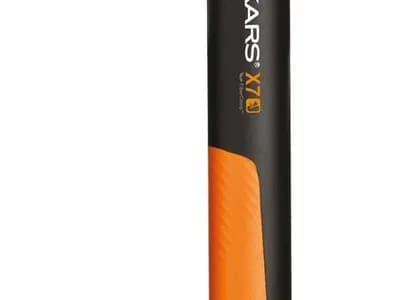
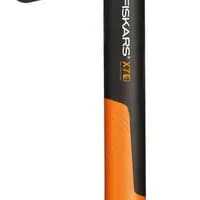 Fiskars X7-XS: 35.5 cm small axe for fine woodCherry or apple wood sometimes comes as logs or big pieces that will not fit in the firebox. The Fiskars X7-XS axe is 35.5 cm, weighs about 640 g and comes with a storage sheath; its maker says it handles branches up to 7 cm. That is enough to split a chunk to fist size. Honest drawback: it is a small axe, not for thick logs, and dry fruitwood is hard; split small pieces with controlled strokes and eye protection on.
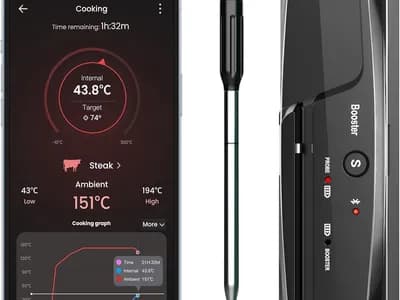
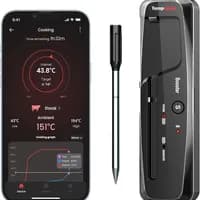 ThermoPro TempSpike TP961: 150 m wireless Bluetooth probeWith five hours of cooking, opening the lid every half hour wrecks stability. The TempSpike TP961 probe (the ThermoPro brand is becoming TempPro) is wireless over Bluetooth 5.2 with a 150 m range, and its second sensor reads up to 300 °C in the chamber, so you see the cube's internal temperature (up to 100 °C) and the kamado's at once on your phone. It is waterproof (IP67) and the booster runs on 2 AAA batteries. Honest drawback: real-world range drops with ceramic and walls in between, and with 3 cm cubes you need to thread two or three in a row so the internal sensor sits in meat.
Method
- 01
Cut and rub
Pat the belly dry and cut it into cubes of about 3 cm, trimming any excess hard fat. Coat them with the mustard, which acts as glue, and toss with the paprika, brown sugar, salt, garlic powder, pepper and mustard powder until fully covered. Cover and refrigerate for at least 2 hours, ideally overnight. Take the cubes out 30 minutes before cooking.
- 02
Set up the kamado for indirect
Fill the firebox with lump charcoal, light one spot in the centre and, once it catches, arrange the 3 fruitwood chunks around the lit coals. Set the deflector and grate and close the lid. Stabilise the kamado at 120 °C with the bottom vent open barely a finger and the top vent half open; climb slowly and start closing the vents 10-15 °C before the mark, because the ceramic keeps heating. Do not put the meat on until the smoke turns from thick and white to thin and almost clear.
- 03
Smoke the cubes
Spread the cubes on the grate with space between them and, if you have a wireless probe, thread two or three of the thickest cubes onto the TempSpike, pressed together, so the internal-sensing part sits fully in meat. Close the lid and hold 120 °C. Smoke for about 3 hours, without opening, until the bark is dark mahogany and firm to the touch. If the internal temperature stalls around 70 °C, that is normal: do not raise the fire. By the end of this stage it is usually around 80-88 °C.
- 04
Prepare the pan
Meanwhile, combine the butter, honey and barbecue sauce in the Rösle pan. Once the cubes have their bark, open the kamado with burping: lift the lid about 5 cm, wait about 5 seconds, then open fully with your face turned away and gloves on. Move the cubes to the pan with tongs and toss them in the sauce to coat.
- 05
Braise covered
Cover the pan tightly with aluminium foil and set it on the grate, with the deflector still in. Close the lid and hold 120 °C for 60-75 minutes. From the one-hour mark, check a cube with the probe or a toothpick: it should slide in with no resistance, around 93-96 °C. If there is still resistance, re-cover and give it 15 more minutes.
- 06
Uncover and glaze
Open with burping and gloves, and peel back the foil carefully because very hot steam will escape outwards. Gently stir the cubes in the sauce and return the uncovered pan to the kamado at 120 °C for 15-20 minutes, until the sauce reduces and clings to the cubes like a glossy varnish. For more colour, give it another 5-10 minutes without raising the fire, watching that the sugar does not burn.
- 07
Rest and serve
Lift the pan out with gloves and both hands and let it rest for 10 minutes so the sauce settles. Close both vents fully to put out the coals. Serve in the same pan, with cocktail sticks, and spoon over the sauce from the bottom.
About this recipe
Burnt ends were born in Kansas City barbecue joints as the charred points of a brisket, cut off and handed out as a snack. Today the name stands for something more indulgent: cubes of smoked meat, finished in sauce until lacquered and sticky. The fresh pork belly version is the easiest to find in Spain and the most forgiving, because the marbling in belly does for the cube what collagen does for brisket, giving a dark crust outside and an almost gelatinous texture within.
Fresh pork belly: what to buy and how to cut it
Ask the butcher for skinless fresh pork belly, one piece of about 1.5 kg and even thickness, with bands of lean and fat fairly balanced; if they only have it with the skin on, ask them to remove it, because the skin will not soften in this time and just gets in the way. The guide to meat cuts and Spanish equivalents covers the other pork cuts that behave similarly. Cut the belly into cubes about 3 cm a side: smaller and they dry out before they soften, larger and they take forever and the glaze never reaches the centre. They shrink by about a third during cooking, ending up as bites of roughly 2-2.5 cm. Toss them in the dry rub of paprika, brown sugar, salt and garlic and leave in the fridge for at least two hours, ideally overnight.
Two stages: smoke, then braise
The technique has two clearly separate stages. In the first, the chamber sits at about 120 °C, indirect, with the deflector in and the cubes on the grate, and fruitwood smoke builds the bark over around three hours. Colour is the guide: the cube goes from pink to mahogany and the surface turns firm to the touch. This is also where internal temperature stalls, the phenomenon described in the glossary entry on the stall. In the second stage the cubes go into a pan with butter, honey and barbecue sauce, covered with aluminium foil, for another 60-75 minutes at the same temperature. This is the Texas crutch logic: trapped steam melts fat and collagen and softens the interior without drying it. The last stage, uncovered with the sauce reduced, leaves the sticky lacquer.
Wood, pan and probe
The fruitwood makes a difference. Cherry or apple gives a gentle, slightly sweet smoke that accompanies the pork without covering it; the guide to smoking woods has the pairings and amounts, and the general rule is little wood and thin, nearly invisible smoke: three chunks spread over the coals are enough. For the braise you need a high-sided tray that fits on the grate: the Rösle Universal Pro Pan, in 18/10 stainless steel, measures about 41 x 22 cm and 5 cm deep with a 3-litre capacity, and the cubes fit in a single layer. And to avoid opening the lid every half hour, a wireless probe is useful; how to place it is in the thermometer and probe guide. Here you cook by feel, not by clock: the cube is ready when the probe slides in with no resistance, around 93-96 °C.
How to serve them
Burnt ends are served freshly glazed, in the pan itself, with cocktail sticks or in a bowl, alongside pickles, pickled onion and burger or brioche buns if you want them in a sandwich. They work as a nibble on a smoked-meats board and, with a bit of coleslaw, as a main. If you want another long-cooked pork recipe, there is the Carolina-style smoked pulled pork, which shares the smoke technique and the temperature control.
In 30 seconds
Skinless fresh pork belly in 3 cm cubes with a dry rub goes in the kamado indirect at 120 °C with cherry or apple wood for about 3 hours, until mahogany bark. Move the cubes to a pan with butter, honey and barbecue sauce, cover with foil and braise 60-75 minutes until a probe slides in with no resistance (93-96 °C). Uncover 15-20 minutes to lacquer, rest 10 minutes and serve.
Will it fit your kamado?
Small
33-40 cm · Joe Jr, MiniMax
Tight
The 1.5 kg of cubes probably fit closer together; check the pan fits the grate.
Medium
46-51 cm · Classic, Large
Fits
The cubes fit with space between them and the pan fits well.
Large
56-61 cm · Big Joe, XL
Fits
Room to spare: probably double the pork belly would fit.
What to serve with it
Sides
- Cast-iron skillet cornbread
- Elote-style grilled corn
- Coleslaw with a sharp vinaigrette
- Wine
- Red Garnacha from Campo de Borja or Monastrell from Jumilla
- Beer
- Amber ale or smoked porter
- Alcohol-free
- Ginger lemonade
Leftovers and storage
- In the fridge
- With their sauce, airtight, chilled within 2 hours: 3-4 days.
- Freezing
- Freeze well for 2-3 months in their sauce; thaw in the fridge and do not refreeze.
- Reheating
- Oven at 150 °C, covered with a splash of water, to 74 °C in the centre; uncover 5 min to re-glaze.
- Using them up
- Tacos with coleslaw, a soft-roll sandwich, or stirred into stewed beans.
Cool and refrigerate within 2 hours. When in doubt, throw it out.
Editor's tips
- Cut the cubes to an even size: small ones dry out before large ones soften. If in doubt, keep the smaller ones on one side of the grate and take them off earlier.
- Cook by feel, not by clock: the cube is ready when the probe slides in with no resistance, between 93 and 96 °C. The TempSpike reads up to 100 °C inside the food and up to 300 °C ambient with its second sensor.
- The sugar in the sauce burns above roughly 150 °C. If the cubes darken too much while glazing, take the pan off and lower the fire before returning it. The temperature problems guide helps if the chamber runs away.
- Leftovers reheat in an oven at 150 °C covered with a splash of water or stock, or go into scrambled eggs or a sandwich the next day.
Gear for this recipe
As an Amazon Associate, mikamado.es earns from qualifying purchases. At no extra cost to you.
Kamado Bono Media 51 cm
This recipe needs a kamado that holds a steady 120 °C for about five hours and can fit a 41 cm pan with the deflector in. The Kamado Bono Media is 51 cm across according to its listing, so the Rösle pan, about 47 cm on the diagonal, fits with room to spare. The ceramic mass holds temperature without checking every five minutes, which is what the first two stages require. Honest drawback: at 120 °C the vents sit barely open and a small overshoot at start-up takes time to correct; climb slowly.
€785
Grill Republic premium cherry wood chips 1.5 kg
Smoke is half the flavour of burnt ends, and pork rewards a gentle fruitwood. The Grill Republic cherry chunks come in a 1.5 kg bag and smoke without overpowering: three fist-sized chunks on the coals are enough for the three-hour smoke stage. Honest drawback: they are chunks, not charcoal, and you need a separate lump charcoal base to hold 120 °C; and if you put them all in at once you get a white, bitter smoke.
€17
Rösle 25233: high-sided 18/10 stainless steel tray
The cubes need a high-sided tray to braise in their own sauce. The Rösle Universal Pro Pan is 18/10 stainless steel, 41 x 22 cm, 5 cm deep and 3 litres according to the listing, enough for one layer of cubes from 1.5 kg of belly before cooking. It goes in the dishwasher and also works for marinating and serving. Honest drawback: it is shallow at 5 cm, so with a lot of sauce you have to stir carefully, and with a diagonal of about 47 cm it needs a grate of 46 cm or more.
€18
Fiskars X7-XS: 35.5 cm small axe for fine wood
Cherry or apple wood sometimes comes as logs or big pieces that will not fit in the firebox. The Fiskars X7-XS axe is 35.5 cm, weighs about 640 g and comes with a storage sheath; its maker says it handles branches up to 7 cm. That is enough to split a chunk to fist size. Honest drawback: it is a small axe, not for thick logs, and dry fruitwood is hard; split small pieces with controlled strokes and eye protection on.
€42
ThermoPro TempSpike TP961: 150 m wireless Bluetooth probe
With five hours of cooking, opening the lid every half hour wrecks stability. The TempSpike TP961 probe (the ThermoPro brand is becoming TempPro) is wireless over Bluetooth 5.2 with a 150 m range, and its second sensor reads up to 300 °C in the chamber, so you see the cube's internal temperature (up to 100 °C) and the kamado's at once on your phone. It is waterproof (IP67) and the booster runs on 2 AAA batteries. Honest drawback: real-world range drops with ceramic and walls in between, and with 3 cm cubes you need to thread two or three in a row so the internal sensor sits in meat.
€47
Have you made it?
Tell us how it turned out on your kamado. We review every rating before publishing it.
No published ratings yet. Be the first!
FAQ
Can I use skin-on belly?
Better skinless. The skin does not soften in 4-5 hours at 120 °C and stays leathery in the cube. If you can only find skin-on belly, remove it with a very sharp knife before cutting the cubes, starting at one corner and pulling with the blade almost flat. The skin offcuts can be saved for stock.
What about a small kamado?
The pan measures about 41 x 22 cm and its diagonal is around 47 cm: on a 46 cm grate it only just fits, corners at the edge, and on kamados of 40 cm or less it will not fit. The alternatives are to braise in a cast-iron pot that does fit, split the batch into two smaller trays, or halve the quantities. Smoking the cubes works in any kamado.
Can I make it without barbecue sauce?
Yes. Replace the sauce with 3 tablespoons of ketchup, one of apple cider vinegar, one of Worcestershire sauce and one more of honey; or a mix of honey, soy sauce and smoked paprika for a more Asian profile. Taste before pouring and adjust sweet and sour.
How long does it take and how do I know it is done?
Allow about 5 hours in total: roughly 3 of smoke, 60-75 minutes of braising and 15-20 of glazing. Doneness comes from texture: the probe or a toothpick should slide into the cube with no resistance, around 93-96 °C, and the cube should give when squeezed with tongs. If still firm, re-cover and give it 15 more minutes.
How do I store them?
In an airtight container in the fridge they keep up to 3 days, or frozen up to 2 months. Reheat covered in a 150 °C oven with a splash of water or stock until hot throughout, without letting the sauce dry out.
More kamado recipes
Lamb Lyulya Kebab on the Kamado
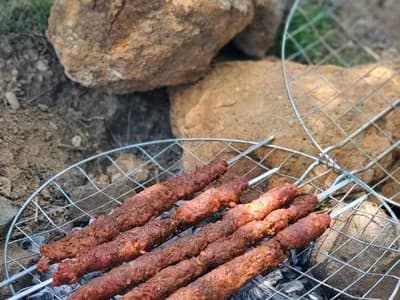
The question is never how to season it, but why it falls off the skewer. The answer is fat, a hand-chopped grain and real kneading: juicy lamb that holds together over direct fire.
Pork Neck Shashlik on the Kamado, Onion Marinade
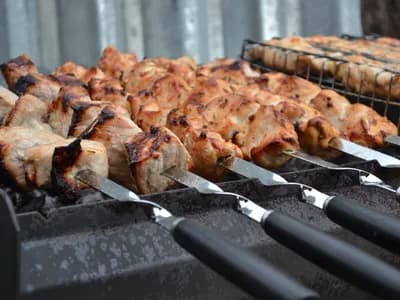
The skewer of the Russian-speaking world, cooked as I make it on my Big Green Egg Large: pork neck in 3 cm cubes, a grated onion marinade with not a drop of vinegar, and twenty minutes of steady direct fire.
Beef Cheeks in Red Wine, Braised in a Dutch Oven on the Kamado
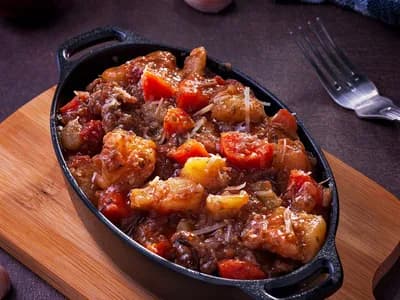
Three hours of red wine, cast iron and a thread of olive-wood smoke your kitchen oven simply cannot make. The braise that justifies lighting the kamado in midwinter.
KEEP READING
Go deeper on this dish
- Recommended kamado
Kamado Bono Media 51 cm
This recipe needs a kamado that holds a steady 120 °C for about five hours and can fit a 41 cm pan with the deflector in. The Kamado Bono Media is 51 cm across according to its listing, so the Rösle pan, about 47 cm on the diagonal, fits with room to spare. The ceramic mass holds temperature without checking every five minutes, which is what the first two stages require. Honest drawback: at 120 °C the vents sit barely open and a small overshoot at start-up takes time to correct; climb slowly.
- Editorial guide
How to light a kamado: the step-by-step method
No petrol, no weird tablets and no 45-minute waits. The cone method, airflow control and the mistakes that prevent 80% of the frustration.
- Glossary term
Low & slow
Cooking at low temperature (95-130 °C) for many hours to tenderise tough cuts and develop deep smoke.
- Related comparison
big green egg large vs kamado joe classic iii
The classic kamado matchup: the Big Green Egg Large, the indestructible pioneer with the widest accessory network, agai…