Recipe · Indirect · Medium
Adjaruli Khachapuri on the Kamado: Cheese Boat with Egg Yolk on Steel
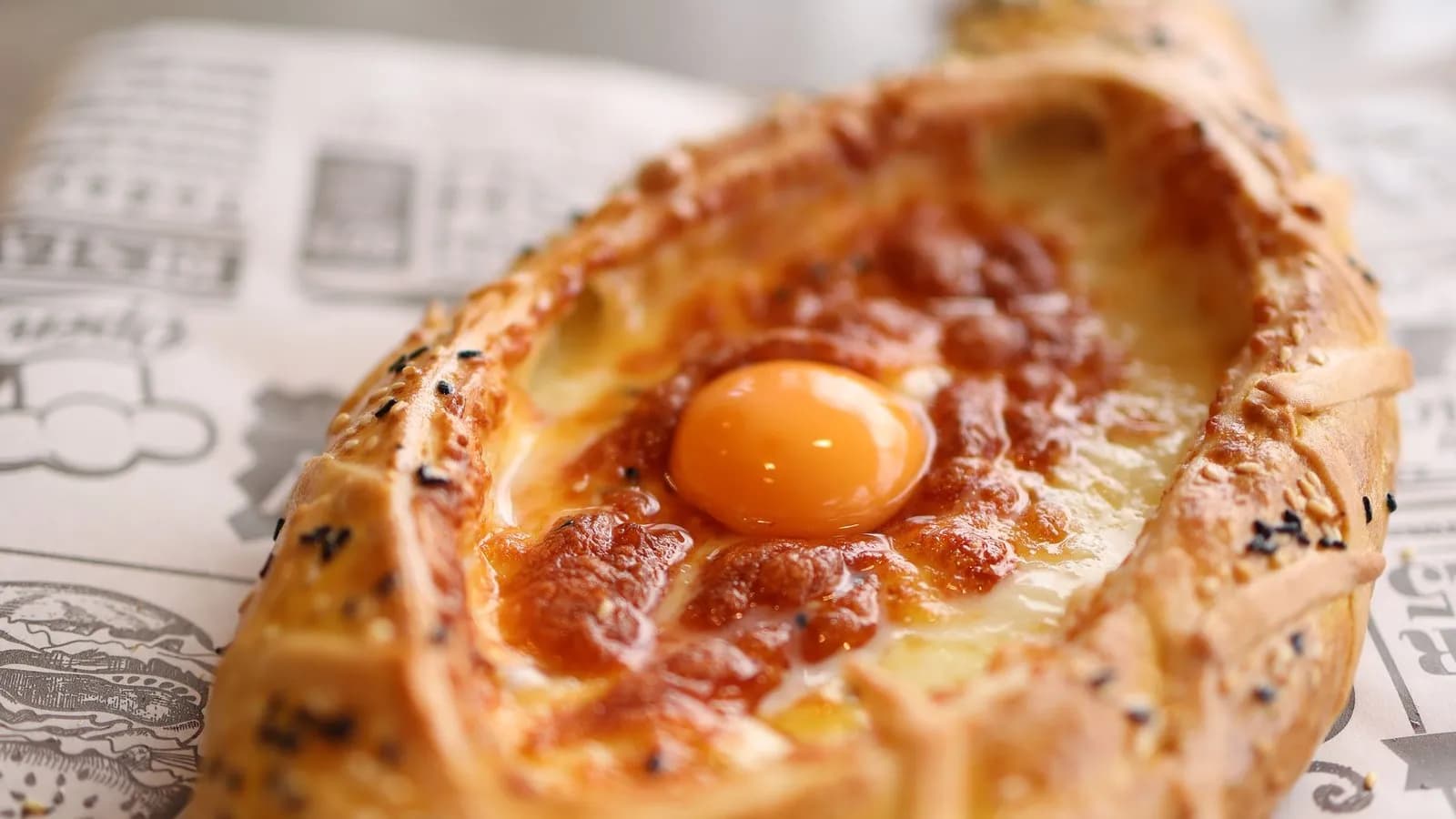
The Georgian bread boat of melted cheese, yolk and butter, baked on a steel plate at 260-280 °C in a kamado with a 49-50 cm grate: crisp base, a dome that browns the rim, and the yolk going in for the final minutes.
Quick answer
Stretch balls of milk dough of about 210 g into ovals, shape boats of about 28 cm filled with mozzarella and feta, and bake them one at a time on steel, indirect, at 260-280 °C for 8-10 minutes. Burp the lid, add the yolk and give it 2-3 minutes more. Off the heat, put cold butter on top. Times are a guide.
- Prep
- 120 min
- Cook
- 60 min
- Servings
- 4 servings
- Temperature
- 270 °C
Ingredients
- strong bread flour (harina de fuerza, W 260-300)500 g
- whole milk, lukewarm, at about 30 °C300 ml
- dried baker's yeast (or 21 g fresh)7 g
- sugar5 g
- fine salt10 g
- extra virgin olive oil2 cda
- low-moisture block mozzarella, grated, in place of the suluguni (сулугуни)450 g
- feta cheese, crumbled250 g
- fresh eggs (4 yolks for the centres and 1 whole egg for brushing)5 ud
- cold butter, in 4 pieces60 g
- durum wheat semolina for the peel, as neededc/n
The gear for this recipe
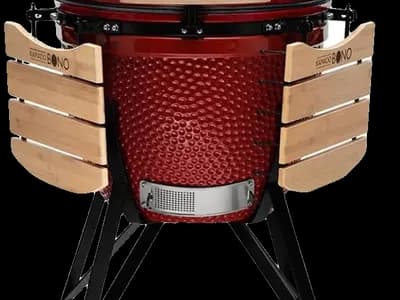
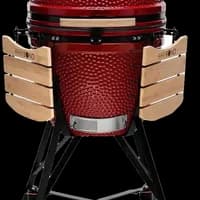 Kamado Bono Grande XXL 59 cmThe steel in this recipe measures 35.6 × 30.5 cm and its diagonal is around 46.9 cm: on a 46 cm grate it does not sit flat. The 49-50 cm grate of the **Kamado Bono Grande XXL** leaves it centred, with 1-1.5 cm per corner, and the standard deflector, in two half-moons, goes underneath and cuts the direct radiation from the embers, which would burn the base of the boat before the rim browns. The ceramic stores heat to hold 260-280 °C through four batches in a row, and the closed dome gives the heat from above that melts the cheese and browns the rim at the same time.
 Jealous Devil 100% White Quebracho lump charcoal 15.8 kgFour boats, one at a time, add up to close to an hour at 260-280 °C, opening the lid three times per batch: to load, for the yolk and to take it out. That calls for a bed of embers that does not fade halfway through the session. **Jealous Devil white quebracho charcoal** comes in large chunks of a very dense wood and leaves little ash, so a full firebox holds its temperature without ash blocking the air intake underneath, which is the most common reason a kamado loses degrees mid-cook. It is resin-free hardwood: it adds no harsh smoke to a dough that spends ten minutes under a closed lid.
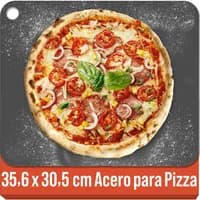 Chef Pomodoro CP-SBP: 35.6 × 30.5 cm steel pizza plateThe steel is what cooks the base of the khachapuri. The **Chef Pomodoro CP-SBP plate**, 6.35 mm thick and 5.16 kg according to its listing, conducts heat faster than cordierite and at 260-280 °C browns the base in the time the cheese takes to bubble. The listing rates it for a maximum of 300 °C. The dome runs at 260-280 °C, but the lid thermometer reads the air, not the steel: if you have an infrared thermometer, check before loading that the surface does not go above 300 °C. Its compact size leaves room for one boat of around 28 cm per batch and, at the same time, fits a 49-50 cm grate, which leaves 1-1.5 cm per corner. It needs 30-40 minutes of preheating with a stable chamber, and long gloves to handle it hot.
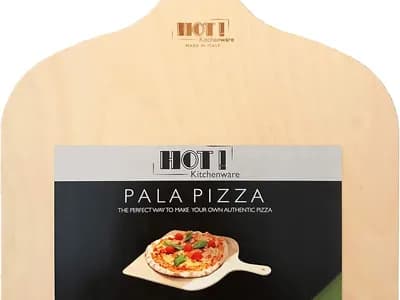
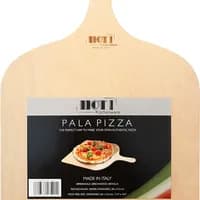 HOT! Kitchenware multilayer birch pizza peel, 29 × 41.5 cmThe raw boat is heavy and loses its shape if you move it by hand. The **HOT! Kitchenware birch peel** is 29 cm wide: the boat of around 28 cm is shaped directly on it, lying across, and, as it slides off, it lands along the 35.6 cm side of the steel. On wood with semolina the dough releases better than from metal, which is what makes the pull clean. Its listing gives a limit of 230 °C, below the temperature of the steel, so the peel goes in, loads or collects, and comes straight out: it is never rested on the hot steel or left inside the kamado.
Method
- 01
Knead and prove
Dissolve the yeast and sugar in the lukewarm milk and leave for 10 minutes. Mix into the flour, add the salt and oil, and knead for 8-10 minutes to a smooth, slightly sticky dough. Cover it in an oiled bowl and let it prove for 60-90 minutes at 24-26 °C, until doubled in volume. With a cooler dough, the process takes longer.
- 02
Prepare the cheese
Grate the block mozzarella on the coarse side and crumble the feta with your fingers. Mix them in a bowl and taste: the feta already brings all the salt the filling needs, so add none. Separate the four yolks without breaking them, keep each one in its own half shell or in a cup, and beat the whole egg in a separate bowl. Everything goes in the fridge until assembly.
- 03
Set up the kamado
Empty the ash from the last cook and fill the firebox of the Kamado Bono Grande XXL with Jealous Devil charcoal, on its cast-iron charcoal grate; light it in two or three spots with the vents open. Fit the standard deflector, in two half-moons, the 49-50 cm grate and the Chef Pomodoro steel centred on top. Start closing the vents about 30 °C before the target, around 230-240 °C, and settle the dome at 260-280 °C. Once the chamber is stable, let the steel heat for 30-40 minutes.
- 04
Divide and stretch
Gently degas the dough and divide it into four balls of around 210 g. Leave them covered for 15 minutes so the gluten relaxes. Stretch each ball by hand on a floured bench into an oval of about 30 × 20 cm and 5 mm thick. Stretch only the one you are about to bake: stretched dough that waits sticks to the bench and then to the peel.
- 05
Shape the boat
Move the oval onto the HOT! Kitchenware peel dusted with semolina, lying across it, and shape the boat there: spread a line of cheese along both long sides and roll them inwards over it. Join the ends and twist them to close both points: you get a boat about 28 cm long. Fill the centre with the rest of its quarter of the cheese, around 175 g per boat, and brush the rim with beaten egg; if you like, sprinkle sesame or nigella seeds along the rim (optional).
- 06
Bake on the steel
Burp the lid open (about 5 cm, about 5 seconds, then fully), wearing gloves. Slide the boat onto the steel with a sharp pull of the peel and close the lid. Bake for 8-10 minutes at 260-280 °C, until the cheese bubbles and the rim browns. If, when you open for the yolk, the base is already darker than the rim, leave the vents alone: the ceramic takes minutes to come down. For the next one, let the steel rest longer with the lid closed, as the pizza guide explains.
- 07
Add the yolk
Burp the lid open again. With the back of a spoon, make a well in the centre of the cheese and slide in a whole yolk. Close the lid for 2-3 minutes: the yolk warms through and any white it brings sets, but the centre stays runny. For vulnerable diners, add the yolk halfway through the bake and leave the boat in until yolk and white are fully set; if the rim browns first, take it out and lift the runny yolk out with a spoon.
- 08
Butter and batches
Burp the lid open again (about 5 cm, about 5 seconds, then fully), take the boat out with the peel without leaving it inside the kamado, and put a 15 g piece of cold butter on top. Serve at once: at the table, yolk, butter and cheese get stirred together with a fork and the crust of the rim is dunked in. Between boats, keep the lid closed for 3-5 minutes so the steel recovers its temperature.
About this recipe
Adjaruli khachapuri (jachapuri in Spanish spelling, хачапури по-аджарски; in Georgian, აჭარული ხაჭაპური) is the cheese bread of Adjaria, the Georgian region on the Black Sea. It is shaped like a boat: a rolled rim of dough that holds melted cheese, with an egg yolk and a knob of butter in the middle that get stirred together at the table before anyone tears off the first piece of crust. It needs strong heat from below so the base crisps, and dome heat from above so the rim browns before the cheese burns. A kamado with a steel plate on top of the deflector gives you both at once. On this site it sits alongside the Uzbek samsa and the pitta on a stone, but it is the only dough with the filling on show and the yolk added at the end.
The cheese: what you can buy and what you cannot
The Georgian recipe uses imeruli, a fresh cow's milk cheese, together with suluguni (сулугуни), a brined pasta filata cheese that stretches when it melts and brings salt. In Spain suluguni is hard to find outside a few Russian and Georgian food shops, so this recipe replaces it with a mix of low-moisture mozzarella (the block kind, not the ball in whey) and feta. The mozzarella supplies the stretch; the feta, the salt and the tang. It works well, but it is not the original, and it is worth saying so. If you do find suluguni or imeruli, use them at the same total weight and taste for salt before adding any. Fresh mozzarella balls release water as they melt and flood the boat.
Why steel, and why a 49-50 cm grate
Steel conducts heat faster than cordierite stone, and as the guide to pizza on a kamado explains, that gives the base more drive at moderate temperatures. At 260-280 °C the khachapuri browns its base in the time the cheese takes to bubble. Hotter than that, the cheese burns before the thick rim of dough has cooked through. The Chef Pomodoro plate, 35.6 × 30.5 cm, has a 46.9 cm diagonal (calculated from the listed dimensions), so it does not sit flat on a 46 cm grate. On the 49-50 cm grate of the Kamado Bono Grande XXL, which leaves 1-1.5 cm per corner, it sits flat, on top of its standard deflector, in two half-moons. One boat of around 28 cm fits per batch, so they go in one at a time.
The yolk goes in last, and the lid opens in two stages
The yolk does not go in at the start: ten minutes at 270 °C would leave it hard and rubbery. It goes in once the cheese is bubbling and the rim is golden, and it spends 2-3 minutes more inside, ending up hot but still runny. To open the lid at this temperature you burp it: lift the lid about 5 cm, wait about 5 seconds, then open it fully, wearing gloves and keeping your face turned away, because the rush of oxygen can cause a backdraft flare. The temperature problems guide covers it in detail. Every time in this recipe is a guide: each kamado and each load of charcoal behaves differently, and the colour of the rim is what counts. If pregnant women, small children, older people or anyone immunocompromised are at the table, add the yolk halfway through the bake rather than at the end, and leave the boat in until yolk and white are fully set; if the rim browns first, take it out anyway and do not serve it with a runny yolk: lift the yolk out with a spoon.
In 30 seconds
Prove the milk dough for 60-90 minutes, shape four boats of around 28 cm with low-moisture mozzarella and feta in place of suluguni, preheat the steel for 30-40 minutes indirect at 260-280 °C, bake each boat for 8-10 minutes, burp the lid, give the yolk 2-3 minutes more and add the cold butter off the heat. Stir everything together at the table and dunk the crust.
Editor's tips
- Use block mozzarella, not the ball in whey: fresh mozzarella releases water as it melts and leaves a flooded boat with a soft, wet base.
- Seal the points well by twisting them twice. If they open in the oven, the cheese escapes onto the steel, burns and smokes on the next batch; scrape it off before the next boat goes in.
- The wooden peel loads and unloads, it does not stay in: its listing gives a limit of 230 °C and the steel runs above that. Work quickly and wear long gloves.
- Keep the leftover egg whites in a container in the fridge and use them the next day for an omelette or a baked meringue.
Gear for this recipe
As an Amazon Associate, mikamado.es earns from qualifying purchases. At no extra cost to you.
Kamado Bono Grande XXL 59 cm
The steel in this recipe measures 35.6 × 30.5 cm and its diagonal is around 46.9 cm: on a 46 cm grate it does not sit flat. The 49-50 cm grate of the **Kamado Bono Grande XXL** leaves it centred, with 1-1.5 cm per corner, and the standard deflector, in two half-moons, goes underneath and cuts the direct radiation from the embers, which would burn the base of the boat before the rim browns. The ceramic stores heat to hold 260-280 °C through four batches in a row, and the closed dome gives the heat from above that melts the cheese and browns the rim at the same time.
€1,084

Jealous Devil 100% White Quebracho lump charcoal 15.8 kg
Four boats, one at a time, add up to close to an hour at 260-280 °C, opening the lid three times per batch: to load, for the yolk and to take it out. That calls for a bed of embers that does not fade halfway through the session. **Jealous Devil white quebracho charcoal** comes in large chunks of a very dense wood and leaves little ash, so a full firebox holds its temperature without ash blocking the air intake underneath, which is the most common reason a kamado loses degrees mid-cook. It is resin-free hardwood: it adds no harsh smoke to a dough that spends ten minutes under a closed lid.
€205
Chef Pomodoro CP-SBP: 35.6 × 30.5 cm steel pizza plate
The steel is what cooks the base of the khachapuri. The **Chef Pomodoro CP-SBP plate**, 6.35 mm thick and 5.16 kg according to its listing, conducts heat faster than cordierite and at 260-280 °C browns the base in the time the cheese takes to bubble. The listing rates it for a maximum of 300 °C. The dome runs at 260-280 °C, but the lid thermometer reads the air, not the steel: if you have an infrared thermometer, check before loading that the surface does not go above 300 °C. Its compact size leaves room for one boat of around 28 cm per batch and, at the same time, fits a 49-50 cm grate, which leaves 1-1.5 cm per corner. It needs 30-40 minutes of preheating with a stable chamber, and long gloves to handle it hot.
€50
HOT! Kitchenware multilayer birch pizza peel, 29 × 41.5 cm
The raw boat is heavy and loses its shape if you move it by hand. The **HOT! Kitchenware birch peel** is 29 cm wide: the boat of around 28 cm is shaped directly on it, lying across, and, as it slides off, it lands along the 35.6 cm side of the steel. On wood with semolina the dough releases better than from metal, which is what makes the pull clean. Its listing gives a limit of 230 °C, below the temperature of the steel, so the peel goes in, loads or collects, and comes straight out: it is never rested on the hot steel or left inside the kamado.
€19
FAQ
What cheese goes in adjaruli khachapuri, and what can replace it?
In Georgia it is made with imeruli, a fresh cow's milk cheese, and suluguni (сулугуни), a brined pasta filata cheese. In Spain suluguni is hard to find, so the usual substitute is low-moisture mozzarella with feta: the first stretches as it melts and the second brings the salt. It is similar, but not the same thing. If you find suluguni in a Russian or Georgian food shop, use it.
What temperature and how long do you bake khachapuri for?
In the kamado, at 260-280 °C indirect on a steel plate preheated for 30-40 minutes: 8 to 10 minutes until the rim browns and the cheese bubbles, then 2-3 minutes more with the yolk. These times are a guide. Above that temperature, the cheese and the base burn before the thick rim has cooked through. Go by the colour of the rim, not the clock.
When do you add the egg to adjaruli khachapuri?
At the end. Once the cheese is bubbling and the rim is golden, make a well in the centre, add the yolk and bake 2-3 minutes more so it heats without hardening. Some people add it off the heat, straight onto the hot cheese, but then it stays practically raw. The butter always goes on off the heat, just before serving.
Can you make khachapuri in a frying pan or on a barbecue?
In a covered frying pan the base cooks, but little heat reaches the top and the rim stays pale. On an open barbecue it is the other way round: the base sees the embers and burns. A closed kamado, with a deflector and a steel plate, cooks the base by contact and browns the rim with the heat of the dome, which is what a bread oven does; that is why the result is closer to an oven than to a frying pan.
Is it safe to eat the runny yolk in khachapuri?
A barely set yolk does not remove the salmonella risk that raw egg can carry. Use fresh eggs with intact shells, kept in the fridge. AESAN, the Spanish food safety agency, advises pregnant women to cook eggs until both yolk and white are fully set. For pregnant women, small children, older people or the immunocompromised, add the yolk halfway through the bake and leave the boat in until yolk and white are fully set.
More kamado recipes
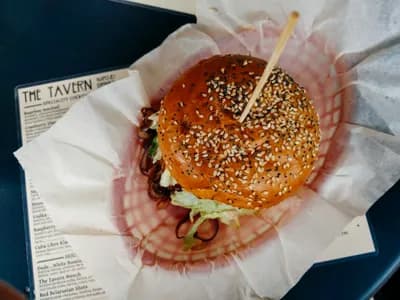
Brioche Burger Buns on the Kamado
Brioche burger buns baked on the kamado: a soft, buttery crumb, an egg-glazed shine and a scatter of sesame. The perfect cushion for your next homemade smash burger.
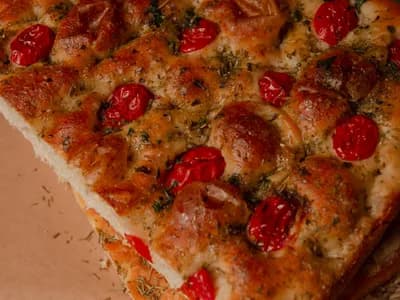
Valencian coca de recapte on the kamado, escalivada and sardine
A thin oil-dough savoury coca topped with red-pepper and aubergine escalivada and salted sardine strips. Indirect at 250°C on stone, crisp base. No cheese, the Levante way. Serves 6.
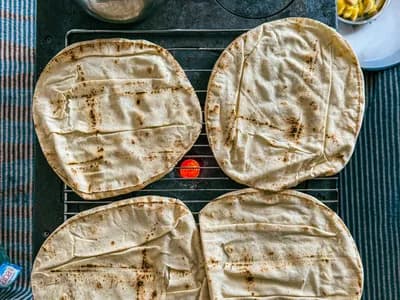
Kamado pita bread that puffs itself on the stone
Individual pita breads that balloon up into a perfect pocket on cordierite stone at 300°C, cooked indirect. Fresh, golden and steaming from the pocket: the party trick I pull on my Torrevieja terrace whenever there is hummus.
KEEP READING
Go deeper on this dish
- Recommended kamado
Kamado Bono Grande XXL 59 cm
The steel in this recipe measures 35.6 × 30.5 cm and its diagonal is around 46.9 cm: on a 46 cm grate it does not sit flat. The 49-50 cm grate of the Kamado Bono Grande XXL leaves it centred, with 1-1.5 cm per corner, and the standard deflector, in two half-moons, goes underneath and cuts the direct radiation from the embers, which would burn the base of the boat before the rim browns. The ceramic stores heat to hold 260-280 °C through four batches in a row, and the closed dome gives the heat from above that melts the cheese and browns the rim at the same time.
- Editorial guide
How to light a kamado: the step-by-step method
No petrol, no weird tablets and no 45-minute waits. The cone method, airflow control and the mistakes that prevent 80% of the frustration.
- Glossary term
Heat deflector
Ceramic plate placed between the coals and the grate to turn direct fire into indirect cooking.
- Related comparison
big green egg large vs kamado joe classic iii
The classic kamado matchup: the Big Green Egg Large, the indestructible pioneer with the widest accessory network, agai…