Recipe · Pizza · Medium
Margherita pizza on the kamado
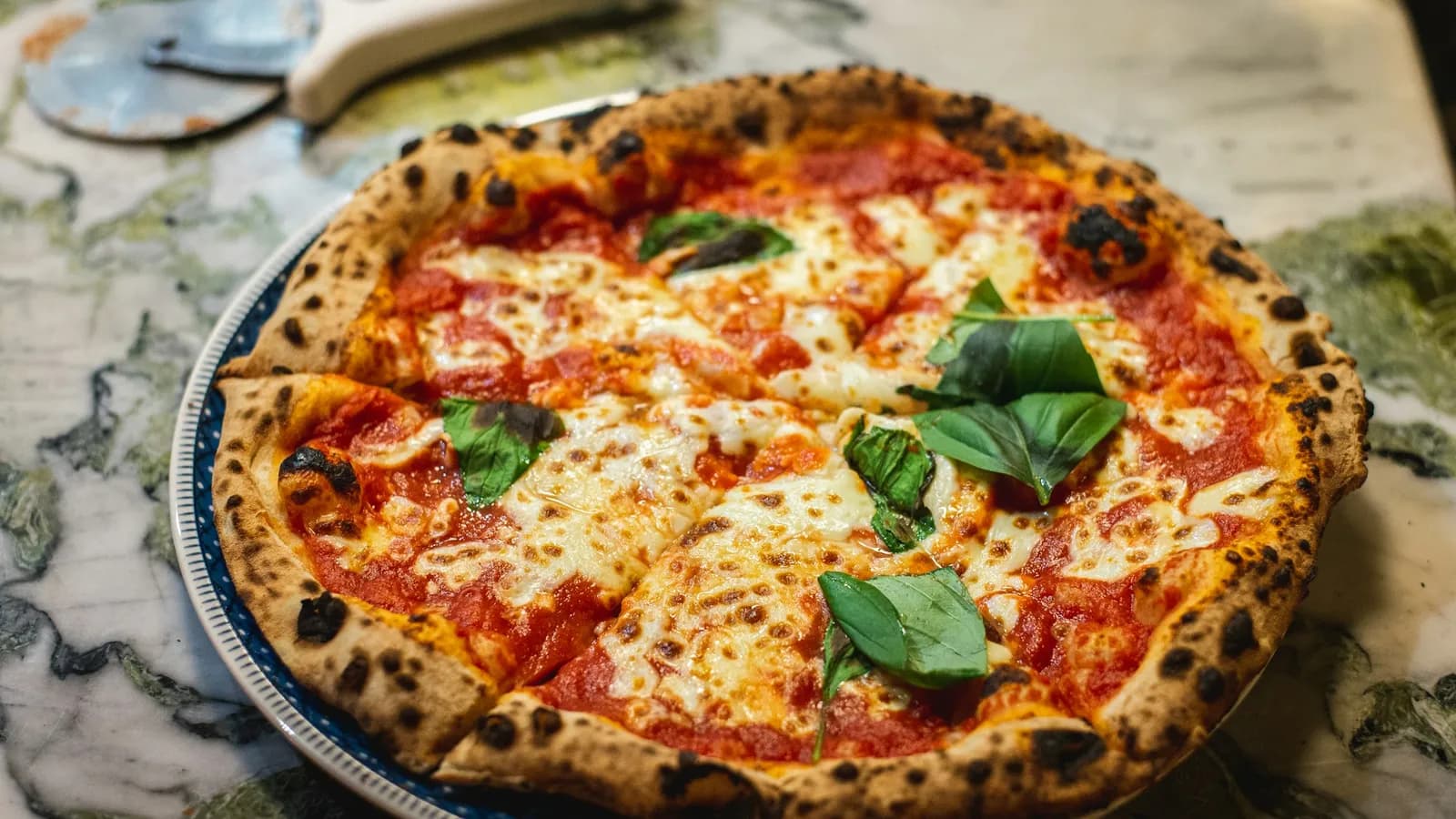
Tomato, fior di latte and basil: three ingredients and nowhere to hide. On a 350°C stone the cornicione puffs in seconds and the margherita reminds you why it is still the queen.
Quick answer
Neapolitan margherita bakes on a saturated stone at 350 °C, with the stone raised and preheated for 45-60 minutes. The pizza cooks in about 90 seconds, turned halfway. It carries San Marzano tomato, drained fior di latte and basil, which always goes on as it comes out so it doesn't blacken.
- Prep
- 1470 min
- Cook
- 3 min
- Servings
- 4 servings
- Temperature
- 350 °C
Ingredients
- "00" flour, W 260-300 (100% baker's)500 g
- cold water (62% hydration)310 ml
- fine sea salt (2.8%)14 g
- fresh yeast (0.2%)1 g
- San Marzano DOP tomatoes, hand-crushed400 g
- fior di latte, drained 1 hour300 g
- fresh basil leaves16 hojas
- extra virgin olive oil4 cdas
Method
- 01
Mix and ferment 24h
The day before, dissolve the yeast in the water, add the flour and knead for 10 minutes; work the salt in at the end. Shape a smooth ball, leave 2 hours at room temperature, then 24 hours covered in the fridge. Slow fermentation is 80% of the flavour: do not cut it short.
- 02
Ball and temper
Four hours before baking, divide the dough into four 200 g balls, building good surface tension. Leave them covered at room temperature: cold dough springs back when stretched and tears at the centre.
- 03
Light the kamado and saturate the stone
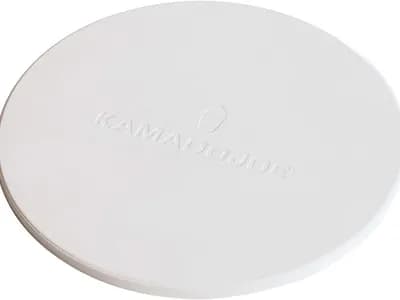
Light a generous charcoal bed, set the stone raised (mid-dome height, not close to the coals) and open both vents fully. Let everything climb to 350°C and hold it there for 45-60 minutes: the stone must be saturated, not just the air. An infrared gun aimed at the stone should read 380-400°C.
- 04
Stretch and top in 60 seconds
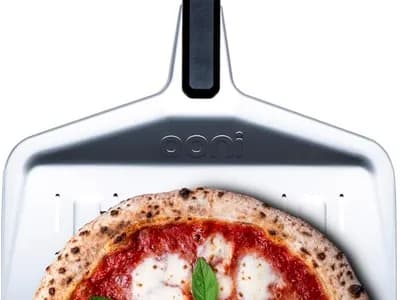
Stretch each ball from the centre outwards, leaving a 2 cm untouched rim, to about 28-30 cm. On a semolina-dusted peel: crushed tomato spread with the back of a ladle (no more than 80 g), torn fior di latte and a thread of oil. Work fast or the dough will glue itself to the peel.
- 05
Bake 90 seconds and turn
Launch the pizza onto the centre of the stone and close the lid. At 45-50 seconds, open and rotate the pizza 180° with the peel: the side facing the hinge always takes more heat. Another 40-50 seconds and it is done, when the cornicione is puffed and leopard-spotted.
- 06
Basil and oil off the heat
Basil goes on after the bake, never inside: at 350°C it turns black and bitter in seconds. Scatter the leaves, finish with a ribbon of olive oil and serve immediately. A margherita stays alive for three minutes.
About this recipe
The margherita is the final exam for any oven, and the kamado passes with honours: the ceramic stores brutal heat and the stone delivers a 400°C floor under a radiant dome — exactly the physics of a Neapolitan wood-fired oven. With well-fermented dough and properly drained cheese, the difference from a serious pizzeria is indistinguishable.
The technique: a saturated stone and 90 seconds of nerve
Mistake number one is launching when the air reads 350°C but the stone has only been in for ten minutes. The stone needs 45-60 minutes of preheating to saturate; otherwise the base comes out pale and chewy while the rim burns. Mistake number two is the cheese: undrained fior di latte weeps whey and floods the centre. Drain it an hour ahead and tear it by hand, never with a knife.
Editor's tips
- Semolina on the peel, not flour: it acts like ball bearings and does not burn bitter on the stone.
- If the base comes out pale while the rim is done, the stone was cold: give it 15 more minutes before the next one.
- Between pizzas, close the lid for 3-4 minutes with the vents open: the stone recovers the heat the dough stole from it.
Gear for this recipe
As an Amazon Associate, mikamado.es earns from qualifying purchases. At no extra cost to you.
FAQ
How long should the pizza stone preheat in a kamado?
Between 45 and 60 minutes with the kamado already stabilised at 350°C, and always put the stone in from the start, cold. The stone's ceramic takes far longer than the air to saturate with heat, and it is the stone — not the air — that bakes the base. The definitive test is an infrared gun: 380-400°C at the surface. Besides, dropping a cold stone into an already-hot kamado can crack it from thermal shock.
Which mozzarella should I use so the pizza does not turn watery?
Fior di latte (fresh cow-milk mozzarella) drained for at least an hour in a sieve in the fridge, torn by hand into walnut-sized pieces. Burrata and buffalo mozzarella release too much whey for a 90-second bake; block "pizza" mozzarella works but loses the creamy melt. If you can only find buffalo, drain it for four hours and use less of it.
Why does my Neapolitan pizza burn underneath in the kamado?
Almost always because the stone sits too close to the coals, or because of burnt flour. The stone should be raised to gasket height or above, so it receives convective heat rather than direct radiation from the charcoal. And use semolina on the peel sparingly: loose flour falling on a 400°C stone carbonises in seconds and turns every following pizza bitter. Sweep the stone with a brass brush between bakes.
Can you make Neapolitan pizza in a kamado with regular charcoal?
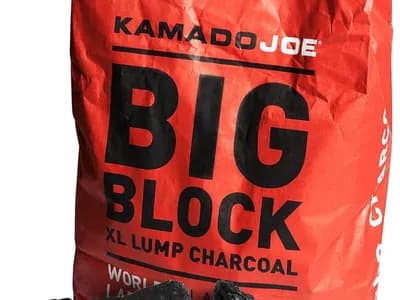
Yes, as long as it is large lump charcoal, not briquettes. Briquettes rarely hold 350°C and give off a chemical smoke you can taste on such a naked dough. A hard charcoal like quebracho or holm oak lasts a whole 4-pizza session on a single bed. Wood is optional: a couple of beech or oak splits on the coals add the smoky nuance of a Neapolitan oven, but the margherita comes out spectacular on good charcoal alone.
More kamado recipes
Sourdough pala-style pizza on the kamado
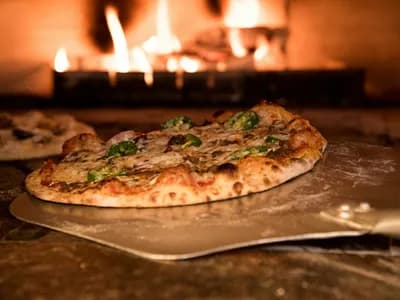
A Roman pala-style pizza — long, with a tall, open-crumb edge — leavened with sourdough and baked on steel at 350°C with the deflector in.
Neapolitan pizza on the kamado
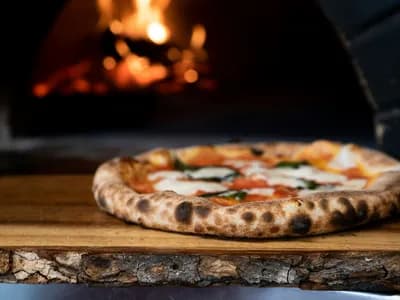
At 350°C the base puffs in 90 seconds and the cornicione comes out leopard-spotted and pillowy. One pizza, three minutes, zero margin for error.

Sobrasada and honey pizza on the kamado
The Spanish twist that beats many classics: Mallorcan sobrasada melting into orange lava, aged Mahón cheese and honey to finish. Mallorca and Naples, finally at the same table.
KEEP READING
Go deeper on this dish
- Recommended kamado
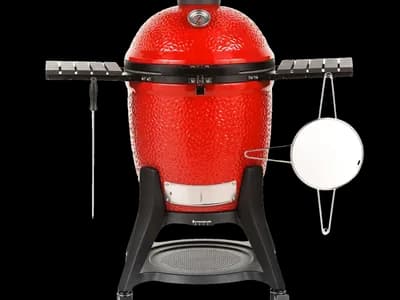
Kamado Joe Classic III 18"
The most versatile kamado on the market
- Editorial guide
Your first kamado: the complete pre-purchase guide
Size, materials, brand and budget. Everything you have to decide before clicking Buy, told by someone who has made enough mistakes.
- Glossary term
Heat deflector
Ceramic plate placed between the coals and the grate to turn direct fire into indirect cooking.
- Related comparison
big green egg large vs kamado joe classic iii
The classic kamado matchup: the Big Green Egg Large, the indestructible pioneer with the widest accessory network, agai…