Recipe · Indirect · Easy
Cedar-Plank Salmon on the Kamado with Mustard, Honey and Dill Glaze
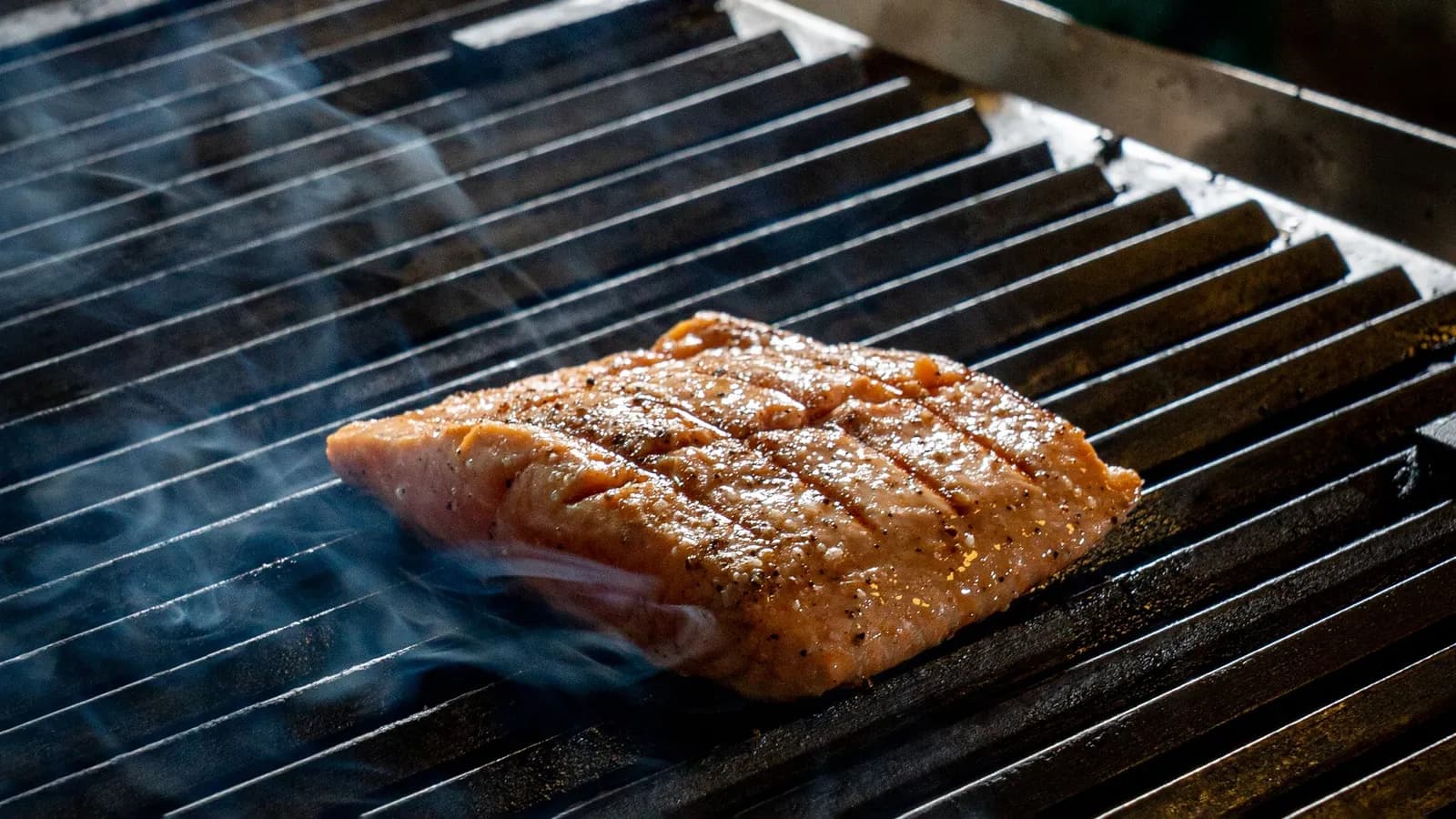
A salmon loin on a soaked cedar plank, glazed with mustard, honey and dill. Indirect at about 180 °C with the dome closed, until 50-52 °C at the core: juicy, opaque-edged and scented with wood.
Quick answer
With the deflector in and the chamber at 180 °C, warm the soaked cedar plank for 3-5 min, set the salmon glazed with mustard, honey and dill on top and close the dome. At 15-20 minutes, with 50-52 °C at the core, take it off and rest it for five minutes.
One big step at a time, screen kept on and built-in timers.
- Prep
- 20 min
- Cook
- 30 min
- Servings
- 4 servings
- Temperature
- 180 °C
What time do you want to eat?
Pick a time and we'll tell you when to start.
12:30
Start the prep
12:50
Light the kamado
13:20
Onto the kamado
14:00
Serve
Estimate: it includes lighting and settling the kamado plus a margin for large cuts. If the recipe asks you to marinate or salt ahead, add that time.
Fire setupIndirect
- Dome
- 180 °C
- Deflector
- Yes
- Grate
- Standard height
- Bottom vent
- A crack
- Top vent
- A crack
- Fuel
- Lump charcoal, firebox filled to the holes
- Wood
- Soaked red cedar plank, 40 × 15 cm
- Setup
- Wireless probe and infrared thermometer
Ingredients
- red cedar plank, 40 × 15 cm, soaked for 1-2 h (both pieces of salmon fit on it)1
- skin-on salmon loin, evenly about 3 cm thick (2 pieces of 350 g)700 g
- Dijon mustard3 tbsp
- honey2 tbsp
- chopped fresh dill, plus a few sprigs to serve2 tbsp
- lemon: juice of half, the other half in wedges1
- extra virgin olive oil1 tbsp
- flaky sea salt1 tsp
- freshly ground black pepperto taste
- lump charcoal (fill the fire box to the edge of the holes)1 load
Allergens
- Fish
- Mustard
Dijon mustard is usually made with wine or vinegar: it may contain sulphites.
Based on the recipe's ingredients. Always check the label of every product you buy.
The gear for this recipe
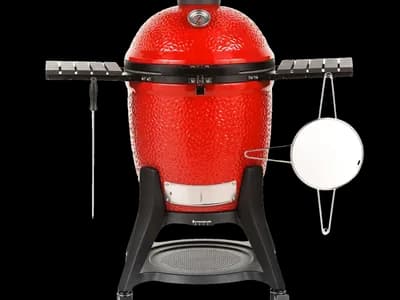
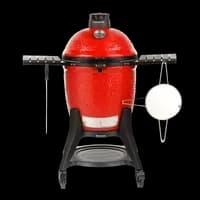 Kamado Joe Classic III 18"This is the recipe's kamado: its 46 cm grate takes the 40 × 15 cm plank centred over the deflector, with room for air to move round it. The thick ceramic helps the chamber hold steady when you open the dome to glaze. The honest drawback: it is 127 kilos with the cart, according to Kamado Joe, so settle the spot before buying.
 Jealous Devil 100% White Quebracho lump charcoal 15.8 kgLump from Paraguayan white quebracho, a very dense wood that leaves little ash (around 3%) and has a neutral aroma, so the cedar takes the lead. One load is more than enough for this short cook. The real drawback: it runs hot readily, so close the vents down before you reach 180 °C, and the 15.8 kg bag takes up room.
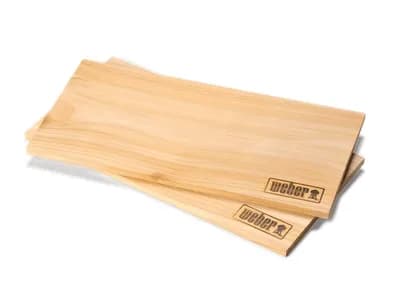
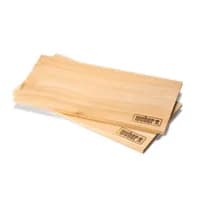 Weber Pacific Red Cedar Grilling Planks 40 × 15 cm, Pack of 2The recipe's planks: Pacific red cedar, 40 × 15 cm, pack of two. The 15 cm width is plenty for both pieces of salmon and the comfortable range is indirect at 180-200 °C, exactly this recipe's. The honest drawback: they are a consumable, hand-wash only, and go in the bin once the underside is black and brittle.
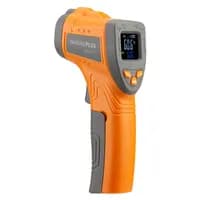 Inkbird INK-IFT01: surface infrared thermometer up to 550 °CNon-contact infrared thermometer with a -50 to 550 °C range and 2% or 2 °C accuracy. Here it checks that the grate is hot and keeps an eye on the plank edges, which is where it starts to burn. The important drawback: it reads surfaces only, not the salmon's internal temperature; for that you need a probe.
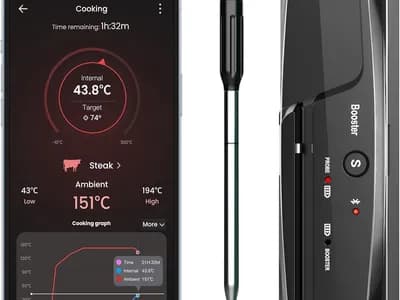
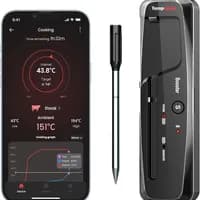 ThermoPro TempSpike TP961: 150 m wireless Bluetooth probeThis is the probe the recipe needs: a single wireless probe with two sensors, one for the inside of the food (-10 to 100 °C, ±1 °C) and one for the chamber, so you can set the alarm for 50 °C without opening the dome. The honest drawback: with one food sensor you only track the thicker piece, and the booster runs on AAA batteries; it may arrive branded ThermoPro or TempPro.
Method
- 01
Soak the plank
Submerge the plank in cold water for at least an hour, ideally two, with a plate or pan on top to stop it floating. If it is new, rinse it first. Meanwhile take the salmon out of the fridge 15 minutes early and pat it dry with kitchen paper.
- 02
Set up the kamado indirect at 180 °C
Fill the fire box with lump, light it in one spot with the bottom vent and top vent open and let it catch well in the centre. Fit the deflector in the indirect position with the grate on top and close the dome. When the chamber is about 20 °C short of target, close the bottom and top vents down to a finger's width and make small adjustments until it settles at 180 °C. It takes about 15-20 minutes.
- 03
Make the glaze
In a bowl mix the mustard, honey, chopped dill, juice of half a lemon and the oil. It should be a glossy paste with no lumps. Taste it: it should be gently sweet and fragrant, because heat mellows it.
- 04
Warm the plank
Drain the plank. Open the lid with care: lift it about 5 cm for a few seconds before opening fully, to avoid a flare-up from the rush of oxygen. Set the plank in the middle of the grate with no fish, close the dome and leave it 3-5 minutes, until it smells of wood and a thin thread of smoke appears. If a flame catches at the edge, spray it with water.
- 05
Place the salmon
On the worktop, season the salmon with salt and pepper and brush the flesh with half the glaze. Open the dome in two stages again, as before, and lay both pieces on the plank end to end, skin side down. Before closing, point the infrared thermometer at the grate and the plank edges: if one edge is already very dark, turn the plank round.
- 06
Cook with the dome closed
Close the dome and cook for 8 minutes without opening. Then open with the same care, brush on the remaining glaze and push the probe in from the side into the thickest part of the thicker piece. Close and carry on until it reads 50-52 °C. It usually takes 15-20 minutes in total, depending on thickness.
- 07
Remove and rest
Open the dome in two stages and lift the plank out with the fish on it, using heat-resistant gloves and a wide spatula underneath; set it on a metal tray, never on wood or a tablecloth, because the underside comes out smouldering. Rest for five minutes: the temperature climbs 2-3 °C and the juices settle.
- 08
Serve and shut down
Serve the salmon straight from the plank, with fresh dill and lemon wedges, leaving the skin stuck to the plank as you lift the pieces. Shut the kamado down by closing the bottom and top vents fully. If the underside of the plank is not charred, rinse it, dry it and keep it for a second use.
About this recipe
Salmon on a cedar plank is the classic dish of the Pacific Northwest, where Indigenous peoples cooked fish staked beside the fire on red cedar boards. It suits the kamado particularly well: with the dome closed and the vents almost shut, the plank smoulders slowly underneath, the salmon cooks in gentle all-round heat and the mustard, honey and dill glaze sets to a lacquer on the surface without burning. It is half an hour of fire and very little fuss, good all year round, and it looks far more impressive than it is difficult.
The plank: soak it, do not ignite it
A cedar plank does not smoke like a chunk of oak: it perfumes. It is soaked, set on the hot grate and, as the water leaves, the wood begins to smoulder under the fish instead of burning with a flame. The Weber red cedar planks, 40 × 15 cm come as a pack of two, and their 15 cm width is plenty for a 600-700 g salmon loin; a whole side will not fit without cutting. This recipe needs just one, with the two pieces of salmon laid end to end. Soak it for at least an hour (two is better) with something on top to keep it under, because it floats. The wetter it is, the later it smokes and the more slowly it burns away. If a flame appears at the edge in the last minutes, put it out with a splash of water and carry on.
Indirect at about 180 °C
This recipe is cooked indirect: the deflector between the coals and the grate keeps the heat from rising straight to the plank, and the chamber settles near 180 °C. The guide to direct and indirect cooking explains why; the key point here is that below 160 °C the wood gives off hardly any aroma and above 210 °C the plank tends to catch. You steer it with the bottom vent and the top vent, set to little more than a finger's width once the chamber is within 20 °C of target, before it overshoots. A load of dense lump, such as Jealous Devil quebracho, holds that temperature without spikes and leaves very little ash.
Salmon at 50-52 °C, no more
Salmon cooks in a matter of minutes and goes from juicy to dry with very little margin. The target is 50-52 °C at the core of the loin, measured with a probe pushed in from the side into the thickest part; it will climb 2-3 °C while resting. At 50-52 °C the flesh is opaque at the edges, still translucent in the middle and flakes into large pieces. If you prefer it more cooked, or you are cooking for pregnant women, small children or anyone immunocompromised, go to 63 °C, the usual food-safety reference. An infrared thermometer such as the Inkbird IFT01 cannot do this job because it reads surfaces only, but it does confirm that the grate is hot and that no edge of the plank is burning before the fish goes on. The temperature and time chart covers the other references.
Mustard, honey and dill
The glaze is simple and takes a minute: Dijon mustard for acidity and heat, honey so it lacquers and caramelises, fresh dill for the herbal note and a little lemon juice to lift it. It is brushed on twice: once as the fish goes on and again halfway through, so the layer settles without dripping. It is a classic counterpoint to salmon, lighter than a soy glaze, and it travels: it works just as well on trout or a loin of cod. If you want a smokier salmon, with a different technique and character, the guajillo smoked salmon goes in that direction. Serve the loin with boiled potatoes, asparagus grilled over the coals or a cucumber and yoghurt salad.
In 30 seconds
Soak the cedar plank for one or two hours. Set the kamado up indirect with the deflector at about 180 °C, warm the plank for 3-5 minutes until it smells of wood, set the salmon on it glazed with mustard, honey and dill, and close the dome. At 15-20 minutes, with 50-52 °C at the core, take it off, rest it for five minutes and serve.
Will it fit your kamado?
Small
33-40 cm · Joe Jr, MiniMax
Won't fit
The 40 cm plank probably won't fit; with a shorter plank, a single salmon piece.
Medium
46-51 cm · Classic, Large
Fits
The 40 cm plank fits in the centre with both 350 g pieces.
Large
56-61 cm · Big Joe, XL
Fits
Two planks probably fit: double the salmon on the same fire.
What to serve with it
Sides
- Grilled wild asparagus
- Boiled potatoes with dill and butter
- Cucumber and yogurt salad
- Wine
- White Albariño from Rías Baixas or Verdejo from Rueda
- Beer
- Wheat beer
- Alcohol-free
- Sparkling water with cucumber and lemon
Leftovers and storage
- In the fridge
- Within 2 hours, into the fridge in an airtight container: 1-2 days, as it is fish.
- Freezing
- Keeps 2-3 months well wrapped, though it loses juiciness; thaw in the fridge.
- Reheating
- Best cold. To warm, oven at 140 °C covered with foil for 8-10 min, until hot without drying.
- Using them up
- Flaked into a salad, on toast with cream cheese and dill, or as rillettes.
Cool and refrigerate within 2 hours. When in doubt, throw it out.
Editor's tips
- Keep the planks under water with a weight: if they float, only one face soaks and the other burns quickly. Do not wash them with soap, which they absorb; a good hot rinse and thorough drying will do.
- Buy the centre-cut loin of even thickness: the tail is thin and overcooks while the middle is still raw. If all you have is uneven pieces, tuck the thin end under.
- For 50-52 °C use farmed salmon or salmon previously frozen at -20 °C for at least 24 hours, as regulations require for lightly cooked fish because of the anisakis risk. If you are cooking for at-risk groups, go up to 63 °C.
- If the chamber climbs past 210 °C, close the bottom vent a little and let it fall without opening the dome: opening only feeds the fire and puts the plank at risk of igniting.
Gear for this recipe
As an Amazon Associate, mikamado.es earns from qualifying purchases. At no extra cost to you.
Kamado Joe Classic III 18"
This is the recipe's kamado: its 46 cm grate takes the 40 × 15 cm plank centred over the deflector, with room for air to move round it. The thick ceramic helps the chamber hold steady when you open the dome to glaze. The honest drawback: it is 127 kilos with the cart, according to Kamado Joe, so settle the spot before buying.
€2,399

Jealous Devil 100% White Quebracho lump charcoal 15.8 kg
Lump from Paraguayan white quebracho, a very dense wood that leaves little ash (around 3%) and has a neutral aroma, so the cedar takes the lead. One load is more than enough for this short cook. The real drawback: it runs hot readily, so close the vents down before you reach 180 °C, and the 15.8 kg bag takes up room.
€234
Weber Pacific Red Cedar Grilling Planks 40 × 15 cm, Pack of 2
The recipe's planks: Pacific red cedar, 40 × 15 cm, pack of two. The 15 cm width is plenty for both pieces of salmon and the comfortable range is indirect at 180-200 °C, exactly this recipe's. The honest drawback: they are a consumable, hand-wash only, and go in the bin once the underside is black and brittle.
€30

Inkbird INK-IFT01: surface infrared thermometer up to 550 °C
Non-contact infrared thermometer with a -50 to 550 °C range and 2% or 2 °C accuracy. Here it checks that the grate is hot and keeps an eye on the plank edges, which is where it starts to burn. The important drawback: it reads surfaces only, not the salmon's internal temperature; for that you need a probe.
€26
ThermoPro TempSpike TP961: 150 m wireless Bluetooth probe
This is the probe the recipe needs: a single wireless probe with two sensors, one for the inside of the food (-10 to 100 °C, ±1 °C) and one for the chamber, so you can set the alarm for 50 °C without opening the dome. The honest drawback: with one food sensor you only track the thicker piece, and the booster runs on AAA batteries; it may arrive branded ThermoPro or TempPro.
€47
Have you made it?
Tell us how it turned out on your kamado. We review every rating before publishing it.
No published ratings yet. Be the first!
FAQ
Can I make it without a cedar plank?
Yes. Put the salmon on baking paper or a metal tray at the same temperature and time. You will lose the wood aroma, but the glaze and texture hold up. Alder or maple planks made for cooking also work, but never treated or hardware-store wood.
Does it fit in a small kamado?
A 40 × 15 cm plank set in the centre needs a grate of about 45 cm across or more with the deflector fitted. It will not fit in a 33-34 cm kamado: saw it down to about 28 cm long before soaking and lay the two pieces of salmon side by side, or cook them in two batches.
How do I know when it is done?
A probe is the reliable way: 50-52 °C at the core for juicy, opaque-edged salmon, 63 °C if you want it well done. With no probe, press with a fork: if it starts to flake but the centre is still a touch translucent, it is ready.
Can I reuse the plank?
A second use is possible if the underside is not charred, but each time it gives less aroma. Wash by hand without soap, dry completely and store somewhere dry. Throw it out when it is black and brittle.
How do I store leftover salmon?
Remove the skin, keep it in an airtight container in the fridge for up to two days and eat it cold in a salad or warm in a rice bowl. Do not over-reheat it: it dries and turns chalky.
More kamado recipes
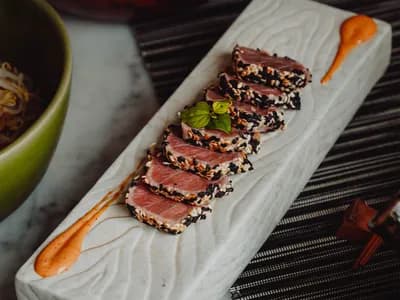
Sesame-Crusted Seared Bluefin Tuna on the Kamado (Tataki)
A bluefin tuna loin rolled in sesame and seared 30-45 seconds per side over a screaming-hot kamado: a toasted crust outside, a raw, juicy core, and a soy, ginger and lime sauce that wakes it all up.
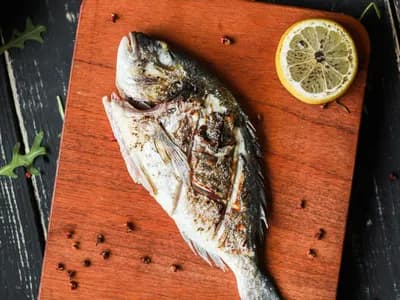
Butterflied sea bream on the kamado, with garlic, chilli and lemon refrito
Sea bream butterflied open over direct coals, skin down first, finished with a hot garlic, chilli and lemon refrito. Mediterranean fish off Torrevieja, ready in 18 minutes. Serves 2.
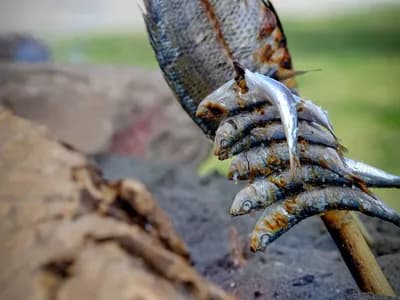
Skewered Sardines al Espeto on the Kamado
The icon of the Mediterranean summer at home: fresh sardines with coarse salt, roasted by the side heat of the kamado's embers without touching the grate. Charred skin, juicy flesh, bread and lemon.
KEEP READING
Go deeper on this dish
- Recommended kamado
Kamado Joe Classic III 18"
This is the recipe's kamado: its 46 cm grate takes the 40 × 15 cm plank centred over the deflector, with room for air to move round it. The thick ceramic helps the chamber hold steady when you open the dome to glaze. The honest drawback: it is 127 kilos with the cart, according to Kamado Joe, so settle the spot before buying.
- Editorial guide
How to light a kamado: the step-by-step method
No petrol, no weird tablets and no 45-minute waits. The cone method, airflow control and the mistakes that prevent 80% of the frustration.
- Glossary term
Heat deflector
Ceramic plate placed between the coals and the grate to turn direct fire into indirect cooking.
- Related comparison
big green egg large vs kamado joe classic iii
The classic kamado matchup: the Big Green Egg Large, the indestructible pioneer with the widest accessory network, agai…