Recipe · Indirect · Advanced
Guajillo-cured smoked salmon, low indirect
A 900 g salmon fillet, 24 hours dry-cured in Maldon salt, brown sugar, ground guajillo and dill. Smoked at 130°C with apple and cherry. Silky texture and a spicy crust.
Season:All yearCuisine:Latin American
Quick answer
Guajillo-cured smoked salmon dry-cures for 24 hours (55% salt, 45% sugar) with guajillo and dill, forms a pellicle for 2-4 hours, then smokes at 130 °C indirect with apple and cherry wood to 60 °C internal, about 80-90 minutes. The result: a silky texture and a spicy crust. The probe is essential.

One big step at a time, screen kept on and built-in timers.
- Prep
- 1440 min
- Cook
- 90 min
- Servings
- 6 servings
- Temperature
- 130 °C
What time do you want to eat?
Pick a time and we'll tell you when to start.
11:50
the day before
Start the prep
11:50
Light the kamado
12:20
Onto the kamado
14:00
Serve
Estimate: it includes lighting and settling the kamado plus a margin for large cuts. If the recipe asks you to marinate or salt ahead, add that time.
Fire setupIndirect
- Dome
- 130 °C
- Deflector
- Yes
- Grate
- Standard height
- Fuel
- Charcoal, one lit zone (Minion method)
- Wood
- 2 apple wood chunks and 1 cherry chunk
- Setup
- Deflector
Temperature curve
2:17 h from lighting
Kamado domeInside the meat (probe)
| # | From | Phase | Dome | Internal |
|---|---|---|---|---|
| 1 | 0:00 | Light the charcoalMinion with deflector; clean bluish smoke | 20 → 130 °C | no probe |
| 2 | 0:30 | Stabilise10 min steady, then apple and cherry chunks | 130 °C | no probe |
| 3 | 0:40 | Put the food inPellicle-coated salmon skin down, probe in the thickest part | 130 → 115 °C | 6 °C |
| 4 | 0:42 | Smoke80-90 min unopened with no extra wood, to 60 °C | 115 → 130 °C | 6 → 60 °C |
| 5 | 2:07 | RestLift out with a wide spatula, no fork; it rises 2-3 °C | 130 → 70 °C | 60 → 63 °C |
| 6 | 2:17 | Serve | off | no probe |
0:00 is the moment you light the charcoal. Internal temperatures are the ones the recipe gives; without a probe, go by the times. Turn these times into clock times with the planner
For this recipe
Ingredients
- fresh salmon fillet with skin (800 g - 1 kg)1
- Maldon flaky sea salt100 g
- brown sugar80 g
- ground guajillo chile (imported from Mexico)2 tbsp
- fresh dill, chopped1 bunch
- apple wood chunks (not chips)2 pieces
- cherry wood chunk1 piece
- extra-virgin olive oil DOP (Comunidad Valenciana)2 tbsp
- freshly ground black pepper1 pinch
Another cut
Got a different cut? Here is how the recipe changes
For 6 people the recipe uses 1.4 kg of salmon: indirect at 190 °C, 25 min plus 3 min rest. If the shop had something else:
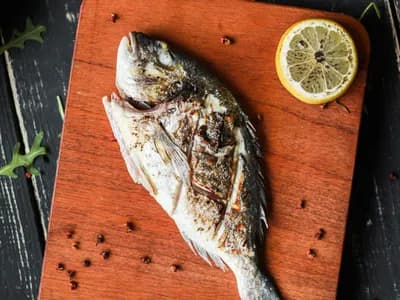
- Portion-size whole fish (sea bream, sea bass, trout)Buy 2.4 kg (6 pieces)
- Fire
- Indirect · 200 °C
- Time
- 20 min
- Rest
- 5 min
Same lighting time
Whole fish, same fire. Indirect at 200 °C, one fish per person, pull at 60 °C next to the bone. A trout fits on the cedar plank and takes the same smoke.
- Large whole fish (sea bass or sea bream, 1-1.5 kg)Buy 2.8 kg (2 pieces)
- Fire
- Indirect · 200 °C
- Time
- 40 min
- Rest
- 10 min
Light 20 min earlier
One whole fish for the table, on a dish rather than the plank, which it will not fit. Indirect at 200 °C, pull at 58-60 °C in the centre by the bone.
- Bluefin tuna (loin)Buy 1.2 kg
- Fire
- Direct · 260 °C
- Time
- 4 min
- Rest
- 2 min
Light 30 min later
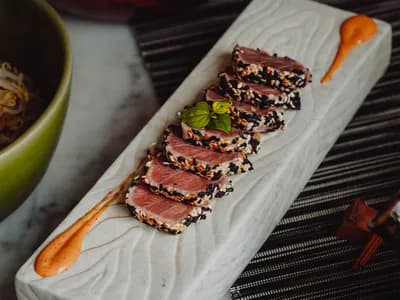
Different fire: direct at 260 °C. Sear the loin on every side and keep it red and warm inside, no probe. Slice against the grain; it is a tataki, not a roast.
Times are a guide, based on the How much to buy figures; follow the recipe first. Full fire plan for 6 people: Portion-size whole fish (sea bream, sea bass, trout), Large whole fish (sea bass or sea bream, 1-1.5 kg), Bluefin tuna (loin).
Allergens
- Fish
Served on toast with fresh cheese, as suggested, it adds gluten and dairy.
Based on the recipe's ingredients. Always check the label of every product you buy.
Method
- 01
Mix the cure
In a bowl combine Maldon salt, brown sugar, ground guajillo and chopped dill until evenly integrated. The ratio is roughly 55% salt, 45% sugar — sugar tempers the bite of salt and balances the guajillo heat.
- 02
Pack the salmon
Check the salmon is pin-bone free (tweezers if needed). Lay the fillet on a tray over a rack (critical: not in direct contact with the dish — the water it releases must drain). Pack the cure mix over and under, generous and even.
- 03
Cure 24h in the fridge
Cover with cling film and refrigerate for 24 hours. At the 12-hour mark drain accumulated water from the tray and flip the salmon. After 24 hours the fillet should have changed colour (darker, almost translucent) and released a fair amount of moisture.
- 04
Rinse and dry
Take the salmon out and rinse under cold tap water for about 30 seconds per side to remove excess cure. Otherwise the dish ends up too salty. Pat dry thoroughly with paper towels — surface completely dry.
- 05
Pellicle 2-4 hours
Place the salmon on a clean rack and leave it uncovered in the fridge for at least 2 hours, ideally 4. A sticky, glossy layer (pellicle) forms — it is what locks the smoke onto the fish. No pellicle, no real smoke.
- 06
Stabilise at 130°C
Light only one zone of charcoal (Minion method) and stabilise the kamado at 130°C indirect with the deflector. When the chamber holds for 10 minutes without drifting, add the apple and cherry chunks. Wait until the smoke runs clean and blue, not thick white.
- 07
Smoke low and steady
Lay the salmon on the grate skin side down. Sink the probe into the thickest part of the fillet. Cook until the probe reads 60°C internal — 80 to 90 minutes. Do not open the lid, do not add more wood during the smoke.
- 08
Probe at 60°C, pull
The moment the probe hits 60°C internal, lift the salmon with a wide spatula (better two paddles or a fish spatula — the fillet is delicate). Do not poke with a fork. Temperature will carry over another 2-3°C during the rest.
- 09
Rest and serve
Rest 10 minutes at room temperature. Move to a board, slice thinly (yes, peeling at a diagonal off the knife). Serve on toast with fresh cheese (cream-style or mild goat), a drizzle of DOP oil and freshly ground pepper. Leftovers: wrapped in wax paper in the fridge, 3-4 days.
About this recipe
This is the most editorial dish that comes out of my kamado: hot-smoked salmon with guajillo cure, 24 hours of prep and 90 minutes of low-temperature smoking. The time investment is high, but the result — silky texture and a caramelised chile-sugar crust — is restaurant-menu material. It goes on toast with fresh cheese and feeds 6 without effort.
24-hour dry cure
Combine 100 g Maldon salt, 80 g brown sugar, 2 tablespoons of ground guajillo and a handful of chopped fresh dill. Pack the mix over the entire salmon fillet, top and bottom, full coverage with no gaps. Place on a tray with a wire rack (so the water it releases does not pool) and cover with film. Fridge for 24 hours. Salt pulls moisture, sugar tempers it, guajillo adds smoky heat and colour depth. After 24 hours, rinse thoroughly under the tap to remove excess cure — otherwise the dish will be salty.
Pellicle: the step nobody does and everyone should
After rinsing, pat dry and leave the fillet uncovered on a rack in the fridge for at least two hours, four is better. A sticky, glossy layer called pellicle forms on the surface. That layer is what traps smoke compounds during the smoke — without it, smoke does not adhere and you get cooked salmon that smells burnt, not real smoked salmon. This is the step that separates the casual cook from the one who knows what they are doing.
Smoke at 130°C with mild woods
Kamado stabilised at 130°C with the deflector. Add two small chunks of apple and cherry (NOT mesquite, NOT hickory) — strong woods overwhelm fish and kill the guajillo nuance. Place the salmon on the grate skin side down, sink the probe into the thickest part. Cook until 60°C internal, 80 to 90 minutes. Pull, rest 10 minutes. Serve in thin slices on toast with fresh cheese and a drizzle of DOP olive oil. Costa Blanca twist: the guajillo is imported, but the oil is local.
In 30 seconds
Dry cure 24h: 100g Maldon + 80g brown sugar + 2 tbsp guajillo + dill. Rinse, dry, pellicle 2-4h uncovered in the fridge. Kamado 130°C indirect, apple + cherry (no mesquite). Probe to 60°C internal, ~80-90 min. Rest 10 min. Serve in thin slices on toast with fresh cheese and DOP oil. 6 diners. Top-tier editorial plate.
Will it fit your kamado?
Small
33-40 cm · Joe Jr, MiniMax
Tight
A ~1 kg side will probably be tight; it can be cut into two pieces.
Medium
46-51 cm · Classic, Large
Fits
The whole side fits without cutting.
Large
56-61 cm · Big Joe, XL
Fits
Probably two sides fit at once.
What to serve with it
Sides
- Toasted pan de cristal with fresh cheese
- Cucumber, dill and yogurt salad
- Wine
- Albariño white from Rías Baixas or Rueda Verdejo
- Beer
- Wheat beer or witbier, fresh and citrusy
- Alcohol-free
- Iced ginger and lemon tea
Leftovers and storage
- In the fridge
- Cooked fish: 1-2 days in the fridge, wrapped or airtight, stored within 2 hours.
- Freezing
- Sliced and sealed, 2-3 months; texture softens a little. Thaw in the fridge; do not refreeze.
- Reheating
- Best cold. If you want it warm, a low covered oven for a few minutes until hot in the centre.
- Using them up
- Flaked into cream cheese with dill on toast, or folded into scrambled eggs.
Cool and refrigerate within 2 hours. When in doubt, throw it out.
Leftover embers
You still have embers: what to do with the leftover heat
For 1 h 30 min at 130 °C in a classic kamado you load about 800 g of charcoal and burn 300 g: when you serve, about 520 g of live embers remain. Before you shut the vents, that is still enough for:
Without touching the vents
130 °Ca short smoke
3 h 40 minof embers
- Hot-Smoked Whole Mackerel on the Kamado45 min · 120 °C
No recipe needed
- Coarse salt on a tray, with a wood chunk: smoked salt for months (1-2 h)
- Almonds or walnuts on a rack (45 min)
- Whole heads of garlic, for spreading (1 h)
Opening the vents halfway
140-200 °Cdessert while you eat
1 h 40 minof embers
- Tarta de Santiago on the kamado, deeply almond and flourless35 min · 175 °C
- Kamado-roasted figs with goat cheese and honey7 min · 200 °C
- Cornbread in an Iron Skillet on the Kamado, with Brown Butter45 min · 200 °C
No recipe needed
- Yesterday's bread with oil and garlic, on the grate (10 min)
- Corn cobs in their husks (30 min)
- Whole apples with a slit in the skin (45 min)
Before opening the lid, crack it open for a few seconds first; if you raise the heat, stir the ash so the coals can breathe. And if you are not going to use them: once the food is out, close the bottom and top vents. The charcoal that does not burn (about 520 g) can be used next time. Different size of kamado? Work out your load for 2 h of fire, lighting included.
Editor's tips
- The pellicle is not optional or a flourish. It is chemistry: the dry protein surface creates binding sites for smoke compounds. Skip this step and you burn wood without transferring flavour — the salmon turns out smoke-cooked, not smoked.
- Mild woods for fish: apple, cherry, peach, alder. Strong woods (mesquite, hickory, oak) are made for beef and pork and taste ashy on salmon. If hickory is all you have, use only a small piece and keep it well away from the fillet.
- 60°C internal is the ceiling, not the floor. Push past it and the salmon dries irreversibly — the silky texture turns into stiff slabs. Without a probe this dish is Russian roulette. Inkbird or Meater, whatever you have.
- Cure time: 24 hours minimum, 36 hours maximum. Under 24 and the salt does not penetrate; over 36 and the salmon turns into a salty ham. For thinner fillets (around 600 g), drop to 18 hours.
- Kamado low and steady. The ceramic holds 130°C stable on a single vent setting — this is exactly where it shines over a metal smoker. Do not touch the vents during the smoke; a 20°C swing either way ruins the curve.
Gear for this recipe
As an Amazon Associate, mikamado.es earns from qualifying purchases. At no extra cost to you.

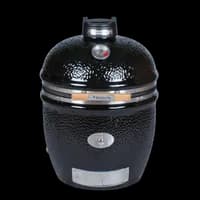
Monolith Classic Pro 2.0
€2,000
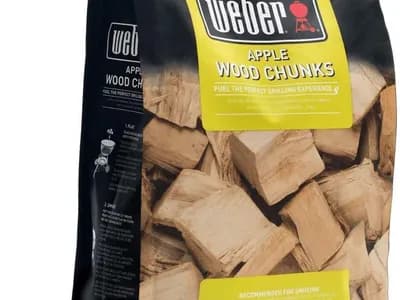
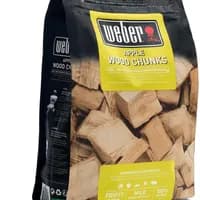
Weber Apple Wood Smoking Chunks 1.5 kg
Apple wood chunks for a soft, fruity smoke on the cured salmon.
€14
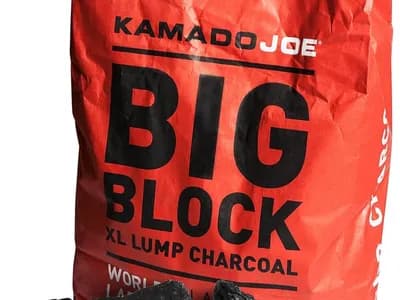
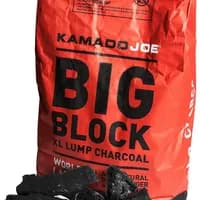
Kamado Joe Big Block XL lump charcoal 9.1 kg
€67
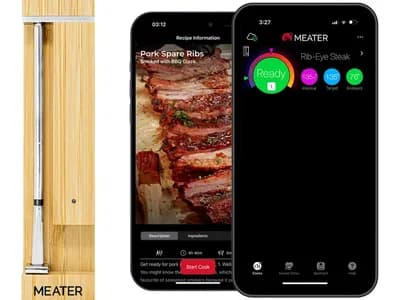
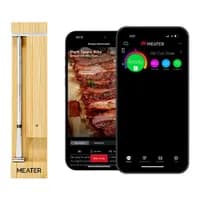
MEATER Pro / 2 Plus Wireless Meat Thermometer
€187
Have you made it?
Tell us how it turned out on your kamado. We review every rating before publishing it.
No published ratings yet. Be the first!
FAQ
Wild or farmed salmon?
For this recipe, go for quality farmed Norwegian or Scottish salmon — fattier, more uniform, more forgiving when smoked. Wild salmon (sockeye, king) is leaner and dries easily at 60°C internal: you would need to pull at 55-58°C and watch it like a hawk. If you have fresh wild salmon and want to use it, cut the cure to 18 hours and pull at 55°C internal. More intense flavour, much narrower margin.
What exactly is the pellicle and why does it matter so much?
The pellicle is a thin, tacky, glossy layer of dehydrated soluble proteins that forms on fish skin when left to air-dry in a cold environment. It is not slime or dirt — pure chemistry. That layer acts as molecular adhesive: aromatic smoke compounds (phenols, carbonyls) stick to it instead of bouncing off a wet surface. That is why a salmon with pellicle smells genuinely smoked, and one without smells only of surface scorching.
Without guajillo, what chile can I substitute?
Guajillo brings medium heat (2,500-5,000 SHU) with fruity notes and deep red colour. Direct substitutes: ground ancho chile (sweeter, less heat), ground chipotle (smokier and hotter — use half the amount), or nora (Spanish chile, very close but sweeter). Sweet Pimentón de la Vera plus a pinch of cayenne also approximates it, though you lose the fruity nuance. What does NOT substitute: Tex-Mex chili powder, which carries cumin and oregano and unbalances the dish.
How long does it keep in the fridge after smoking?
3-4 days wrapped in wax paper or cling film in the coldest part of the fridge. Curing and smoking significantly lower water activity, so shelf life beats raw fresh salmon (only 1-2 days). When serving, let it come up to room temperature for 15 minutes — flavour improves considerably versus serving straight from the fridge. Do not freeze thin slices (they break on thawing); freeze the whole block wrapped if necessary.
Does freezing the salmon before curing work?
Yes, and it is recommended for food safety. EU regulation (853/2004) requires freezing fish destined for raw or cured consumption at -20°C for 24 hours to kill parasites like Anisakis. Although smoking at 60°C internal kills any parasite, the dry cure beforehand is a cold step — freezing 48 hours before the cure gives you a safety buffer without affecting final texture. Defrost slowly in the fridge 24 hours before curing.
Can I make this recipe with a different cut instead of salmon?
Portion-size and large whole fish keep the indirect roast at 200 °C and are checked next to the bone. Tuna switches to a quick direct sear, red inside. The probe decides, or the cut in the case of tuna, not the clock.
What do I do with the embers left after making Guajillo-cured smoked salmon, low indirect?
After 1 h 30 min at 130 °C in a classic kamado about 520 g of live embers remain: 3 h 40 min more at 130 °C without touching the vents or 1 h 40 min at 140-200 °C opening the vents. If you are not going to use them, close both vents and keep the charcoal for next time.
More kamado recipes
KEEP READING
Go deeper on this dish
- Recommended kamado
Monolith Classic Pro 2.0
The German alternative to the Kamado Joe Classic III
- Editorial guide
How to light a kamado: the step-by-step method
No petrol, no weird tablets and no 45-minute waits. The cone method, airflow control and the mistakes that prevent 80% of the frustration.
- Glossary term
Heat deflector
Ceramic plate placed between the coals and the grate to turn direct fire into indirect cooking.
- Related comparison
kamado joe classic iii vs monolith classic pro 2 cart
The comparison every European cook eventually makes: the Kamado Joe Classic III, the US reference with SlōRoller, again…