Analysis by Valery Grin · · updated September 11, 2026
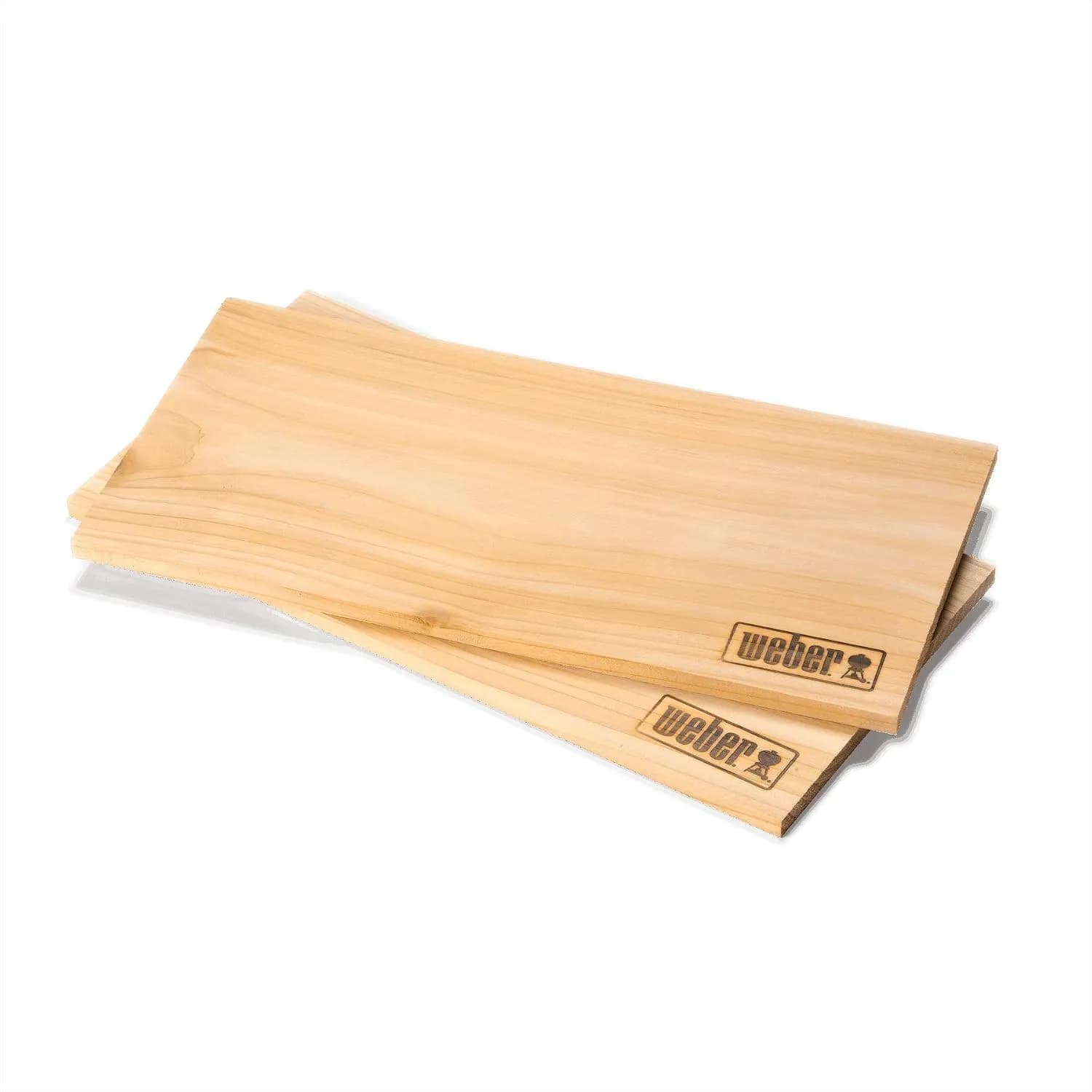
Weber Pacific Red Cedar Grilling Planks 40 × 15 cm, Pack of 2
Natural cedar for scenting fish, cheese and vegetables; hand wash only
From€30
Price verified on Amazon on September 12, 2026 · may change
As an Amazon Associate, mikamado.es earns from qualifying purchases. At no extra cost to you.
- Material
- Pacific red cedar wood
Quick answer
If you cook fish on a kamado and want smoke aroma without committing to a long session, yes, they earn their place. The manufacturer's sheet lists Pacific red cedar and a sweet, mild aroma, and people who use planks regularly agree they perfume without burying the fish. They are consumable: two or three cooks and they go in the bin. At 40 × 15 cm they take loins easily, a whole side only just, and they work best with a deflector at 180-200 °C.
Pacific red cedar in two 40 × 15 cm planks: soak them, lay them on the grate and the fish comes off scented and in one piece. In a kamado, dome closed, they smoulder slowly instead of catching fire.
A cedar plank doesn't smoke the way an oak chunk does: it scents. You soak it, lay it on a hot grate and, as the water goes, the wood starts smouldering under the food instead of bursting into flame. On a kamado that difference matters more than on any other barbecue: with the dome shut and the vents nearly closed there is little oxygen, so the plank is consumed slowly and the smoke circles inside the ceramic.
Weber publishes little about them — Pacific red cedar, 40 × 15 cm, two per pack — and the figure that settles the purchase is the width. Fifteen centimetres is plenty for salmon loins, chicken thighs or a whole cheese; a full side of salmon won't fit unless you cut it, though both planks sit side by side on a Large grate. The comfortable range is indirect roasting, 180-200 °C with a deflector: below that the wood barely gives anything.
They are a consumable and deserve to be treated as one: hand wash only, and into the bin once the underside is black and brittle. On the coast, store them indoors; cedar drinks up damp on a Torrevieja porch. They sit among the best sellers in their plank category on Amazon.es, which says more about how widespread the habit of cooking on wood is than about the timber itself.
They scent more than they smoke, and a kamado — restricted airflow, closed dome — is where they behave best: smouldering rather than flaming. Consumable, mind you.
Editorial rating from spec sheet, measurements and kamado fit · not a hands-on test
Pros
- Pacific red cedar; the maker's sheet calls the aroma sweet and mild
- On a kamado the restricted airflow makes them smoulder, not flame
- Fish doesn't stick or break up when you lift it off the grate
- Two planks per pack: they sit side by side on a Large grate
- Grate to table on the same plank, with nothing to transfer
Cons
- Consumable: two or three cooks and they're spent, with no reviving them
- Fifteen centimetres wide: a whole side of salmon won't fit unless you cut it
- Hand wash only, and they must be stored dry — doubly so on the coast
Who it's for
For anyone cooking fish, cheese or vegetables on a kamado who wants smoke aroma in twenty minutes, without setting up a long session.
Not for
Not if you mostly cook low and slow at 110 °C or want something reusable: the plank is a consumable and barely smoulders at that temperature.
Specifications
- Material
- Pacific red cedar wood
As an Amazon Associate, mikamado.es earns from qualifying purchases. At no extra cost to you.
Goes well with
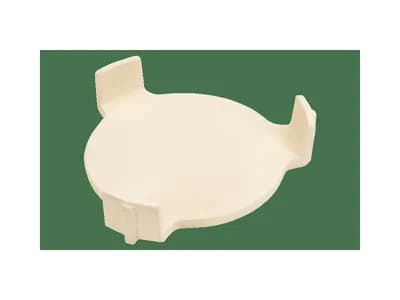
Big Green Egg ConvEGGtor plate setter (Large)
Planking wants indirect heat: with the deflector in, the kamado settles into the 180-200 °C roasting band and the cedar smoulders slowly instead of catching alight underneath.
€85

DOQAUS instant-read thermometer, folding probe, 3-second read
Fish on a plank goes from juicy to dry in two minutes. An instant-read thermometer tells you when to pull it without opening the dome again and again.
€7
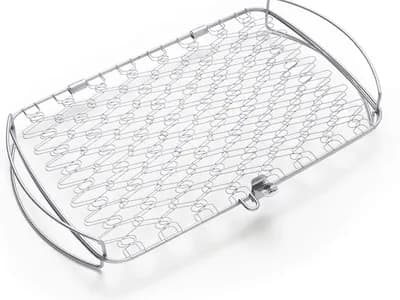
Weber Fish & Vegetable Basket 6471, stainless steel 46 × 28 cm
For whole fish or loose vegetables the plank runs out of room: the basket flips the lot in one go over the coals. Two different tools for the same fish.
€40
FAQ
Do the planks need soaking before use?
Standard practice is an hour or two submerged in water, weighted down so they don't float. The water sets the pace: while it evaporates the wood smoulders instead of igniting. A dry plank in a kamado at 200 °C chars within minutes and leaves a bitter edge on the fish.
How many times can a plank be used?
Weber publishes no figure. People who plank regularly report two or three cooks if the board comes off merely toasted: scrape it, wash it by hand — the sheet specifies hand wash only — and store it dry. Once the underside is black, cracked and brittle it no longer scents; it just burns and turns bitter.
What temperature should I run the kamado at?
Deflector in, kamado settled between 180 and 200 °C. That is the roasting band: the plank smoulders steadily and a salmon loin is done in fifteen to twenty minutes. Below 150 °C the wood gives almost no aroma; above 250 °C it chars long before the fish reaches temperature.
Are they only good for fish?
The maker recommends them for fish, poultry and meat, and the listing adds cheese and vegetables. They shine with melting cheeses — think of the roasted figs with goat's cheese and honey — or with salmon cooked indirect and low. For an eight-hour brisket, no: the plank is spent long before the meat is.