Recipe · Indirect · Medium
Cordoba-Style Oxtail Braised in Red Wine in a Dutch Oven on the Kamado
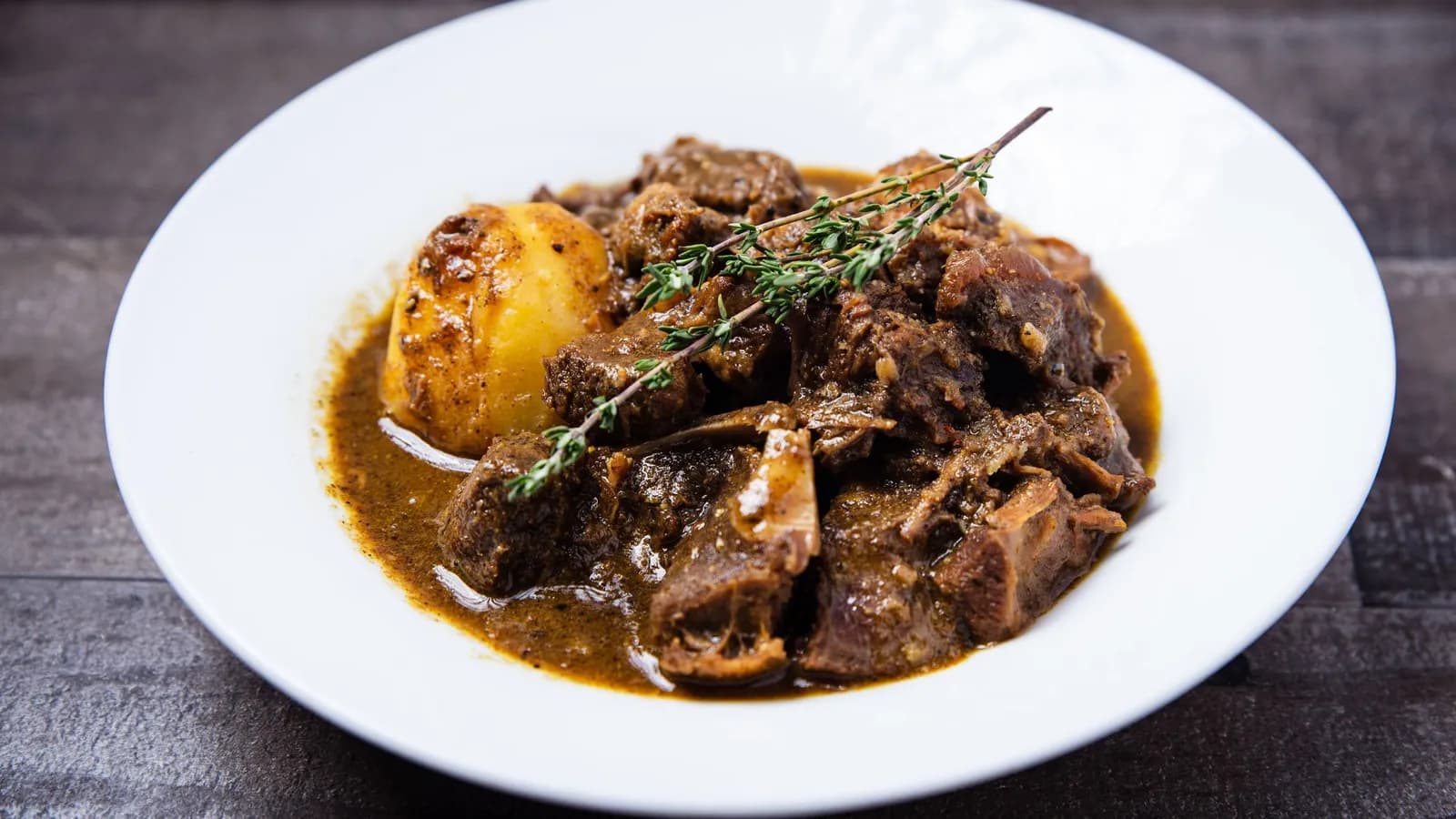
Cordoba-style rabo de toro is the great winter stew of Andalusia. An oval Dutch oven inside the kamado cooks it slowly, at about 150 °C, until the meat slips off the bone by itself.
Quick answer
With a deflector and the chamber at about 150 °C, brown the oxtail pieces, soften the vegetables, add red wine and stock to come three-quarters up the meat and braise covered for 3-4 h. It is done when a fork meets no resistance. Reduce the sauce and rest 15 min.
One big step at a time, screen kept on and built-in timers.
- Prep
- 40 min
- Cook
- 270 min
- Servings
- 4 servings
- Temperature
- 150 °C
What time do you want to eat?
Pick a time and we'll tell you when to start.
07:20
Start the prep
08:00
Light the kamado
08:30
Onto the kamado
13:00
Take it off and rest
14:00
Serve
Estimate: it includes lighting and settling the kamado plus a margin for large cuts. If the recipe asks you to marinate or salt ahead, add that time.
Fire setupIndirect
- Dome
- 150 °C
- Deflector
- Yes
- Grate
- Standard height
- Bottom vent
- A crack
- Top vent
- Half open
- Fuel
- Quebracho lump charcoal, full firebox
- Setup
- 31 cm oval Dutch oven
Ingredients
- oxtail (rabo de toro or rabo de vaca), in 4-5 cm rounds1.6 kg
- plain flour, for dredging40 g
- extra virgin olive oil80 ml
- large onions, sliced2
- carrots, in thick rounds2
- leek, sliced1
- garlic cloves, skin on and crushed6 cloves
- full-bodied red wine (tempranillo or monastrell)500 ml
- brandy, optional50 ml
- beef stock, approximately500 ml
- bay leaves3 leaves
- sprigs of thyme4 sprigs
- salt12 g
- freshly ground black pepperto taste
Allergens
- Gluten
- Sulphites
Shop-bought beef stock may contain celery or gluten: check the label.
Based on the recipe's ingredients. Always check the label of every product you buy.
The gear for this recipe
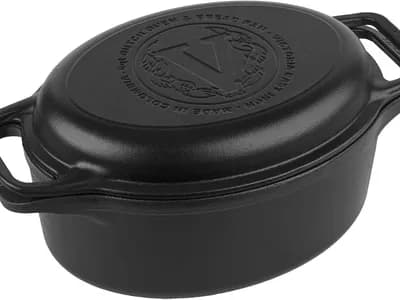
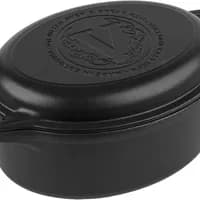 Victoria 31 cm oval Dutch oven: enamelled cocotte with grill-pan lidOxtail asks for a pot that traps steam for hours and whose enamel stands up to wine. The Victoria oval 31 cm is 5.7-litre enamelled cast iron, with a lid that doubles as a skillet, and the listing rates it for barbecue and oven. Its long shape lays the pieces in a single layer. Honest drawbacks: it weighs almost 8 kg with the lid, so you need both arms and gloves to move it, and the 5.7 litres cap the recipe at about 1.6 kg of oxtail. The listing warns against sudden temperature changes, so always add the stock hot.
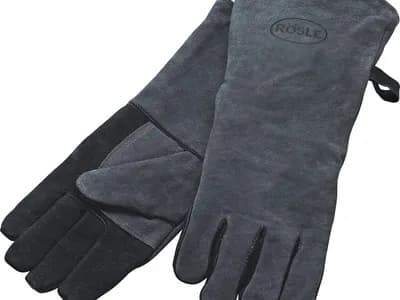
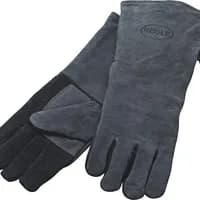 Rösle leather barbecue gloves: long, one sizeThis recipe moves a pot of almost 8 kg with the chamber at 150 °C, and every opening of the kamado is done with a burp. The Rösle leather gloves are certified leather with a cotton and polyester lining, 41.5 cm long, and cover hand and forearm, which helps when putting the pot in and taking it out. Drawback: the listing gives no maximum temperature and they cannot be washed, so the leather will pick up grease, and you should not handle a wet pot with them.
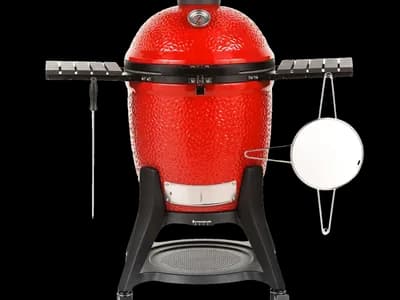
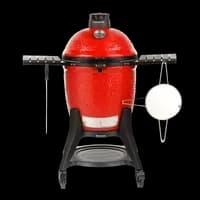 Kamado Joe Classic III 18"The braise needs a kamado that holds 150 °C for four hours with very little attention and has room for an oval pot. The 18-inch Kamado Joe Classic III has a grate of about 46 cm, so the 31 cm pot sits comfortably on the deflector. The thick ceramic holds temperature with the vents nearly closed. Drawback: it is a heavy kamado and hard to move, and with a large pot the space above is reduced, so nothing else fits on the grate at the same time.
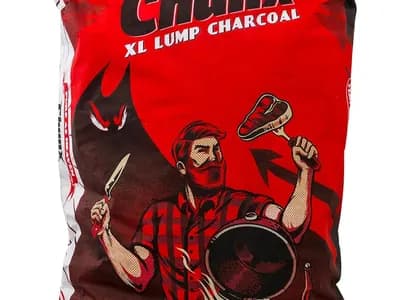
 Jealous Devil 100% White Quebracho lump charcoal 15.8 kgFour hours at 150 °C call for a charcoal that lasts and leaves little ash so as not to choke the fire. Jealous Devil is quebracho blanco lump charcoal, a dense wood, and its listing puts ash at around 3 %. With a full firebox at the start it is enough for the whole recipe without refuelling. Drawback: it is a very powerful charcoal, and for 150 °C you must open the vents only slightly from the start; if it overshoots, it is hard to bring back down.
Method
- 01
Season and flour the oxtail
Take the oxtail out of the fridge an hour ahead. Pat it very dry, season with salt and pepper and dredge it in the flour, shaking off the excess: a thin coat, only to help browning and to thicken the sauce. Cut the vegetables meanwhile: onion in thin slices, carrot in thick rounds, leek in rounds.
- 02
Light with the deflector
Fill the firebox with lump charcoal, light it and set the deflector under the grate. Bring the chamber to 150 °C with the bottom vent slightly open and the top vent half open, and let it settle for 20-30 minutes. It is easier to creep up than to bring down a ceramic that has overshot, so do not correct in a hurry.
- 03
Sear the oxtail in the pot
On the hob, heat the oil in the Dutch oven over medium-high heat and sear the oxtail in batches, without crowding, 3-4 minutes per side, to a deep brown. Set the meat aside on a plate. Do this on the hob, not on the kamado: with the deflector in and the chamber at 150 °C there is not enough heat to brown, and pulling a ceramic down from 230 °C takes a long time.
- 04
Soften the vegetables
In the same pot, with the fat that remains, soften the onion, carrot, leek and garlic for 10-12 minutes, scraping the base, until the onion is soft and colouring. Raise the heat, add the brandy if using and let it evaporate. Pour in the wine and boil for 5 minutes to take off its sharpest alcohol.
- 05
Load the pot
Return the oxtail to the pot in a single layer, add the bay and thyme and pour in hot stock to come three-quarters up the meat, without submerging it. Bring to a gentle simmer on the hob and cover. Wearing gloves, carry the pot to the kamado and set it centred on the deflector.
- 06
Braise for three to four hours
Close the kamado and hold the chamber at 150 °C. When opening, always burp the lid: lift it about 5 cm, wait about 5 seconds, then open fully with your face turned away, because of flare-up risk. At the hour and a half, burp the lid, lift the pot lid with gloves and turn the pieces with tongs; check the liquid is still three-quarters up and, if it has dropped, add a little hot stock. Nothing more is needed. Allow 3-4 hours in total.
- 07
Check for doneness
At 3 hours open with a burp and prick a piece with a fork: it should go in without resistance and the meat part from the bone at a touch. If not, cover and give it 30 more minutes. Once it is, take the pot out of the kamado with gloves, carry it to the hob and lift the oxtail with tongs onto a platter and keep it covered with foil.
- 08
Reduce the sauce and rest
Remove the bay and thyme. Blend the vegetables with their liquid or push it through a sieve, and reduce the sauce on the hob over high heat until it coats the back of a spoon. Adjust salt and pepper, return the oxtail to the sauce and rest it 15 minutes before serving with fried potatoes or mash. Close both vents of the kamado to put the coals out.
About this recipe
Rabo de toro Cordoba-style is one of those dishes that explains a city: a humble cut, all bone and collagen, that after hours over a gentle fire turns into melting meat and a glossy sauce of wine, onion and carrot. It was originally made from the tails of fighting bulls, hence the name, and today it is prepared with oxtail from bull, ox or cow, which in a Spanish butcher's is simply asked for as «rabo de toro» or «rabo de vaca», cut into rounds at the vertebrae. The kamado suits it like a glove: the ceramic holds 150 °C for hours on very little charcoal, and the Dutch oven traps the steam so nothing dries out.
Why the kamado and an oval Dutch oven
Oxtail needs time, not temperature. Its tendons and collagen begin to gelatinise around 70 °C and finish breaking down over three or four hours with the liquid at a barely perceptible simmer. A steady chamber at 150 °C with a deflector gives exactly that: the pot gets enveloping heat, never direct, and the liquid stays at a soft bubble instead of boiling hard. For the pot, the Victoria oval Dutch oven, 31 cm is enamelled cast iron of 5.7 litres, and its long shape fits the pieces in a single layer better than a round pot of the same volume. It weighs almost eight kilos with the lid, so allow for that when lifting it. In an 18-inch kamado such as the Kamado Joe Classic III, with its grate of about 46 cm, it sits comfortably on the deflector. The guide to cast iron and Dutch ovens on the kamado explains why enamel is the right choice for a wine braise, since wine attacks bare iron.
How it is cooked: brown on the hob, braise on the kamado
The recipe starts outside the kamado, on the kitchen hob, because browning oxtail properly needs direct heat and instant control. The pieces are lightly floured and seared on every face in olive oil to a deep brown: half the flavour is won there, through the Maillard reaction. Meanwhile the kamado is lit with lump charcoal, such as Jealous Devil quebracho, which leaves little ash and lasts four hours without refuelling if you start with a full firebox. The deflector goes in for indirect cooking, the chamber is stabilised at 150 °C with the bottom vent slightly open and the top vent half open, and only then does the pot go in. If anything overshoots, the temperature control guide shows how to bring it down without choking the fire.
The Cordoba sauce and when the meat is ready
The sauce is vegetables and wine, with no thickener other than the oxtail's own collagen. Onion, carrot, leek and garlic soften in the same pot, a splash of optional brandy goes in, then a full-bodied red wine (a tempranillo or monastrell you would happily drink, not a cooking wine) and beef stock to come three-quarters up the meat, never fully covering it: the part that shows browns, the part below braises. At three hours test with a fork; if the meat will not release, give it another half hour. At the end the meat is lifted out, the vegetables are strained or blended and the sauce is reduced until it coats the back of a spoon. This is a braise well beyond 90 °C inside; what you are after is tenderness, not a number. If you like the same method with another cut, the red wine veal cheeks in a cocotte follow the same logic in less time.
In 30 seconds
Floured oxtail browned on the hob; vegetables, red wine and stock to three-quarters of the meat's height in an oval Dutch oven. Kamado with deflector at about 150 °C, pot covered 3-4 hours, burping the lid when you open. Done when a fork goes in without resistance; reduce the sauce and rest 15 minutes.
Will it fit your kamado?
Small
33-40 cm · Joe Jr, MiniMax
Won't fit
The 31 cm oval pot with handles probably won't fit; use a 24 cm round one, maybe with less oxtail.
Medium
46-51 cm · Classic, Large
Fits
The 31 cm pot fits centred over the deflector, oxtail in one layer.
Large
56-61 cm · Big Joe, XL
Fits
Fits easily; a bigger pot would allow doubling the quantity.
What to serve with it
Sides
- Homemade chips or mashed potatoes
- Rustic bread for the sauce
- Wine
- Crianza red from Rioja or Ribera del Duero
- Beer
- Stout or brown ale
- Alcohol-free
- Red grape juice
Leftovers and storage
- In the fridge
- In its sauce, airtight, chilled within 2 h: 3-4 days. It is even better the next day.
- Freezing
- Freezes very well for 2-3 months in its sauce; thaw in the fridge and do not refreeze.
- Reheating
- Covered pot over low heat, with a splash of stock if thick, until piping hot (74 °C).
- Using them up
- Pick off the bone for oxtail croquettes, small pasties or a filling for fresh pasta.
Cool and refrigerate within 2 hours. When in doubt, throw it out.
Editor's tips
- Ask the butcher to cut the oxtail into rounds at the vertebrae and of similar size so they all finish together. The thicker, meatier pieces from the base take a little longer than those from the tip.
- If the stew cools a little, spoon off the fat from the surface before reducing the sauce. Oxtail releases a lot, and a sauce left untrimmed is heavy. Made the day before and reheated, the dish improves and the fat lifts off by itself once set.
- With the pot covered and the deflector in, the chamber needs little attention. If the temperature drops below 130 °C open the bottom vent a little more; if it rises above 170 °C close it almost fully along with the top vent and see the temperature problems guide.
- The wine matters: what reduces, concentrates. A harsh or very young red leaves a bitter, astringent sauce. If it ends up sharp, a teaspoon of sugar or a little more carrot rounds it off.
Gear for this recipe
As an Amazon Associate, mikamado.es earns from qualifying purchases. At no extra cost to you.
Victoria 31 cm oval Dutch oven: enamelled cocotte with grill-pan lid
Oxtail asks for a pot that traps steam for hours and whose enamel stands up to wine. The Victoria oval 31 cm is 5.7-litre enamelled cast iron, with a lid that doubles as a skillet, and the listing rates it for barbecue and oven. Its long shape lays the pieces in a single layer. Honest drawbacks: it weighs almost 8 kg with the lid, so you need both arms and gloves to move it, and the 5.7 litres cap the recipe at about 1.6 kg of oxtail. The listing warns against sudden temperature changes, so always add the stock hot.
€103
Rösle leather barbecue gloves: long, one size
This recipe moves a pot of almost 8 kg with the chamber at 150 °C, and every opening of the kamado is done with a burp. The Rösle leather gloves are certified leather with a cotton and polyester lining, 41.5 cm long, and cover hand and forearm, which helps when putting the pot in and taking it out. Drawback: the listing gives no maximum temperature and they cannot be washed, so the leather will pick up grease, and you should not handle a wet pot with them.
€22
Kamado Joe Classic III 18"
The braise needs a kamado that holds 150 °C for four hours with very little attention and has room for an oval pot. The 18-inch Kamado Joe Classic III has a grate of about 46 cm, so the 31 cm pot sits comfortably on the deflector. The thick ceramic holds temperature with the vents nearly closed. Drawback: it is a heavy kamado and hard to move, and with a large pot the space above is reduced, so nothing else fits on the grate at the same time.
€2,399
Jealous Devil 100% White Quebracho lump charcoal 15.8 kg
Four hours at 150 °C call for a charcoal that lasts and leaves little ash so as not to choke the fire. Jealous Devil is quebracho blanco lump charcoal, a dense wood, and its listing puts ash at around 3 %. With a full firebox at the start it is enough for the whole recipe without refuelling. Drawback: it is a very powerful charcoal, and for 150 °C you must open the vents only slightly from the start; if it overshoots, it is hard to bring back down.
€234
Have you made it?
Tell us how it turned out on your kamado. We review every rating before publishing it.
No published ratings yet. Be the first!
FAQ
Can I use cow oxtail instead of bull oxtail?
Yes. In practice almost all the oxtail sold in Spain comes from cow or ox, and butchers label it either way. Fighting-bull tail is rare and more fibrous. The timing is the same, 3 to 4 hours, and doneness is judged the same way: the fork goes in without resistance.
What if the kamado is small and the pot does not fit?
The 31 cm oval Dutch oven needs a generous grate: in a kamado with a 33-34 cm grate it will not go in with the deflector. The alternative is a 24 cm round cocotte and less meat, up to 1 kg of oxtail, or braising in the kitchen oven at 150 °C on the same logic and saving the kamado for something else.
How do I know the oxtail is done?
There is no temperature to watch: the test is the fork. It should enter the thickest part without resistance and the meat should part from the bone without pulling. If it still resists or feels springy, the collagen has not broken down: cover and cook 30 minutes more, always with the liquid at a gentle bubble.
Can I make it ahead, and how does it keep?
It improves overnight. Cool it quickly, keep it in an airtight container in the fridge for up to 3 days and reheat gently in its sauce, covered, over low heat. It also freezes well for up to three months. Before reheating, lift off the layer of solidified fat on the surface.
Can it be made without wine?
Yes, though it loses its Cordoba character. Replace the wine with beef stock plus a spoonful of sherry vinegar to restore the acidity the wine gives the sauce. Increase the carrot a little to make up the sweetness. The method and timings do not change.
More kamado recipes
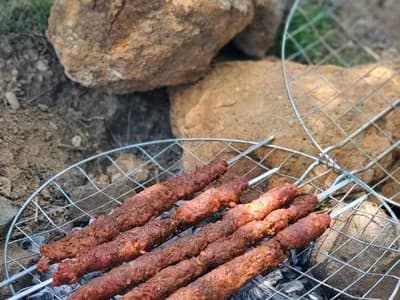
Lamb Lyulya Kebab on the Kamado
The question is never how to season it, but why it falls off the skewer. The answer is fat, a hand-chopped grain and real kneading: juicy lamb that holds together over direct fire.
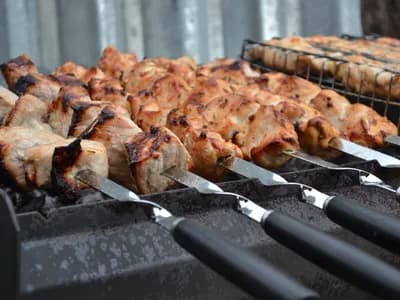
Pork Neck Shashlik on the Kamado, Onion Marinade
The skewer of the Russian-speaking world, cooked as I make it on my Big Green Egg Large: pork neck in 3 cm cubes, a grated onion marinade with not a drop of vinegar, and twenty minutes of steady direct fire.
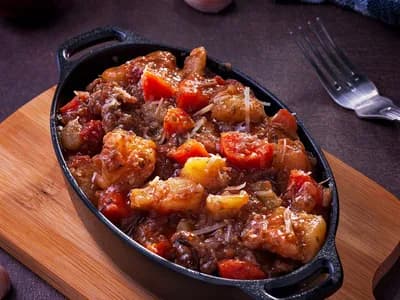
Beef Cheeks in Red Wine, Braised in a Dutch Oven on the Kamado
Three hours of red wine, cast iron and a thread of olive-wood smoke your kitchen oven simply cannot make. The braise that justifies lighting the kamado in midwinter.
KEEP READING
Go deeper on this dish
- Recommended kamado
Kamado Joe Classic III 18"
The braise needs a kamado that holds 150 °C for four hours with very little attention and has room for an oval pot. The 18-inch Kamado Joe Classic III has a grate of about 46 cm, so the 31 cm pot sits comfortably on the deflector. The thick ceramic holds temperature with the vents nearly closed. Drawback: it is a heavy kamado and hard to move, and with a large pot the space above is reduced, so nothing else fits on the grate at the same time.
- Editorial guide
How to light a kamado: the step-by-step method
No petrol, no weird tablets and no 45-minute waits. The cone method, airflow control and the mistakes that prevent 80% of the frustration.
- Glossary term
Heat deflector
Ceramic plate placed between the coals and the grate to turn direct fire into indirect cooking.
- Related comparison
big green egg large vs kamado joe classic iii
The classic kamado matchup: the Big Green Egg Large, the indestructible pioneer with the widest accessory network, agai…