Analysis by Valery Grin · · updated May 27, 2026
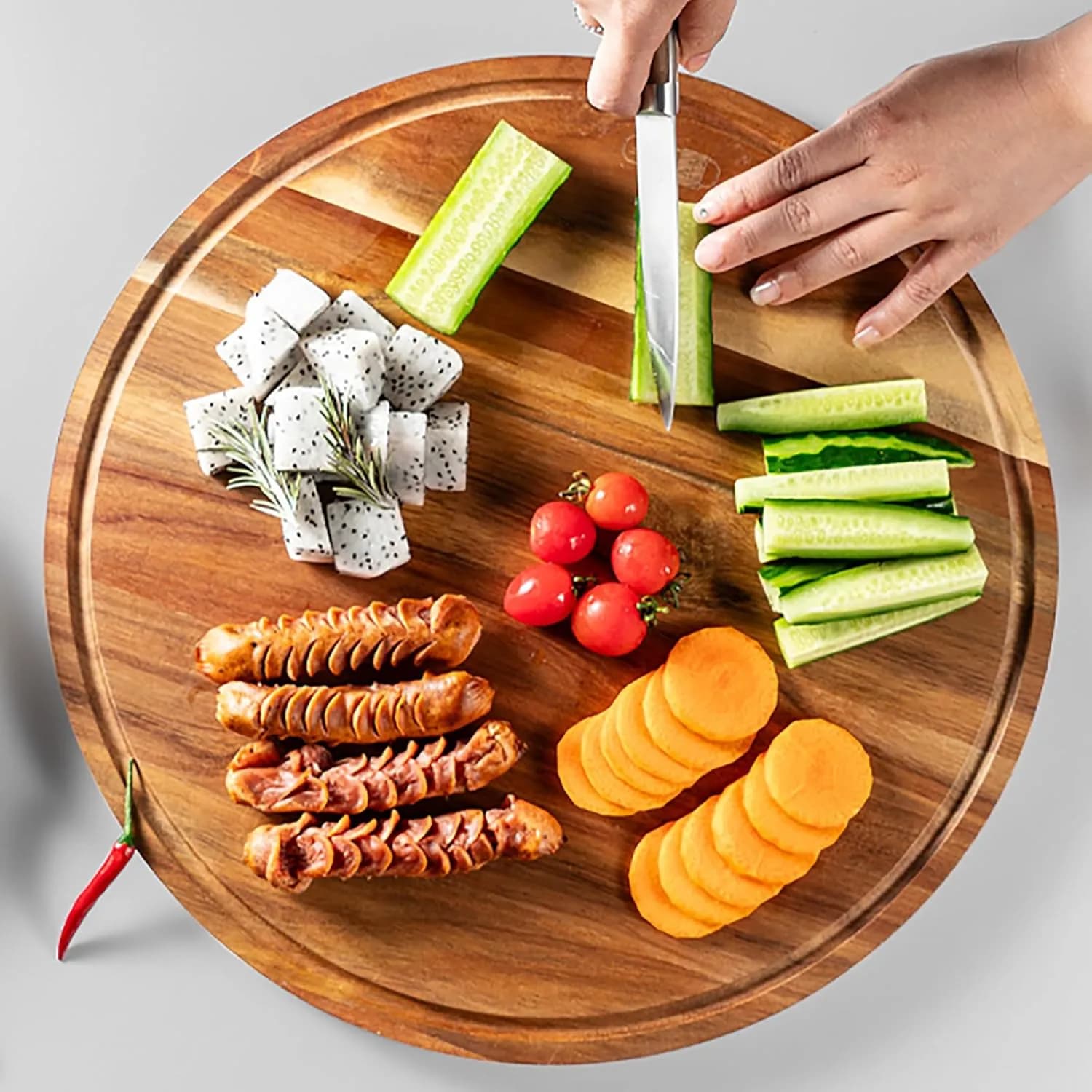
JF JAMES.F round acacia cutting board 30 cm
Solid acacia, 1.8 cm thick, reversible
From€48
Price verified on Amazon on September 12, 2026 · may change
Amazon does not have it available right now
We checked on October 19. The review stays up because it is still useful for comparing, but it cannot be bought on Amazon.es today.
As an Amazon Associate, mikamado.es earns from qualifying purchases. At no extra cost to you.
Quick answer
The JF JAMES.F round acacia cutting board 30 cm is the board you carry to the table when you want the ribeye to be the center of the plate. It's solid acacia, 30 cm across and 1.8 cm thick, reversible: just the right size to show off on the table without getting in the way. It's for presentation, sliced ribeye, a charcuterie board, cheese, and as a small second board for vegetables and herbs during prep. Skip it if you need to catch the juices of a whole brisket: this one has no channel; for that look at a large square board with a perimeter groove.
A round solid acacia board built for presentation: sliced ribeye, charcuterie spread, cheese plate beside the kamado. 30 cm diameter, 1.8 cm thick — the right size to anchor a table without being unwieldy.
Solid tropical acacia (not laminated), 1.8 cm thick — denser than bamboo and far more resistant to deep cuts. No juice channel: this is a serving board first, a chopping board second, so we use it as the final presentation surface for sliced ribeye or as a charcuterie/cheese plate. Apply mineral oil every 2-3 months to prevent the grain from cracking.
The round board you bring to the table when the ribeye is the centerpiece.
Editorial rating from spec sheet, measurements and kamado fit · not a hands-on test
Pros
- Solid tropical acacia, 1.8 cm thick
- Round shape — looks intentional on the table
- Reversible: cutting + serving
- 30 cm diameter — manageable, not bulky
Cons
- No perimeter channel — won't catch juices
- Not dishwasher safe — wipe by hand with a damp cloth
Who it's for
For presentation: sliced ribeye, charcuterie, cheese. Also works as a second small board for veg and herbs during prep.
Not for
If you need to catch the juices from a whole brisket — this one has no channel. Look for a larger square board with a perimeter groove.
As an Amazon Associate, mikamado.es earns from qualifying purchases. At no extra cost to you.
Goes well with
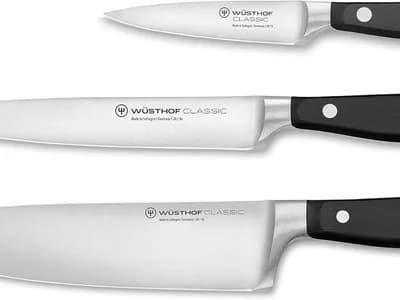
Wüsthof Classic 3-piece knife set (chef + carving + paring)
Wüsthof y acacia: filo alemán sobre madera dura que no marca surcos. La combinación que respeta el cuchillo y la pieza.
€182
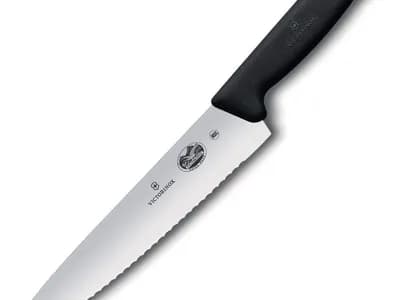
Victorinox Fibrox carving knife 25 cm
Si tu cuchillo es el Victorinox, esta tabla es su pareja natural: acacia con canal recogedor, justo lo que pide un trinchado contra el grano.
€42
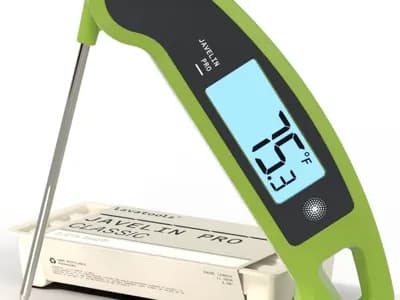
Lavatools Javelin PRO Duo instant-read thermometer
Tabla, cuchillo y termómetro instant-read: las tres piezas en torno al plato terminado.
€65
FAQ
Why acacia rather than bamboo or teak?
Tropical acacia is denser than bamboo (heals deep cuts without splintering) and has a tighter grain that repels juices better than teak, with less frequent oiling. It is the wood that best balances hardness, maintenance and presentation at a reasonable price. Kitchen-grade teak costs three times more.
How often do I have to oil the board?
Every 2-3 months of normal use, or when the grain looks "dry" after a wash. Food-grade mineral oil (pharmacy paraffin) or a board-specific mineral wax — never olive oil (goes rancid) or kitchen vegetable oil. Wipe on, let it soak 15 minutes, buff off excess.
Can I slice a whole brisket fresh off the kamado on it?
For presentation after slicing, yes — for slicing a whole brisket, no. The board has no perimeter groove and the juices from a 5kg brisket run straight off the edges onto the table. Slice on a large square board with a juice channel and transfer the slices here for serving. 30cm diameter is generous for plating, tight for breaking down big cuts.
Can I clean it with regular soap or only water?
Mild soap is fine — a couple of drops on a damp sponge. What you must NOT do: dishwasher (it cracks), soaking (it swells and warps), sun-drying. Wash, towel-dry, stand it on its edge so both faces air out.
YOU MIGHT ALSO LIKE