Recipe · Indirect · Easy
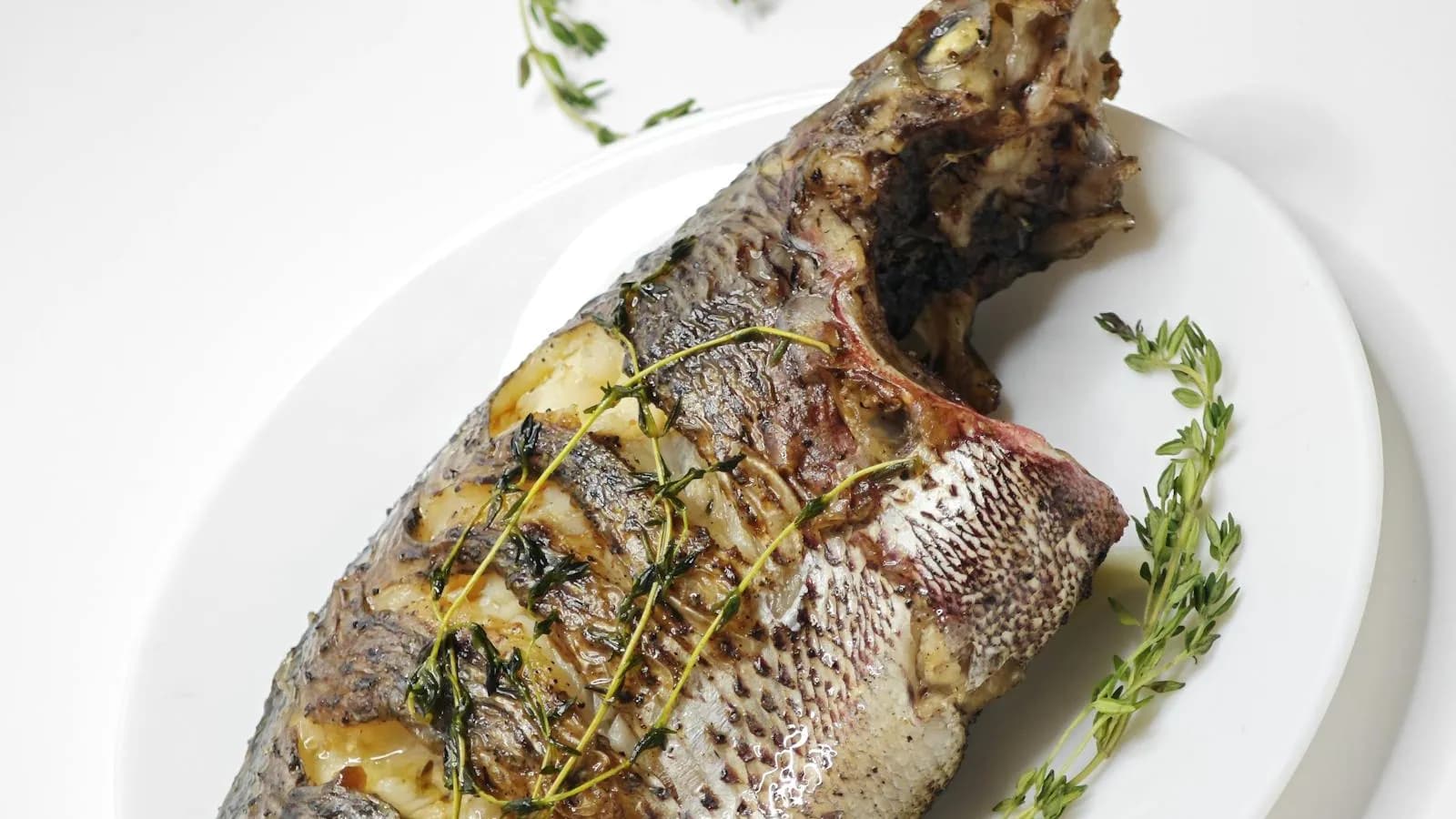
Salt-baked sea bass on the kamado, juicy inside
A whole 1.2-1.5 kg sea bass under a coarse-salt crust, indirect heat at 200°C and around 35 minutes. The salt seals the moisture in and the fish comes out juicy, not salty, with a clean taste of the sea.
Quick answer
Salt-baked sea bass on the kamado bakes at 200 °C indirect with a deflector, encased in a coarse-salt crust bound with egg white (1 kg of salt per kilo of fish). A 1.2-1.5 kg fish takes 30-35 minutes; pull it at 55 °C internal. The salt seals in moisture and the fish comes out juicy, not salty.
- Prep
- 20 min
- Cook
- 35 min
- Servings
- 4 servings
- Temperature
- 200 °C
Ingredients
- whole fresh sea bass, 1.2-1.5 kg, gutted but NOT scaled1 ud
- coarse sea salt (about 1 kg of salt per kilo of fish)1.5 kg
- egg whites (to bind the crust)2 ud
- cold water (a splash, to dampen the salt)100 ml
- lemon (half sliced for the belly, half to serve)1 ud
- fresh rosemary2 ramas
- fresh thyme (or dill)3 ramas
- crushed garlic clove (optional, for the belly)1 diente
- extra-virgin olive oil (to finish)4 cda
- freshly ground black pepper (to finish)1 pizca
Method
- 01
Prep the sea bass
Ask for the bass gutted but not scaled — the scales are part of the barrier against the salt. Pat it dry on the outside. Stuff the belly with the slices from half a lemon, the rosemary, the thyme and the crushed garlic. Do not season the flesh: the crust does that job from the outside.
- 02
Set the deflector and stabilise 200°C
Light the charcoal, set the deflector for indirect cooking and stabilise the kamado at 200°C. It takes 15-20 minutes. Do not load the fish until the chamber temperature holds steady for 10 minutes. Always indirect: over direct heat the crust scorches underneath before the fish is done.
- 03
Make the salt mix
Mix the coarse salt with the 2 egg whites and a splash of cold water to a packed-snow texture that holds its shape when squeezed. The egg white is the binder: it sets the crust rigid so it does not crumble. Reckon on 1 kg of salt per kilo of fish, plus a little extra to seal properly.
- 04
Build the bed and cover
On a kamado-safe tray or a stone, spread a 1 cm bed of salt in the shape of the fish. Lay the bass on it and cover it completely with the rest of the salt, pressing to seal — leave only the head and tail showing if you like. Close any gaps: that is where the steam escapes.
- 05
Bake over indirect heat
Slide the tray into the kamado and close the lid. Bake at 200°C indirect. For a 1.2-1.5 kg fish reckon 30-35 minutes: the rule of thumb is roughly 22-25 minutes per kilo. Do not open the lid to peek — every opening drops the chamber and stretches the curve. The crust will gradually colour and harden.
- 06
Check doneness with a probe
From the 25-minute mark, push an instant-read probe through the crust into the loin next to the spine (the thickest part). You want 55°C internal. If it is not there yet, close up and check again in 3-4 minutes. The moment it reads 55°C, pull the tray: carry-over does the rest.
- 07
Rest and crack the crust
Let it rest 5 minutes: the temperature climbs to 57-58°C and the juices settle. Tap the crust with the handle of a knife or a pestle until it cracks and lift it off in plates. Peel away the skin with the scales attached — it comes off clean, taking the salt with it. Lift the fillets off the backbone with a flexible spatula.
- 08
Plate up
Set the clean fillets on warm plates. A generous drizzle of extra-virgin olive oil, freshly ground pepper and a lemon wedge alongside. Taste before adding any salt: you almost never need it. Serve with kamado potatoes or a seasonal tomato salad.
About this recipe
Salt-baked sea bass is one of the most rewarding things to pull off a kamado: it looks like a restaurant dish, yet it is technically hard to get wrong if you nail two things — the crust and the internal doneness. Coarse salt, bound with egg white and a splash of water, forms a dome that bakes the fish in its own steam at 200°C indirect. The flesh comes out firm and pearly, juicy, with a far cleaner taste of the sea than any pan-fried bass.
Why the salt does not make the fish salty
It is everyone's first question. The key is that the skin and scales act as a barrier: the bass bakes whole, unscaled and opened no further than gutting it. The salt sets into a rigid shell that insulates and spreads the heat evenly — it works like a miniature clay oven. Salt only transfers at the points where the skin is broken, which is why you do not stuff the belly with carelessly cut lemon or slash the flesh. The result is perfect seasoning from the inside out, with barely any salt needed at the table.
The kamado at 200°C indirect: why it beats the oven
With the deflector in, the kamado behaves like a thick-walled convection oven: the ceramic radiates an enveloping, stable heat that sets the crust fast and holds 200°C without swings. Against a home oven, you gain two things: a far steadier temperature (the ceramic does not drop degrees when a cold piece goes in) and, if you want it, a subtle edge of fire. We are not after smoke here — sea bass is delicate and strong smoke buries it — but good lump charcoal alone leaves a background note an electric oven cannot give.
The doneness: 55-58°C internal, not one degree more
This is the difference between a memorable bass and a dry one. White fish is at its best between 55 and 58°C at the loin, next to the spine. Push past that and the flesh dries out and turns cottony, with no way back. Since you cannot see the fish under the crust, an instant-read probe is your only eye: push it through the salt into the thickest part from the 25-minute mark. When it reads 55°C, pull it. Carry-over will lift it another 2-3°C during the 5-minute rest before you crack the crust.
In 30 seconds
Whole sea bass 1.2-1.5 kg left unscaled, just gutted, herbs and lemon inside. Crust: 1 kg of coarse salt per kilo of fish bound with 2 egg whites and a splash of water. Kamado 200°C indirect with the deflector. Bake 30-35 min to 55-58°C internal (probe through the crust). Rest 5 min, crack the crust with one sharp blow, lift away salt and skin, free the fillets. Clean taste of the sea, juicy, not salty.
Editor's tips
- An instant-read probe is not optional here: it is literally your only eye under the crust. Without it you are blind, and the bass goes from juicy to cottony in five minutes. A Lavatools Javelin or similar reads in 2-3 seconds through the salt.
- Do not scale the fish and do not slash the flesh. The scales and intact skin are the barrier that stops the salt seasoning the inside. If your fishmonger scales it out of habit, ask them specifically NOT to for a salt-baked preparation.
- Skip the heavy smoke. Sea bass is delicate and a chunk of hickory or mesquite buries it completely. If you want a hint, a single small piece of apple or vine cutting is plenty — but the classic version, on good charcoal alone, is already spot on.
Gear for this recipe
As an Amazon Associate, mikamado.es earns from qualifying purchases. At no extra cost to you.
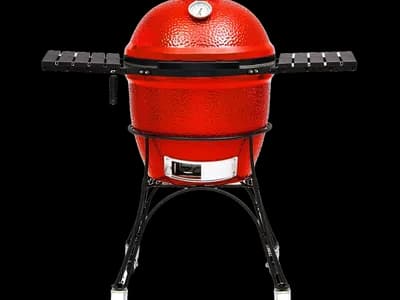
Kamado Joe Classic II 18"
Classic 18 acoge entera la lubina de 1,2-1,5 kg en indirecto a 200 C para 4.
€1,399
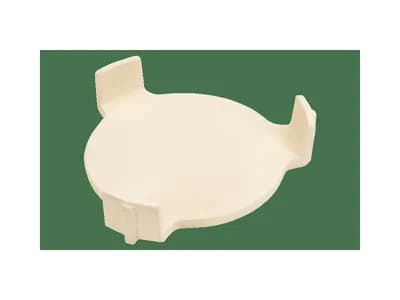
Big Green Egg ConvEGGtor plate setter (Large)
Deflector para hornear la lubina en costra de sal con calor indirecto a 200 C.
€85
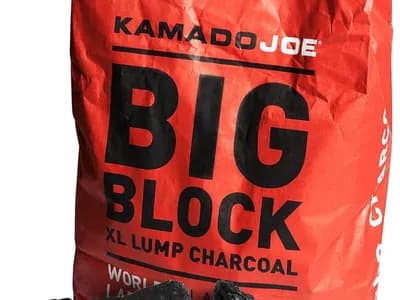
Kamado Joe Big Block XL lump charcoal 9.1 kg
Lump para fijar 200 C limpios durante los 35 minutos de horneado.
€67
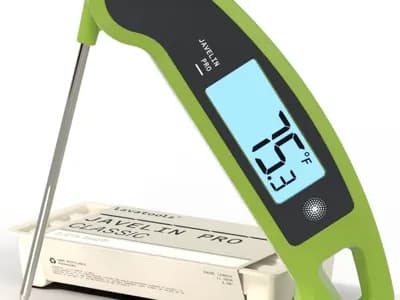
Lavatools Javelin PRO Duo instant-read thermometer
Pincha al corazon para confirmar que el lomo llega a punto bajo la sal.
€65
FAQ
How much salt do I need per kilo of fish, and what kind of salt?
The benchmark ratio is 1 kg of salt per kilo of fish, plus a little extra to seal the gaps — for a 1.2-1.5 kg bass, reckon on 1.5 kg of salt. Use coarse sea salt, never fine table salt: coarse sets into a rigid shell that insulates and lifts off clean, while fine salt melts, sticks to the skin and does season the fish. Binding the salt with 1-2 egg whites and a splash of water makes the crust harden and stops it crumbling when you handle it.
How do I know when the salt-baked bass is done without breaking the crust?
With an instant-read probe pushed through the crust into the loin next to the spine (the thickest part). White fish is juicy between 55 and 58°C internal; pull at 55°C because carry-over adds another 2-3°C during the rest. Without a probe, the visual cue is the crust: when it is fully set, golden and starting to crack on top by itself, the fish is usually near the mark — but by then you are guessing, which is exactly why the probe is the only reliable method.
Do I need a deflector, or can I cook it direct?
You need a deflector. Salt-baking is oven work, not grilling: over direct heat the underside of the crust scorches and cracks before the centre of the fish reaches temperature, and salt touching the coals turns bitter. The deflector (ceramic plate or conveggtor) turns the kamado into a 200°C convection oven that sets the crust evenly. There is no direct version that works well for this dish — indirect cooking is non-negotiable here.
What fish work besides sea bass?
Any whole, firm-fleshed fish with intact skin works in salt. Sea bream is the most direct and cheaper alternative, with an identical internal target (55-58°C). Red sea bream (besugo) is superb and a touch fattier, so it forgives an extra couple of minutes better. Snapper, white sea bream and meagre also come out very well. Avoid very flat or very thin fish — they cook too fast and the crust offers no margin — and big oily fish like tuna, which need a different technique. Adjust time to weight: roughly 22-25 minutes per kilo at 200°C.
How do I open and plate the salt crust without the fish ending up salty?
After the rest, give the centre of the crust a sharp tap with the handle of a knife or a pestle to crack it, and lift it off in large plates, careful not to let salt fall onto the flesh. The skin is the key: peel it away whole with the scales attached — it comes off clean and drags any remaining salt with it. Only then lift the fillets off the backbone with a flexible spatula and move them to a clean plate. If you clear the salt without removing the skin first, you can drag grains onto the meat.
More kamado recipes
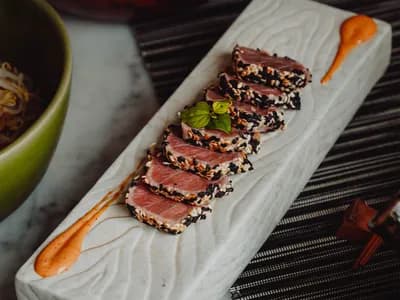
Sesame-Crusted Seared Bluefin Tuna on the Kamado (Tataki)
A bluefin tuna loin rolled in sesame and seared 30-45 seconds per side over a screaming-hot kamado: a toasted crust outside, a raw, juicy core, and a soy, ginger and lime sauce that wakes it all up.
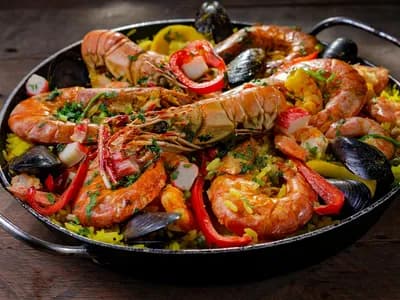
Arroz a banda on the kamado, fisherman's socarrat
Alicante-style arroz a banda in a paella pan over the kamado grate: a rockfish fumet, a long sofrito and a textbook final socarrat.
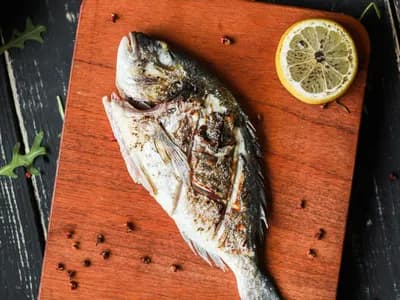
Butterflied sea bream on the kamado, with garlic, chilli and lemon refrito
Sea bream butterflied open over direct coals, skin down first, finished with a hot garlic, chilli and lemon refrito. Mediterranean fish off Torrevieja, ready in 18 minutes. Serves 2.
KEEP READING
Go deeper on this dish
- Recommended kamado
Kamado Joe Classic II 18"
Classic 18 acoge entera la lubina de 1,2-1,5 kg en indirecto a 200 C para 4.
- Editorial guide
How to light a kamado: the step-by-step method
No petrol, no weird tablets and no 45-minute waits. The cone method, airflow control and the mistakes that prevent 80% of the frustration.
- Glossary term
Heat deflector
Ceramic plate placed between the coals and the grate to turn direct fire into indirect cooking.
- Related comparison
kamado joe classic ii vs kamado joe classic iii
The most-asked question on r/kamadojoe: do I pay the Classic III premium for the SlōRoller, or stick with the Classic I…