Recipe · Indirect · Medium
Alicante-style baked rice on the kamado in a clay cazuela
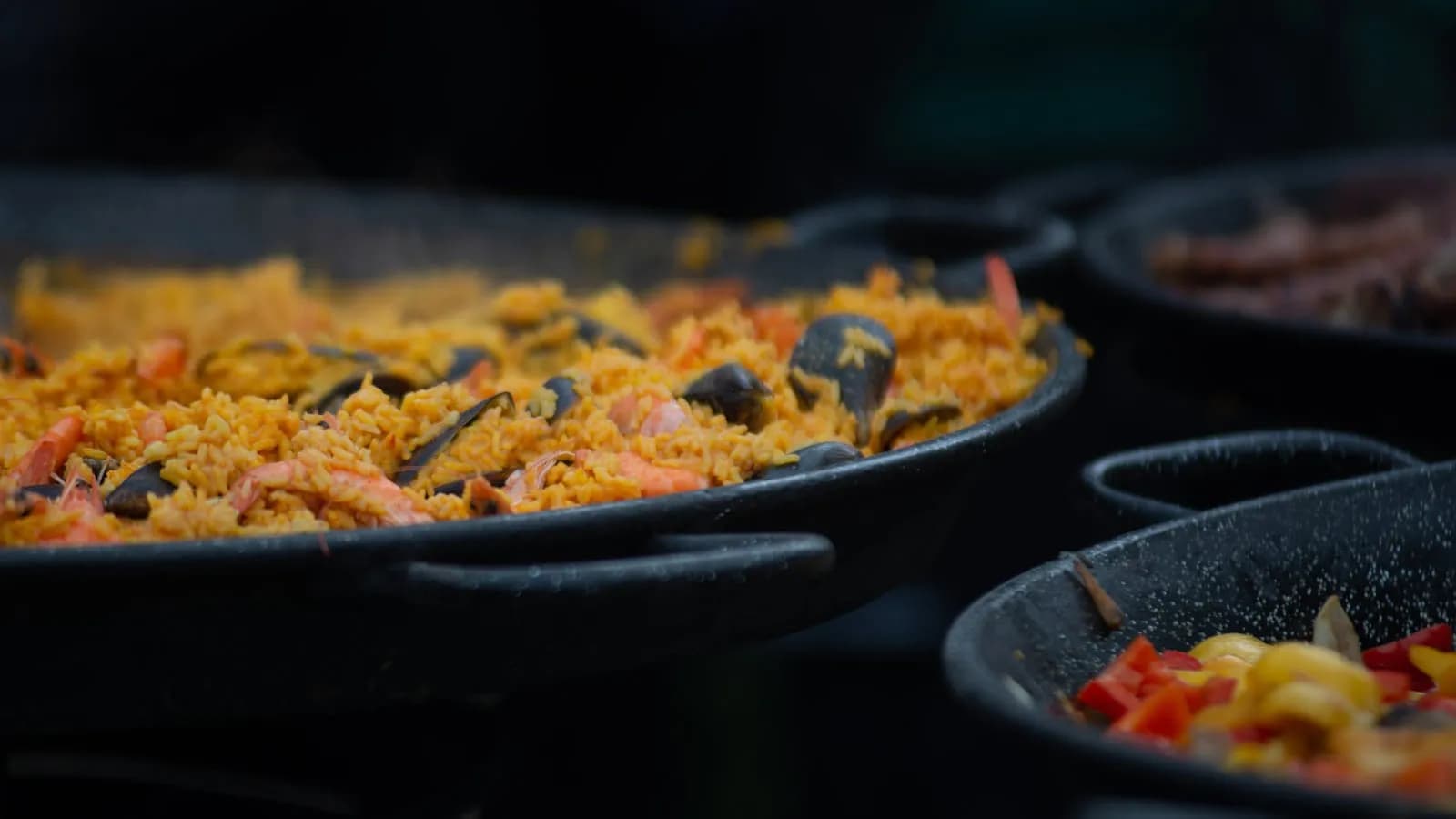
Traditional Alicante baked rice —chickpeas, pork rib, blood sausage, potato and tomato, with a whole garlic head in the centre— baked in a clay cazuela at 220°C indirect.
Quick answer
Alicante-style baked rice is made in an earthenware dish at 220 °C indirect with a deflector, in the enveloping heat of an oven. After toasting the rice, layer in chickpeas, ribs, blood sausage, potato and the head of garlic, pour in hot cocido broth (2 parts to 1 of rice) and bake for 18-20 minutes without stirring.
One big step at a time, screen kept on and built-in timers.
- Prep
- 30 min
- Cook
- 50 min
- Servings
- 6 servings
- Temperature
- 220 °C
What time do you want to eat?
Pick a time and we'll tell you when to start.
12:00
Start the prep
12:30
Light the kamado
13:00
Onto the kamado
14:00
Serve
Estimate: it includes lighting and settling the kamado plus a margin for large cuts. If the recipe asks you to marinate or salt ahead, add that time.
Fire setupIndirect
- Dome
- 220 °C
- Deflector
- Yes
- Grate
- Standard height
- Fuel
- Charcoal
- Setup
- Deflector; clay casserole
Temperature curve
1:20 h from lighting
Kamado dome
| # | From | Phase | Dome |
|---|---|---|---|
| 1 | 0:00 | Light the charcoalDeflector in; 25-30 min to settle at 220 °C | 20 → 220 °C |
| 2 | 0:30 | StabiliseMeanwhile: sofrito, toasting the rice and boiling stock; 10 min steady | 220 °C |
| 3 | 0:50 | Put the food inClay pot with boiling stock, do not stir | 220 → 190 °C |
| 4 | 0:52 | Bake18-20 min; check at 16 and add 3-4 min if needed | 190 → 220 °C |
| 5 | 1:15 | RestFive minutes under a cloth, then to the table | 220 → 205 °C |
| 6 | 1:20 | Serve | off |
0:00 is the moment you light the charcoal. Internal temperatures are the ones the recipe gives; without a probe, go by the times. Turn these times into clock times with the planner
For this recipe
Ingredients
- round rice, bomba or senia type400 g
- rich stew stock (ideally from the day before), hot800 ml
- pork rib from the stew, already cooked and cut into pieces (or raw rib pre-braised 1 hr; see step 2)300 g
- onion blood sausage (thick slices)2
- cooked chickpeas (ideally from the stew)250 g
- medium potatoes, 1 cm slices2
- ripe tomatoes (one grated for the sofrito, one sliced)2
- whole garlic head (for the centre)1
- sweet smoked paprika (de la Vera)1 tsp
- extra-virgin olive oil from the Valencia region4 tbsp
- salt and a few saffron threads (or food colouring)1 pinch
Allergens
None of the 14 mandatory-declaration allergens in the ingredients.
Shop-bought morcilla and stock may contain gluten, celery or sulphites: check the label.
Based on the recipe's ingredients. Always check the label of every product you buy.
The gear for this recipe
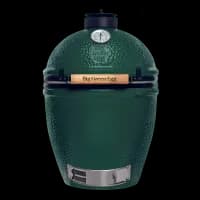 Big Green Egg LargeThe Large bakes the clay pot indirect at 220 °C with room to spare for 6.
 Orework Spanish Holm Oak Charcoal 15 kgHolm oak with long, steady embers to hold 220 °C for the whole bake.
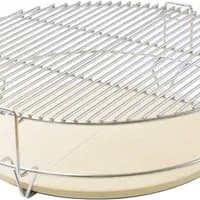 Onlyfire GCG-8552 Cooking System (2 grates + rack + 2 deflectors) for Large Kamado
 ThermoPro TP25 Bluetooth thermometer, 4 probesDome probe to lock in 220 °C indirect while the rice bakes.
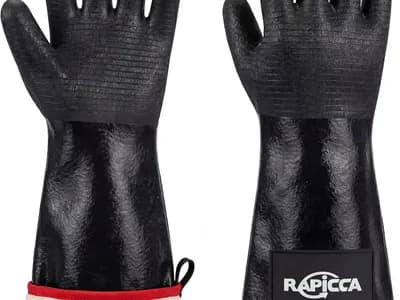
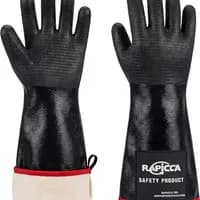 Rapicca XL Barbecue Gloves 43 cm
Method
- 01
Set deflector and stabilise at 220°C
Light the charcoal, set the deflector and stabilise the kamado at 220°C indirect. It takes 25-30 minutes. Don't load the cazuela until the dome thermometer holds 220°C steady for ten minutes: an unstable temperature ruins the rice's even cooking.
- 02
Tomato and paprika sofrito
Use rib already cooked in the stew: these short times leave no margin to tenderise a raw rib, so start with tender meat. In the clay cazuela over medium heat (or the direct zone before fitting the deflector), heat the olive oil and give the cooked rib a quick sear on its faces, 2-3 minutes, just to toast the outside. Set the rib aside, lower the heat, add the grated tomato and fry for 5 minutes until it loses its water and darkens. Off the heat, stir in the paprika quickly so it doesn't burn. (If you're starting from scratch with no stew, braise the raw rib first in stock over low heat for about 1 hour until tender; the 18-20 minutes in the oven won't cook it through.)
- 03
Toast the rice
Add the rice to the sofrito and stir for 2 minutes until the grains turn translucent at the edges and coat in the oil. This step, toasting the rice, seals the grain and is key to a loose, non-claggy result. Spread the rice in an even layer across the cazuela.
- 04
Build the cazuela
Scatter the chickpeas, browned rib, blood sausage, potato and tomato slices over the rice, alternated and eye-catching. Push the whole garlic head, scored on top, right into the centre of the cazuela. Sprinkle the saffron or food colouring over everything.
- 05
Pour the hot stock
Bring the stock to a boil separately and pour it hot over the cazuela —two parts stock to one of rice, about 800 ml for these 400 g. Pouring boiling stock stops the cooking from stalling when it hits the kamado. Adjust the salt: it should taste savoury, almost salty, because the rice takes salt as it absorbs.
- 06
Bake indirect 18-20 min
Put the cazuela into the kamado at 220°C indirect and close the lid. Never stir from here on: baked rice cooks undisturbed. In 18-20 minutes the grain absorbs the stock and the surface browns. Check at 16 minutes by barely lifting the lid; if there's stock left and the grain is hard, give it another 3-4 minutes.
- 07
Rest and serve
Take the cazuela out with gloves (clay is heavy and scorching) and let it rest 5 minutes covered with a clean cloth. The rest settles the grain and finishes loosening it. Carry the cazuela straight to the table, open the garlic head and spread its creamy pulp over the top. Each diner squeezes their own roasted garlic onto the rice.
About this recipe
Baked rice is paella's dry-land cousin: there's no paella-pan socarrat or stock reducing over a roaring fire, but rather a clay cazuela that goes into the kamado as if it were a wood oven. You want stable indirect heat at 220°C, deflector in place, and a properly savoury stock —ideally yesterday's stew— in just the right proportion so the grain stays loose and never claggy. It's a humble, hearty Alicante leftovers dish, and the kamado nails it because the ceramic delivers the wrap-around heat the cazuela needs.
Why indirect and at oven-like temperature
Baked rice doesn't cook by contact with the flame but by wrap-around radiant heat, exactly as in the traditional home oven of every house in the Vega Baja. That's why the deflector is non-negotiable: it turns the kamado into a domed oven that surrounds the clay cazuela from above, the sides and below. At 220°C the stock comes to a boil, the rice absorbs in about 18-20 minutes and the surface browns without the bottom scorching. Cook it direct and the base of the cazuela would char before the top grains were done. The ceramic's thermal mass is the great ally: once stabilised at 220°C, the kamado holds that temperature even if you lift the lid to peek.
The stock: leftover stew rules
I have a firm opinion here: baked rice was born to use up the stew from the day before, and with homemade pot-stock it's on another level. If you have cooked chickpeas, already-cooked rib, bone and a rich stew broth, this recipe comes together in fifteen minutes of mise en place. From scratch, fry the tomato down properly and use real meat stock —never a stock cube alone, which adds salt and no body—; and mind the rib: raw, it won't tenderise in the 18-20 minutes of oven time, so braise it first for about an hour until tender and only then build it into the cazuela. The ratio I use is two parts stock to one of rice (a touch less than a soupy rice): the grain must stay whole, loose and dry on top, with the split garlic head in the centre perfuming everything.
Clay cazuela versus cast-iron cocotte
The clay cazuela is the tradition and the soul of the dish: low thermal mass, thin walls, it heats and cools fast and keeps the grain loose. The enamelled cast-iron cocotte is the modern alternative —it holds more heat, gives a bolder base browning and is indestructible in the kamado—, but it wants a touch less stock because it keeps cooking by carry-over once you pull it. I cook the classic clay version when there's company (the cazuela goes from kamado to table), and reach for the cocotte when I want a more pronounced base crust. Both work; the difference is nuance, not success or failure.
In 30 seconds
Kamado indirect at 220°C with the deflector, like an oven. Fry the tomato and quickly sear the already-cooked rib from the stew (if starting from raw, braise it first for an hour), build the clay cazuela: rice, chickpeas, rib, blood sausage, potato and tomato slices, whole garlic head in the centre. Pour in hot stock, two parts stock to one of rice, ideally yesterday's stew. Bake 18-20 minutes without stirring until the grain absorbs and the surface browns. Rest 5 minutes before serving. Loose grain, never claggy.
Will it fit your kamado?
Small
33-40 cm · Joe Jr, MiniMax
Tight
Probably tight: a 6-serving casserole barely fits; with a ~28 cm one, about 3-4 servings.
Medium
46-51 cm · Classic, Large
Fits
A clay casserole for all 6 servings fits.
Large
56-61 cm · Big Joe, XL
Fits
Fits comfortably; a bigger casserole allows more servings.
What to serve with it
Sides
- Lettuce, tomato and onion salad
- Grilled artichokes with lemon
- Wine
- Alicante Monastrell or Utiel-Requena Bobal red
- Beer
- Toasty märzen-style lager
- Alcohol-free
- Lemon soda or unsweetened iced tea
Leftovers and storage
- In the fridge
- Cool quickly and refrigerate airtight within 2 hours: eat within 24 hours.
- Freezing
- Does not freeze well: the rice turns stodgy and the potato watery.
- Reheating
- Low oven, covered with a little stock, until piping hot in the centre (74 °C). Only once.
- Using them up
- Rice croquettes with the chopped black pudding and chickpeas.
Cool and refrigerate within 2 hours. When in doubt, throw it out.
Leftover embers
You still have embers: what to do with the leftover heat
For 50 min at 220 °C in a classic kamado you load about 1 kg of charcoal and burn 800 g: when you serve, about 170 g of live embers remain. Before you shut the vents, that is still enough for:
Closing the vents halfway and waiting for it to drop
140-200 °Cdessert while you eat
20 minof embers
- Smoked Loaded Nachos on the Kamado12 min · 185 °C
- Kamado-roasted figs with goat cheese and honey7 min · 200 °C
No recipe needed
- Yesterday's bread with oil and garlic, on the grate (10 min)
Before opening the lid, crack it open for a few seconds first; if you raise the heat, stir the ash so the coals can breathe. And if you are not going to use them: once the food is out, close the bottom and top vents. The charcoal that does not burn (about 170 g) can be used next time. Different size of kamado? Work out your load for 1 h 30 min of fire, lighting included.
History of the dish
- Origin
- Valencian Community (Spain)
- Period
- Folk tradition; current form possibly from the 18th century
- Where it is cooked today
- Most of the Valencian Community; notably Xàtiva and, in Alicante, Agres, Beniarrés and Muro de Alcoy
Arroz al horno (arròs al forn) is a typical dish of the Valencian Community. No author or date of birth is known: the regional government describes it as a recipe that "probably has as many versions as there are homes where it is enjoyed". Xàtiva's tourist office suggests it was possibly in the 18th century that it took its current form, with chickpeas, onion blood sausage, garlic and ribs.
It is said to have originated as a way of using up leftovers from the cocido stew, and in many kitchens it is still made with what is left of the stew: chickpeas and pork products, with potato, tomato and a whole head of garlic crowning the dish. It is cooked in a flat earthenware casserole, and since in the past many homes had no oven, it was taken to the bread oven; hence its old name, arròs passejat ("walked rice"), a custom still seen in Agres.
Today it is made in almost every part of the Valencian region. Among the most renowned towns are Xàtiva, which holds an international competition for this rice, and, in the province of Alicante, Agres, Beniarrés and Muro de Alcoy.
Sources
- Arroz al horno — Wikipedia, la enciclopedia libre (es.wikipedia.org)
- Arròs al forn — Mediterrani en Acció, Turisme Comunitat Valenciana (Generalitat Valenciana) (comunitatvalenciana.com)
- Tastes of Xàtiva — Xàtiva Turismo (xativaturismo.com)
Editor's tips
- Cure a new clay cazuela before its first use: soak it in water for several hours, dry it and rub it with raw garlic and oil. Uncured clay drinks up liquid and can crack from the kamado's thermal shock. And always add hot stock, never cold, so you don't stress the kamado's own ceramic either.
- The stock ratio is the difference between success and failure. Two parts stock to one of rice for a dry, loose result, as baked rice demands. Too much liquid and it turns claggy and pasty; too little and the grain comes out hard. Weigh it, don't eyeball it the first time.
- A handful of wood chunks doesn't belong here: Alicante baked rice isn't a smoked dish and smoke would mask the flavour of the stew and roasted garlic. Clean, well-lit charcoal, no aromatic woods. At most a sliver of vine cutting or orange wood, very subtle, but it's optional and not at all traditional.
Gear for this recipe
As an Amazon Associate, mikamado.es earns from qualifying purchases. At no extra cost to you.
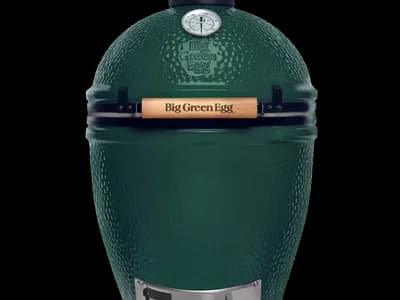
Big Green Egg Large
The Large bakes the clay pot indirect at 220 °C with room to spare for 6.
€2,099
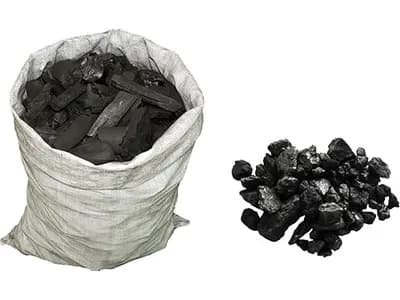
Orework Spanish Holm Oak Charcoal 15 kg
Holm oak with long, steady embers to hold 220 °C for the whole bake.
€45
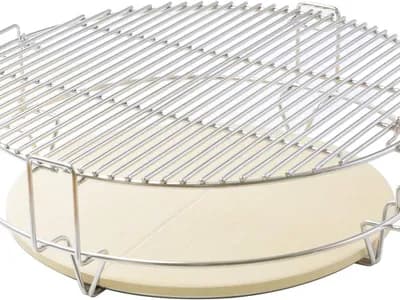
Onlyfire GCG-8552 Cooking System (2 grates + rack + 2 deflectors) for Large Kamado
€95

ThermoPro TP25 Bluetooth thermometer, 4 probes
Dome probe to lock in 220 °C indirect while the rice bakes.
€65
Rapicca XL Barbecue Gloves 43 cm
€50
Have you made it?
Tell us how it turned out on your kamado. We review every rating before publishing it.
No published ratings yet. Be the first!
FAQ
Clay cazuela or cast-iron cocotte for baked rice?
The clay cazuela is the tradition: thin walls, low thermal mass, it heats and cools fast and keeps the grain looser. The enamelled cast-iron cocotte holds more heat, gives a more pronounced base browning and is indestructible in the kamado, but it keeps cooking by carry-over once pulled, so use slightly less stock and a shorter rest. For the classic table version, go clay; for a bold base crust or frequent cooking, the cocotte performs better. Both make a great rice.
Why is it cooked indirect and at what oven-like temperature?
Because baked rice cooks by wrap-around radiant heat, just like the traditional oven, not by contact with the flame. The deflector turns the kamado into a domed oven that surrounds the cazuela and cooks it evenly. The target temperature is 220°C: enough for the stock to boil and the surface to brown in 18-20 minutes without scorching the bottom. Direct, the base of the cazuela would char before the top grain was done. The kamado's thermal stability does the rest.
How do I get loose, non-claggy grain in a cazuela?
Three keys. First, toast the rice in the sofrito for 2 minutes before adding stock: the oil seals the grain. Second, respect the two-parts-stock-to-one-of-rice ratio —it's the difference between dry and loose or pasty and claggy. Third, never stir inside the kamado: baked rice cooks undisturbed, stirring releases starch and clags it. Use round bomba or senia rice, which handle absorption well, and rest 5 minutes covered after pulling so the grain settles.
What's the difference with paella and with arroz a banda?
Paella is cooked uncovered in a wide, flat pan over direct fire, aiming for a thin layer of grain and a base socarrat; the stock evaporates over a roaring flame. Arroz a banda is a seafood rice cooked with a rockfish fumet, served apart from the fish that gave the stock. Baked rice, by contrast, goes in a deep cazuela, covered by the oven's or kamado's dome, with wrap-around heat and stew meat —chickpeas, rib, blood sausage—, not seafood. It's an inland, leftovers dish, more rustic and hearty than its coastal cousins.
Can I use yesterday's stew for the stock?
Not only can you: it's the very origin of the dish. Baked rice was born to use up the stew, and with a rich, savoury pot-stock it turns out incomparably better than with stock-cube broth. Reuse the cooked chickpeas, the rib and the stew bone too. Strain the stock, skim a little fat if it's very strong and heat it before pouring. A day-old stock has also had time to settle its flavours in the fridge. It's the most authentic version and the tastiest.
What do I do with the embers left after making Alicante-style baked rice on the kamado in a clay cazuela?
After 50 min at 220 °C in a classic kamado about 170 g of live embers remain: 20 min at 140-200 °C closing the vents. If you are not going to use them, close both vents and keep the charcoal for next time.
More kamado recipes
KEEP READING
Go deeper on this dish
- Recommended kamado
Big Green Egg Large
The Large bakes the clay pot indirect at 220 °C with room to spare for 6.
- Editorial guide
How to light a kamado: the step-by-step method
No petrol, no weird tablets and no 45-minute waits. The cone method, airflow control and the mistakes that prevent 80% of the frustration.
- Glossary term
Heat deflector
Ceramic plate placed between the coals and the grate to turn direct fire into indirect cooking.
- Related comparison
big green egg large vs kamado joe classic iii
The classic kamado matchup: the Big Green Egg Large, the indestructible pioneer with the widest accessory network, agai…