Analysis by Valery Grin · · updated September 11, 2026
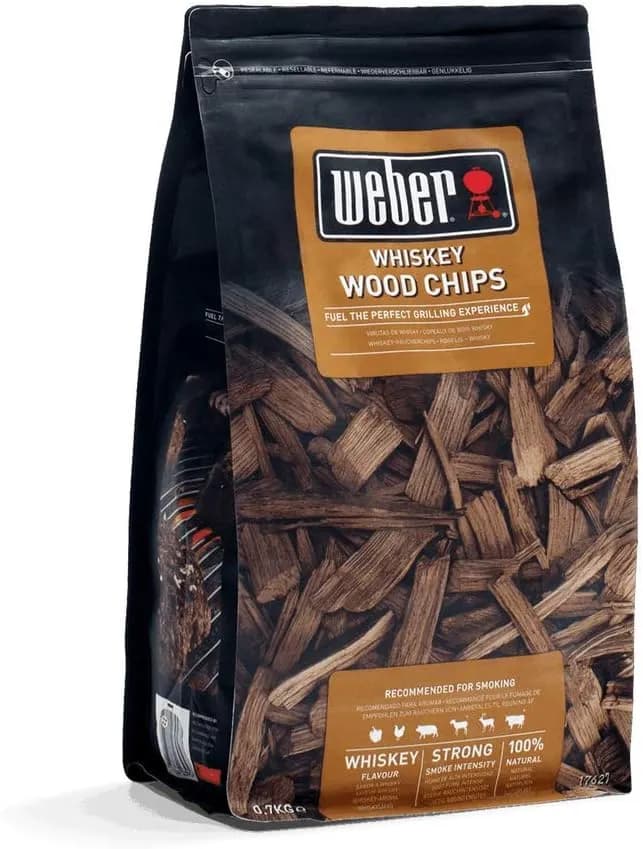
Weber Whisky Barrel Smoking Wood Chips, 700 g bag
Whisky-cask wood chips, FSC Mix certified, in a 700 g bag
From€8
Price verified on Amazon on September 12, 2026 · may change
As an Amazon Associate, mikamado.es earns from qualifying purchases. At no extra cost to you.
- Weight
- 0.7 kg
- Material
- Whisky barrel wood, FSC Mix certified
Quick answer
Worth it? If your kamado cooks run two or three hours — ribs, whole chicken, vegetables, nachos — then yes: they give an oak smoke with a cask backbone that suits pork, lamb and beef. For a twelve-hour brisket, no: fine chips burn out within half an hour under a closed dome, and that is chunk territory. Weber did not design them with ceramic in mind, but small doses work well.
Weber sells these as whisky-cask aroma: FSC-certified European wood, 700 g and a smoke with body. In ceramic the question isn't how much you add but when — fine chips burn fast inside a closed dome.
The manufacturer's listing describes a 700 g bag of chips made from whisky barrel wood, European in origin and FSC Mix certified. Weber suggests them for vegetables and every kind of meat, and shelves them alongside its apple and beech chips. They currently sit among the best sellers in their smoking-chips category on Amazon.es, which says rather more about distribution than about quality: quality is settled inside the dome.
And that is the nuance the bag never mentions. A ceramic kamado breathes very little and holds smoke like nothing else. A closed dome at 110 °C with the deflector in place turns one handful of chips into proper smoke, and two handfuls into an acrid, ashy taste. Scatter them dry through the top layer of lump before you light it, or load them into a smoker box resting on the coals — never on top of the deflector, where they simply char.
Weber advises soaking them. On paper that makes sense on a gas grill, but in ceramic the water steams off inside and drags down the very temperature you spent half an hour stabilising, so plenty of kamado owners use them dry and sparingly. A coastal note: on the Costa Blanca an open bag draws damp within weeks, so decant it into an airtight jar. For long cooks, use chunks, not chips.
Cask oak with real character, in the format that lasts least in ceramic. A dry handful among the lump for two- or three-hour cooks; for long low & slow, chunks.
Editorial rating from spec sheet, measurements and kamado fit · not a hands-on test
Pros
- Whisky-cask oak: a full-bodied smoke for pork, beef and lamb
- European wood, FSC Mix certified according to the maker's listing
- Lights in minutes: smoke almost as soon as you close the dome
- Easy to dose: one handful is plenty in a closed kamado
- Small bag: a way to try a wood without committing to a sack
Cons
- Fine chips burn out in half an hour: not enough for long low & slow
- The listing recommends soaking — poor advice in ceramic, where water cools the dome
- Once opened it draws damp; on the coast it needs an airtight container
Who it's for
For anyone running two- or three-hour kamado cooks — ribs, whole chicken, vegetables, nachos — who wants an oak smoke with character and declared FSC traceability.
Not for
If your plan is a twelve-hour brisket without lifting the lid, these chips are gone in the first half hour: that job calls for wood chunks, not chips.
Specifications
- Weight
- 0.7 kg
- Material
- Whisky barrel wood, FSC Mix certified
As an Amazon Associate, mikamado.es earns from qualifying purchases. At no extra cost to you.
Goes well with
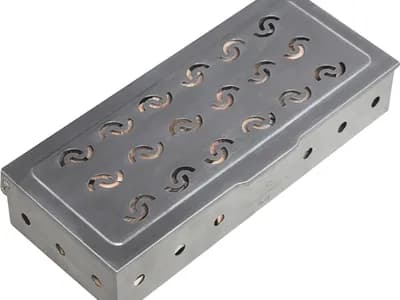
La Cuisine Stainless Steel Smoker Box with Slotted Lid
A smoker box is the natural partner for chips: it holds them over the coals, stops them flaring all at once and stretches the smoke by a good few minutes.
€17
Weber Hickory Smoking Chunks 1.5 kg
For what chips cannot cover: hickory chunks buried in the charcoal hold hours of smoke through a brisket or a pulled pork without opening the dome.
€12
Weber apple wood smoking chips 700 g
The gentle sister in the same format: apple wood for chicken, fish and vegetables, when cask oak turns out too intense for the cut in hand.
€8
FAQ
Chips or wood chunks for a kamado?
It depends on the length of the cook. These chips smoke straight away and fade fast, so they shine on two- or three-hour sessions: St. Louis ribs, spatchcock chicken, vegetables. For a low-temperature brisket or a twelve-hour pulled pork you want chunks buried in the charcoal, releasing smoke hour after hour with the lid shut.
Should they be soaked first, as Weber suggests?
Weber's listing recommends it, and on a gas grill or an open-lid kettle it makes sense. In ceramic the water steams off inside an almost airtight chamber: it drops the dome temperature, delays stabilisation and the first smoke comes out white and damp. People who use a kamado daily tend to load them dry, and in smaller amounts than the bag suggests.
How much should I use, and where in the kamado?
One handful is enough: ceramic holds smoke, and overdoing it leaves an acrid, sooty aftertaste. Scatter them dry through the top layer of lump before lighting, or load them into a smoker box resting on the coals so they smoulder gradually. What never works is dropping them on the deflector: up there they simply char without smoking anything.
Do they actually taste of whisky?
Don't expect a dram of single malt. The base is oak, the wood casks are made from, and what the spirit leaves behind is a sweet, toasted undertone rather than a taste of alcohol — the alcohol burns off with the wood. Weber proposes it for chicken, pork, lamb, game and beef, and that is where it reads best.