BRAND
Big Green Egg
Origin: USA · Founded in 1974 · 5 products in catalog
Origin and philosophy
Big Green Egg is the company that translated the old Japanese kamado for the American back garden. Ed Fisher founded it in Atlanta in 1974, after running into the cooker during a stretch of military service in Asia and noticing that nothing comparable existed in the United States. Fifty years on, the company still operates out of the same Georgia city, with Ardy Arani at the helm and an authorised dealer network that holds the model together: BGE is not stocked in big-box stores; it is sold in physical shops that actually know the product.
The ceramic that gives the green egg its shape is manufactured in Monterrey, Mexico, by Daltile, a specialist in industrial ceramics. It derives from the refractory compounds originally developed for aerospace work, which in practice means walls that can take brutal thermal shock without cracking. The philosophy is deliberately conservative: a 1974 Egg and a 2026 Egg are recognisable on sight, and parts continue to fit across generations.
What sets Big Green Egg apart
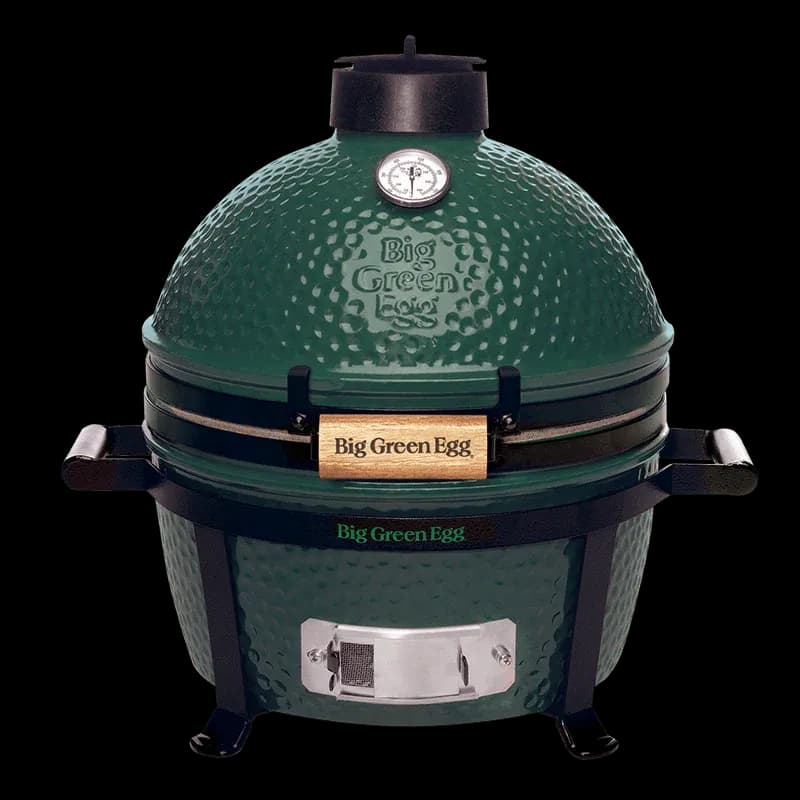
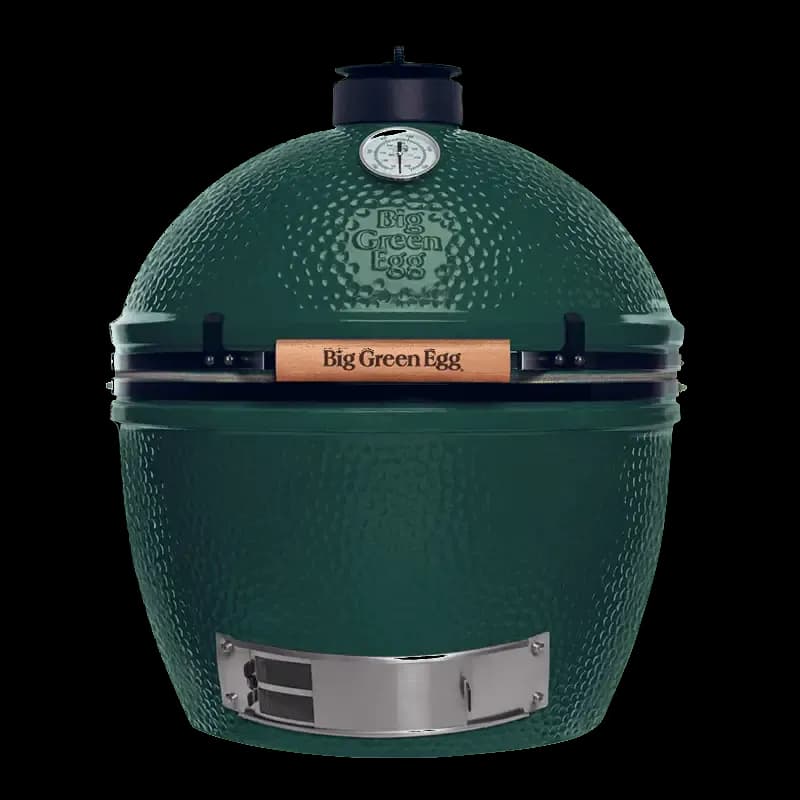
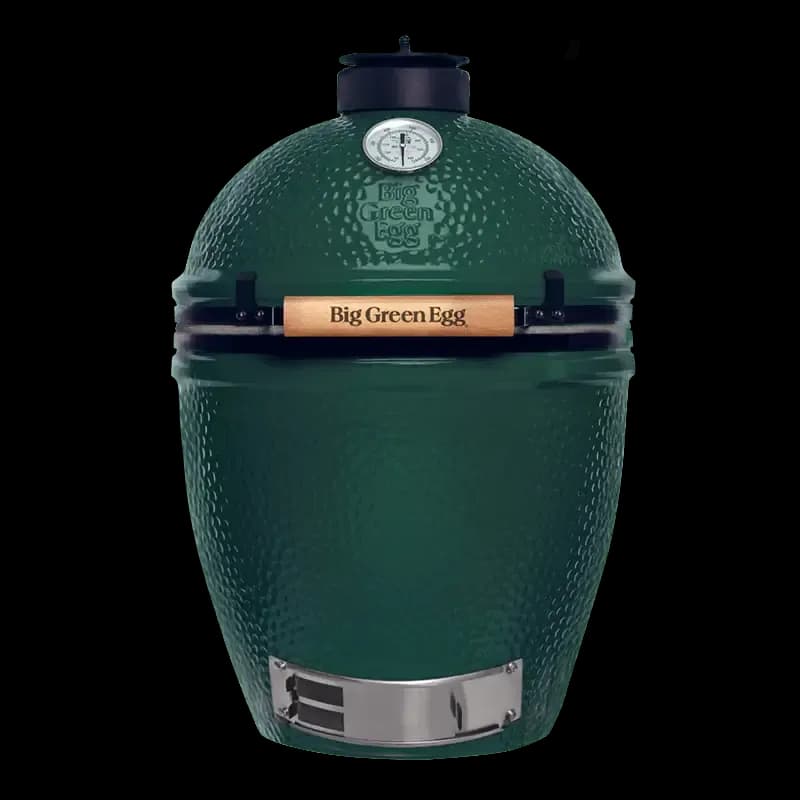
Seven sizes, from Mini to 2XL, cover everything from a two-person camp setup to catering for fifty. The Large is the spine of the line-up and the benchmark every other 46 cm kamado is measured against. What sets BGE apart is not a flashy patented technology — there is no SloRoller equivalent here — but the sum of small decisions: a cast-iron bottom damper with a lever, a daisy-wheel top vent, and a lifetime ceramic warranty that is also transferable. That last detail is the one that changes the economics: a five-year-old BGE Large resells at around 60% of new, a figure almost no other kitchen appliance can match.
The brand also leans hard on community rather than just customer relationships. Eggtoberfest, its annual gathering on the outskirts of Atlanta, has run for more than two decades and pulls in thousands — part cooking demo, part owners reunion, part brand validation no competitor has managed to replicate.
Our experience with the brand
We have been cooking on a BGE Large from our terrace in Torrevieja for several seasons, with 70 km/h Levante winds and the salt air that comes with any flat two hundred metres from the Mediterranean. The ceramic shows no hairline cracks; the two outer metal bands ask for grease every autumn, especially the lower ring, but that is honest maintenance, not a disguised defect. We find the venting less precise than the Kamado Joe Classic III, but more reliable over time: fewer moving parts, fewer things that can break. On eight-hour summer smokes we have walked away from the kamado for entire shifts — thermal inertia forgives mistakes.
Who it is for
We recommend Big Green Egg to the buyer who values durability over factory equipment. If you want everything in the box — cart, side tables, ceramic deflector, two-tier grate system — the Classic III gives you that for a similar price. If on the other hand you want to build your kamado piece by piece with accessories that last decades and that you can resell, BGE is the safe pick in the segment. It is also the better first purchase for someone who does not yet know how they will cook: the brand ecosystem stays with you for years, not seasons.
How we assess this brand
Brands do not pay to appear on mikamado.es and do not review what we write. Each product is judged by what it does in a real kamado: how it copes with the heat of the ceramics, whether its measurements match the listing, what warranty it offers in Spain and whether spares or after-sales service exist beyond the marketplace. When a brand sells only on Amazon, we say so, and we judge the piece by its material and relative price, not by its name. If anything on this page does not match your experience, write to us and we will check it.
As an Amazon Associate, mikamado.es earns from qualifying purchases. At no extra cost to you.