Recipe · Indirect · Easy
Free-Range Chicken Roasted in a Cocotte with Lemon, Garlic and Thyme on the Kamado
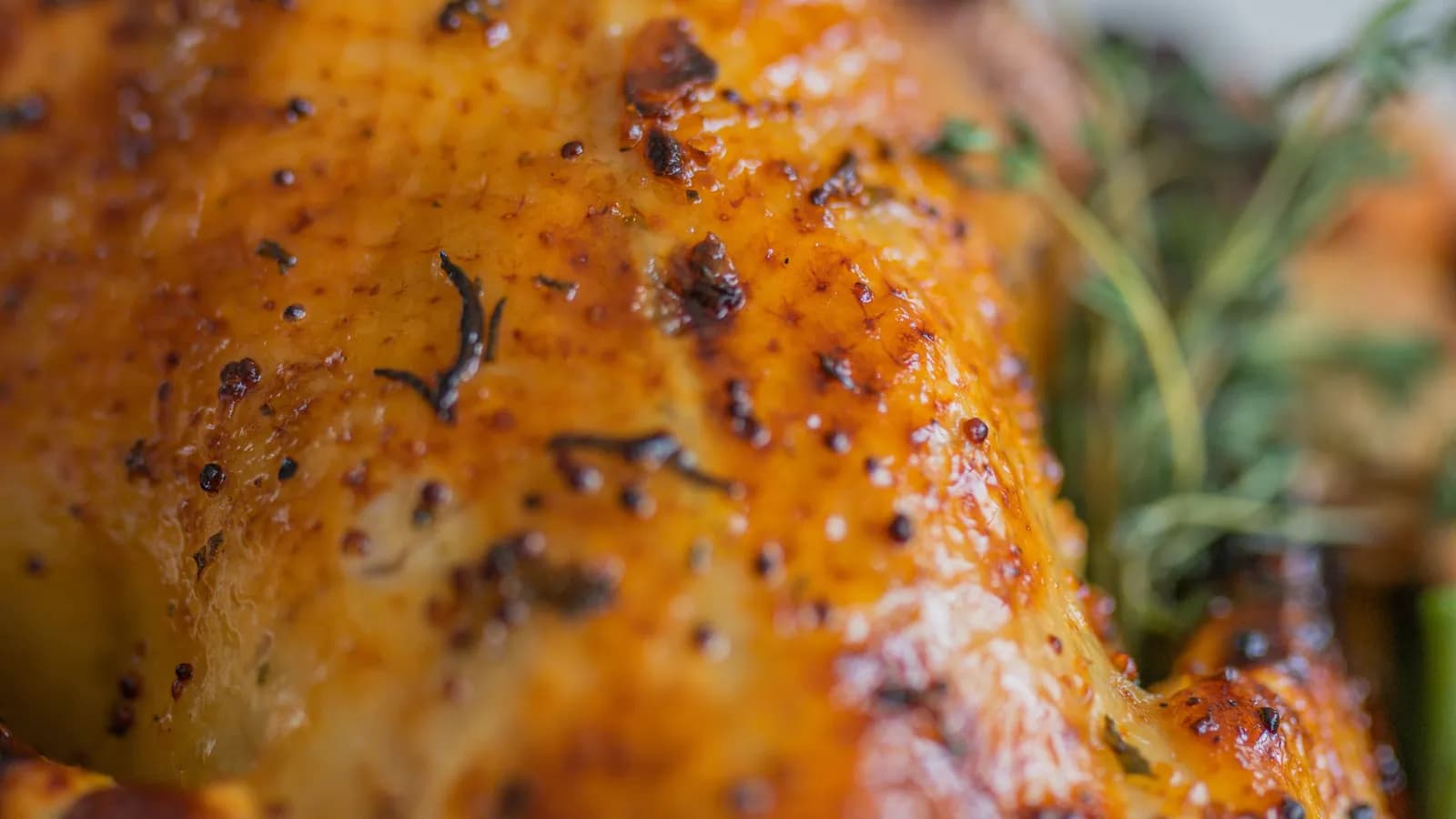
A whole free-range chicken, lemon, garlic, thyme and potatoes in an enamelled cocotte: covered to keep it juicy and uncovered at the end to colour the skin, with the kamado set up for indirect heat.
Quick answer
With the deflector in and the chamber at 200 °C, roast the 1.4-1.5 kg chicken on the potatoes in the covered cocotte for about 50 minutes. Uncover, raise to 210-220 °C and continue 20-30 minutes until the skin is golden and the thigh reads 74 °C. Rest 15 minutes.
One big step at a time, screen kept on and built-in timers.
- Prep
- 30 min
- Cook
- 100 min
- Servings
- 4 servings
- Temperature
- 200 °C
What time do you want to eat?
Pick a time and we'll tell you when to start.
11:10
Start the prep
11:40
Light the kamado
12:10
Onto the kamado
14:00
Serve
Estimate: it includes lighting and settling the kamado plus a margin for large cuts. If the recipe asks you to marinate or salt ahead, add that time.
Fire setupIndirect
- Dome
- 200 °C
- Deflector
- Yes
- Grate
- Standard height
- Bottom vent
- A crack
- Top vent
- Half open
- Fuel
- Quebracho lump charcoal, full firebox
- Setup
- 24 cm enamelled cast-iron cocotte
Ingredients
- free-range whole chicken, 1.4-1.5 kg, at room temperature1
- waxy potatoes, in large quarters600 g
- lemons: one in thick slices, the other zested and halved for the cavity2
- head of garlic, halved crosswise1
- sprigs of fresh thyme8 sprigs
- soft butter40 g
- extra virgin olive oil2 tbsp
- fine salt, divided between the chicken and the potatoes15 g
- freshly ground black pepperto taste
- dry white wine or water, for the base of the pot100 ml
Allergens
- Milk
- Sulphites
Using water instead of white wine avoids sulphites.
Based on the recipe's ingredients. Always check the label of every product you buy.
The gear for this recipe
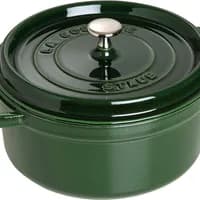 Staub round cocotte: 24 cm enamelled cast iron casseroleThis is the pot where the chicken cooks covered, in its own steam, before moving to the uncovered stage. The 24 cm, 3.8-litre Staub is enamelled cast iron with an iron lid too, and according to its listing measures about 30 cm with handles and about 15 cm tall with the lid; the metal knob withstands up to 250 °C. It weighs about 4.6 kg and fits a 1.4-1.5 kg chicken with potatoes around it snugly. The real drawback: at 4.6 kg it is awkward to handle loaded and hot, and with a bigger bird the lid will not close properly.
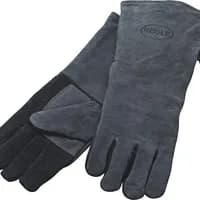 Rösle leather barbecue gloves: long, one sizeThe cocotte goes in and out of the kamado at about 200 °C, with handles and lid at that same temperature, and the kamado is opened several times with burping. The Rösle gloves are leather with a cotton and polyester lining and measure about 41.5 cm long, so they protect hand and forearm when moving the lid and lifting out a pot of over 4 kg with the chicken inside. Honest drawback: the listing gives no maximum temperature and they cannot be washed, so they are not for holding hot iron longer than necessary.
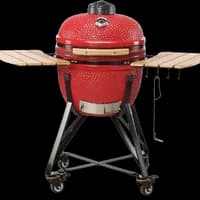 Kamado Bono Media 51 cmThe recipe needs a kamado that holds 200 °C for over an hour and rises to 210-220 °C once uncovered. The Kamado Bono Media is the 51 cm model in the range and is sold as a bundle with the deflector included, exactly the piece this indirect cook requires; the cocotte, about 30 cm with handles, sits centred with room to spare. Drawback: with the deflector between the coals and the grate, the chamber is slow to respond to the vents, so stabilise it before putting the pot in.
 Jealous Devil 100% White Quebracho lump charcoal 15.8 kgThat is almost two hours of fire at 200-220 °C with no refuelling, on a bed of coals that has to stay steady. Jealous Devil is quebracho blanco charcoal, a very dense wood; its listing mentions large pieces, little ash (around 3 %) and a neutral aroma that does not mask the lemon or thyme. A full firebox at the start is plenty for the whole recipe, and whatever has not burned goes out when you close the vents. Drawback: it burns hotter than supermarket charcoal, so start closing the vents before you reach 200 °C to avoid overshooting.
Method
- 01
Dry and salt the chicken
Take the chicken out of the fridge 40 minutes ahead. Dry it very thoroughly with paper, inside and out, and salt the whole surface and the cavity. If it has been sitting uncovered in the fridge since the day before, just pat the skin dry again. Mix the butter with the zest of one lemon and a little pepper.
- 02
Stuff, rub and tie
Put half a lemon, half the head of garlic and half the thyme in the cavity. With your fingers, loosen the skin over the breast a little and spread part of the butter underneath; the rest goes on the outside. Tie the legs with kitchen string and tuck the wing tips under the body so they do not burn.
- 03
Prepare the cocotte
In the enamelled cocotte toss the potatoes with the oil, a pinch of salt, the rest of the garlic and thyme and the slices of the other lemon. Pour in the wine or water. Set the chicken on top, breast up. Do not heat the pot empty: the enamel does better when the heat arrives with food inside.
- 04
Light with the deflector
Fill the firebox with Jealous Devil, light it and set the deflector with the grate above it. Bring the kamado to 200 °C with the bottom vent open about two fingers and the top vent half open, and let it settle for about 15 minutes. Adjust gradually: the ceramic is slow to respond and it is easy to overshoot.
- 05
Roast covered
With the Rösle gloves on, open with burping (5 cm, about 5 seconds, face turned away), set the covered cocotte in the centre and close. Roast about 50 minutes, holding 190-200 °C. Avoid opening earlier: every opening drops the temperature and takes time to recover.
- 06
Check and uncover
Open with burping and gloves, lift the pot lid away from you and measure at the thickest part of the thigh without touching the bone: it should read about 70 °C. Open the vents further to raise the chamber to 210-220 °C. If a lot of liquid remains, let it reduce; if the base dries out, add a splash of water.
- 07
Crisp the skin
Leave the pot uncovered for 20-30 minutes, watching the colour from minute 15. The skin should be golden and the thigh should read 74 °C; check the breast as well. If one area colours too quickly, turn the pot a quarter turn. The potatoes must be tender inside.
- 08
Rest and serve
Lift the cocotte out with the gloves and both hands: the handles are at chamber temperature. Close the kamado vents to put the coals out. Rest the chicken for 15 minutes on a board, loosely tented with foil. Carve and serve with the potatoes, the roasted lemon and the pot juices with a little thyme.
About this recipe
Roast chicken in a cocotte is the Sunday dish of half of Europe: a whole bird, lemon, garlic, thyme and a few potatoes that cook in the juices. It works in a home oven; it works better in a kamado, because the ceramic holds an even temperature for well over an hour and the closed cocotte turns the first half of the cook into something close to a steam roast. The result is meat that is juicy to the bone and potatoes that soak up chicken fat, lemon and thyme. The skin, which does not brown under a lid, is sorted out in the second half: take the lid off and the dry heat of the chamber leaves it golden and taut.
Why covered first, then uncovered
With the lid on, the cocotte traps the moisture from the bird, the lemon and the potatoes and returns it to the pot. That humid atmosphere cooks the breast gently without drying it out and stops the base from burning. The price is pale, soft skin. That is why the recipe has two stages: about 50 minutes covered with the chamber near 200 °C, until the thigh is around 70 °C, then 20-30 minutes uncovered, raising the chamber to about 210-220 °C, until the skin colours and the internal temperature in the thickest part of the thigh reaches 74 °C. That is the food-safety reference for poultry, and it is better measured in two places than judged by colour or by clear juices.
Indirect heat and a heavy cocotte
The cocotte sits on the deflector, not over the coals: the ceramic and the enamelled iron receive heat that has already been spread out, and the base of the potatoes does not char. The difference between cooking over the coals and above a deflector is explained in the guide to direct versus indirect cooking, and for general handling of cast iron and pots in the kamado it is worth reading the cast iron and dutch oven guide. A Staub 24 cm, 3.8-litre cocotte is a snug size for a 1.4-1.5 kg chicken with potatoes around it; per its listing it measures about 30 cm with handles and about 15 cm tall with the lid, so it clears the dome of a medium kamado easily. With a bigger bird the lid will not seat properly and the recipe gets thrown off: a smaller chicken is better than forcing it.
The chicken: free-range, dry and salted ahead
A free-range chicken (pollo de corral or campero) has more flavour and more fat in the skin than an industrial one, and stands up better to prolonged heat. What changes the result most is the preparation: take it out of the fridge at least 40 minutes beforehand, dry it thoroughly with paper, salt it inside and out and, if there is time, leave it uncovered in the fridge for a few hours or overnight so the skin dries. Fill the cavity with half a lemon, garlic and sprigs of thyme, and rub the skin with soft butter mixed with lemon zest. The other half of the lemon goes in with the potatoes. Tying the legs with kitchen string gives a compact shape that fits the pot and cooks more evenly.
Safety and handling when you open up
The cocotte comes out of a chamber at nearly 200 °C: handles, lid and knob will burn, and the metal knob of the Staub is rated heat-resistant to 250 °C, a comfortable margin for a recipe that never goes above 220 °C. Use long leather gloves, such as the Rösle, and always open the kamado by burping the lid: raise it about 5 cm, wait a few seconds, then open fully with your face turned away, so that a rush of air does not set off a flare-up. The potatoes will not necessarily brown, but they must be tender when pierced: if not, return them to the base and leave uncovered a few minutes longer. For another whole bird in the kamado, with no pot, see the spatchcock chicken.
In 30 seconds
A 1.4-1.5 kg free-range chicken, dried and salted, with lemon, garlic and thyme inside, on potatoes in an enamelled cast-iron cocotte. Indirect kamado with deflector at about 200 °C: 50 minutes covered, then 20-30 minutes uncovered at 210-220 °C, until the thigh reads 74 °C. Rest 15 minutes loosely tented with foil and serve with the juices from the pot.
Will it fit your kamado?
Small
33-40 cm · Joe Jr, MiniMax
Tight
The 24 cm cocotte with handles probably just fits; check the kamado lid closes.
Medium
46-51 cm · Classic, Large
Fits
The cocotte fits easily in the centre, clear of the ceramic.
Large
56-61 cm · Big Joe, XL
Fits
Room to spare: a second cocotte for another chicken could go in.
What to serve with it
Sides
- Grilled wild asparagus
- Green salad with lettuce and spring onion
- Wine
- Barrel-aged white Rioja or Godello from Valdeorras
- Beer
- Wheat beer or mild lager
- Alcohol-free
- Iced lemon and thyme tea
Leftovers and storage
- In the fridge
- Off the bone and airtight, into the fridge within 2 h: 3-4 days, potatoes kept separately.
- Freezing
- Boned meat freezes well for 2-3 months; the potatoes do not, they turn mealy.
- Reheating
- Oven at 160 °C, covered with a little stock, until piping hot in the centre (74 °C).
- Using them up
- Chicken croquettes, or shredded into a salad or a sandwich with aioli.
Cool and refrigerate within 2 hours. When in doubt, throw it out.
Editor's tips
- Always measure the temperature in both thigh and breast: poultry is ready at 74 °C. The reference for each cut is in the temperature and time chart.
- If the skin will not brown, pat it dry with paper before uncovering and raise the chamber by about 10 °C instead of extending the time: more time at the same temperature only dries out the breast.
- Cut the potatoes into large pieces of similar size; small ones fall apart in the juices and very large ones stay hard inside.
- The pot juice is the sauce. Spoon off the fat, scrape up the base with the thyme and squeeze in a little roasted lemon to lighten it.
Gear for this recipe
As an Amazon Associate, mikamado.es earns from qualifying purchases. At no extra cost to you.
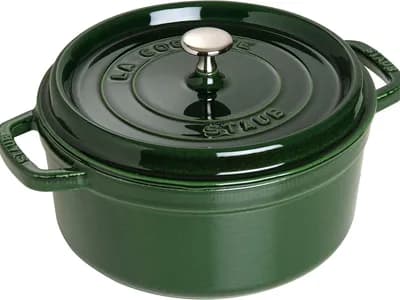
Staub round cocotte: 24 cm enamelled cast iron casserole
This is the pot where the chicken cooks covered, in its own steam, before moving to the uncovered stage. The 24 cm, 3.8-litre Staub is enamelled cast iron with an iron lid too, and according to its listing measures about 30 cm with handles and about 15 cm tall with the lid; the metal knob withstands up to 250 °C. It weighs about 4.6 kg and fits a 1.4-1.5 kg chicken with potatoes around it snugly. The real drawback: at 4.6 kg it is awkward to handle loaded and hot, and with a bigger bird the lid will not close properly.
€234
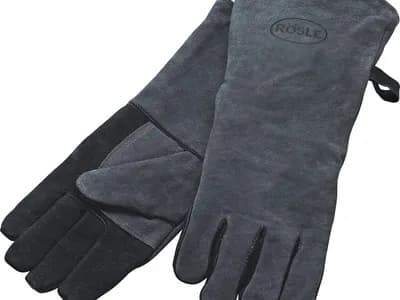
Rösle leather barbecue gloves: long, one size
The cocotte goes in and out of the kamado at about 200 °C, with handles and lid at that same temperature, and the kamado is opened several times with burping. The Rösle gloves are leather with a cotton and polyester lining and measure about 41.5 cm long, so they protect hand and forearm when moving the lid and lifting out a pot of over 4 kg with the chicken inside. Honest drawback: the listing gives no maximum temperature and they cannot be washed, so they are not for holding hot iron longer than necessary.
€22
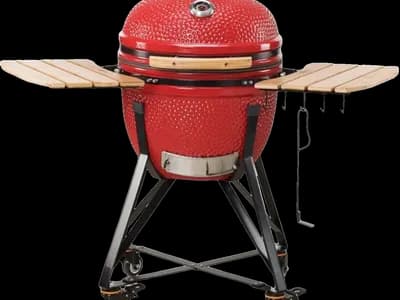
Kamado Bono Media 51 cm
The recipe needs a kamado that holds 200 °C for over an hour and rises to 210-220 °C once uncovered. The Kamado Bono Media is the 51 cm model in the range and is sold as a bundle with the deflector included, exactly the piece this indirect cook requires; the cocotte, about 30 cm with handles, sits centred with room to spare. Drawback: with the deflector between the coals and the grate, the chamber is slow to respond to the vents, so stabilise it before putting the pot in.
€785

Jealous Devil 100% White Quebracho lump charcoal 15.8 kg
That is almost two hours of fire at 200-220 °C with no refuelling, on a bed of coals that has to stay steady. Jealous Devil is quebracho blanco charcoal, a very dense wood; its listing mentions large pieces, little ash (around 3 %) and a neutral aroma that does not mask the lemon or thyme. A full firebox at the start is plenty for the whole recipe, and whatever has not burned goes out when you close the vents. Drawback: it burns hotter than supermarket charcoal, so start closing the vents before you reach 200 °C to avoid overshooting.
€234
Have you made it?
Tell us how it turned out on your kamado. We review every rating before publishing it.
No published ratings yet. Be the first!
FAQ
Can it be made without an enamelled cast-iron cocotte?
Yes. Any pot or casserole with a lid that withstands about 220 °C and fits in the kamado will do: uncoated cast iron, enamelled steel or a lidded earthenware dish. With earthenware, avoid sudden temperature changes. If the pot is lighter, watch the potatoes at the base, which cook faster.
What if the kamado is small?
The 24 cm cocotte measures about 30 cm with handles, which calls for a grate of at least 35-38 cm and clear height under the dome. In a kamado with a 33 cm grate, use a smaller pot with a 1-1.2 kg chicken, or cook pieces (thighs and drumsticks) instead of the whole bird.
How do I know it is done without a probe?
Without a thermometer it is a gamble: clear juices and legs that move loosely help, but they do not replace measurement. An instant-read thermometer is the only way to be sure of 74 °C in the thickest part of the thigh without overcooking the breast.
Can I use other herbs or citrus?
Yes. Rosemary, sage or bay go well with chicken; orange or lime replace the lemon with a sweeter profile. Rosemary is stronger than thyme, so use less. Avoid delicate herbs such as parsley or coriander during cooking: they burn, so add them at serving.
How do I store leftovers?
Let it cool and keep it in the fridge in a closed container for up to two days. Take the meat off the bone, which cools faster. Reheat until piping hot throughout and discard anything left at room temperature for more than two hours.
More kamado recipes
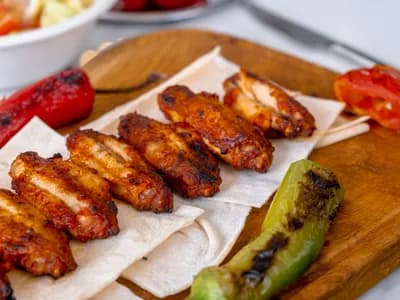
Crispy chicken wings on the kamado with honey and Pimentón de la Vera (crackling skin, no frying)
Glass-crisp skin without a fryer: dry brine with baking soda, indirect at 200°C with apple smoke and a final sear. Honey and Pimentón de la Vera glaze. Serves 4.
Chicken Gyros on the Rotisserie in a Kamado
A block of chicken thighs marinated in yoghurt, lemon and oregano, turning on the kamado's rotisserie at 180 °C: shave thin slices as the outer face browns, send the block back to the fire, repeat.

Tandoori Chicken Thighs on the Kamado
Yogurt, garam masala and live fire: tandoori chicken thighs on the kamado come out juicy inside and lacquered with spice outside, with a cool cucumber raita to cut the heat.
KEEP READING
Go deeper on this dish
- Recommended kamado
Kamado Bono Media 51 cm
The recipe needs a kamado that holds 200 °C for over an hour and rises to 210-220 °C once uncovered. The Kamado Bono Media is the 51 cm model in the range and is sold as a bundle with the deflector included, exactly the piece this indirect cook requires; the cocotte, about 30 cm with handles, sits centred with room to spare. Drawback: with the deflector between the coals and the grate, the chamber is slow to respond to the vents, so stabilise it before putting the pot in.
- Editorial guide
How to light a kamado: the step-by-step method
No petrol, no weird tablets and no 45-minute waits. The cone method, airflow control and the mistakes that prevent 80% of the frustration.
- Glossary term
Heat deflector
Ceramic plate placed between the coals and the grate to turn direct fire into indirect cooking.
- Related comparison
big green egg large vs kamado joe classic iii
The classic kamado matchup: the Big Green Egg Large, the indestructible pioneer with the widest accessory network, agai…