Recipe · Direct · Easy
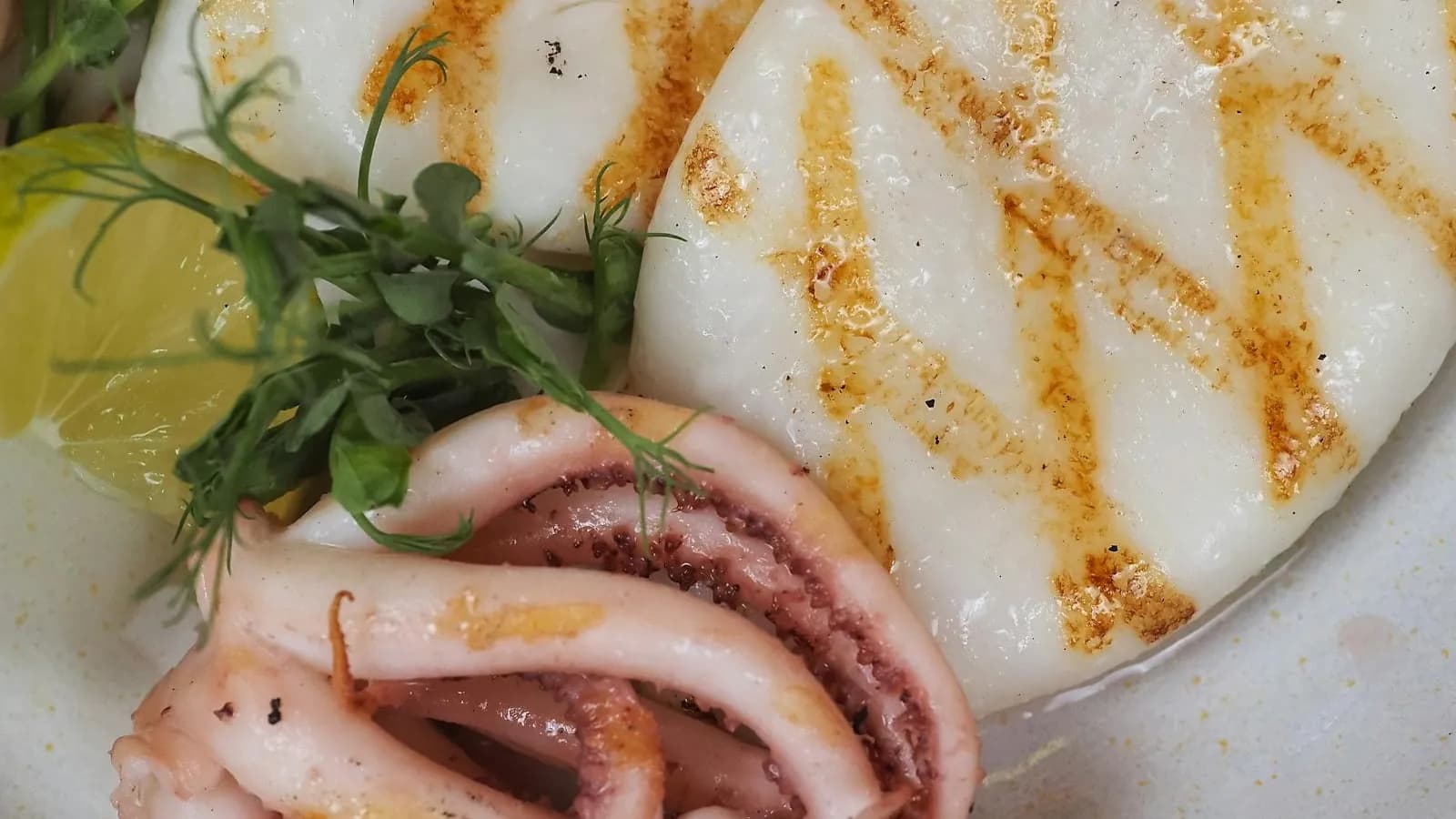
Griddled cuttlefish on the kamado with black garlic alioli
Fresh cuttlefish butterflied open, seared on a 260°C cast-iron griddle until golden, finished with garlic, parsley and a dark black-garlic alioli. Eight minutes of cooking, zero mystery.
Quick answer
Cuttlefish is butterflied open and seared on an iron griddle at 260 °C direct: 3-4 minutes on the inner face and 2-3 on the outer, about 8 minutes total. Finish it with garlic, parsley and a black-garlic aioli. Don't use a probe: with a thin cut, time and touch rule; it's ready when it turns from translucent to opaque.
- Prep
- 20 min
- Cook
- 8 min
- Servings
- 4 servings
- Temperature
- 260 °C
Ingredients
- large fresh cuttlefish (about 600-700 g each, cleaned)2 ud
- extra-virgin olive oil (half for the griddle, half for the alioli)4 cda
- fresh white garlic cloves (for the garlic-parsley mince)3 dientes
- fresh parsley, leaves only, finely chopped1 manojo
- fermented black garlic cloves (for the alioli)5 dientes
- mild olive oil to build the alioli (arbequina or a low-bitterness EVOO)120 ml
- freshly squeezed lemon juice (for the alioli)1 cdita
- flaky sea salt, Maldon-style (to finish)1 pizca
- lemon, cut into wedges (to serve)1 ud
Method
- 01
Butterfly and dry the cuttlefish
If you buy it whole, remove the cuttlebone, the guts and the dark skin, and butterfly it open along the inside face. If it comes cleaned, just open it. Dry it thoroughly with paper on both faces: surface water is the enemy of browning. Hold it uncovered in the fridge while you light the kamado.
- 02
Build the black garlic alioli
Pound the 5 black garlic cloves in a mortar with a pinch of salt to a smooth paste. Add the mild oil in the thinnest stream, working in circles without stopping: the black garlic's starch emulsifies the oil with no egg. When it thickens, adjust with the lemon juice. If it splits, restart with half a spoon of paste and stream again.
- 03
Light the kamado and heat the griddle
Light for direct heat, no deflector, vents open. Set the cast-iron griddle on the grate once the dome clears 220°C and leave it 8-10 minutes: we want the surface at 260°C, not the dome. With an infrared gun, point at the centre of the griddle; it should clear 250°C before the cuttlefish goes on.
- 04
Sear the inside face
Brush the cuttlefish with a thin film of EVOO (not the griddle, so it won't smoke). Lay it inside-face down and don't touch it for 3-4 minutes: it will curl slightly, that's normal. Press gently with the spatula for the first 20 seconds to force contact and an even sear. You'll watch the edge turn from translucent to opaque white.
- 05
Flip and finish with garlic and parsley
Flip with the spatula and cook the outside face 2-3 minutes. In the last minute scatter the white garlic and parsley mince on top; at 260°C the garlic golds in seconds, so keep it moving so it doesn't burn. The cuttlefish is done when the flesh has turned from translucent to opaque white and gives to pressure with a firm spring-back. Don't chase a probe number: with a piece this thin over high heat, time and touch are what matter.
- 06
Rest and serve
Move the cuttlefish to a board and let it rest 2 minutes: the juices set and the fibre relaxes. Slice into wide strips on the bias, flaky salt on top, a lemon wedge alongside and the black garlic alioli in a separate bowl for dipping. Serve hot; griddled cuttlefish loses its charm lukewarm.
About this recipe
Griddled cuttlefish on the kamado is cooked direct, hot and fast: a cast-iron griddle over live coals, surface around 260°C, the cuttlefish butterflied open and laid inside-face down first. Three or four minutes a side, not one more. What separates tender, golden cuttlefish from sad rubber isn't a secret marinade: it's the griddle temperature and not moving the piece too soon.
Why the cast-iron griddle and not the grate
Cuttlefish releases water. A lot of it. On the open grate that water drips onto the coals, steam rises and the piece poaches instead of browning: you end up with pale, leathery cuttlefish. A cast-iron griddle holds that water, flashes it off against the metal and lets the piece sear by contact. That's why we want thermal mass: a heavy griddle doesn't crash in temperature when the cold cuttlefish hits it. In the kamado, with the ceramic radiating heat back, the griddle reaches a true 260°C and stays there. If you have an infrared thermometer, point it at the surface before you start: below 230°C it won't mark, above 280°C it'll scorch the garlic at the end.
The black garlic alioli, eggless and drama-free
Black garlic is garlic fermented under heat and humidity for weeks: sweet, balsamic, with notes of liquorice and prune. Here it builds an alioli emulsified with olive oil and the garlic's own starch alone —no egg—, pounded in a mortar until it binds. It's the sauce that suits cuttlefish best: its deep sweetness balances the bitterness of the iron sear and the seafood's iodine note. I let it rest while I light the kamado in Torrevieja; by the time the cuttlefish comes off the griddle, the sauce is ready.
In 30 seconds
Fresh cuttlefish butterflied open, dried and oiled. Cast-iron griddle at 260°C, direct, no deflector. Inside-face down 3-4 min untouched, flip 2-3 min. Garlic and parsley mince in the last minute. Rest 2 min. Serve with eggless black garlic alioli. 4 servings, 8 min on the griddle, easy.
Editor's tips
- Don't salt the cuttlefish before searing: salt draws out water and steals your browning. Season with flaky salt right at serving, over the crust you've already built.
- If you only have small cuttlefish, don't butterfly them: griddle them whole but drop to 2 minutes a side. The thinner the piece, the less time and the higher the risk of overcooking.
- The black garlic alioli is better made 1-2 hours ahead: it rests, the flavours settle and it binds even tighter. Cover it at room temperature, not in the fridge, or it'll stiffen.
Gear for this recipe
As an Amazon Associate, mikamado.es earns from qualifying purchases. At no extra cost to you.
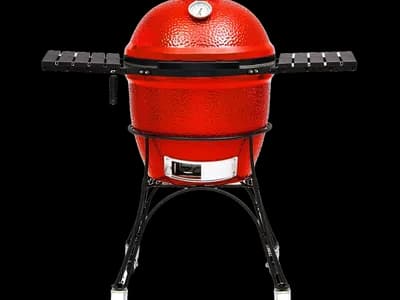
Kamado Joe Classic II 18"
Classic II tamano ideal para una plancha de hierro al directo a 260 C para 4.
€1,399
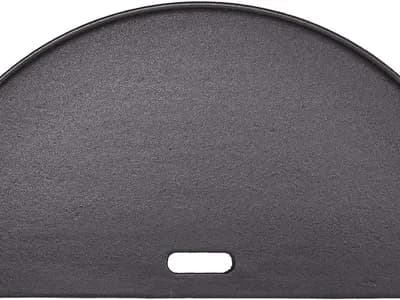
Kamado Joe Half Moon Reversible Cast Iron Griddle (Classic)
Plancha reversible de hierro para marcar la sepia en libro y dorarla a 260 C.
€66
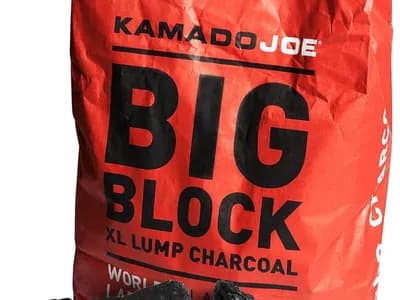
Kamado Joe Big Block XL lump charcoal 9.1 kg
Lump que alcanza rapido los 260 C de plancha al rojo.
€67
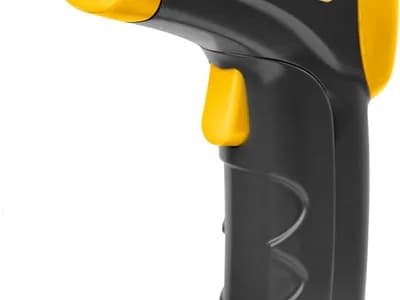
Ooni Digital Infrared Pizza Oven Thermometer
Confirmar que la plancha esta a 260 C antes de echar la sepia.
€29
FAQ
How do I clean and butterfly the cuttlefish before griddling?
Pull the head to draw out the guts and the whole ink sac (save it if you fancy a black rice). Remove the internal white cuttlebone and peel off the dark skin from one end. Cut away the eyes and the central beak. Open the body in a butterfly with one lengthwise cut and flatten it. Ask for it pre-cleaned at the fishmonger if you're in a hurry: you save time and mess.
Why does cuttlefish shrink and how do I keep it tender?
It shrinks because the cephalopod's muscle fibre contracts with heat and expels water. You can't fully avoid it, but you control it with two things: high, fast heat (3-4 minutes a side, not ten) and not salting it beforehand. With cephalopods, don't chase a target internal temperature the way you would with fish: their tenderness comes from cooking them fast and very hot, not from hitting a low probe reading. Go by time and by colour, from translucent to opaque. The classic mistake is cooking it low and long, which is exactly the opposite of what it wants.
Cast-iron griddle or open grate for cuttlefish on the kamado?
Cast-iron griddle, no question. Cuttlefish releases water and on the open grate that water drips onto the coals, makes steam and poaches the piece instead of browning it: it comes out pale and leathery. A cast-iron griddle flashes the water off against the metal and sears by contact, giving that sweet edge-to-edge gold. It also catches the garlic and parsley at the end without it falling through the bars. The grate only wins if you're doing very small whole cuttlefish and want a smokier flavour.
How long per side over high heat?
With the griddle at 260°C, for a large butterflied cuttlefish: 3-4 minutes on the inside face (the one you lay down first) and 2-3 minutes on the outside face. About 8 minutes total. The inside face needs a touch more because that's where most of the water flashes off. If the piece is thinner or you use small whole cuttlefish, drop to 2 minutes a side. Go by time and feel, not a probe: a piece this thin gives you no reliable internal temperature to read. It's done when it gives but springs back and has turned from translucent to opaque.
How do I make a black garlic alioli that binds without egg?
The key is the mortar and patience. Pound the black garlic with a pinch of salt to a smooth paste; its fermented pulp brings starch and mucilage that emulsify the oil just as an egg yolk would. Add the EVOO in the thinnest stream, almost drop by drop at first, always pounding in the same direction. Use a mild oil (arbequina), not a very bitter one, or it'll overpower the garlic. If it splits, don't bin it: restart in a clean mortar with half a spoon of paste and fold the split oil back in gradually.
More kamado recipes
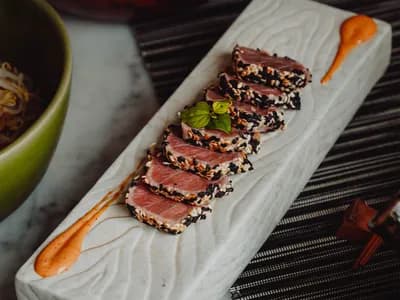
Sesame-Crusted Seared Bluefin Tuna on the Kamado (Tataki)
A bluefin tuna loin rolled in sesame and seared 30-45 seconds per side over a screaming-hot kamado: a toasted crust outside, a raw, juicy core, and a soy, ginger and lime sauce that wakes it all up.
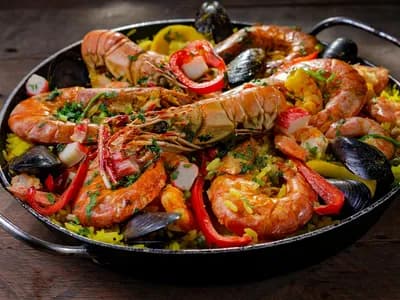
Arroz a banda on the kamado, fisherman's socarrat
Alicante-style arroz a banda in a paella pan over the kamado grate: a rockfish fumet, a long sofrito and a textbook final socarrat.
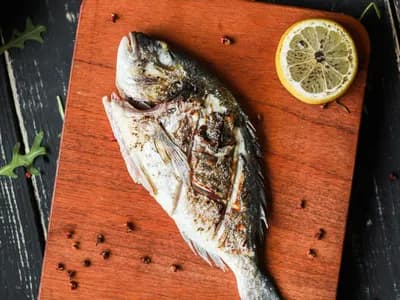
Butterflied sea bream on the kamado, with garlic, chilli and lemon refrito
Sea bream butterflied open over direct coals, skin down first, finished with a hot garlic, chilli and lemon refrito. Mediterranean fish off Torrevieja, ready in 18 minutes. Serves 2.
KEEP READING
Go deeper on this dish
- Recommended kamado
Kamado Joe Classic II 18"
Classic II tamano ideal para una plancha de hierro al directo a 260 C para 4.
- Editorial guide
How to light a kamado: the step-by-step method
No petrol, no weird tablets and no 45-minute waits. The cone method, airflow control and the mistakes that prevent 80% of the frustration.
- Glossary term
Heat deflector
Ceramic plate placed between the coals and the grate to turn direct fire into indirect cooking.
- Related comparison
kamado joe classic ii vs kamado joe classic iii
The most-asked question on r/kamadojoe: do I pay the Classic III premium for the SlōRoller, or stick with the Classic I…