Recipe · Smoked · Medium
Cold-Smoked Cheese on the Kamado with a Pellet Tube, No Charcoal Lit
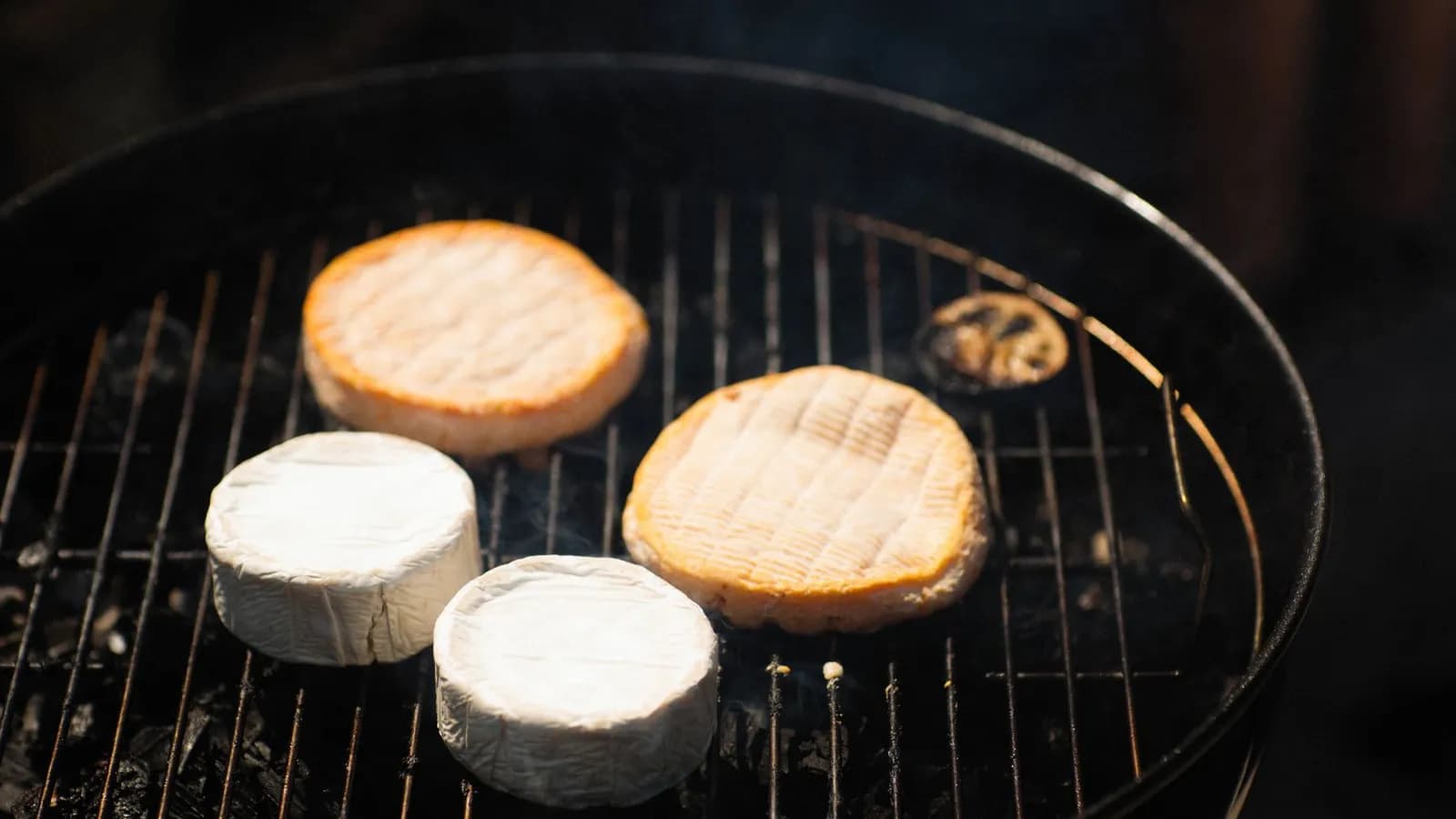
A closed kamado, cold and without a single charcoal ember: just a tube of apple pellets smouldering without flame and three cheeses taking on smoke for hours while the dome stays below 25 °C.
Quick answer
Fill the Naisfei tube with apple pellets, light it with the torch, let it flame for 10 minutes and blow the flame out. Put it in the unlit kamado, with the cheese on a clean grate or on baking paper, and smoke for 2-3 hours with the chamber below 25 °C, measured with a probe. Wrap the cheese and leave it to rest in the fridge for several days.
- Prep
- 30 min
- Cook
- 180 min
- Servings
- 8 servings
- Temperature
- 20 °C
Ingredients
- semi-cured manchego, in a wedge about 3 cm thick400 g
- young gouda in a block, wax coating removed (if it has one)400 g
- block mozzarella (the pizza kind, not fresh mozzarella in brine)300 g
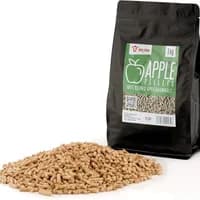
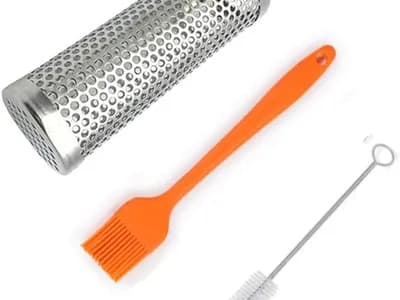
- tube filled to the top with 100% apple pellets, 6 mm, dry1 ud
- sheet of baking paper, if the grate has traces of grease1 ud
- roll of cling film or waxed paper, for wrapping1 ud
- country loaf (pan de pueblo or hogaza), to serve1 ud
- membrillo (quince paste)150 g
- shelled walnuts100 g
- rosemary honey2 cda
Method
- 01
Pick the morning and measure
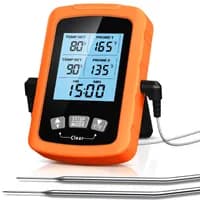
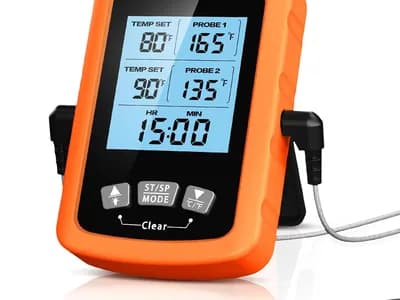
This recipe starts with a thermometer, not a fire. Lay one of the CIRYCASE's two probes on the grate of the closed kamado as an ambient probe and wait five minutes: if it reads below 20 °C, you have room; between 20 and 25 °C it can be done, with an eye on it; above 25 °C, it is not the day. On the Costa Blanca that means mornings in autumn, winter or early spring, and first thing. Set the thermometer's timer to 30 minutes.
- 02
Dry the cheese
Take the cheeses out of the fridge 30-60 minutes ahead and leave them uncovered on a kitchen rack somewhere cool. A cold cheese put into a smoky chamber condenses water on its surface, and that damp film traps smoke unevenly and bitterly. Cut the gouda and the mozzarella into blocks 3-4 cm thick; leave the manchego as a wedge but strip its rind if it is paraffin or plastic-coated, since it neither takes smoke nor gets eaten. Pat everything dry with kitchen paper just before it goes in.
- 03
Prepare the chamber, no charcoal
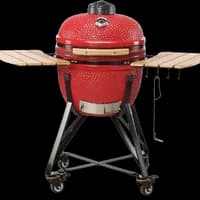
Clear the ash from the basket and leave the charcoal grate empty: not a single briquette goes into this recipe. Fit the clean cooking grate; if it still holds grease from a previous cook, put a piece of baking paper the size of each cheese under it, without covering the whole grate, which would cut off the smoke from below. Open the Kamado Bono's bottom vent a centimetre and the top one halfway: with no fire, that small draught is enough for the smoke to circulate rather than stagnate.
- 04
Load and light the tube
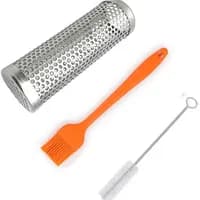
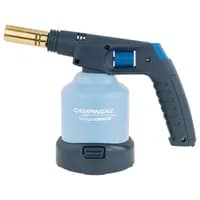
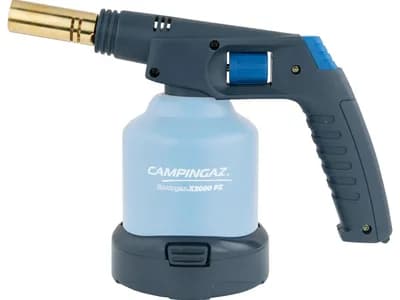
Fill the Naisfei tube to the top with the apple pellets and tap it a few times so they settle. Aim the Campingaz torch at the open end for 45-60 seconds, until the first pellets burn with a live flame. Stand the tube upright on a non-flammable surface, outside the kamado, and let it flame for 10 minutes: the ember needs that time to bed in so it does not go out once it is inside the chamber.
- 05
Put the flame out before it goes in
Blow on the flame until it disappears and check that the end is left with a red ember and thin smoke, no fire. This step separates cold smoke from melted cheese: a tube with a flame inside the ceramic is a real heat source, and the ceramic holds that heat. Pick it up with a glove or tongs and lay it on the empty charcoal grate at the bottom, off to one side and away from the cheese. Close the dome and check that smoke leaves the top.
- 06
Place the cheese and close
Spread the cheeses over the clean grate with at least 3 cm between pieces, so the smoke washes every face, and leave the CIRYCASE ambient probe at cheese height without touching it. Close the dome. For the first 10 minutes the smoke should leave the top vent thin and bluish; if it comes out white and dense, open the bottom vent a little more to give the tube air and wait for it to clear.
- 07
Check every 30 minutes
Each time the timer goes, look at two things without opening up: the ambient probe reading and the colour of the smoke leaving the top. Above 25 °C, open the dome fully, let the chamber come back down to air temperature and close it again. If the smoke stops, take the tube out with a glove or tongs: refill it if the pellets have burnt through, relight it with the torch and repeat the flame step outside the kamado. At the one-hour mark, turn each piece over with clean hands.
- 08
Take them out in turn
The mozzarella comes out at 2 hours: it is the softest and the first to saturate. The gouda and the manchego hold for between 2 and a half and 3 hours, depending on how strong you want the result. Colour guides you as much as the clock: an even golden tone, no dark patches. Move the cheeses to a kitchen rack and leave them in the air, somewhere cool, for 1 hour, so the surface dries and loses its acrid edge.
- 09
Wrap and rest
Wrap each piece separately in cling film or waxed paper, pressed tight with no air pockets, label it with the date and put it in the fridge. The cheese needs several days of rest for the surface smoke to migrate inwards; opening it the same day only shows you the bitter layer. To serve, take it out 30 minutes ahead, slice it thinly and set it out with the bread, the membrillo, the walnuts and a thread of honey.
About this recipe
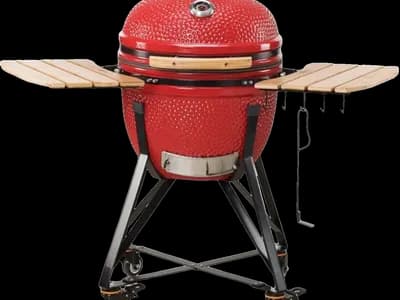
In every recipe on mikamado.es, the kamado gets lit. Not in this one. The closed ceramic of the Kamado Bono Media 51 works here as a sealed chamber that holds smoke, nothing more: the only fire in the whole process is a perforated tube packed with apple pellets from BBQ-Toro, smouldering without flame at the bottom, and the dome has to stay below 25 °C all morning. Above it, on a clean grate, a wedge of semi-cured manchego, a block of young gouda and a block mozzarella. Three different cheeses, so you can see how cold smoke gets into each one.
Cold smoke and hot smoke are two different processes
In the [hot-smoked mackerel](/recetas/caballa-ahumada-caliente-kamado) the smoke rides along with a cook: the charcoal heats the chamber to 90-100 °C and the fish cooks while it takes on flavour. In cold smoking there is no cooking. The cheese comes out as raw as it went in; the only thing that changes is its surface, where the phenols and aromatic compounds in the smoke settle. For that, the chamber has to be properly cold. Milk fat starts to soften well below the temperature at which a cheese melts: as soon as the chamber passes 30 °C, the block sweats beads of fat, loses its shape and the rind turns rubbery. That is why this recipe is made on cool mornings in autumn, winter or early spring, and why summer on the Costa Blanca is out except, with luck, in the small hours before dawn, and only if the probe agrees. One of the CIRYCASE's two probes, resting on the grate as an ambient probe, is what says yes or no: below 25 °C, go ahead; above, open the dome and wait.
The pellet tube: how to light it and how to read the smoke
The Naisfei tube is a 15 cm perforated stainless-steel cylinder that you fill with pellets and light at one end. The pellets burn slowly and in a chain, each one lighting the next, and give off smoke continuously; the heat they release is small, but it is real, which is why you measure it rather than assume it is nil. The Campingaz gas torch does the lighting in a minute: aim it at the open end until the pellets catch with a live flame, let them flame for about 10 minutes outside the kamado so the ember beds in, then blow the flame out. That last step is the one that decides the recipe. If the tube goes in with a flame, the chamber warms up and the cheese melts; if it goes in as a glowing ember, it only smokes. Good smoke looks thin, bluish and almost transparent. If it comes out white and dense, the pellets are damp or the tube is short of air; if it smells acrid or turns yellowish, that is creosote, and the [guide to bitter smoke](/guias/humo-amargo-creosota-humo-limpio-kamado) explains how to put it right. Apple is chosen for its gentleness: the [guide to smoking woods](/guias/maderas-para-ahumar-kamado) runs through which woods give mild smoke and which are too strong for a dairy product.
Why the cheese rests wrapped before you eat it
Straight out of the kamado, smoked cheese is a let-down: the surface holds all the smoke and tastes like an ashtray, while the inside has not noticed a thing. Wrapped in cling film or waxed paper and kept in the fridge, the smoke compounds migrate little by little from the rind inwards and the harshness of the surface evens out. This is not a measurement, it is the long-standing technique of anyone who smokes cheese: several days of rest before opening. A cheese tasted the same day tells you nothing about the result. Unlike the [smoked nachos](/recetas/nachos-ahumados-kamado), which are eaten straight away because the cheese melts under hot smoke, here patience is part of the recipe.
In 30 seconds
Kamado unlit, no charcoal. Naisfei tube packed with apple pellets, lit with the torch, 10 minutes of flame and the flame blown out before it goes in. Cheese on a clean grate, 2-3 hours of thin smoke with the chamber below 25 °C, measured with a probe. Wrap and rest for several days in the fridge before slicing.
Editor's tips
- Start with the young gouda if this is your first time: it is the easiest to find in any supermarket, the most forgiving in texture and the one that best shows the difference between 2 and 3 hours of smoke.
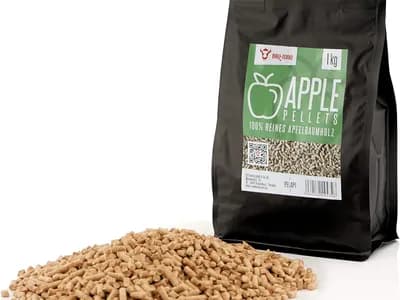
- Dry pellets or nothing: a pellet that has taken on moisture swells, burns badly and gives white smoke. Keep the BBQ-Toro bag sealed and indoors, not next to the kamado.
- Do not open the dome to have a look outside the 30-minute checks: every opening empties the chamber of smoke, and you have to wait for it to fill again before the cheese carries on taking flavour.
- Coarse salt on a tray or an already-cured salmon take the same tube and the same cold chamber; butter does too, but with the chamber below 20 °C and for less time, because it softens long before cheese does.
Gear for this recipe
As an Amazon Associate, mikamado.es earns from qualifying purchases. At no extra cost to you.
FAQ
Can you cold-smoke cheese in summer in Spain?
On the Mediterranean coast, not reliably. Cold smoking needs the kamado chamber to stay below 25 °C for 2-3 hours, and in summer the air only drops below that, if at all, in the hours before dawn. The ambient probe decides: if it reads over 25 °C before the cheese goes in, you wait for autumn. A tray of ice between the tube and the cheese, the usual workaround in warm air, buys a few degrees, but it does not make up for a 28 °C morning and adds condensation to watch.
Which cheeses can be cold-smoked?
Firm, pressed cheeses: semi-cured manchego, young gouda, cheddar, edam, block mozzarella for pizza. They sit for hours on a grate without losing their shape and have a rind or dry surface that picks up smoke evenly. Fresh, high-moisture cheeses (mozzarella in brine, burrata, requesón or curd cheese) weep whey and spoil; very mature cheeses already carry so much flavour of their own that the smoke barely registers.
How long should cheese be cold-smoked for?
Between 2 and 3 hours in thin, continuous smoke, depending on the cheese and your taste: mozzarella saturates sooner, manchego and gouda can take the extra hour. Beyond that the risk is a bitter surface, not a tastier cheese. The clock starts when the tube goes in without a flame and the smoke runs bluish; minutes of white, dense smoke do not count, and are fixed by giving the tube more air.
Why does smoked cheese taste bitter or like an ashtray?
For three reasons that pile up: white, dense smoke (damp pellets or a tube short of air), creosote deposited because the tube went in with a flame or the vents were shut, and tasting it the same day. The first two are fixed at lighting and with the vents, as the guide to bitter smoke explains. The third fixes itself: wrapped and in the fridge for several days, the rind spreads the smoke inwards and the harsh edge disappears.
Do you need to light the kamado's charcoal to smoke cheese?
No, and it is better not to. The pellet tube burns on its own and produces more than enough smoke for a 51 cm chamber; the kamado acts as a sealed vessel that holds it and passes it over the cheese. Any charcoal ember, however small, is an added heat source that the ceramic stores, and the margin up to 25 °C is far too narrow to allow it.
More kamado recipes
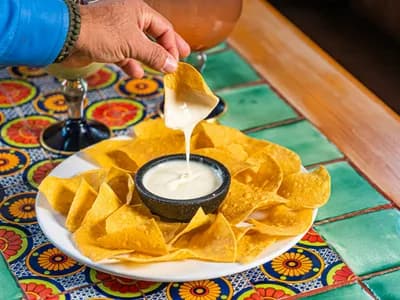
Smoked Loaded Nachos on the Kamado
The ultimate sharing starter: layers of tortilla chips, melted cheese, beans and jalapeños in a cast-iron pan, kissed by 10-12 minutes of gentle olive-wood smoke and topped with fresh pico de gallo.
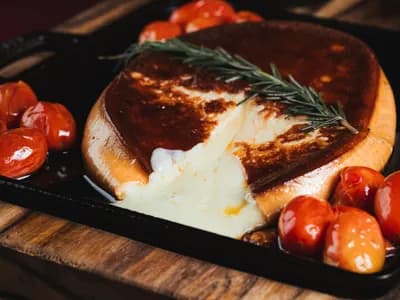
Grilled provolone on the kamado with tomato, oregano and olive oil, in a cast-iron skillet
Argentine-style provoleta over direct heat: a wheel of provolone in a cast-iron skillet at 230°C until you get a golden crust and a molten centre. Tomato, oregano, olive oil and bread. A starter in 12 minutes. Serves 4.
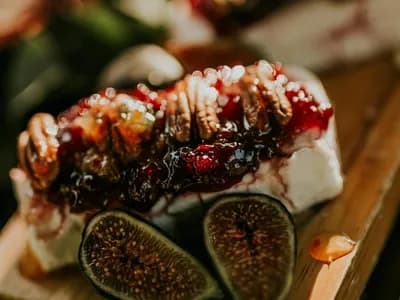
Kamado-roasted figs with goat cheese and honey
Figs scored into a cross, stuffed with melting goat cheese, glazed with honey and rosemary. Seven minutes over direct heat and you have the kamado's late-summer dessert.
KEEP READING
Go deeper on this dish
- Recommended kamado
Kamado Bono Media 51 cm
Mid-size ceramic with a 6-piece accessory set included
- Editorial guide
How to light a kamado: the step-by-step method
No petrol, no weird tablets and no 45-minute waits. The cone method, airflow control and the mistakes that prevent 80% of the frustration.
- Glossary term
Low & slow
Cooking at low temperature (95-130 °C) for many hours to tenderise tough cuts and develop deep smoke.
- Related comparison
big green egg large vs kamado joe classic iii
The classic kamado matchup: the Big Green Egg Large, the indestructible pioneer with the widest accessory network, agai…