Recipe · Indirect · Easy
Moscatel and Cinnamon Baked Apples on the Kamado, Stuffed with Walnuts
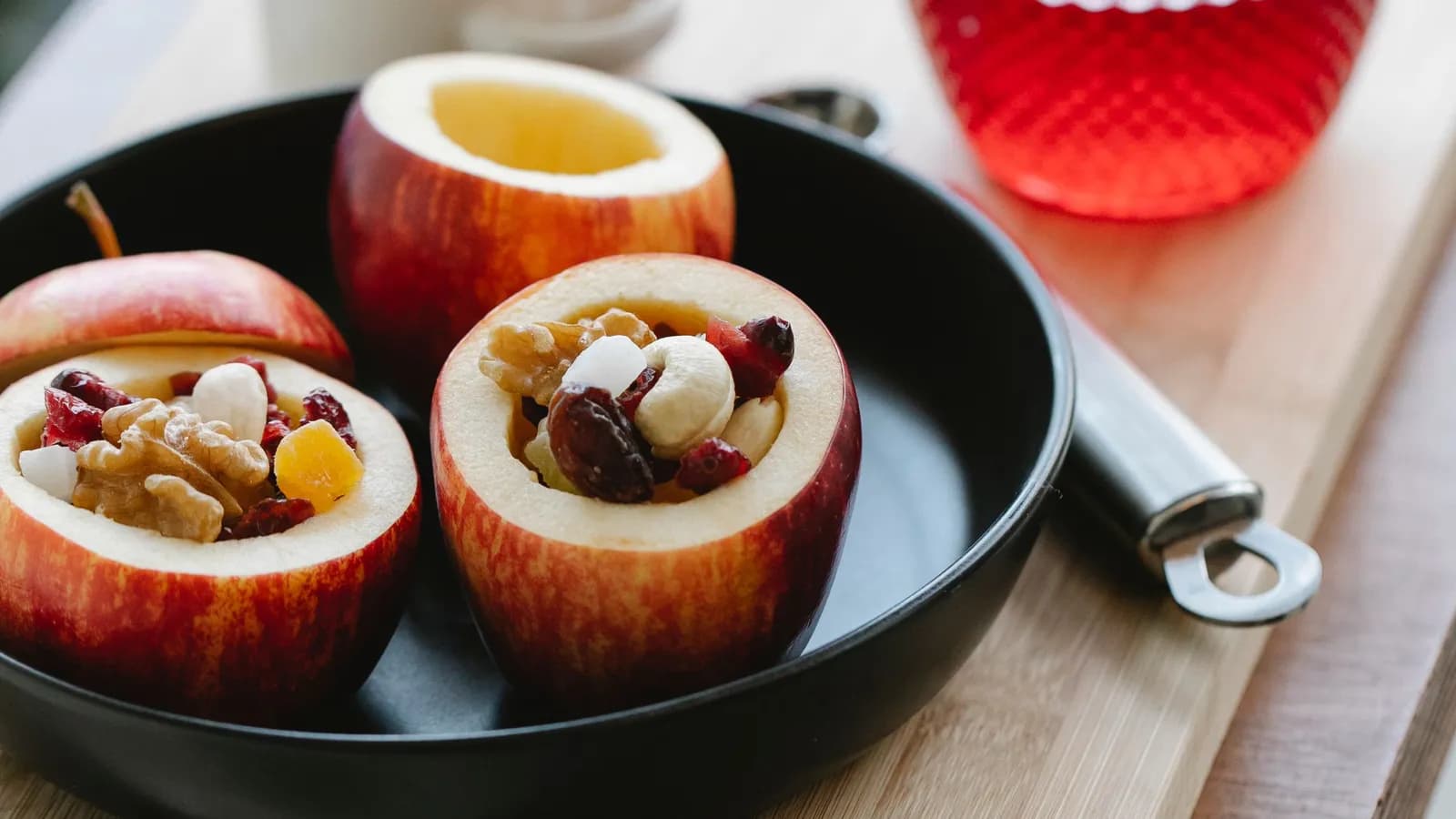
Reineta apples stuffed with butter, brown sugar, cinnamon and walnuts, splashed with moscatel and roasted indirectly at 180 °C. An autumn dessert served warm, with cream or ice cream.
Quick answer
With the deflector in and the chamber at 180 °C, roast cored reineta apples stuffed with butter, brown sugar, cinnamon and walnuts in a dish with moscatel in the bottom. Covered for 25-30 minutes and uncovered for another 15-25, basting halfway, until a toothpick slides in without resistance. Rest ten minutes and serve with cream or ice cream.
One big step at a time, screen kept on and built-in timers.
- Prep
- 20 min
- Cook
- 75 min
- Servings
- 6 servings
- Temperature
- 180 °C
What time do you want to eat?
Pick a time and we'll tell you when to start.
11:45
Start the prep
12:05
Light the kamado
12:35
Onto the kamado
14:00
Serve
Estimate: it includes lighting and settling the kamado plus a margin for large cuts. If the recipe asks you to marinate or salt ahead, add that time.
Fire setupIndirect
- Dome
- 180 °C
- Deflector
- Yes
- Grate
- Standard height
- Bottom vent
- A crack
- Top vent
- Half open
- Fuel
- Clean lump charcoal, full firebox
- Setup
- Deep-sided pan or 24 cm cocotte
Ingredients
- reineta apples of about 200-250 g each6
- butter at room temperature80 g
- brown sugar70 g
- ground cinnamon2 tsp
- shelled walnuts, toasted and chopped60 g
- seedless raisins (optional)30 g
- fine salt1 pinch
- Alicante or Valencia moscatel150 ml
- orange, grated zest only plus a few drops of juice1
- whipping cream, or vanilla ice cream to taste300 ml
Allergens
- Milk
- Tree nuts
- Sulphites
Shop-bought vanilla ice cream may contain egg: check the label.
Based on the recipe's ingredients. Always check the label of every product you buy.
The gear for this recipe
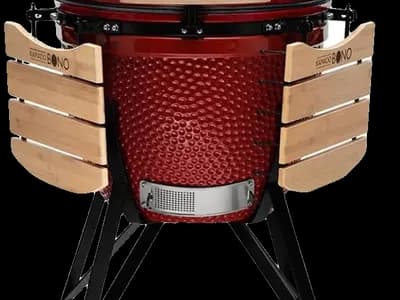
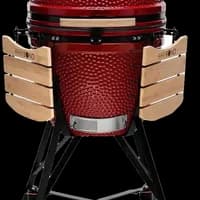 Kamado Bono Grande XXL 59 cmIt is the size that lets the 41.5 cm dish sit flat: the Kamado Bono Grande XXL has a grate of about 49-50 cm, and its six-piece accessory bundle includes the deflector this indirect roast at 180 °C needs. With six apples there is room for air to circulate around the dish. Honest drawback: almost 100 kg of ceramic takes a while to settle and uses a fair amount of charcoal per light, so for a dessert on its own it pays off mainly when you are using the heat from an earlier roast.
 Jealous Devil 100% White Quebracho lump charcoal 15.8 kgAn hour at 180 °C wants a clean charcoal that leaves no taste on the fruit. Jealous Devil is quebracho blanco lump in large pieces, low in ash (around 3%) and neutral in aroma according to its listing, and a full firebox covers the roast with plenty to spare and no refuelling. Honest drawback: it is built for high heat and very long sessions, so at 180 °C the vents have to stay nearly closed and it is easy to overshoot if you open them too far.
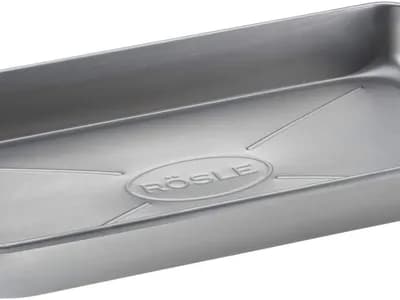
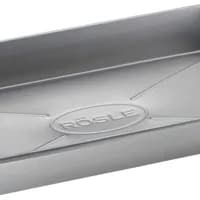 Rösle 25233: high-sided 18/10 stainless steel trayIt is the roasting vessel of the recipe: 18/10 stainless steel measuring 41.5 x 22.5 cm and about 4.7 cm tall according to its listing, with a 3-litre capacity. It needs a grate of about 47 cm or more to sit flat. Six apples fit in two rows and the rim keeps the moscatel and butter from spilling. It also carries the dessert to the table. Drawback: stainless steel conducts heat less well than iron and does not give the covered-pot effect, so it needs foil over it for the first half hour, and burnt sugar on the edge of the base is hard to scrub off.
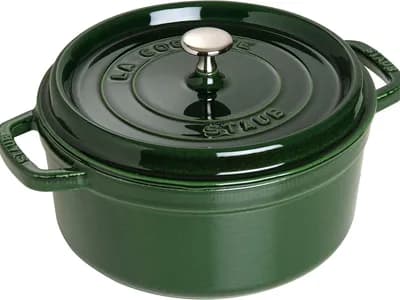
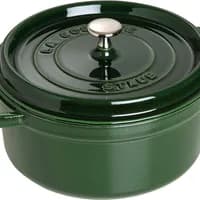 Staub round cocotte: 24 cm enamelled cast iron casseroleIt is the covered alternative for four apples: enamelled cast iron, 24 cm and 3.8 L, with an iron lid and a metal knob heat-resistant to 250 °C according to its listing. The interior enamel is easy to clean and the iron spreads the heat, so the fruit comes out juicier. Real drawback: it weighs about 4.6 kg, so it comes out with gloves and both hands while the sugar is bubbling; at 180 °C indirect it is no problem, but do not go beyond 250 °C or leave it empty for long over direct fire.
Method
- 01
Set up the kamado for indirect
Fill the firebox with clean lump charcoal and light it. Set the deflector and grate in place, close the lid and bring the chamber to 180 °C with the bottom vent open barely a finger and the top vent half open, adjusting for your kamado. Wait 20-25 minutes until the temperature holds without swinging and no white smoke comes out. Meanwhile, prepare the apples.
- 02
Core and score the skin
Wash and dry the apples. Remove the core with an apple corer without going through the base, leaving a hollow about 2-3 cm wide. With the tip of a knife, cut a shallow line around the equator of each apple: this way the skin opens without bursting. If any will not stand upright, trim a very thin slice off the base.
- 03
Make the filling
Mix the butter with the brown sugar, cinnamon, salt and grated orange zest until you have a smooth paste. Fold in the chopped walnuts and the raisins, if using. Spoon the filling into the hollows, pressing it down with a teaspoon and leaving a small mound on top.
- 04
Arrange and add the moscatel
Place the apples in the dish (or four in the 24 cm cocotte), close together but not squeezed. Pour the moscatel into the bottom, not over the filling, along with a few drops of orange juice. A thin layer that wets the base is enough (about 100 ml in the cocotte): with more liquid the fruit stews instead of roasting.
- 05
Roast covered for the first half hour
Burp the lid (lift it 5 cm for a few seconds, then open fully) and, wearing gloves, set the vessel on the grate above the deflector and close. If using the cocotte, put its lid on; with the dish, cover it loosely with aluminium foil. Roast 25-30 minutes at 180 °C so the fruit softens in the steam without the skin drying out.
- 06
Uncover, baste and brown
Open with burping and gloves, remove the lid or foil and baste each apple with the juices from the bottom using a spoon. Close and roast another 15-25 minutes uncovered, basting once more halfway, until the skin wrinkles and browns and a toothpick slides into the flesh without resistance. If the base darkens too much, lower the temperature with the bottom vent.
- 07
Rest and serve
Lift the vessel out with gloves, using both hands, and rest the apples ten minutes: the sugar is extremely hot. Whip the cream without over-sweetening or take out the ice cream. Serve each apple with its pan syrup, a spoonful of cream or a scoop of ice cream and a few walnuts on top. Close both vents to put out the coals.
About this recipe
Baked apples are the autumn dessert that hardly needs a recipe and yet goes wrong easily: burst skins, a raw centre, sugar scorched at the bottom of the tray. The kamado handles them well because it roasts indirectly with an enveloping, even heat, close to a wood oven but with a hint of coals. Here they are stuffed with butter, brown sugar, cinnamon and walnuts, splashed with moscatel and finished with cream or ice cream. It is a dessert of indirect cooking that makes use of the heat left over after a meat or fish course, which is why it suits an autumn or winter meal so well.
Reineta, the apple that stands up to the oven
The reineta (an apple from Asturias, Galicia or El Bierzo) is the classic choice for a concrete reason: its flesh is firm and slightly tart, and it stays whole when other varieties collapse into purée inside their skins. That acidity balances the brown sugar and the sweetness of the moscatel. If you cannot find it, a firm golden or a granny smith will do, although the latter needs a few more minutes and a little more sugar. Avoid mealy apples, such as an over-ripe red delicious, which fall apart. Pick fruit of similar size, around 200-250 g, so they are all ready together, and that stand upright: if needed, trim a thin slice off the base. Core them with an apple corer without going through the bottom, so the filling and the liquid stay inside.
Indirect at 180 °C with the deflector
The trick is the heat: 180 °C in the chamber, with the deflector in place between the coals and the dish. Without it, the bottom of the tray would burn before the centre of the apple softened. With it, the heat circulates around the dome and reaches the fruit from every side. Before you start, review how to stabilise the chamber in the temperature control guide. A dessert wants little smoke: use clean lump charcoal and wait until the chamber is steady and free of white smoke before the apples go in, so they do not taste smoky. Also, when opening the lid on a live fire, burp it: lift it about 5 cm, wait a few seconds and then open fully, to avoid a flare-up.
Dish or casserole: where to roast them
The recipe works in two vessels. The Rösle Universal Pro dish is 18/10 stainless steel and measures about 41 x 22 cm with a 5 cm rim, according to its listing: six apples fit in two rows and the rim holds the moscatel and the melted butter. For a smaller group, the 24 cm Staub cocotte takes four apples and its iron lid lets you start covered, which gives a more tender, juicier result. The dish does need a wide grate: in a large kamado such as the Kamado Bono Grande XXL, with a grate of about 49-50 cm, it sits flat over the deflector; in a medium one of about 45 cm its corners will not fit and the cocotte is the way to go. Check it cold before you light up. What you should not use is a thin aluminium tray: it warps and scorches the sugar.
Moscatel, butter and walnuts
The moscatel (the sweet, aromatic one from Alicante or Valencia) does two jobs: it perfumes the fruit and, mixing with the butter and sugar in the base, it forms a light syrup to serve. It does not need to be an expensive one; a young, fruity moscatel is ideal, and if you prefer an alcohol-free dessert, replace it with apple or orange juice. The walnuts are toasted dry for a couple of minutes before chopping so they do not turn soft. The butter goes in at room temperature, worked with the brown sugar and cinnamon into a paste, which is spread into the hollow of each apple. For another way to use seasonal fruit, see the tarte tatin in a cocotte.
In 30 seconds
Light the kamado with the deflector and stabilise it at 180 °C. Core six reineta apples, stuff them with butter, brown sugar, cinnamon and walnuts, set them in the dish and pour over the moscatel. Roast indirectly for 40-55 minutes, basting with their juices halfway, until a toothpick slides in without resistance. Rest ten minutes and serve with cream or ice cream.
Will it fit your kamado?
Small
33-40 cm · Joe Jr, MiniMax
Tight
Probably 4 apples in the 24 cm cocotte; all 6 in two batches.
Medium
46-51 cm · Classic, Large
Fits
All 6 apples probably fit in one pan, close but not squeezed.
Large
56-61 cm · Big Joe, XL
Fits
All 6 fit easily; even pan and cocotte together for more servings.
What to serve with it
Sides
- Whipped cream or vanilla ice cream
- Wine
- Moscatel de Valencia or Moscatel from Alicante
- Beer
- Toasty ale or dark wheat beer
- Alcohol-free
- Apple and cinnamon infusion
Leftovers and storage
- In the fridge
- Without the cream, in their syrup and airtight, chilled within 2 hours: 3-4 days.
- Freezing
- Whole they go mushy; better to freeze them as compote, 2-3 months.
- Reheating
- Oven at 160 °C for 10 min, covered with their syrup, until hot through.
- Using them up
- Mashed into compote for breakfast yogurt or as a crêpe filling.
Cool and refrigerate within 2 hours. When in doubt, throw it out.
Editor's tips
- Cut around the equator before stuffing: that is what stops the skin from bursting and lets the fruit expand without splitting.
- If the sugar at the bottom starts to darken, add two spoonfuls of moscatel or water. A dark caramel makes the syrup bitter, and it is easy to avoid by keeping an eye on the final quarter of an hour.
- Make use of the hot kamado: if you have just roasted a meat indirectly at 180 °C, the apples go in right afterwards with nothing to change. The dessert is served warm, so time it while everyone eats the main course.
- A pinch of salt in the filling lifts the cinnamon and the moscatel. If the cream tastes flat, a teaspoon of sugar and a little grated orange zest lift it without masking the fruit.
Gear for this recipe
As an Amazon Associate, mikamado.es earns from qualifying purchases. At no extra cost to you.
Kamado Bono Grande XXL 59 cm
It is the size that lets the 41.5 cm dish sit flat: the Kamado Bono Grande XXL has a grate of about 49-50 cm, and its six-piece accessory bundle includes the deflector this indirect roast at 180 °C needs. With six apples there is room for air to circulate around the dish. Honest drawback: almost 100 kg of ceramic takes a while to settle and uses a fair amount of charcoal per light, so for a dessert on its own it pays off mainly when you are using the heat from an earlier roast.
€921

Jealous Devil 100% White Quebracho lump charcoal 15.8 kg
An hour at 180 °C wants a clean charcoal that leaves no taste on the fruit. Jealous Devil is quebracho blanco lump in large pieces, low in ash (around 3%) and neutral in aroma according to its listing, and a full firebox covers the roast with plenty to spare and no refuelling. Honest drawback: it is built for high heat and very long sessions, so at 180 °C the vents have to stay nearly closed and it is easy to overshoot if you open them too far.
€234
Rösle 25233: high-sided 18/10 stainless steel tray
It is the roasting vessel of the recipe: 18/10 stainless steel measuring 41.5 x 22.5 cm and about 4.7 cm tall according to its listing, with a 3-litre capacity. It needs a grate of about 47 cm or more to sit flat. Six apples fit in two rows and the rim keeps the moscatel and butter from spilling. It also carries the dessert to the table. Drawback: stainless steel conducts heat less well than iron and does not give the covered-pot effect, so it needs foil over it for the first half hour, and burnt sugar on the edge of the base is hard to scrub off.
€18
Staub round cocotte: 24 cm enamelled cast iron casserole
It is the covered alternative for four apples: enamelled cast iron, 24 cm and 3.8 L, with an iron lid and a metal knob heat-resistant to 250 °C according to its listing. The interior enamel is easy to clean and the iron spreads the heat, so the fruit comes out juicier. Real drawback: it weighs about 4.6 kg, so it comes out with gloves and both hands while the sugar is bubbling; at 180 °C indirect it is no problem, but do not go beyond 250 °C or leave it empty for long over direct fire.
€234
Have you made it?
Tell us how it turned out on your kamado. We review every rating before publishing it.
No published ratings yet. Be the first!
FAQ
Which apple is best for roasting?
The reineta is the classic: firm, tart flesh that does not collapse. A firm golden and granny smith also work, the latter with a few extra minutes and a little more sugar. Avoid mealy or very ripe varieties, which turn to purée and burst the skin.
Can I make them without alcohol?
Yes. Swap the moscatel for cloudy apple juice or fresh orange juice in the same amount. You lose the floral aroma of the wine, but the base juice with butter and brown sugar still turns out well. With wine, much of the alcohol evaporates over such a long bake, but not all of it.
Can they be made in a small kamado?
Yes, with smaller quantities. The 41.5 x 22.5 cm dish needs a grate of about 47 cm or more to sit flat, so it will not fit a medium kamado of about 45 cm or a compact one of 33-34 cm. Use the 24 cm cocotte (30 cm across the handles, so it fits even a compact grate) with three or four apples, or an iron dish that leaves room around it for air to circulate. Keep the same 180 °C and the same timing.
How do I know they are done?
The skin wrinkles and browns, the fruit has sunk slightly and a toothpick or the tip of a knife goes into the flesh without resistance. If the centre still feels firm, give them 5-10 minutes more. Better slightly under than over, as the fruit keeps softening while it rests.
How do I store and reheat them?
They keep covered in the fridge for up to two days, with their juices. To reheat, 10-12 minutes in the oven or in the kamado at 160 °C, or 1-1.5 minutes per apple in the microwave. Always serve the cream or ice cream fresh from the fridge or freezer, never reheated with the fruit.
More kamado recipes
Grilled Watermelon with Feta, Mint and Balsamic Reduction
Watermelon wedges seared over live coals: the sugars caramelize at the edges while the centre stays cool and juicy. Salty feta, fresh mint and a thread of balsamic make a sweet-savoury summer dessert-salad.

Nectarine and raspberry galette on the kamado
A rustic summer tart: flaky shortcrust, wedges of ripe nectarine and raspberries bursting into syrup, baked indirect over a stone until the free-form edges turn deep gold.

Kamado-Grilled Apricots with Honey and Rosemary
Peak-summer apricots, halved and seared over live fire until caramelised, glazed with warm rosemary honey and served with mascarpone or vanilla ice cream. The easiest stone-fruit dessert off the kamado.
KEEP READING
Go deeper on this dish
- Recommended kamado
Kamado Bono Grande XXL 59 cm
It is the size that lets the 41.5 cm dish sit flat: the Kamado Bono Grande XXL has a grate of about 49-50 cm, and its six-piece accessory bundle includes the deflector this indirect roast at 180 °C needs. With six apples there is room for air to circulate around the dish. Honest drawback: almost 100 kg of ceramic takes a while to settle and uses a fair amount of charcoal per light, so for a dessert on its own it pays off mainly when you are using the heat from an earlier roast.
- Editorial guide
How to light a kamado: the step-by-step method
No petrol, no weird tablets and no 45-minute waits. The cone method, airflow control and the mistakes that prevent 80% of the frustration.
- Glossary term
Heat deflector
Ceramic plate placed between the coals and the grate to turn direct fire into indirect cooking.
- Related comparison
big green egg large vs kamado joe classic iii
The classic kamado matchup: the Big Green Egg Large, the indestructible pioneer with the widest accessory network, agai…