Analysis by Valery Grin · · updated September 12, 2026
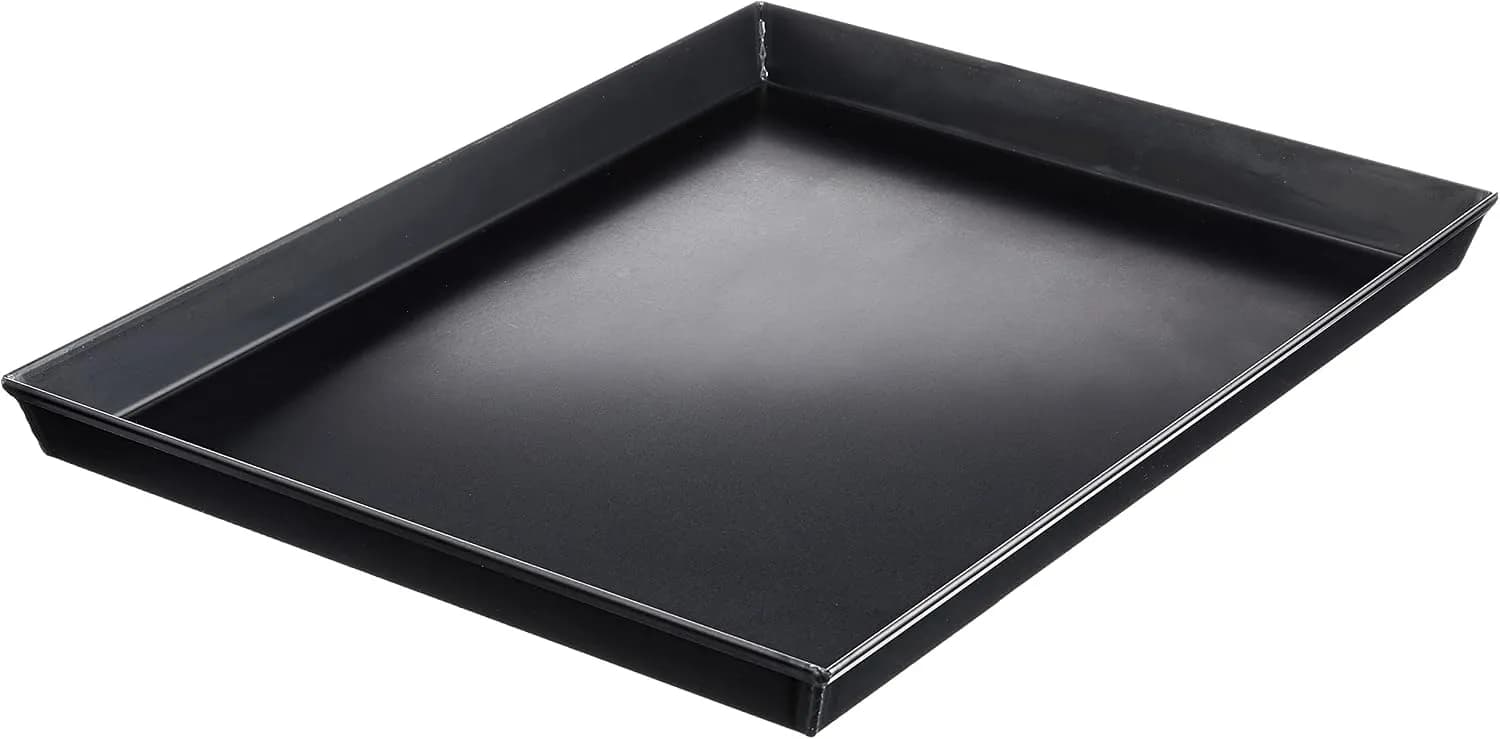
Ballarini Professionale 3000 Iron Oven Tray, 40 × 30 × 3 cm
The Roman teglia in bare iron sheet: it needs seasoning, and it only fits an XL kamado
From€16
Price verified on Amazon on September 12, 2026 · may change
As an Amazon Associate, mikamado.es earns from qualifying purchases. At no extra cost to you.
- Material
- Uncoated iron sheet; requires seasoning before first use
Quick answer
Worth it if you bake Roman pizza al taglio or pan focaccia and own an XL kamado or a home oven. It is 40 × 30 × 3 cm of bare iron sheet: it has to be seasoned before first use and never washed with soap, but it has no temperature ceiling. On an 18" kamado do not even try: a 50 cm diagonal will not go in.
Bare iron sheet, 40 × 30 × 3 cm: the exact Roman teglia format. It needs seasoning before first use and gives the dough a fried base rather than a baked one. Size warning: it will not pass into an 18" kamado.
The Professionale 3000 is the tray you picture when you hear the words "Roman teglia": a rectangle of iron sheet measuring 40 × 30 cm with a 3 cm rim, no non-stick, no enamel, no finish beyond the metal itself. One precision first: the Amazon listing calls it "iron" and never says "blued steel". That it is *ferro blu* I infer from what the listing itself demands — season it before first use to build the protective patina — and not from any literal statement by the manufacturer.
Start with the thing that can ruin the purchase. Forty by thirty centimetres is a 50 cm diagonal, and it will not pass through the mouth of a [Big Green Egg Large](/kamados/big-green-egg-large) or an 18" [Kamado Joe Classic](/kamados/kamado-joe-classic-iii): the corners hit the ceramic before the tray ever reaches the grate. This is XL kamado gear — Big Green Egg XL, the 24" [Big Joe](/kamados/kamado-joe-big-joe-iii), the [Monolith LeChef](/kamados/monolith-lechef-pro-2) — or home-oven gear. Even in an XL it leaves very little air path around it, so you want the grate on the upper ring and you should expect modest circulation. If your kamado is an 18", the arithmetic is simple: you need a tray with a diagonal under 44 cm, something in the order of 35 × 25 cm.
With that settled, what it does well it does very well indeed. [Roman pizza al taglio](/recetas/pizza-romana-al-taglio-kamado) is not baked by air: it is baked by contact against heat-loaded metal with oil in the bottom, which fries the base while the crumb opens up inside. The thermal mass of the iron decides the result, and a thin non-stick aluminium tray simply cannot deliver it. With the [heat deflector](/glosario#deflector) in place and a [steel plate](/accesorios/gimetal-plancha-acero-pizza-40x35) or a stone underneath at 270 °C, the teglia becomes the floor of a miniature Roman oven.
Bare iron is also what removes the ceiling. There is no coating to degrade, so the radiant spikes off the dome — the rule in a ceramic rather than the exception — are irrelevant to it. The price of that freedom is maintenance: season it with oil and heat before first use, scrape it dry, dry it over the fire and store it under a film of fat. On the coast the enemy is salt air: a teglia put away damp on a porch in Torrevieja will show rust spots within a week. The [coastal maintenance guide](/guias/proteger-kamado-salitre-humedad-clima-costero) applies to tools as much as to ceramic.
Against the other tray in this same batch, [Agnelli's aluminised sheet](/accesorios/agnelli-bandeja-aluminizada-40x30), the difference is not quality but trade: that one goes in the sink and handles [focaccia](/recetas/focaccia-rosmarino-kamado) and [coca de llanda](/recetas/coca-de-llanda-valenciana-kamado); this one gets seasoned, never gets wet and exists for oiled doughs at high heat. Owning both is not redundant.
And against a [steel plate](/accesorios/vevor-pizza-steel-carbono) or a [baking stone](/glosario#ceramica-refractaria) there is no comparison to make: those are flat surfaces for Neapolitan pizza, which goes straight onto the oven floor. A dough at 80 % hydration with forty millilitres of oil beneath it needs walls, and only a teglia has walls.
The textbook Roman teglia: bare iron, the right format and real thermal mass. The problem is not the tray, it is that 40 × 30 cm does not fit an 18" kamado. In an XL or an oven, outstanding.
Editorial rating from spec sheet, measurements and kamado fit · not a hands-on test
Pros
- Exactly 40 × 30 × 3 cm: the teglia format Roman recipes ask for
- Uncoated iron sheet: nothing to degrade when the dome radiates hard
- Real thermal mass; the base cooks by contact and comes out fried, not pale
- The 3 cm rim holds an 80 % hydration dough with oil underneath it
- Made in Italy by a maker with over a century of trade (Zwilling group)
Cons
- A 50 cm diagonal: it will not pass into an 18" kamado (BGE Large, KJ Classic)
- Even in an XL it leaves very little air path around the tray
- The listing calls it "iron", never "blued steel": that it is ferro blu is inferred from the seasoning it demands, not stated by the maker
- Bare iron: it must be seasoned, never washed with soap, and it rusts if stored damp near the sea
Who it's for
For anyone with an XL kamado, or who plans to alternate it with the kitchen oven, and who bakes al taglio, pan focaccia or flatbread with some regularity.
Not for
Not for an 18" kamado or a Joe Jr: it does not go in, and no trick fixes that. Nor for anyone unwilling to season a tray and give up washing it with soap.
Specifications
- Material
- Uncoated iron sheet; requires seasoning before first use
As an Amazon Associate, mikamado.es earns from qualifying purchases. At no extra cost to you.
Goes well with
FAQ
Will this tray fit my kamado?
It depends on the size, and the honest answer is that in most of them it will not. Its 40 × 30 cm give a 50 cm diagonal, more than the internal diameter of an 18" kamado such as the Big Green Egg Large or the Kamado Joe Classic: the corners jam against the ceramic and the tray never reaches the grate. It fits the XLs — Big Green Egg XL, 24" Big Joe, Monolith LeChef — and there it is best placed on the upper ring, since it leaves little room for air to move. On an 18" kamado the alternative is a tray under 44 cm across the diagonal, roughly 35 × 25 cm, or using this one in the kitchen oven.
How do I season and clean a bare iron tray?
The listing itself warns that it has to be seasoned before first use. The method is the same as for any iron: wash it once to remove the factory oil, dry it thoroughly, wipe on the thinnest possible film of a high-smoke-point oil and give it half an hour in the kamado at around 200-220 °C with the deflector in. Repeat two or three times and you will have a dark patina. After that it never sees soap again: scrape it dry, or use hot water and a scraper, dry it over the fire or on residual heat, and store it under a veil of fat. The patina is not dirt, it is the non-stick coating you built yourself.
Is it really blued steel (ferro blu)?
Everything points that way, but it is worth saying where that conclusion comes from. The Amazon listing describes it as "iron" and nowhere uses the phrase "blued steel". What it does say is that it must be seasoned before first use so it forms its patina, and that is a requirement specific to untreated iron sheet, not to a non-stick tray or an aluminium one. For what matters here — thermal mass, absence of coating and behaviour at 270 °C — the outcome is the same; if you need the finish certified in writing, you will have to ask the manufacturer.
Does it work for focaccia and bread, or only for pizza al taglio?
It works, and works very well, for any dough baked in a tray with oil: focaccia at 230 °C, savoury coca, flatbread, potato pizza. The iron contributes exactly what it contributes to al taglio, a base that fries rather than steams. Where I would not use it is tray baking with sugar: coca de llanda carries sugar and milk, bakes at 180 °C and then needs the tray scrubbed, and scrubbing is precisely what this one does not tolerate. That is what the aluminised tray is for, since it goes into the sink without drama.
What goes under the tray: a stone, a steel plate, or just the deflector?
The deflector alone does work, but it is the weakest option: it turns the kamado into a convection oven and the base comes up short. What al taglio wants is a hot surface in contact with the bottom of the tray, so underneath goes a steel plate or a thoroughly preheated stone, with the deflector below that as the barrier against the flame. One practical detail: try to make the base at least as large as the tray. A 38 × 30 cm stone leaves two centimetres of teglia hanging in the air on each side, and that is where the base comes out paler.
YOU MIGHT ALSO LIKE