Recipe · Direct · Medium
Rosemary focaccia on the kamado
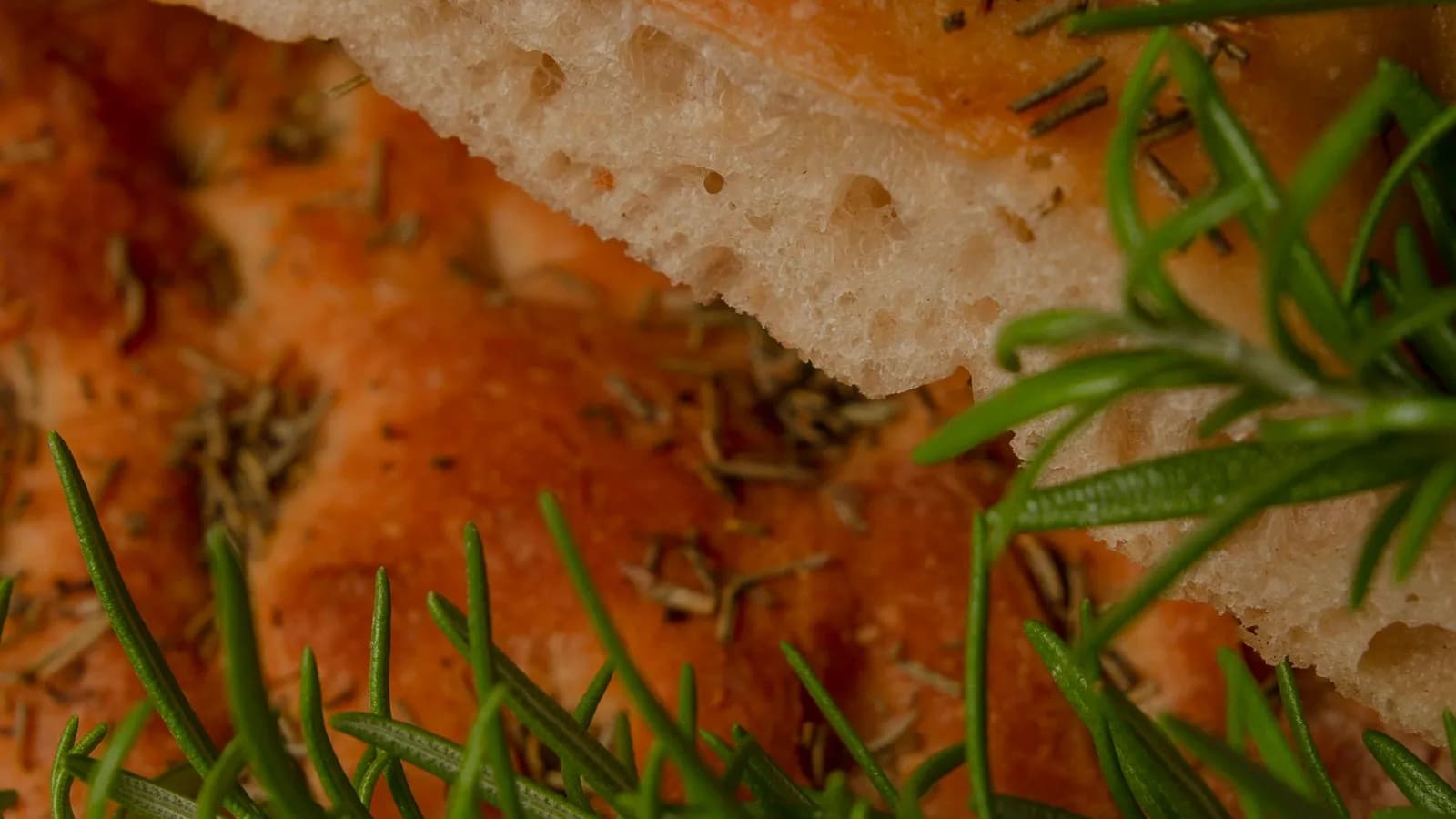
A light focaccia on the kamado: 80% hydration, a stone running red-hot, Bajo Aragón olive oil and fresh rosemary, ideally cut from the plant rather than dried.
Quick answer
Focaccia on the kamado bakes at 230 °C on a refractory stone for 20 minutes, with dough at 80% hydration and four sets of folds every 30 minutes. A deflector and stone preheated for 30 minutes give a golden base and an open crumb. Finish with olive oil, Maldon salt and fresh rosemary.
One big step at a time, screen kept on and built-in timers.
- Prep
- 180 min
- Cook
- 20 min
- Servings
- 6 servings
- Temperature
- 230 °C
What time do you want to eat?
Pick a time and we'll tell you when to start.
10:10
Start the prep
13:10
Light the kamado
13:30
Onto the kamado
14:00
Serve
Estimate: it includes lighting and settling the kamado plus a margin for large cuts. If the recipe asks you to marinate or salt ahead, add that time.
Fire setupStone or steel
- Dome
- 230 °C
- Deflector
- Yes
- Setup
- Deflector, baking stone and 30×40 cm tray
Temperature curve
1:20 h from lighting
Kamado dome
| # | From | Phase | Dome |
|---|---|---|---|
| 1 | 0:00 | Light the charcoalWith deflector and baking stone | 20 → 230 °C |
| 2 | 0:20 | StabiliseThe recipe asks 30 min with the stone at 230 °C | 230 °C |
| 3 | 0:50 | Put the food inTray on the stone; do not open for 10 min | 230 → 200 °C |
| 4 | 0:52 | BakeGolden at 18-20 min in total | 200 → 230 °C |
| 5 | 1:10 | RestOn a rack for 10 min before cutting | 230 → 100 °C |
| 6 | 1:20 | Serve | off |
0:00 is the moment you light the charcoal. Internal temperatures are the ones the recipe gives; without a probe, go by the times. Turn these times into clock times with the planner
For this recipe
Ingredients
- type 0 flour W260+ (Italian panificabile)500 g
- warm water (~28°C)400 ml
- fresh yeast5 g
- fine sea salt10 g
- extra-virgin olive oil (Bajo Aragón or picual)60 ml
- fresh rosemary (from the plant, not dried)2 sprigs
- Maldon flaky salt for finishing1 tbsp
Allergens
- Gluten
Based on the recipe's ingredients. Always check the label of every product you buy.
The gear for this recipe
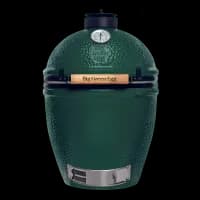 Big Green Egg LargeThe Large holds a steady 230 °C to bake the focaccia for 6.
 Weber Briquettes 8 kgBriquettes for an even, steady bed of embers for baking.
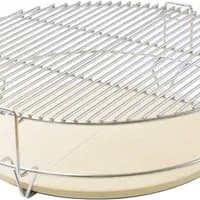 Onlyfire GCG-8552 Cooking System (2 grates + rack + 2 deflectors) for Large Kamado
 Onlyfire cordierite pizza stone 38 × 30 cmPiping-hot cordierite stone for the focaccia's crisp base.
 Baldassare Agnelli Aluminised Steel Baking Tray, 40 × 30 × 3 cm
Method
- 01
Autolyse
Mix flour and water by hand, no yeast, no salt, until no dry lumps remain. Cover and rest 30 minutes at room temperature.
- 02
Add yeast and salt
Dissolve the yeast in a spoonful of warm water and mix into the dough. Add the salt and 30 ml of the oil. Knead 5 minutes in the bowl with a wet hand until integrated.
- 03
4 folds
Every 30 minutes, for 2 hours, do a stretch-and-fold: wet your hand, pull one side of the dough up and fold it over. Rotate the bowl 90° and repeat three more times.
- 04
Final proof
Oil a 30×40 cm tray with the remaining olive oil. Tip the dough out and spread it gently with your hands to cover the tray. Cover and rest 30 more minutes.
- 05
Dimples and topping
With your fingertips press deep dimples across the whole surface, reaching the bottom of the tray. Drizzle generously with olive oil, scatter rosemary and Maldon salt.
- 06
Prepare the kamado
With deflector and baking stone in place, stabilise at 230°C. The stone needs at least 30 minutes at temperature before loading the focaccia.
- 07
Bake
Place the tray on the stone. Close the lid and DO NOT open it for the first 10 minutes. After that, check every 3 minutes until golden — total 18-20 min.
- 08
Rest
Pull the focaccia out and turn it onto a rack so steam can escape from below. Wait 10 minutes before cutting — the crumb is still finishing.
About this recipe
A kamado focaccia bakes at 230°C on a stone for 20 minutes, with 80% hydration dough and four stretch-and-folds at 30-minute intervals. The ceramic concentrates heat from below, olive oil builds a golden crust on top, and the crumb comes out wide-open and almost alveolar. It is the bread that pairs best with weekend grilled meats.
The dough: why 80% hydration
A real focaccia is not just any flatbread. It needs a strong flour, W260+ type 0 (Caputo, Spadoni or any Italian panificabile), and a water ratio that scares the beginner. At that level the dough feels impossible to handle — folds solve the problem: every 30 minutes you stretch and fold it on itself, and in two hours you have a strong, silky dough full of air.
The trick that makes the difference is autolyse: Mix only flour and water, wait 30 minutes before adding salt and yeast, and the gluten starts to form on its own. You then knead much less and the crumb comes out better.
The kamado: deflector + stone
For a stable base you need a deflector + baking stone preheated for at least 30 minutes at 230°C. Without the deflector, direct fire scorches the base before the dough rises. Without the stone, the floor does not radiate and the focaccia stays pale underneath. The classic dimples (made with your fingertips) hold the oil and Maldon salt — and let steam escape so the top crust does not lift.
In 30 seconds: W260+ type 0 flour, 80% water, 4 folds every 30 min, deflector + stone preheated 30 min at 230°C, dimples with fingertips, oil drizzle, Maldon salt and rosemary, 20 minutes without lifting the lid for the first 10.
Will it fit your kamado?
Small
33-40 cm · Joe Jr, MiniMax
Won't fit
The 30×40 cm tray won't fit; use a ~25 cm one and bake in two batches.
Medium
46-51 cm · Classic, Large
Tight
The 30×40 cm tray (50 cm diagonal) is a very tight fit or won't fit; a smaller one is probably better.
Large
56-61 cm · Big Joe, XL
Fits
The 30×40 cm tray probably fits on the stone.
What to serve with it
- Wine
- Rueda Verdejo white or Navarra rosé
- Beer
- Light lager or wheat beer
- Alcohol-free
- Sparkling water with lemon and rosemary
Leftovers and storage
- In the fridge
- 1-2 days at room temperature, well wrapped; the fridge makes it stale.
- Freezing
- Freezes very well in pieces for 2-3 months; thaw wrapped.
- Reheating
- Oven or kamado at 200 °C for 5-6 min, straight on the stone to re-crisp the base.
- Using them up
- Focaccia sandwiches or croutons for salads and soup.
Cool and refrigerate within 2 hours. When in doubt, throw it out.
Leftover embers
You still have embers: what to do with the leftover heat
For 20 min at 230 °C in a classic kamado you load about 800 g of charcoal and burn 600 g: when you serve, about 250 g of live embers remain. Before you shut the vents, that is still enough for:
Without touching the vents
230 °Cgrilled vegetables
25 minof embers
- Garlic Butter Naan on the Kamado18 min · 260 °C
- Saffron Milk Caps on a Steel Griddle with Garlic and Parsley10 min · 250 °C
- Kamado-Grilled Apricots with Honey and Rosemary10 min · 230 °C
No recipe needed
- Strips of courgette and aubergine, char-marked (5 min)
- Pita or naan from shop dough, on the grate (3 min each)
- Halved tomatoes, cut side down, for a sauce (10 min)
Closing the vents halfway and waiting for it to drop
140-200 °Cdessert while you eat
35 minof embers
- Smoked Loaded Nachos on the Kamado12 min · 185 °C
- Brioche Burger Buns on the Kamado18 min · 190 °C
- Garlic-stuffed portobello mushrooms grilled in the kamado22 min · 190 °C
No recipe needed
- Yesterday's bread with oil and garlic, on the grate (10 min)
- Corn cobs in their husks (30 min)
Before opening the lid, crack it open for a few seconds first; if you raise the heat, stir the ash so the coals can breathe. And if you are not going to use them: once the food is out, close the bottom and top vents. The charcoal that does not burn (about 250 g) can be used next time. Different size of kamado? Work out your load for 1 h of fire, lighting included.
Editor's tips
- If you cannot find W260 flour, look for any Italian panificabile or mix 70% strong bread flour with 30% all-purpose.
- On your first try drop the hydration to 70% (350 ml water). Easier to handle, almost the same result.
- The stone must preheat a full 30 minutes at 230°C. Cold loaded, the base stays raw and pale.
- Do not open the lid for the first 10 minutes. The focaccia needs initial oven spring, and any heat loss ruins it.
Gear for this recipe
As an Amazon Associate, mikamado.es earns from qualifying purchases. At no extra cost to you.
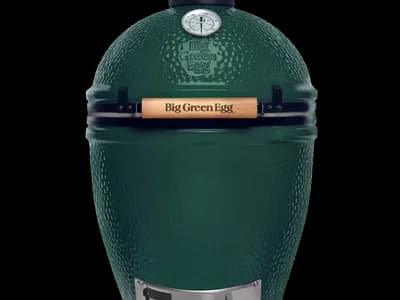
Big Green Egg Large
The Large holds a steady 230 °C to bake the focaccia for 6.
€2,099
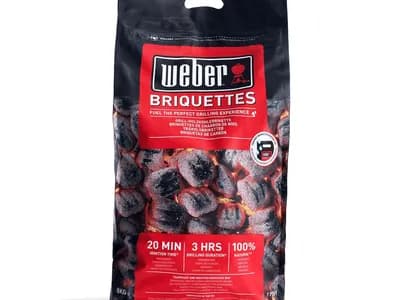
Weber Briquettes 8 kg
Briquettes for an even, steady bed of embers for baking.
€28
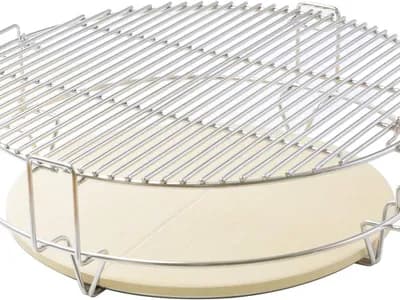
Onlyfire GCG-8552 Cooking System (2 grates + rack + 2 deflectors) for Large Kamado
€95
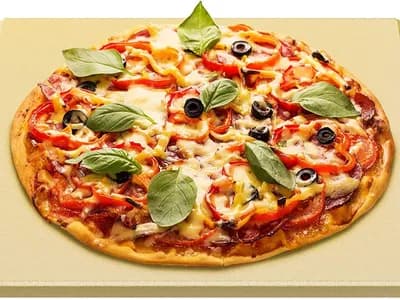
Onlyfire cordierite pizza stone 38 × 30 cm
Piping-hot cordierite stone for the focaccia's crisp base.
€35
Baldassare Agnelli Aluminised Steel Baking Tray, 40 × 30 × 3 cm
€16
Have you made it?
Tell us how it turned out on your kamado. We review every rating before publishing it.
No published ratings yet. Be the first!
FAQ
What flour can I use if I cannot find W260 type 0?
Any Italian flour labelled "panificabile" or "per pizza" works. With Spanish flours mix 70% strong bread flour and 30% all-purpose. The goal is 12.5-13.5 g protein per 100 g.
Can I make focaccia without a baking stone?
Yes, but the result drops noticeably. Without a stone the floor does not radiate and the base stays pale. As a substitute use a heavy cast-iron pan preheated 30 minutes inside the kamado.
Can I use sourdough starter instead of fresh yeast?
Yes. Replace the 5 g fresh yeast with 100 g active sourdough starter and reduce the water to 350 ml. Fermentation is slower (4-5 hours instead of 2) and the flavour gets more complex, with a tangy note.
Can I freeze the raw dough?
Not ideal. High-hydration dough loses structure when thawed. If you need to prep ahead, freeze the baked focaccia in portions and reheat 5 minutes at 200°C wrapped in foil.
What do I do with the embers left after making Rosemary focaccia on the kamado?
After 20 min at 230 °C in a classic kamado about 250 g of live embers remain: 25 min more at 230 °C without touching the vents or 35 min at 140-200 °C closing the vents. If you are not going to use them, close both vents and keep the charcoal for next time.
More kamado recipes
KEEP READING
Go deeper on this dish
- Recommended kamado
Big Green Egg Large
The Large holds a steady 230 °C to bake the focaccia for 6.
- Editorial guide
Your first kamado: the complete pre-purchase guide
Size, materials, brand and budget. Everything you have to decide before clicking Buy, told by someone who has made enough mistakes.
- Glossary term
Heat deflector
Ceramic plate placed between the coals and the grate to turn direct fire into indirect cooking.
- Related comparison
big green egg large vs kamado joe classic iii
The classic kamado matchup: the Big Green Egg Large, the indestructible pioneer with the widest accessory network, agai…