Recipe · Pizza · Advanced
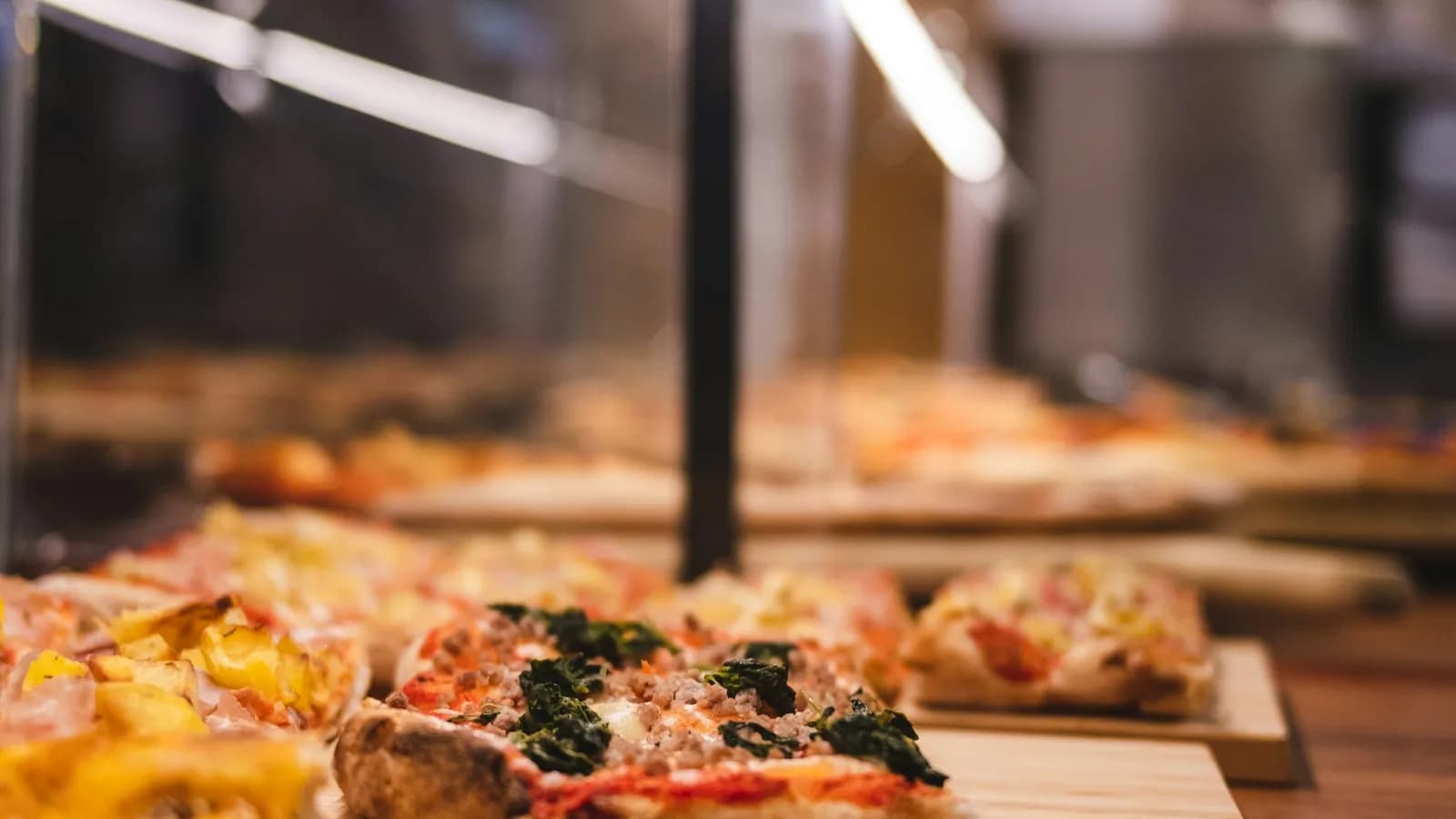
Roman pizza al taglio on the kamado
High-hydration dough fermented 48 hours, baked in a pan and scissor-cut into rectangles like in Rome's forni. Crisp below, an open-crumbed cloud within.
Quick answer
Pizza al taglio is high-hydration (80%) fermented for 48 hours and bakes in an oiled steel tray, indirect over a stone with a deflector at 270 °C. Two bakes: first the base with tomato for 12-14 minutes, then add the mozzarella for 4-5 minutes. Cut it into rectangles with scissors and serve warm.
- Prep
- 2940 min
- Cook
- 18 min
- Servings
- 6 servings
- Temperature
- 270 °C
Ingredients
- strong bread flour, W 300-350 (100%)500 g
- cold water (80% hydration)400 ml
- fine sea salt (2.4%)12 g
- fresh yeast (0.4%)2 g
- olive oil for the dough (3%)15 ml
- olive oil for the pan40 ml
- crushed tomato with salt and oregano (rossa base)400 g
- low-moisture mozzarella (second bake)250 g
- mortadella veils and pistachios (to finish, optional)100 g
Method
- 01
Day 1: mix and fold
Mix flour, water and yeast until no dry flour remains; rest 20 minutes, add salt and oil and squeeze in. Then four rounds of coil folds every 30 minutes with wet hands. The dough will go from sticky soup to glossy cushion. Into the fridge, in an oiled tub, for 48 hours.
- 02
Day 3: oiled pan and final proof
Three hours before baking, turn the dough into a generously oiled 30×40 cm steel pan and stretch it with flat fingers towards the corners without degassing. If it resists, wait 15 minutes and repeat. Let it proof covered until it bubbles lazily.
- 03
Kamado at 270°C, indirect over the stone
A different setup from Neapolitan: deflector in AND stone on top, 40 minutes preheating at 270°C. The pan needs strong but even heat below; direct flame would burn the base oil before the crumb bakes.
- 04
First bake: the rossa base
Spread the seasoned tomato over the whole dough, right to the edges, and bake the pan on the stone for 12-14 minutes with a halfway turn. Look for edges releasing from the pan and a golden sole when you lift a corner with a spatula. At this point the "rossa" is already edible and glorious.
- 05
Second bake: cheese and finishes
Pull the pan, scatter the mozzarella and return it to the kamado for 4-5 minutes, until melted with golden bubbles. The double bake is the Roman secret: the crumb is already set so the cheese cannot crush it. Out of the oven, mortadella veils over the heat and chopped pistachios.
- 06
Cut with scissors and serve by weight
Slide the pizza onto a rack (never leave it in the pan: steam softens the sole) and cut rectangles with kitchen scissors, as Rome commands. Serve warm; it keeps for hours — if it survives minutes.
About this recipe
Al taglio is the technical antithesis of Neapolitan: 80% hydration, 48 hours of cold ferment and an unhurried pan bake at 270°C. The result is a light focaccia-like crumb over a shallow-fried crisp sole, made to be cut into rectangles and eaten at any hour. In Rome it sells by weight; in your garden, by the trayful.
High hydration: from fear to the fold
An 80% dough is not kneaded: it is folded. Four rounds of folds across the first two hours build the structure classic kneading cannot give something this liquid. In the kamado the pan goes on the stone, deflector in, at 270°C: the pan's iron or steel fries the base in oil while the dome bakes the crumb without drying it. Roman double bake: first the "rossa" base, then the topping.
Editor's tips
- Blued steel or iron pan, not thin non-stick: you need thermal mass below for the "fried in oil" effect.
- The cold window is 24-72 hours: at 48 it peaks in both flavour and handling.
- Textbook Roman combos: sliced potato and rosemary; courgette and anchovy; or the naked rossa, which needs no one.
Gear for this recipe
As an Amazon Associate, mikamado.es earns from qualifying purchases. At no extra cost to you.


FAQ
What is the difference between pizza al taglio and Neapolitan pizza?
Almost everything: Neapolitan is round, thin, 60-62% hydration, baked directly on stone at 350-450°C in 90 seconds and eaten on the spot. Al taglio is rectangular, tall (2-3 cm), 75-85% hydration, baked in an oiled pan at 250-280°C for 15-20 minutes and improves warm. The Neapolitan is an instant soufflé; the Roman, a high-ferment bread crumb on a crisp sole. On the kamado, al taglio is also the most forgiving pizza: it demands no peel and no speed, only patience with the dough.
Why is pizza al taglio baked at a lower temperature?
Because dough 2-3 cm thick needs time to bake through to the centre, and at 350°C the surface and the pan oil burn long before that happens. The 250-280°C range provides the 15-20 minutes the crumb requires to fully gelatinise while the pan gently fries the base. It is bread logic: the more crumb volume, the more time and the less temperature. That is why the kamado runs a deflector here: it turns coal-blast into an enveloping oven.
Can you handle an 80% hydration dough without a mixer?
Yes — in fact it comes out better by hand if you swap kneading for folding. Dough this wet cannot be kneaded classically (it slips through your fingers), but it responds beautifully to coil folds: lift the dough from the middle with wet hands, let it fall folding under itself, rotate the tub 90° and repeat. Four rounds spaced 30 minutes apart and the gluten is structured effortlessly. Wet hands are the anti-stick key; extra flour is the enemy that would ruin the hydration.
Which pan should I use for al taglio in the kamado?
A 30×40 cm blued-steel "teglia" is the orthodox Roman choice: it conducts fast, tolerates oil at high heat and builds that signature fried sole. A rimmed baking steel or a cast-iron tray also works. Avoid thin domestic non-stick trays: at 270°C the coating suffers, they warp and the base comes out pale. Whichever you use, oil generously: al taglio is, at its base, a slow and happy shallow-fry.
More kamado recipes

Margherita pizza on the kamado
Tomato, fior di latte and basil: three ingredients and nowhere to hide. On a 350°C stone the cornicione puffs in seconds and the margherita reminds you why it is still the queen.
Sourdough pala-style pizza on the kamado
A Roman pala-style pizza — long, with a tall, open-crumb edge — leavened with sourdough and baked on steel at 350°C with the deflector in.
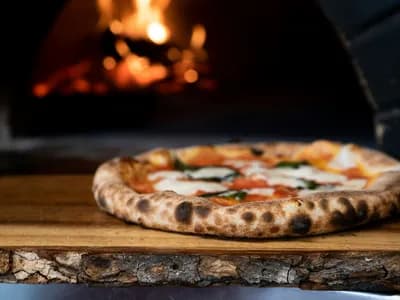
Neapolitan pizza on the kamado
At 350°C the base puffs in 90 seconds and the cornicione comes out leopard-spotted and pillowy. One pizza, three minutes, zero margin for error.
KEEP READING
Go deeper on this dish
- Recommended kamado
Gi.Metal Steel Pizza Plate 40 × 35 cm (4 mm)
The Italian steel that gives a crisp base in a home oven
- Recommended kamado
Navaris Cordierite Pizza Stone Rectangular XL (38×30×1.5 cm)
Cordierite refractory stone for oven, grill and kamado — guaranteed crispy base
- Editorial guide
Your first kamado: the complete pre-purchase guide
Size, materials, brand and budget. Everything you have to decide before clicking Buy, told by someone who has made enough mistakes.
- Glossary term
Heat deflector
Ceramic plate placed between the coals and the grate to turn direct fire into indirect cooking.
- Related comparison
big green egg large vs kamado joe classic iii
The classic kamado matchup: the Big Green Egg Large, the indestructible pioneer with the widest accessory network, agai…