Analysis by Valery Grin · · updated September 12, 2026
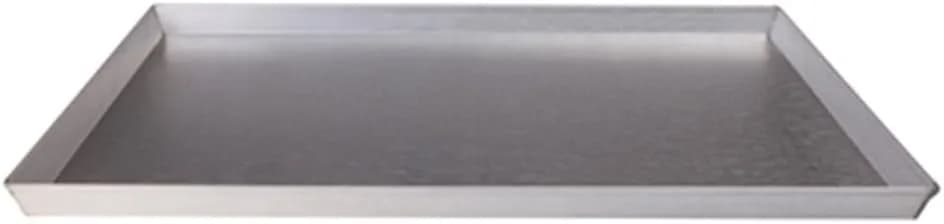
Baldassare Agnelli Aluminised Steel Baking Tray, 40 × 30 × 3 cm
The bakery tray for focaccia and coca: no coating to cap the heat, but the same size problem
From€18
Price verified on Amazon on September 12, 2026 · may change
As an Amazon Associate, mikamado.es earns from qualifying purchases. At no extra cost to you.
- Material
- Uncoated aluminised steel sheet (lamiera alluminata)
Quick answer
The right tray for focaccia and coca de llanda if you have an XL kamado or will also use it in the oven. Bare aluminised steel, 40 × 30 × 3 cm: no coating to cap the heat and the right rim height for the dough to rise and the edges to brown. Mind the variant: the listing's metadata is wrong, so pick "40x30x3 cm".
Uncoated aluminised steel, 40 × 30 × 3 cm: the bakery tray for focaccia and coca. It washes normally and needs no seasoning. It shares the teglia's problem: it will not pass into an 18" kamado.
This is a bakery tray: a rectangle of 40 × 30 cm with a 3 cm rim in aluminised steel, no non-stick, no enamel and no pretensions. Agnelli has been making professional tools in Bergamo since 1907, and this tray is exactly what sits on a baker's bench, with the advantage that in a bakery nothing is chosen for its colour, only for whether it survives.
Why aluminised sheet matters in a kamado. It is steel coated in aluminium, and the relevant part is what it does *not* carry on top: there is no non-stick layer and no lacquer to degrade. That is what lets you take it to the 230 °C of a [focaccia](/recetas/focaccia-rosmarino-kamado) without a second thought. It is worth saying precisely, because this is a property of the material and not a catalogue figure: the Amazon listing declares no maximum temperature at all. The two best-presented alternatives do declare one, and that is why they fell away: an aluminium tray in the same size publishes 220 °C, and an anodised one states "heat resistant to 220 °C". At a real 230 °C, inside a ceramic that also throws radiant spikes, a 220 ceiling means living on the edge.
Size, once again. Forty by thirty is a 50 cm diagonal and it will not pass through the mouth of an 18" [Big Green Egg Large](/kamados/big-green-egg-large) or [Kamado Joe Classic](/kamados/kamado-joe-classic-iii). This is an XL kamado tray — [24" Big Joe](/kamados/kamado-joe-big-joe-iii), Big Green Egg XL, [Monolith LeChef](/kamados/monolith-lechef-pro-2) — or a home-oven tray. If your ceramic is an 18", you need something under 44 cm on the diagonal, roughly 35 × 25 cm, and the recipe works just as well in a smaller format.
The 3 cm rim is the correct height, and that is not cosmetic. Focaccia needs depth for the dimples and the pool of oil; [coca de llanda](/recetas/coca-de-llanda-valenciana-kamado) is poured barely a finger deep and needs hot air reaching its edges so they come out toasted rather than rubbery. A 5 or 6 cm wall would shade the dough; a 2 cm one would not hold the oil. Three is the number.
What to watch when buying. The listing's metadata is a mess: the material shows as "aluminum foil" — a bad translation of *lamiera alluminata*, aluminised sheet — and the dimensions field reads "3D x 40W x 3H cm", which is simply a parsing error. The real measurement comes from the size selector and the title, so you must explicitly select the 40x30x3 cm variant before paying. And an availability warning: Amazon does not sell it directly, a third party does, so stock is more fragile than on a direct sale.
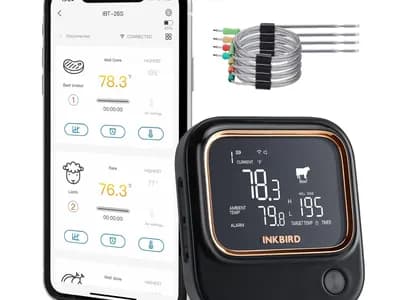
Against [Ballarini's iron teglia](/accesorios/ballarini-professionale-3000-teglia-40x30) the difference is one of use, not of category: that one is seasoned and never gets wet, and exists for oiled doughs at high heat; this one goes in the sink, tolerates sugar, milk and egg, and is what you want when the tray is going to end up sticky. With the [deflector](/glosario#deflector) in and the chamber settled — an [independent probe at grate height](/accesorios/inkbird-ibt-26s-wifi) earns its keep, because the lid thermometer measures something else — it becomes an oven floor without further ceremony.
The right bakery tray for focaccia and coca: uncoated material and exactly the right 3 cm rim. It carries the same size problem as the teglia, plus a listing with its data in a mess.
Editorial rating from spec sheet, measurements and kamado fit · not a hands-on test
Pros
- Uncoated aluminised sheet: no non-stick layer imposing a 220 °C ceiling
- The 3 cm rim is the correct height for focaccia and coca de llanda
- It washes in the sink: no seasoning, none of the bare-iron ritual
- The 40 × 30 bakery format the tray recipes actually call for
- Italian professional-tool maker, in business since 1907
Cons
- A 50 cm diagonal: it does not fit an 18" kamado (BGE Large, KJ Classic) or the smaller ones
- The listing declares no maximum temperature: 230 °C rests on the material, not on a maker's figure
- Wrong metadata on the listing (material "aluminum foil", dimensions "3D x 40W x 3H cm"): you must pick the 40x30x3 variant by hand
- Sold by a third party rather than Amazon, so stock is more fragile
- Bare sheet: it has to be greased or lined, and it darkens with use and never looks new again
Who it's for
For anyone baking tray doughs in an XL kamado, or alternating ceramic and kitchen oven, who wants an uncoated tray that does not impose a 220 °C ceiling.
Not for
Not for an 18" kamado or the smaller ones: at a 50 cm diagonal it does not go in. Nor for anyone hoping to turn things out without greasing: this is not non-stick.
Specifications
- Material
- Uncoated aluminised steel sheet (lamiera alluminata)
As an Amazon Associate, mikamado.es earns from qualifying purchases. At no extra cost to you.
Goes well with
FAQ
Does it really handle focaccia's 230 °C?
Yes, but it helps to know what that answer rests on. The listing publishes no maximum temperature, so the guarantee is not documentary but material: it is uncoated aluminised sheet, and where there is no non-stick and no lacquer, there is nothing to degrade or off-gas at 230 °C. That is precisely what ruled out the two most obvious rivals, which do declare a ceiling and set it at 220 °C. If what you need is a figure signed by the manufacturer, this tray will not give it to you; if what you need is for it not to be damaged, the material answers.
Will it fit a Kamado Joe Classic or a Big Green Egg Large?
No. Its 40 × 30 cm give a 50 cm diagonal, beyond the internal diameter of any 18" ceramic: the corners catch the wall before the tray reaches the grate. It is an XL kamado tray — 24" Big Joe, Big Green Egg XL, Monolith LeChef — or a home-oven tray. With an 18" ceramic the sensible way out is a smaller tray, under 44 cm on the diagonal, roughly 35 × 25 cm; both focaccia and coca de llanda come out exactly the same, just in a smaller portion.
Which variant should I pick when buying it?
The 40x30x3 cm one, selected by hand in the size dropdown. It is worth insisting because the listing is badly built: the material field says "aluminum foil", a bad translation of the Italian *lamiera alluminata* — aluminised sheet, not kitchen foil — and the dimensions field shows "3D x 40W x 3H cm", which matches no real object. The reliable data are in the size selector and the title; trust the details block and you end up buying something else.
Is it dishwasher safe? Will it stain?
It hand-washes without any problem, which is exactly its advantage over a seasoned iron tray. I would not put it through the dishwasher routinely: harsh detergents are rough on the aluminised surface and it is not worth it for ten minutes of scrubbing. And yes, it will stain. Bare sheet darkens with use, picks up uneven gold and grey tones and never looks new again. That is cosmetic and does not affect how it bakes; if a tray with a history bothers you, this is not your material.
Does it work for Roman pizza al taglio?
It works, but it is not the optimal tool. Al taglio wants the bottom of the tray to fry the dough in the oil, and for that thermal mass rules: the bare iron of a teglia stores more heat and delivers a crisper base. Aluminised sheet conducts fast but stores less, so the base comes out correct and slightly less dramatic. The trade-off pays back the other way: after a coca with sugar and milk, this one gets washed and that is that, and the iron one does not.
YOU MIGHT ALSO LIKE