Recipe · Pizza · Medium
Ham and rocket pizza on the kamado
Half of this pizza never enters the oven: veils of ham, fresh rocket and Parmesan shavings land on the just-baked base. Hot below, fresh above — that is the whole trick.
Quick answer
First bake just the tomato-and-mozzarella base at 340 °C, 90-100 seconds, a touch more done than usual. The cured ham, dry rocket and parmesan shavings go on raw over the freshly baked pizza: the residual heat warms the ham without cooking it. Oil and pepper, and to the table.

One big step at a time, screen kept on and built-in timers.
- Prep
- 1460 min
- Cook
- 3 min
- Servings
- 4 servings
- Temperature
- 340 °C
What time do you want to eat?
Pick a time and we'll tell you when to start.
12:42
the day before
Start the prep
13:02
Light the kamado
13:47
Onto the kamado
14:00
Serve
Estimate: it includes lighting and settling the kamado plus a margin for large cuts. If the recipe asks you to marinate or salt ahead, add that time.
Fire setupStone or steel
- Dome
- 340 °C
- Grate
- Raised
- Setup
- Raised stone
Temperature curve
0:50 h from lighting
Kamado dome
| # | From | Phase | Dome |
|---|---|---|---|
| 1 | 0:00 | Light the charcoalRaised stone, 45-60 min of real preheating | 20 → 340 °C |
| 2 | 0:45 | BakeMargherita base 90-100 s with a mid-bake turn | 330 → 295 °C |
| 3 | 0:47 | Recover temperatureDress with ham, rocket and parmesan in 30 s | 295 → 335 °C |
| 4 | 0:50 | Serve | off |
0:00 is the moment you light the charcoal. Internal temperatures are the ones the recipe gives; without a probe, go by the times. Turn these times into clock times with the planner
For this recipe
Ingredients
- "00" flour, W 260-300 (100% baker's)500 g
- cold water (62% hydration)310 ml
- fine sea salt (2.8%)14 g
- fresh yeast (0.2%)1 g
- crushed San Marzano tomatoes350 g
- fior di latte, drained250 g
- prosciutto di Parma or gran reserva serrano, in veils100 g
- wild rocket, washed and very dry60 g
- Parmesan shavings (use a peeler)40 g
- extra virgin olive oil2 tbsp
Allergens
- Gluten
- Milk
Based on the recipe's ingredients. Always check the label of every product you buy.
The gear for this recipe
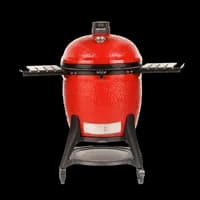 Kamado Joe Big Joe III 24"The Big Joe bakes two bases at once: key when half the work happens outside the oven.
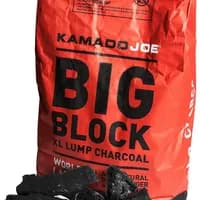 Kamado Joe Big Block XL lump charcoal 9.1 kgA neutral, clean bed that does not compete with great ham.
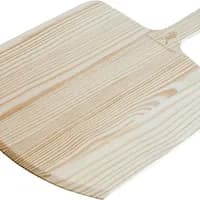 Kamado Joe Wooden Pizza PeelThe wood doubles as a serving board: the pizza gets dressed and presented on the same peel.
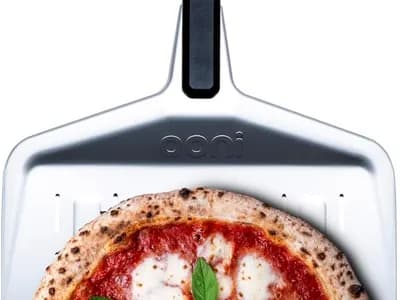
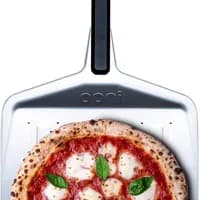 Ooni 14" Perforated Aluminium Pizza PeelFor launching and turning the margherita base that serves as the canvas.
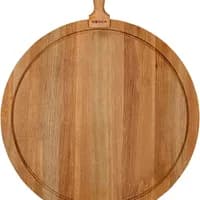 Boska Friends L Round Serving Board Oak 55 cm
Method
- 01
24h dough and a cold mise en place
Standard slow-ferment dough. Before lighting the kamado, prep the "wardrobe": ham separated into veils on paper, dry rocket in a bowl, Parmesan shavings ready. Once the pizza comes out, you get 30 useful seconds.
- 02
Kamado at 340°C, stone saturated
Stone raised, 45-60 minutes of true preheat. 340°C is the sweet spot: a Neapolitan cornicione without scorching the margherita base that serves as the canvas.
- 03
Bake the margherita base
Stretch to 28-30 cm, top with only tomato (80 g) and mozzarella, and bake 90-100 seconds with a halfway turn. It should come out a touch more baked than a regular margherita: it will carry cold weight on top.
- 04
Dress it in 30 seconds
On the board: first the ham veils in loose little mounds (not stretched flat like sheets), then the rocket by the handful, finally the Parmesan shavings. Residual heat tempers the ham and opens its aroma without cooking it.
- 05
Oil, pepper and to the table
A thin ribbon of extra virgin over the rocket, a turn of pepper, and serve it whole at the centre of the table: this pizza gets cut at the table so every slice keeps its green mountain.
About this recipe
This is the two-temperature pizza: a naked margherita leaves the kamado at 340°C and, within the next twenty seconds, gets dressed with ham that tempers without cooking, rocket that barely wilts and Parmesan that sweats without melting. The amateur mistake is baking the ham: at that temperature a great cured veil goes from jewel to salty crackling in sixty seconds.
Prosciutto or serrano? Both, depending on the day
Prosciutto di Parma is the canon — sweet, melting — but a gran reserva serrano, or an Ibérico when the occasion deserves it, brings a depth of cure that Parma lacks. The one universal rule: sliced by knife or machine into near-transparent veils, and always on top of the pizza, never under anything.
Will it fit your kamado?
Small
33-40 cm · Joe Jr, MiniMax
Tight
You need a ~30 cm stone: stretch ~25 cm pizzas, one at a time.
Medium
46-51 cm · Classic, Large
Fits
28-30 cm pizzas on the stone, one at a time.
Large
56-61 cm · Big Joe, XL
Fits
This is the recipe's size: a wide stone, 28-30 cm pizzas with room to spare.
What to serve with it
- Wine
- Well-chilled Jerez fino or a young Rioja red
- Beer
- Ice-cold helles lager
- Alcohol-free
- Tonic with lemon and rosemary
Leftovers and storage
- In the fridge
- 1-2 days in the fridge, airtight; remove the rocket first, as it wilts.
- Freezing
- Does not freeze well with fresh rocket and ham: remove them and freeze only the base 2-3 months; never refreeze.
- Reheating
- Reheat the base in a covered pan 4-5 min, then top with fresh ham and rocket, uncooked.
- Using them up
- Folded in half with extra rocket, it becomes a cold sandwich to take away.
Cool and refrigerate within 2 hours. When in doubt, throw it out.
Leftover embers
You still have embers: what to do with the leftover heat
For 3 min at 340 °C in a classic kamado you load about 1.25 kg of charcoal and burn 900 g: when you serve, about 350 g of live embers remain. Before you shut the vents, that is still enough for:
Without touching the vents
340 °Cfull heat, direct
20 minof embers
- Red prawns over live fire on the kamado in 6 minutes6 min · 280 °C
- Iberian pork tenderloin grilled with Pedro Ximénez glaze8 min · 280 °C
- Sesame-Crusted Seared Bluefin Tuna on the Kamado (Tataki)4 min · 280 °C
No recipe needed
- Pita or naan from shop dough, on the grate (2 min each)
- Whole peppers until the skin blackens, for peeling (8 min)
- Pineapple or peach slices, char-marked (3 min)
Closing the vents a little and waiting for it to drop
210-270 °Cgrilled vegetables
20 minof embers
- Saffron Milk Caps on a Steel Griddle with Garlic and Parsley10 min · 250 °C
- Kamado-Grilled Apricots with Honey and Rosemary10 min · 230 °C
- Bacon-Wrapped Dates on the Grill14 min · 210 °C
No recipe needed
- Strips of courgette and aubergine, char-marked (5 min)
- Pita or naan from shop dough, on the grate (3 min each)
- Halved tomatoes, cut side down, for a sauce (10 min)
Before opening the lid, crack it open for a few seconds first; if you raise the heat, stir the ash so the coals can breathe. And if you are not going to use them: once the food is out, close the bottom and top vents. The charcoal that does not burn (about 350 g) can be used next time. Different size of kamado? Work out your load for 1 h of fire, lighting included.
Editor's tips
- The rocket must be DRY: wet, the steam cooks it on contact with the cheese and it slumps within seconds.
- Do not dress the rocket separately with lemon: acid over hot cheese breaks the creaminess. The oil goes over the whole pizza.
- If you use Ibérico ham, skip the Parmesan and everything else: ham, rocket and oil. The rest is noise.
Gear for this recipe
As an Amazon Associate, mikamado.es earns from qualifying purchases. At no extra cost to you.
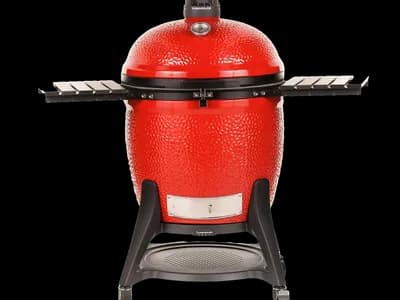
Kamado Joe Big Joe III 24"
The Big Joe bakes two bases at once: key when half the work happens outside the oven.
€3,199
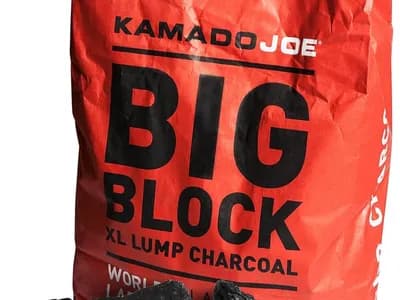
Kamado Joe Big Block XL lump charcoal 9.1 kg
A neutral, clean bed that does not compete with great ham.
€67
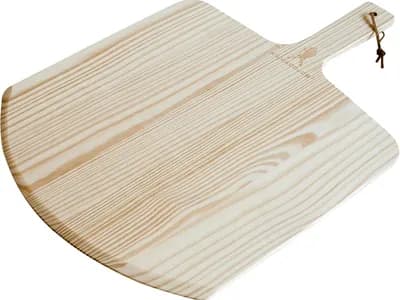
Kamado Joe Wooden Pizza Peel
The wood doubles as a serving board: the pizza gets dressed and presented on the same peel.
€49
Ooni 14" Perforated Aluminium Pizza Peel
For launching and turning the margherita base that serves as the canvas.
€26

Boska Friends L Round Serving Board Oak 55 cm
€150
Have you made it?
Tell us how it turned out on your kamado. We review every rating before publishing it.
No published ratings yet. Be the first!
FAQ
Does the ham on a pizza get baked or added after?
Quality cured hams — Parma, San Daniele, serrano, Ibérico — always go on after the oven, onto the just-baked pizza. The cure has already "cooked" the meat; the oven merely evaporates its aromatic fat, doubles its saltiness by concentration and toughens it. The exception is cooked ham (york, prague), which does go into the oven under the cheese: it needs heat to integrate and has no noble fat to lose.
How do I keep rocket from wilting on the pizza?
Three keys: perfectly dry rocket (spun and rested on paper), added on top of the ham rather than straight onto molten cheese, and the pizza served without delay. The ham acts as a partial heat barrier so the leaf takes just enough warmth to open its pepperiness without collapsing. Variety matters too: wild rocket (narrow leaf) stands heat better than the waterier bagged cultivated kind.
Is Italian prosciutto or Spanish serrano better on this pizza?
They make two different pizzas, both excellent. Parma is sweeter and fattier, melts into the mozzarella and gives the "author Italian pizzeria" result. Gran reserva serrano is drier, more saline, deeper-cured: it asks for a touch more oil on top but leaves a longer finish. With acorn-fed Ibérico you enter another category — and then drop the Parmesan so nothing steals its spotlight. A good rule of thumb: Parma for everyday summer eating, Ibérico when there is something to celebrate.
What do I do with the embers left after making Ham and rocket pizza on the kamado?
After 3 min at 340 °C in a classic kamado about 350 g of live embers remain: 20 min more at 340 °C without touching the vents or 20 min at 210-270 °C closing the vents. If you are not going to use them, close both vents and keep the charcoal for next time.
More kamado recipes


KEEP READING
Go deeper on this dish
- Recommended kamado
Kamado Joe Big Joe III 24"
The Big Joe bakes two bases at once: key when half the work happens outside the oven.
- Editorial guide
Your first kamado: the complete pre-purchase guide
Size, materials, brand and budget. Everything you have to decide before clicking Buy, told by someone who has made enough mistakes.
- Glossary term
Heat deflector
Ceramic plate placed between the coals and the grate to turn direct fire into indirect cooking.
- Related comparison
big green egg xl vs kamado joe big joe iii
The XL derby: 61 cm grate on both, same vocation of cooking for 10-12, but opposite philosophies. The Big Joe III ships…