Recipe · Pizza · Advanced
Classic calzone on the kamado
A sealed pizza is a promise: outside, a golden crackling dome; inside, ricotta, mozzarella and ham steamed molten by their own crust. The kamado nails both halves.
Quick answer
Calzone bakes at 300 °C (lower than pizza) on a saturated stone for 10-12 minutes, so the centre reaches 70-75 °C without charring the dome. Fill only half the dough with well-drained ricotta, mozzarella, ham and parmesan, seal it with overlapping crimped folds and rest it for 4 minutes before cutting.

One big step at a time, screen kept on and built-in timers.
- Prep
- 1480 min
- Cook
- 12 min
- Servings
- 2 servings
- Temperature
- 300 °C
What time do you want to eat?
Pick a time and we'll tell you when to start.
12:13
the day before
Start the prep
12:53
Light the kamado
13:38
Onto the kamado
14:00
Serve
Estimate: it includes lighting and settling the kamado plus a margin for large cuts. If the recipe asks you to marinate or salt ahead, add that time.
Fire setupStone or steel
- Dome
- 300 °C
- Grate
- Raised
- Setup
- Raised stone and pizza peel
Temperature curve
1:05 h from lighting
Kamado dome
| # | From | Phase | Dome |
|---|---|---|---|
| 1 | 0:00 | Light the charcoalRaised stone, 45 min saturation, vents at three quarters | 20 → 300 °C |
| 2 | 0:45 | BakeTurn 180° at 5-6 min; golden top that sounds hollow | 300 → 265 °C |
| 3 | 0:57 | Recover temperature | 265 → 300 °C |
| 4 | 1:01 | RestOn a rack, never a board | 300 → 280 °C |
| 5 | 1:05 | Serve | off |
0:00 is the moment you light the charcoal. Internal temperatures are the ones the recipe gives; without a probe, go by the times. Turn these times into clock times with the planner
For this recipe
Ingredients
- "00" flour, W 260-300 (100% baker's)500 g
- cold water (60% hydration: easier dough to seal)300 ml
- fine sea salt (2.8%)14 g
- fresh yeast (0.2%)1 g
- ricotta, drained in a sieve for 2 hours250 g
- low-moisture mozzarella, diced200 g
- quality cooked ham, in strips120 g
- grated Parmesan40 g
- crushed tomato (to crown, optional)150 g
- black pepper and nutmeg1 pinch
Allergens
- Gluten
- Milk
Based on the recipe's ingredients. Always check the label of every product you buy.
The gear for this recipe
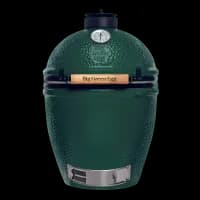 Big Green Egg LargeLegendary stability at 300°C: a calzone needs 12 minutes without swings.
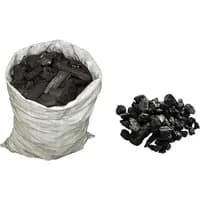 Orework Spanish Holm Oak Charcoal 15 kgHolm-oak with a calm flame for a 12-minute bake without surprises.
 Onlyfire cordierite pizza stone 38 × 30 cmA broad rectangular surface for turning a piece that weighs twice what a pizza does.
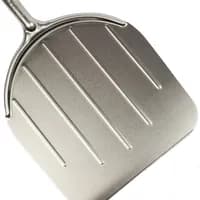 Falci Aluminium Pizza Peel 32 × 34 cmA wide, rigid peel: the committed launch a loaded calzone demands.
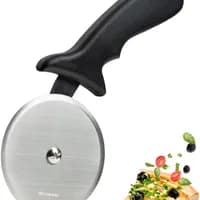 Westmark Professional XXL Pizza Wheel Cutter (ø 10 cm)
Method
- 01
60% hydration dough and a dry filling
A 24-hour dough with a touch less water: crimping demands dough that does not stick. Mix the filling at the last minute: VERY well-drained ricotta, mozzarella, ham, Parmesan, pepper and nutmeg. If the mix glistens with whey, drain further: a wet filling is enemy number one.
- 02
Kamado at a stable 300°C
Stone raised, 45 minutes of saturation, vents trimmed to three-quarters to pin 300°C. Any hotter and the dome browns before the calzone's core passes 70°C — the point where ricotta sets and mozzarella flows.
- 03
Stretch and fill the half-moon
Stretch each 250 g ball to 26-28 cm, slightly thicker than for pizza. Spread half the filling over ONE half of the disc only, leaving a clean 3 cm margin to the edge. The temptation to overfill is strong; resist it or the seal will fail.
- 04
Seal with a rope crimp
Fold the empty half over the filling and line up the edges. Press the whole arc with your fingers, then crimp: fold a corner over itself and keep pleating each section over the previous one, pressing, until the half-moon is closed by a rope of dough. No egg wash or water: pressure is enough if the rim stayed clean.
- 05
Bake 10-12 minutes with a turn
Slide the calzone onto the stone with a well-floured peel (it weighs twice what a pizza does: commit to the move) and crown it with a couple of spoonfuls of tomato and a thread of oil if you like it Neapolitan-style. Rotate 180° at 5-6 minutes. It is done when the dome sounds hollow to a knuckle-tap and wears a deep gold.
- 06
A mandatory 4-minute rest
The inside emerges at iron-foundry temperature. Four minutes on a rack (not a board: the base steam would soften it) bring the filling down to pleasure temperature and let the ricotta finish setting. Cut on the diagonal and let it steam at the table.
About this recipe
A calzone is not a pizza folded out of laziness: it is a different technique. The dough acts as an oven within the oven, steaming the filling while the surface toasts. That is why it bakes at 300°C, not 350°C: an open Neapolitan can sprint; a calzone needs the inside to set before the dome burns.
The seal is 90% of the game
A calzone that bursts open in the oven is a calamity with no way back: the filling spills, the stone fouls and the dough deflates. The edge is closed with a rope crimp, folding and pressing each pleat over the last like a Galician empanada — a gesture every Spanish cook ships from the factory. And never prick the surface: that trapped steam is what cooks the filling.
Will it fit your kamado?
Small
33-40 cm · Joe Jr, MiniMax
Tight
A 26-28 cm calzone probably just fits a small stone; the two are baked in two batches.
Medium
46-51 cm · Classic, Large
Fits
One calzone per bake with room to turn it; the two go one after the other.
Large
56-61 cm · Big Joe, XL
Fits
With a large stone both calzones may fit at once, without touching.
What to serve with it
Sides
- Rocket and tomato salad
- Grilled wild asparagus
- Wine
- Young red from Valdepeñas or Campo de Borja Garnacha
- Beer
- Pilsner or red ale
- Alcohol-free
- Sparkling water with lemon and basil
Leftovers and storage
- In the fridge
- Refrigerate within 2 h, wrapped or airtight; 2-3 days because of the ricotta and ham.
- Freezing
- Freezes well whole and wrapped: 2-3 months. Thaw in the fridge; do not refreeze.
- Reheating
- Oven or kamado at 180 °C for 12-15 min, to 74 °C in the centre; tent with foil if it browns too fast.
- Using them up
- Sliced, cold or warm, as a packed lunch for a picnic or work.
Cool and refrigerate within 2 hours. When in doubt, throw it out.
Leftover embers
You still have embers: what to do with the leftover heat
For 12 min at 300 °C in a classic kamado you load about 1.25 kg of charcoal and burn 900 g: when you serve, about 350 g of live embers remain. Before you shut the vents, that is still enough for:
Without touching the vents
300 °Cfull heat, direct
20 minof embers
- Iberian pork tenderloin grilled with Pedro Ximénez glaze8 min · 280 °C
- Sesame-Crusted Seared Bluefin Tuna on the Kamado (Tataki)4 min · 280 °C
- Red prawns over live fire on the kamado in 6 minutes6 min · 280 °C
No recipe needed
- Pita or naan from shop dough, on the grate (2 min each)
- Whole peppers until the skin blackens, for peeling (8 min)
- Pineapple or peach slices, char-marked (3 min)
Closing the vents a little and waiting for it to drop
210-270 °Cgrilled vegetables
20 minof embers
- Grilled Watermelon with Feta, Mint and Balsamic Reduction10 min · 250 °C
- Blistered Padrón Peppers on the Kamado8 min · 260 °C
- Saffron Milk Caps on a Steel Griddle with Garlic and Parsley10 min · 250 °C
No recipe needed
- Strips of courgette and aubergine, char-marked (5 min)
- Pita or naan from shop dough, on the grate (3 min each)
- Halved tomatoes, cut side down, for a sauce (10 min)
Before opening the lid, crack it open for a few seconds first; if you raise the heat, stir the ash so the coals can breathe. And if you are not going to use them: once the food is out, close the bottom and top vents. The charcoal that does not burn (about 350 g) can be used next time. Different size of kamado? Work out your load for 1 h of fire, lighting included.
No kamado?
How to make it without a kamado: oven, gas grill or pellets
Calzone bakes at 300 °C on a stone for 10-12 minutes, slower than a pizza. That is why it handles a home oven well: it just takes a bit longer.
Home oven
- Temp.
- 275 °C (the maximum) with a stone or steel
- Time
- 14-16 min, about 4 min longer than on the kamado
- Stone or steel on the middle rack, preheated for 45 min at full whack
- If the top is still pale at the end, give it 1-2 min under the top grill
- With more minutes in the oven, drain the ricotta even harder: any whey ends up in the base
SmokeBarkJuicinessVery close; slightly drier dough from the extra minutes
Gas grill
- Temp.
- 300 °C with a stone, all burners on, lid down
- Time
- 10-12 min, same as on the kamado
- Heat the stone 30-45 min with everything on; when the calzone goes in, drop the burners beneath it to medium
- Turn it every 3-4 min instead of once: gas heats one side harder
- If the base is ahead of the top, move it to the upper rack for the last couple of minutes
SmokeBarkJuicinessTurns out well, but watch that the base does not burn
Pellet grill or electric smoker
- Temp.
- 260-290 °C with a stone, the pellet grill's maximum
- Time
- 12-15 min, a little longer than on the kamado
- Stone on the grate, preheated for 45 min with the grill flat out
- The top browns more slowly: brush it with oil before it goes in
- An electric smoker will not do: at 135 °C the dough never bakes in time
SmokeBarkJuicinessDecent but paler; pellet grill only
Temperatures and times are a guide; the original recipe is the kamado one. Tempted? which kamado to choose for what you cook
Editor's tips
- Market ladle ricotta beats the tub kind: less whey, more body. Drain it anyway.
- The "fritta" version for the brave: same calzone, in a deep pan with two fingers of oil at 170°C. Naples approves.
- If the rope crimp defeats you, seal with two firm passes of a fork: less beautiful, equally airtight.
Gear for this recipe
As an Amazon Associate, mikamado.es earns from qualifying purchases. At no extra cost to you.
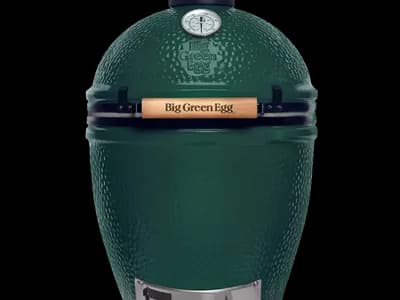
Big Green Egg Large
Legendary stability at 300°C: a calzone needs 12 minutes without swings.
€2,099
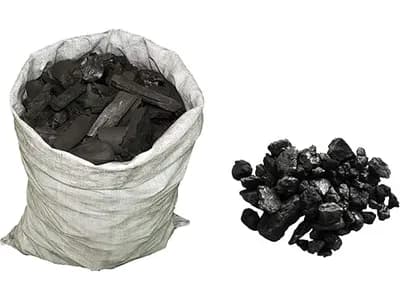
Orework Spanish Holm Oak Charcoal 15 kg
Holm-oak with a calm flame for a 12-minute bake without surprises.
€45

Onlyfire cordierite pizza stone 38 × 30 cm
A broad rectangular surface for turning a piece that weighs twice what a pizza does.
€35

Falci Aluminium Pizza Peel 32 × 34 cm
A wide, rigid peel: the committed launch a loaded calzone demands.
€40
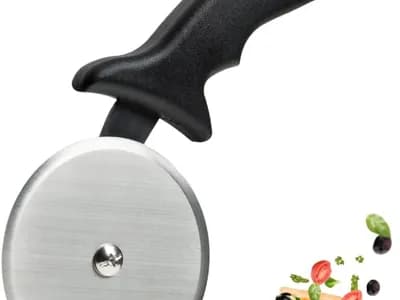
Westmark Professional XXL Pizza Wheel Cutter (ø 10 cm)
€11
Have you made it?
Tell us how it turned out on your kamado. We review every rating before publishing it.
No published ratings yet. Be the first!
FAQ
At what temperature do you bake a calzone in a kamado?
At 300°C on a well-saturated stone, around 10-12 minutes. That is deliberately lower than Neapolitan pizza (350°C) because a calzone is a thick-dough product with a raw, moist filling inside: it needs time for the core to reach 70-75°C. At 350°C the surface chars while the heart is still cold and the ricotta unset. If your kamado is running hot, waiting for it to drop beats gambling: with calzone, haste always loses.
Why does my calzone burst open in the oven?
Three culprits in order of frequency: too much or too-wet filling generating more steam than the dough can hold; a rim dirtied with filling or flour at sealing time, stopping the dough from welding to itself; and a timid single-fold crimp. A clean 3 cm margin, a drained filling and an overlapping rope crimp solve 95% of cases. The remaining 5%: overproofed dough too fragile to hold the pressure — use your dough inside its 24-48 hour window.
What goes in a traditional calzone?
The canonical Neapolitan: ricotta, mozzarella (or smoked provola), salame or cooked ham, Parmesan and black pepper — sometimes crowned outside with tomato and a tear of oil. Ricotta is the soul: the creamy mattress binding the rest. From there, worthy variants are endless (sautéed spinach, mushrooms, artichoke) with one constant: every ingredient must go in cooked or cured and as dry as possible, because inside a calzone nothing evaporates.
Can you make calzone without a kamado?
Yes, and more easily than a Neapolitan pizza, because a calzone already bakes at 300 °C for over 10 minutes. In a home oven at 275 °C on a stone it takes 14-16 minutes; on a gas grill it matches the kamado if you watch the base.
What do I do with the embers left after making Classic calzone on the kamado?
After 12 min at 300 °C in a classic kamado about 350 g of live embers remain: 20 min more at 300 °C without touching the vents or 20 min at 210-270 °C closing the vents. If you are not going to use them, close both vents and keep the charcoal for next time.
More kamado recipes



KEEP READING
Go deeper on this dish
- Recommended kamado
Big Green Egg Large
Legendary stability at 300°C: a calzone needs 12 minutes without swings.
- Editorial guide
How to light a kamado: the step-by-step method
No petrol, no weird tablets and no 45-minute waits. The cone method, airflow control and the mistakes that prevent 80% of the frustration.
- Glossary term
Heat deflector
Ceramic plate placed between the coals and the grate to turn direct fire into indirect cooking.
- Related comparison
big green egg large vs kamado joe classic iii
The classic kamado matchup: the Big Green Egg Large, the indestructible pioneer with the widest accessory network, agai…