Recipe · Pizza · Medium
Roasted vegetable pizza with burrata on the kamado
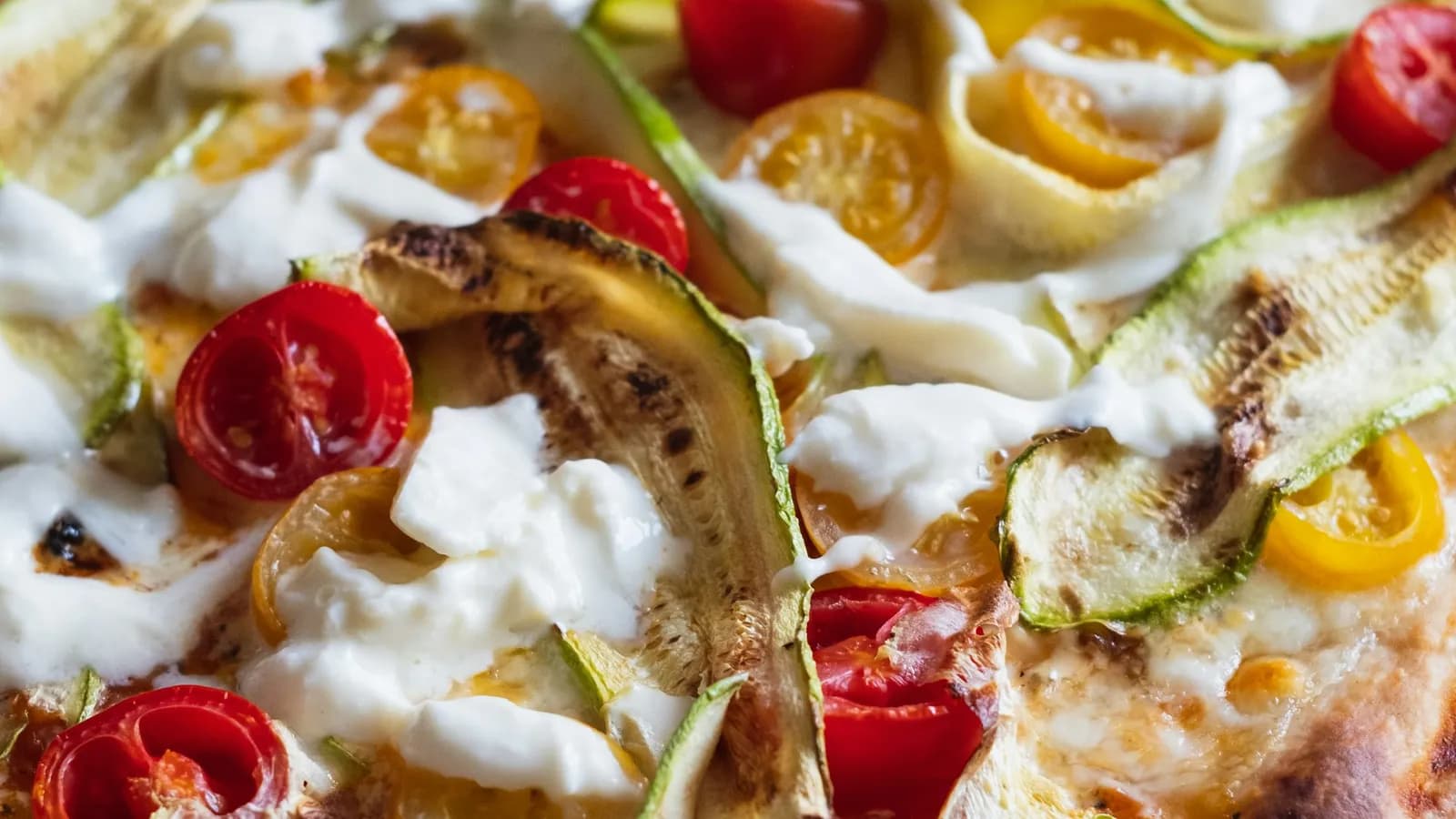
Courgette and peppers seared over the coals while the stone loads up, and a cold burrata torn over the steaming pizza. The warm-cold contrast does all the work.
Quick answer
Roast all the vegetables (courgette, pepper, cherry tomatoes) before they touch the dough so they don't make the pizza soggy. Bake the base with tomato and the vegetables at 330 °C, 2-3 minutes, with no cheese. The burrata is torn on cold by hand over the hot pizza as it comes out: that warm-cold contrast is what makes the dish.
- Prep
- 1470 min
- Cook
- 20 min
- Servings
- 4 servings
- Temperature
- 330 °C
Ingredients
- "00" flour, W 260-300 (100% baker's)500 g
- cold water (62% hydration)310 ml
- fine sea salt (2.8%)14 g
- fresh yeast (0.2%)1 g
- crushed San Marzano tomatoes300 g
- courgette in 3 mm ribbons (use a peeler)1 ud
- red pepper in wide strips1 ud
- cherry tomatoes on the vine150 g
- 125 g burratas, fridge-cold2 uds
- fresh basil10 hojas
- extra virgin olive oil3 cdas
Method
- 01
24h dough and vegetables prepped
Standard slow-ferment dough in 200 g balls. Cut the courgette into ribbons, the pepper into strips and keep the cherries whole; light salt and a thread of oil just before grilling, not earlier (early salting pulls the water out in the bowl).
- 02
Grill the vegetables while the stone loads
Kamado climbing towards 330°C with the stone raised on one side and free grate on the other (or grill before setting the stone). Sear the courgette ribbons 40 seconds a side, the pepper until the skin blisters and the cherries until they burst. Set aside on a plate, uncovered: trapped steam would overcook them.
- 03
Saturate the stone at 330°C
Vegetables done, centre the stone and give it its 45 minutes at 330°C. Use the time to take the burratas out... no: the burratas stay in the fridge until the very last second. Use the time to pour a vermouth.
- 04
Top and bake 2-3 minutes
Stretch to 30 cm: a thin layer of tomato (70 g), the roasted vegetables artfully placed — courgette ribbons in waves, pepper, burst cherries — and no cheese yet. Bake 2-3 minutes with a halfway turn, until the cornicione puffs.
- 05
Cold burrata over hot pizza
On the board, tear the burratas by hand and scatter the shreds across the surface: the creamy heart spills between the vegetables. Basil, a ribbon of oil, salt flakes and pepper. Serve before the chill fully surrenders.
About this recipe
Vegetable pizzas usually fail because raw vegetables sweat water over the cheese. The kamado's solution is elegant: while the stone saturates, the vegetables roast directly on the grate, losing their water over the coals — not over the dough — and gaining the sweet char of a proper sear. By bake time they are a concentrated ingredient, not wet ballast.
The burrata never enters the oven
Non-negotiable rule: the burrata is torn by hand over the pizza once it is out of the kamado, fridge-cold. The stracciatella centre warms through with residual heat, creating that creamy-cool contrast against the hot vegetables that justifies the whole dish. Baked, burrata is just watery, expensive mozzarella.
Editor's tips
- Seasonal vegetables rule: green asparagus in spring, aubergine in summer, roast pumpkin and kale in autumn-winter.
- Burrata under 48 hours old if your shop allows: the difference between liquid and pasty stracciatella is the date.
- No burrata at hand? Cold medallions of good goat cheese make an equally worthy, different dish.
Gear for this recipe
As an Amazon Associate, mikamado.es earns from qualifying purchases. At no extra cost to you.


FAQ
Do you bake burrata on a pizza?
Never. Burrata is a mozzarella pouch filled with stracciatella (cream and pulled-curd strands): baked, the cream splits, floods the pizza, and you lose exactly the cool creaminess that makes it special. It is always added after the bake, cold and hand-torn, so the temperature contrast can work its magic. If you want melted cheese IN the oven, use fior di latte and save the burrata for the finish — or for another pizza.
How do I stop a vegetable pizza from going soggy?
By roasting or searing ALL the vegetables before they touch the dough — rule number one, ignored by 90% of home recipes. Courgette is 95% water: raw on a pizza, that water releases in the oven and soaks the centre. Passed over the coals it loses half its weight and concentrates its flavour. The same applies to mushrooms, aubergine, onion and spinach (the latter sautéed and squeezed thoroughly). The only vegetables licensed to go on raw are paper-thin ones: feathered red onion and little else.
Which vegetables work best on a kamado-style pizza?
The ones that gain from live fire: thin-cut courgette and aubergine (they confit), peppers (charred skin is an aromatic bonus), vine cherry tomatoes (they burst into a second sauce), asparagus and spring onion. Delicate leaves do poorly in the bake (rocket and basil always go on fresh at the end), as do dense brassicas like broccoli, which need separate pre-cooking. The kamado criterion: if a vegetable improves over coals at a barbecue, it improves on this pizza.
More kamado recipes
Margherita pizza on the kamado
Tomato, fior di latte and basil: three ingredients and nowhere to hide. On a 350°C stone the cornicione puffs in seconds and the margherita reminds you why it is still the queen.
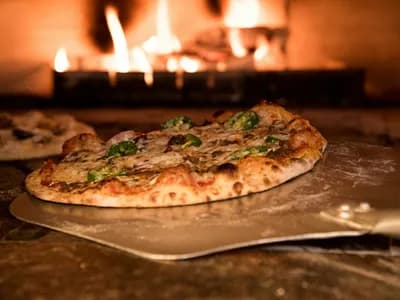
Sourdough pala-style pizza on the kamado
A Roman pala-style pizza — long, with a tall, open-crumb edge — leavened with sourdough and baked on steel at 350°C with the deflector in.
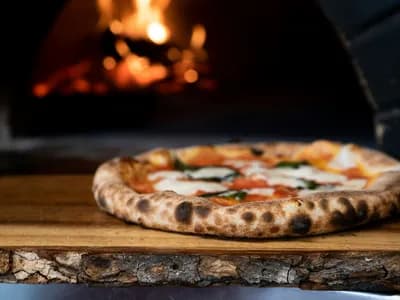
Neapolitan pizza on the kamado
At 350°C the base puffs in 90 seconds and the cornicione comes out leopard-spotted and pillowy. One pizza, three minutes, zero margin for error.
KEEP READING
Go deeper on this dish
- Recommended kamado
Monolith Classic Pro 2.0
The German alternative to the Kamado Joe Classic III
- Editorial guide
Your first kamado: the complete pre-purchase guide
Size, materials, brand and budget. Everything you have to decide before clicking Buy, told by someone who has made enough mistakes.
- Glossary term
Heat deflector
Ceramic plate placed between the coals and the grate to turn direct fire into indirect cooking.
- Related comparison
kamado joe classic iii vs monolith classic pro 2 cart
The comparison every European cook eventually makes: the Kamado Joe Classic III, the US reference with SlōRoller, again…