Recipe · Pizza · Easy
Marinara pizza on the kamado
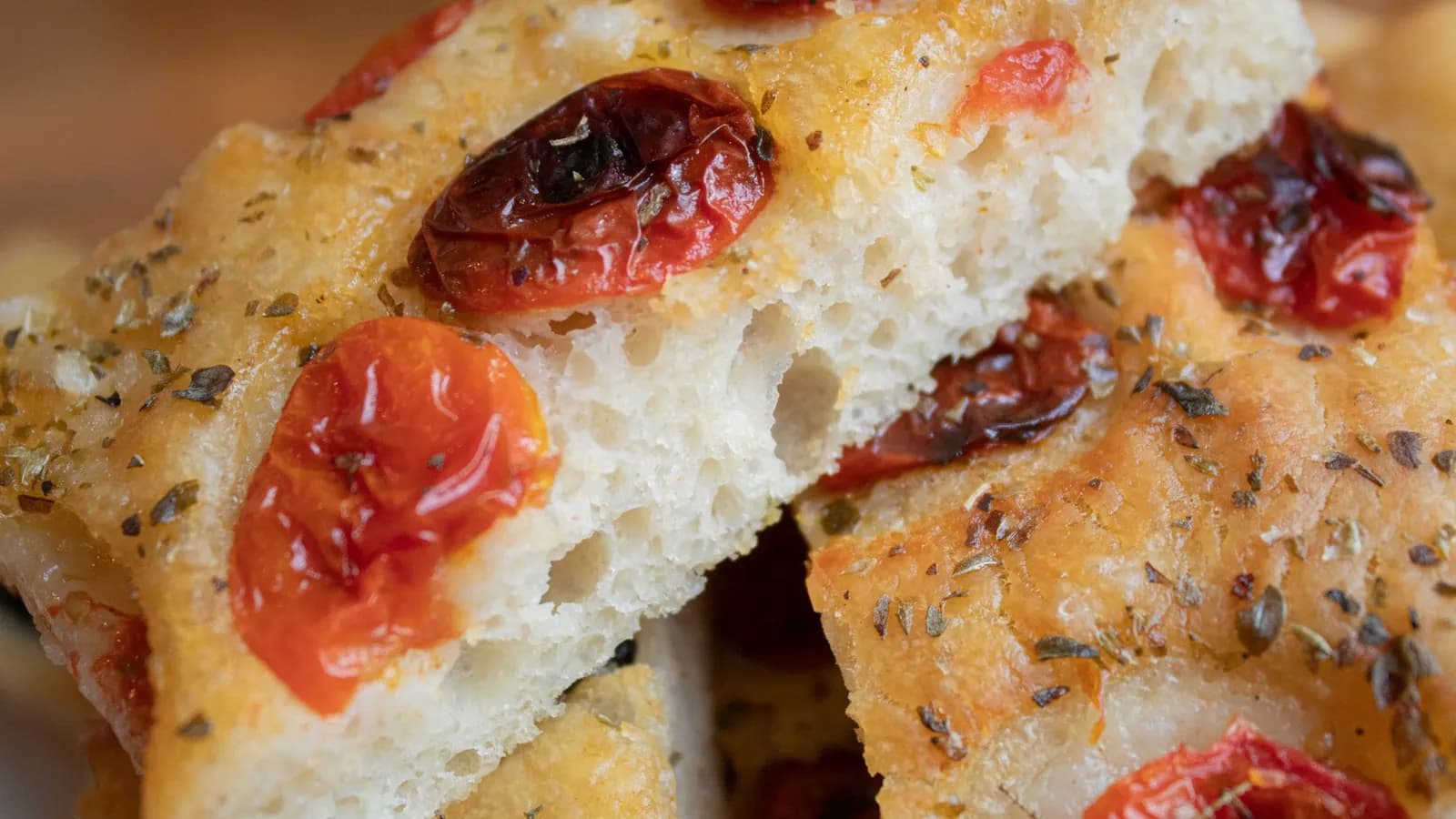
Naples' oldest pizza carries no cheese and never misses it: tomato, sliced garlic, oregano and good oil on a dough with character. Vegan by birth, since 1734.
Quick answer
Marinara is vegan by origin: tomato, sliced garlic, oregano and oil, no cheese. It bakes on a saturated stone at 350 °C in about 90 seconds. The garlic goes in thin slices over the tomato, never on bare dough, so it confits instead of burning. Finish with oregano and oil as it comes out.
- Prep
- 1460 min
- Cook
- 2 min
- Servings
- 4 servings
- Temperature
- 350 °C
Ingredients
- "00" flour, W 260-300 (100% baker's)500 g
- cold water (62% hydration)310 ml
- fine sea salt (2.8%)14 g
- fresh yeast (0.2%)1 g
- San Marzano DOP tomatoes, hand-crushed400 g
- garlic, very thinly sliced4 dientes
- dried oregano (on the branch if you can find it)2 cdtas
- extra virgin olive oil6 cdas
Method
- 01
Dough: 24h cold ferment
Same working dough as the margherita: yeast dissolved in water, flour, 10 minutes of kneading, salt at the end. Two hours at room temperature, 24 in the fridge and 4 hours tempering in 200 g balls before stretching.
- 02
Kamado at 350°C, stone saturated
Stone raised from the start, vents fully open and 45-60 minutes of patience once 350°C is reached. With no cheese on board, the marinara is even less forgiving of a cold stone: all the magic lives in a crisp, open-crumbed base.
- 03
Tomato seasoned, never cooked
Crush the tomatoes by hand and season only with a pinch of salt. Never pre-cook the sauce: at 350°C it concentrates in the oven and keeps the fresh acidity this pizza needs to avoid falling flat.
- 04
Top: tomato, garlic, oregano, oil
Stretch to 28-30 cm, spread 90 g of tomato to within 2 cm of the rim, scatter the garlic slices, half the oregano and a thread of oil. The garlic should sit on the tomato, half-sunk: there it confits instead of burning.
- 05
Bake 90 seconds, turn halfway
Onto the centre of the stone, lid closed, and rotate 180° at 45 seconds. With no cheese to watch, the exit cue is the rim: puffed, leopard-spotted, the big bubbles lightly charred.
- 06
Finish off the heat: oregano and oil
Once out, the rest of the oregano rubbed between your fingers and a generous ribbon of extra virgin. If you like heat, a few chilli flakes suit it beautifully without betraying the original.
About this recipe
With no cheese as a safety net, the marinara is the most honest pizza there is: either the dough and the tomato are excellent, or there is no pizza. That is why it is the pizzaiolo's favourite for judging an oven — and the best choice for breaking in your kamado's stone. It also happens to be the oldest vegan option in the Italian repertoire.
Garlic that perfumes, not punishes
The garlic goes on in paper-thin slices scattered over the tomato, where it confits during the ninety-second bake. Chop it and it burns; grate it and it dominates. The oregano is added half before the bake, half after: the first round toasts and gives depth, the second arrives alive and resinous. A generous ribbon of extra virgin olive oil at the end plays the role of cheese, adding the fat that rounds out the bite.
Editor's tips
- Slice the garlic with a mandoline or a razor-sharp knife: under a millimetre it confits; thicker, it stays raw and aggressive.
- It is the perfect pizza for calibrating a new stone: with no cheese you see exactly how the base bakes and where the hot spots are.
- A touch of smoke suits it especially well: one small holm-oak split on the coals just before baking.
Gear for this recipe
As an Amazon Associate, mikamado.es earns from qualifying purchases. At no extra cost to you.


FAQ
Is marinara pizza vegan?
Yes, by origin and with no adaptations: a dough of flour, water, salt and yeast, plus tomato, garlic, oregano and olive oil. It predates the margherita and was born as sailors' food ("marinai"), who needed ingredients that kept without refrigeration on board. It is probably the vegan dish with the most centuries of history in Italian cooking — not a watered-down version of anything: in Naples it is ordered in its own right.
How do I keep the garlic from burning at 350°C?
Three rules: thin slices (not chopped), always on top of the tomato and never on naked dough, and a thread of oil over it before baking. The tomato and the oil buffer the temperature so the garlic confits instead of toasting. If it still browns too much, slice the garlic and steep it in olive oil for 10 minutes; then spread that oil, slices and all, so they go in pre-protected.
Which tomatoes should I use for marinara pizza?
Quality canned whole peeled tomatoes — San Marzano DOP if the budget allows, or good Spanish plum tomatoes — crushed by hand and uncooked. Avoid fried tomato sauces and cooked passatas: the marinara depends on the live acidity of raw tomato concentrating in the oven. Taste before topping: if it is overly acidic, correct with a pinch of salt, never sugar.
More kamado recipes
Margherita pizza on the kamado
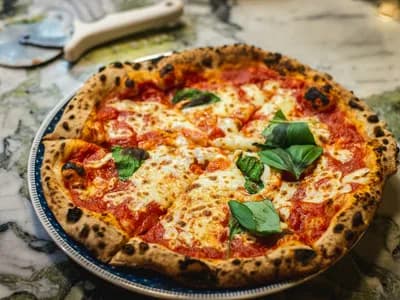
Tomato, fior di latte and basil: three ingredients and nowhere to hide. On a 350°C stone the cornicione puffs in seconds and the margherita reminds you why it is still the queen.
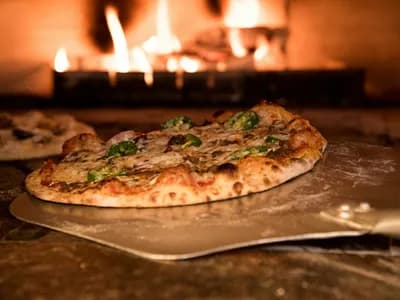
Sourdough pala-style pizza on the kamado
A Roman pala-style pizza — long, with a tall, open-crumb edge — leavened with sourdough and baked on steel at 350°C with the deflector in.
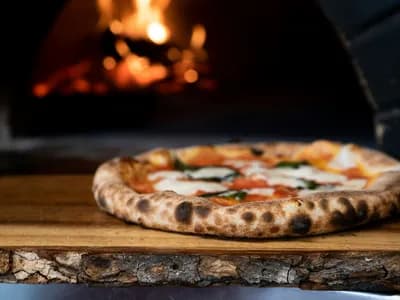
Neapolitan pizza on the kamado
At 350°C the base puffs in 90 seconds and the cornicione comes out leopard-spotted and pillowy. One pizza, three minutes, zero margin for error.
KEEP READING
Go deeper on this dish
- Recommended kamado
Big Green Egg Large
The classic kamado that defined the category
- Editorial guide
Your first kamado: the complete pre-purchase guide
Size, materials, brand and budget. Everything you have to decide before clicking Buy, told by someone who has made enough mistakes.
- Glossary term
Heat deflector
Ceramic plate placed between the coals and the grate to turn direct fire into indirect cooking.
- Related comparison
big green egg large vs kamado joe classic iii
The classic kamado matchup: the Big Green Egg Large, the indestructible pioneer with the widest accessory network, agai…