Recipe · Pizza · Medium
Diavola pizza on the kamado
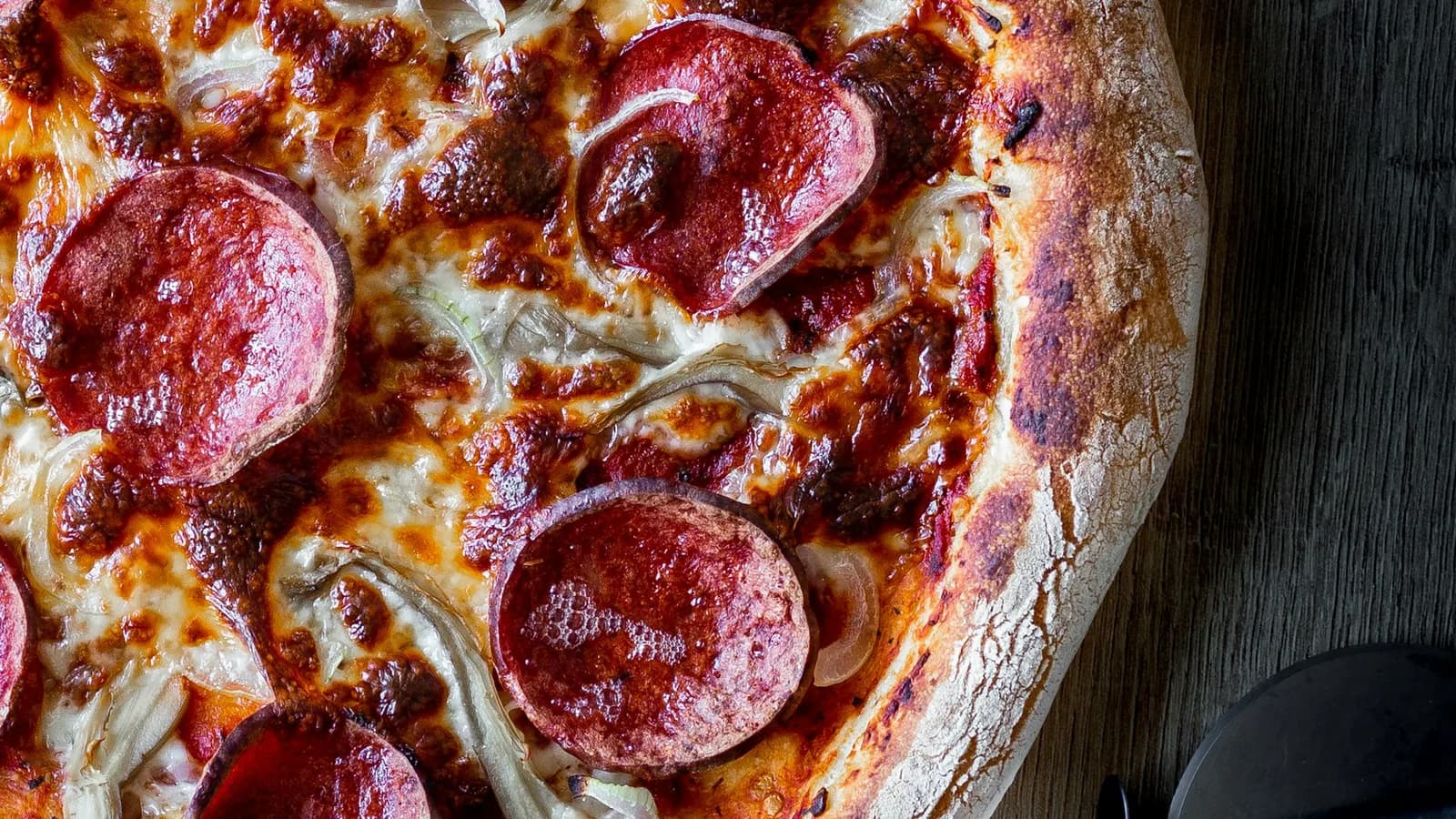
Spicy salami curling and bleeding its red oil over the mozzarella, and a thread of hot honey to finish. The diavola is pure balance of fire, fat and sweetness.
Quick answer
Diavola bakes on a stone at 350 °C in about 2 minutes. Put the spicy salami on top of the mozzarella, never underneath, so it curls into cups and releases its red oil. As it comes out, drizzle with hot honey, aiming for the salami cups: that sweet-and-spicy is what defines the dish.
- Prep
- 1470 min
- Cook
- 3 min
- Servings
- 4 servings
- Temperature
- 350 °C
Ingredients
- "00" flour, W 260-300 (100% baker's)500 g
- cold water (62% hydration)310 ml
- fine sea salt (2.8%)14 g
- fresh yeast (0.2%)1 g
- crushed San Marzano tomatoes350 g
- fior di latte, drained250 g
- Calabrian spianata or ventricina, thinly sliced120 g
- wildflower honey4 cdas
- fresh chilli or dried cayenne1 ud
- cider vinegar (for the hot honey)1 cdta
Method
- 01
Dough and hot honey the day before
Make the standard 24-hour dough (200 g balls, 4 hours tempering). For the hot honey: warm the honey with the sliced chilli and the vinegar over minimal heat for 5 minutes, never boiling, and leave to infuse until the next day. Strain it if you dislike surprises.
- 02
Kamado at 350°C with a touch of wood
Stone raised, vents open, 45-60 minutes of saturation. If your kamado allows it (or you use a wood-fired oven like the Karu), add an oak split just before the first pizza: light smoke lifts the paprika in the salami.
- 03
Top with the salami ON the mozzarella
Stretch to 28-30 cm: 80 g of tomato, torn mozzarella, and the salami slices on top — never under the cheese. Exposed to the dome's direct heat is how they curl into cups with toasted edges; buried, they just sweat grease.
- 04
Bake 2 minutes, watching the curl
Launch onto the centre of the stone and rotate 180° at 50 seconds. The diavola takes slightly longer than a margherita because the salami cools the surface: pull it when the salami cups have crisp edges and the mozzarella is bubbling.
- 05
Hot honey in a thread, off the heat
On the board, drizzle a thin thread of hot honey — one tablespoon per pizza, no more — aiming for the salami cups, where the sweetness mingles with the red oil. Anyone who tries it this way never goes back to a dry diavola.
About this recipe
The diavola demands a salami that actually tastes of something: Calabrian spianata, ventricina or, in a Spanish accent, a good thin-cut spicy chorizo. The visual and textural trick is getting the slices to curl into little cups that concentrate their paprika oil in the middle. That only happens with thin slices and a genuinely hot oven — the kamado's natural territory.
Hot honey: the finish that changes the pizza
The spicy-sweet pairing is no American fad: it is the same principle as cheese with quince. Warm honey with chilli and a splash of vinegar, and apply it in a thin thread, only after the bake — inside the oven it caramelises and turns bitter. The contrast with the salami fat and the lactic mozzarella is what turns a spicy pizza into a memorable diavola.
Editor's tips
- Have the salami machine-sliced at 1.5-2 mm: slice thickness decides whether it curls into cups or lies flat and greasy.
- If you skip making hot honey, mix honey with a few drops of your favourite chilli sauce right before serving.
- A ten-out-of-ten Spanish version: spicy Iberian chorizo and rosemary honey. It is not Calabria, but it argues as an equal.
Gear for this recipe
As an Amazon Associate, mikamado.es earns from qualifying purchases. At no extra cost to you.
FAQ
Which salami goes on an authentic diavola pizza?
In Italy, Calabrian salame piccante: spianata (flat, marbled, elegantly hot) or ventricina (coarser and heavier on paprika). American pepperoni is a valid descendant but fattier and sweeter. In Spain, a good-house spicy chorizo sliced very thin gives a spectacular result with its own personality; avoid soft sarta chorizo, which renders too much fat and never curls.
Does hot honey go on before or after the bake?
Always after, with the pizza already out of the kamado. At 350°C honey sugars caramelise within seconds and shift from floral sweetness to burnt bitterness, staining the surface brown along the way. Applied after the bake it keeps its aroma, stays glossy and creates the hot-cold, sweet-spicy contrast that defines the dish. The only exception is baking below 250°C — and even then the result is inferior.
How do I control the heat level for the whole family?
Build the heat in removable layers: use the mildest salami in the spicy range, and keep all the extra fire in the hot honey and a dish of chilli flakes served on the side. That way the base pizza suits almost everyone and each guest scales their personal inferno at the table. It works better than baking the heat in, where there is no way back.
Why does the salami release so much grease and soak the pizza?
Either the slices are too thick, or they are buried under the cheese, or the salami is low quality with poorly emulsified fat. Thin slices (1.5-2 mm) and always on top of the mozzarella: the dome's direct heat evaporates part of the fat and toasts the edges rather than letting it pool. If it still feels greasy, crisp the slices for 60 seconds on kitchen paper in a pan before topping.
More kamado recipes
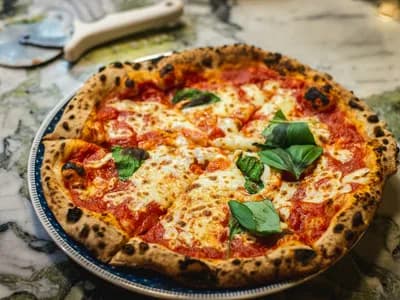
Margherita pizza on the kamado
Tomato, fior di latte and basil: three ingredients and nowhere to hide. On a 350°C stone the cornicione puffs in seconds and the margherita reminds you why it is still the queen.
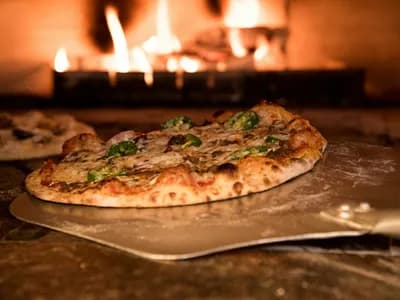
Sourdough pala-style pizza on the kamado
A Roman pala-style pizza — long, with a tall, open-crumb edge — leavened with sourdough and baked on steel at 350°C with the deflector in.
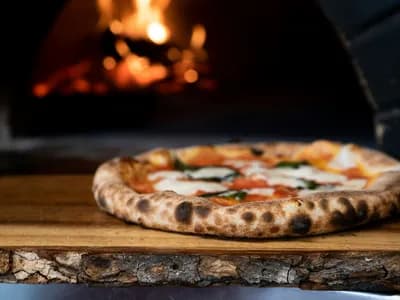
Neapolitan pizza on the kamado
At 350°C the base puffs in 90 seconds and the cornicione comes out leopard-spotted and pillowy. One pizza, three minutes, zero margin for error.
KEEP READING
Go deeper on this dish
- Recommended kamado
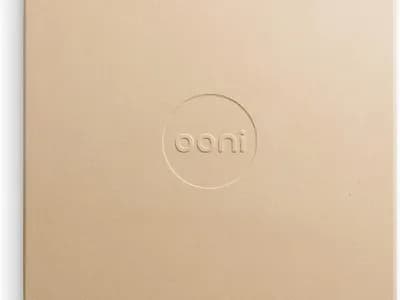
Ooni Cordierite Pizza Baking Stone
Cordierite that takes the thermal shock and hands back a crisp, pizzeria-grade base
- Recommended kamado
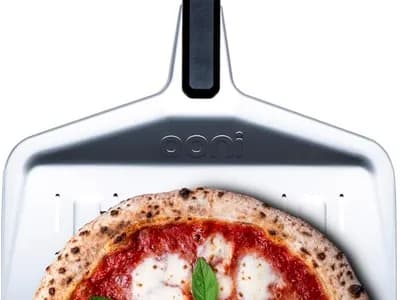
Ooni 14" Perforated Aluminium Pizza Peel
The big perforated sibling for 35 cm pies that won't fit a 12" peel
- Editorial guide
Your first kamado: the complete pre-purchase guide
Size, materials, brand and budget. Everything you have to decide before clicking Buy, told by someone who has made enough mistakes.
- Glossary term
Heat deflector
Ceramic plate placed between the coals and the grate to turn direct fire into indirect cooking.
- Related comparison
big green egg large vs kamado joe classic iii
The classic kamado matchup: the Big Green Egg Large, the indestructible pioneer with the widest accessory network, agai…