TECHNIQUE
Reverse-sear kamado recipes
Reverse-sear flips the classic grill script: we first cook the piece indirect and slow, at 110-130 °C, until we're three degrees below target, and only then open the vents and sear it over live coals for a couple of minutes per side. The result is meat cooked uniformly edge to edge, with a crust only a kamado at 350 °C can build. In this section we collect the recipes that polished the technique on our Torrevieja terrace: thick ribeyes, duck magret and whole tenderloins that deserve the two-step approach.
7 recipes published
Reverse-sear on a kamado flips the classic order: first you cook the meat indirect, with the deflector in, at 110-130 °C until the centre is a few degrees below your target, then you sear it direct over live coals at 300 °C or more, 60-90 seconds per side. With a half-moon deflector you do both stages without touching the charcoal.
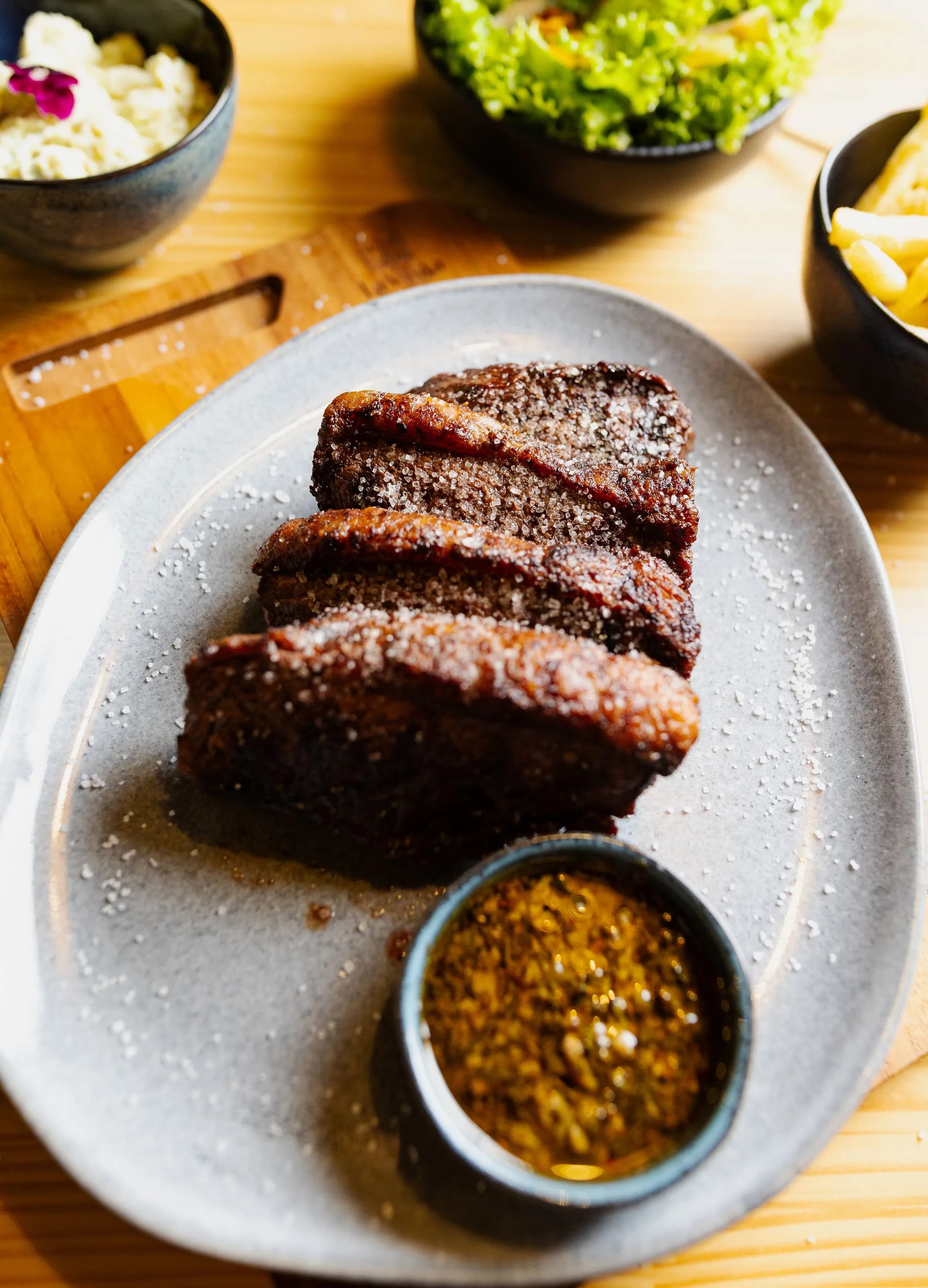
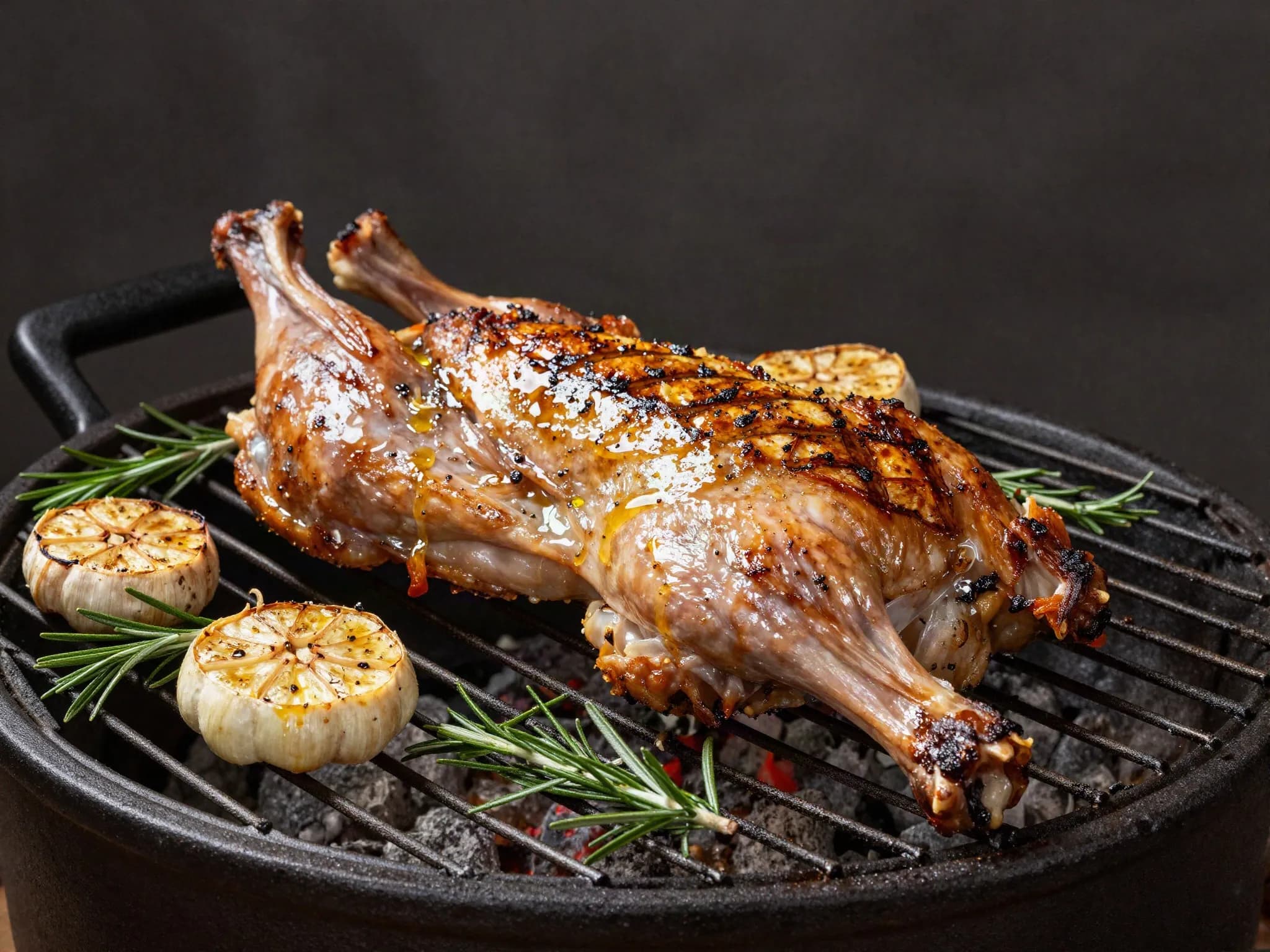
It's the technique for thick cuts, the ones that burn outside before cooking through when grilled direct. The tomahawk is the textbook case: pink edge to edge with a firm crust. The duck breast slowly renders its fat layer during the low stage and finishes with crisp skin during the sear. And the St. Louis-style ribs tenderise indirect and get glazed over the coals at the end, where the sauce caramelises without burning.
We refined it in Torrevieja by failing at the same thing: pull the meat from the slow stage earlier than feels right. For beef cooked medium-rare, take it off at around 48-50 °C core, because the sear adds several more degrees. The typical failure is searing over half-dead coals after hours at low temperature: open both vents fully ten minutes beforehand to wake them up. The whole logic is in direct vs indirect cooking.