Analysis by Valery Grin · · updated September 12, 2026
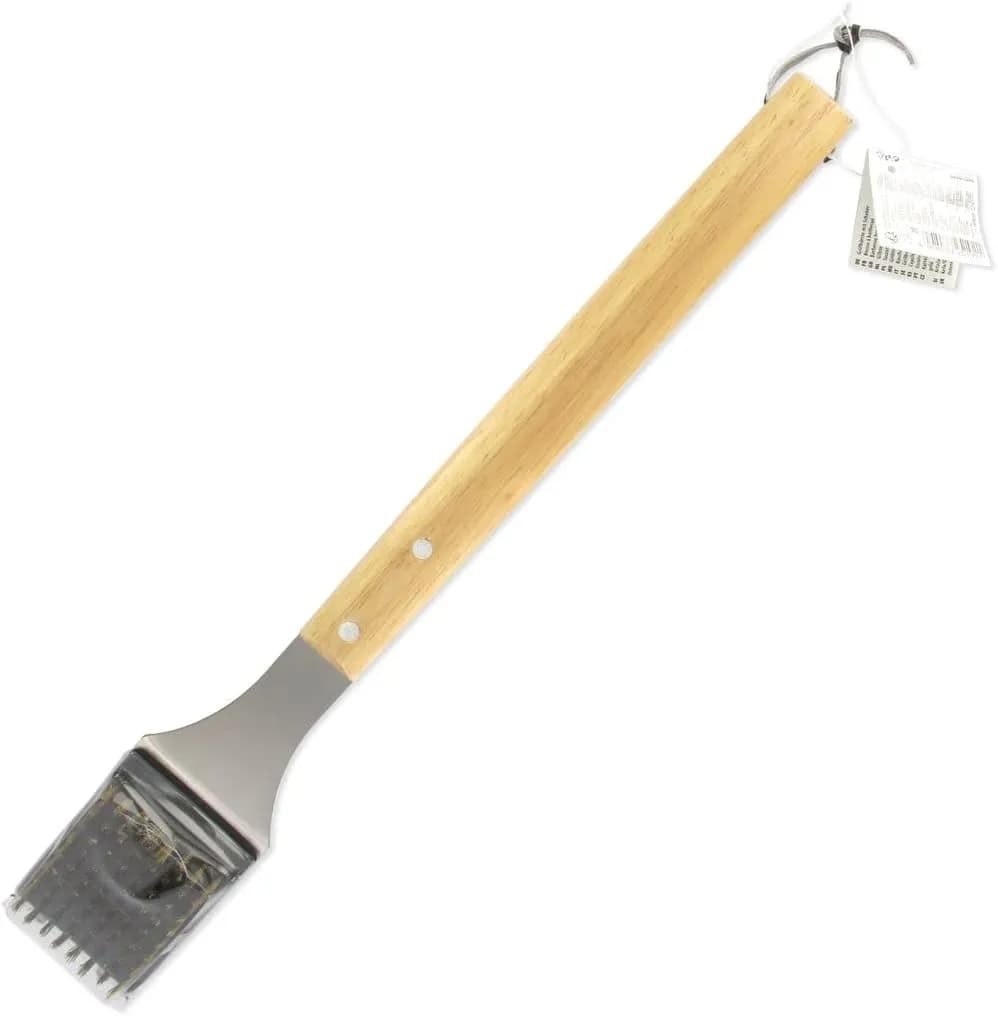
Fackelmann Barbecue Brush with Scraper, Brass Bristles and 42 cm Wooden Handle
Soft brass, a scraper tip and 42 cm of handle: sweeps the pizza stone hot without scoring the cordierite
From€12
Price verified on Amazon on September 12, 2026 · may change
As an Amazon Associate, mikamado.es earns from qualifying purchases. At no extra cost to you.
- Weight
- 0.23 kg
- Material
- Brass bristles and a varnished rubberwood handle. The listing declares a composition of brass, stainless steel and polypropylene, without specifying which part is which material.
Quick answer
Yes for sweeping a pizza stone between bakes: brass is softer than steel and will not score cordierite, the scraper tip lifts welded-on cheese, and 42 cm of handle keeps your hands out of the dome. It is not an official stone brush — Fackelmann lists it as a grill brush — nor a replacement for nylon on a cold grate.
Brass bristles, a scraper tip and a 42 cm wooden handle. Fackelmann sells it as a grill brush, but it is exactly what a pizza stone at 400 °C needs: soft metal that sweeps without scoring cordierite.
The Fackelmann 25190 is an old-school barbecue brush: a 42 cm varnished rubberwood handle, a head of brass bristles and, at the tip, a built-in scraper. Let us start with what it is not: the brand lists it as a brush for grills and barbecues, and neither a photograph nor a line of the listing shows it working on ceramic. What is exactly right for our use is the material combination, which happens to be the one a [cordierite stone](/glosario#pizza-stone) soaked at 380-400 °C actually asks for.
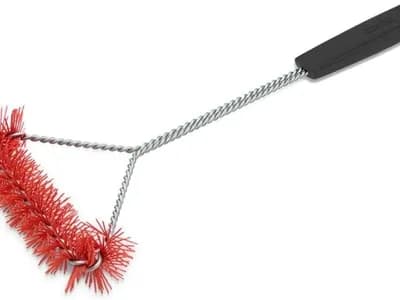
The metal is the point. Brass is softer than stainless steel, so it sweeps ash, scorched semolina and caramelised cheese without cutting grooves into a porous surface that, once scored, gets dirtier and cleans worse. And it shrugs off the heat: an all-nylon brush such as the [Char-Broil 360° Cool-Clean](/accesorios/char-broil-360-cool-clean-brush), excellent on a warm grate, deforms the moment you lean on a stone at 400 °C. They are not rivals; they are two tools for two different moments.
The handle is the other argument, and it is not a small one. The [stone](/accesorios/onlyfire-pizza-stone-cordierite-38x30) sits raised, halfway up the dome, and between pizzas you open the lid for barely twenty seconds while it spits 350 °C air at you. With a 25 cm brush you clean with your knuckles inside the kamado; with 42 cm you clean from outside it. The manufacturer points the same way when it says the handle length "lets you work safely without getting burned". Wood, unlike plastic, also survives brushing against the hot rim of the ring.
The routine that matters here is short. The moment a pizza comes out — the [margherita](/recetas/pizza-margherita-kamado), the [napoletana](/recetas/pizza-napoletana-kamado) or a run of [pita bread](/recetas/pan-pita-kamado-piedra) — you make two quick dry passes towards the back, let the scraper deal with anything welded on, shut the lid and give the stone three or four minutes to recover. Loose flour at 400 °C carbonises in seconds and turns the next base bitter, and that, not tidiness, is the real reason to sweep. There is more on this in our [kamado pizza guide](/guias/como-hacer-pizza-en-kamado).
Now the honest complaints. Amazon's technical table declares "Material: stainless steel" while the bullet points talk about brass bristles and a composition of brass, stainless steel and polypropylene, without saying which part is which: we genuinely cannot tell whether the scraper is brass or steel. The declared country of origin is China. And the ratings are thin: 3.9 out of 5 from five reviews, a sample you cannot conclude anything from, good or bad.
That leaves the caution that applies to every metal brush: bristles come loose. On a stone the risk is lower than on a grate — the pizza sits on a dough base, not on the metal — but check the head from time to time, wipe the stone with a dry cloth before launching the next one, and retire the brush as soon as it starts to look ragged. For the rest of kamado upkeep, see our [cleaning guide](/guias/mantenimiento-limpieza-kamado).
The right material for a pizza stone — soft brass and 42 cm of handle — at the cost of a listing that contradicts itself on what part is made of what, and never shows it on ceramic.
Editorial rating from spec sheet, measurements and kamado fit · not a hands-on test
Pros
- Brass bristles: softer than steel, they sweep the stone without cutting grooves in the cordierite
- Scraper built into the tip for cheese and tomato welded onto the stone
- 42 cm of handle keeps your hands out of the dome with the stone at 380-400 °C
- Varnished rubberwood handle that does not deform when it brushes the hot rim of the ring
- 230 g and 43 × 4 cm: easy to work one-handed and with a glove on
Cons
- Fackelmann lists it as a grill brush: no photo or line of the listing shows it on a pizza stone, so the use we propose is not backed by the maker
- The listing contradicts itself: the technical table says “material: stainless steel” while the bullets talk about brass, steel and polypropylene without saying which part is which
- It is unclear whether the scraper is brass or stainless steel; if it is steel, it needs a lighter hand on ceramic
- Only five Amazon ratings (3.9 out of 5): far too small a sample to draw conclusions about reliability
- Like every metal brush it sheds bristles with use, so check the head and wipe the stone before baking
- The wooden handle is not dishwasher-safe and must not be left to soak
Who it's for
For anyone baking pizza on a stone in a kamado who needs to sweep it between bakes without killing the fire or scoring the cordierite.
Not for
Not a brush for the everyday grate: brass wears out faster than steel on carbonised crust, and for cold cleaning a nylon brush or a sponge does more.
Specifications
- Weight
- 0.23 kg
- Material
- Brass bristles and a varnished rubberwood handle. The listing declares a composition of brass, stainless steel and polypropylene, without specifying which part is which material.
As an Amazon Associate, mikamado.es earns from qualifying purchases. At no extra cost to you.
Goes well with

FAQ
Can I run a brass brush over a pizza stone without scratching it?
Yes, and that is exactly the point: brass is softer than stainless steel, so it drags ash, semolina and cheese away without cutting grooves in the cordierite. Do it dry and with the stone hot, never with water: porous ceramic soaks it up, and a waterlogged stone at 400 °C can crack. Two passes towards the back, then shut the lid.
Why will the nylon brush I already own not do the job?
Because nylon is made for warm grates, not for a stone at 380-400 °C: at that temperature it softens and deforms against the surface. The Char-Broil 360° Cool-Clean in our catalogue is a good brush, but for a different point in the cycle. They complement each other: nylon cold on the grate, brass hot on the stone.
Can bristles come loose and end up in the pizza?
That is the genuine risk with any metal brush and it should not be brushed aside. On a stone it is smaller than on a grate, because the dough rests on its own base rather than on metal, but the drill is the same: check the head before every session, wipe the stone with a dry cloth after sweeping, and bin the brush the moment you see loose bristles or a ragged head.
Is a 42 cm handle long enough on a big kamado?
For sweeping a stone raised halfway up the dome on a kamado with a 46 cm grate, yes: you work with your arm outside the dome and a glove on. It is not the 100 cm tool a professional pizzaiolo uses — which is barely available in Spain anyway — so this stays a twenty-second job with the lid going straight back down, not a deep clean over a live fire.
Does it also work on the kamado grate?
It does, but that is not where it shines. Brass cleans a stainless or cast-iron grate that has just gone out, and it will not scratch it, though it wears out sooner than a steel brush if you ask it to tackle carbonised crust from a long cook. For the everyday grate and cold cleaning a sponge or a nylon brush does more; keep this one for the stone.
YOU MIGHT ALSO LIKE