Analysis by Valery Grin · · updated September 11, 2026
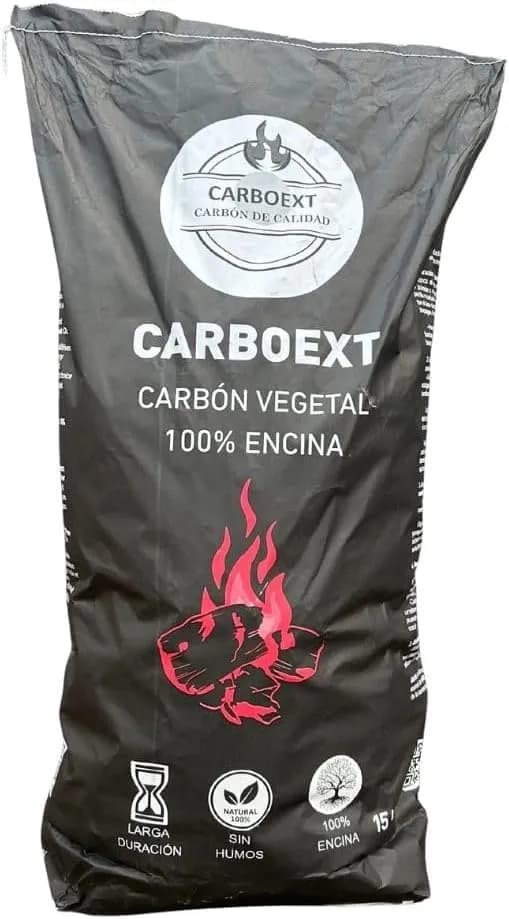
Carboext 100% Holm Oak Lump Charcoal, 15 kg Sack
Pure holm oak lump, no binders or additives, in a large sack
From€38
Price verified on Amazon on September 11, 2026 · may change
And what does running it cost? Work out your monthly cost →
Amazon does not have it available right now
We checked on September 12. The review stays up because it is still useful for comparing, but it cannot be bought on Amazon.es today.
As an Amazon Associate, mikamado.es earns from qualifying purchases. At no extra cost to you.
- Weight
- 14 kg
- Material
- 100% holm oak lumpwood charcoal (no binders or additives, per the manufacturer's data sheet)
Quick answer
If you cook in ceramic with the dome shut, yes: holm oak lump is a kamado's natural fuel, and the manufacturer's listing declares it 100% holm oak, with no blends or binders. It works for a 110 °C low and slow just as well as for pizza at 400 °C. It currently tops the barbecue charcoal sales chart on Amazon.es. In exchange, no piece size is published and the stated weight does not match between title and spec table.
Pure holm oak lump, not a pressed briquette. The manufacturer's listing claims high calorific value, little smoke and minimal ash: on paper, exactly the fuel a ceramic kamado wants with the dome shut.
Carboext sells this sack as artisanal charcoal made from pure holm oak, with no blends or binders, and in lump form rather than briquettes. That distinction matters more in a ceramic than on any other grill: with the dome shut, everything that burns ends up in the food, and a cheap binder leaves an acrid background you would never notice on an open kettle.
Holm oak is the Iberian hardwood par excellence: dense, long-burning and discreet in aroma. In a kamado that covers the three usual working bands: 105-135 °C for a low-and-slow brisket or a Sunday pulled pork, around 250 °C with the deflector in for a spatchcock chicken, and the 350-400 °C ceiling for a Neapolitan pizza or searing a thick rib steak. With the vents nearly shut the fuel burns slowly, and that is exactly where charcoal quality shows far more than on an open grill.
What the listing does not publish counts too: no piece size, no burn hours, no calorific analysis, and the weight wavers between the 15 kg of the title and the 14 kg of the spec table. It is currently the best-selling barbecue charcoal in its Amazon.es category, which speaks to turnover, not to refinement.
Pure holm oak lump, the fuel a closed ceramic understands best. On paper it delivers; in exchange, uneven piece size and a stated weight that contradicts itself.
Editorial rating from spec sheet, measurements and kamado fit · not a hands-on test
Pros
- 100% holm oak, no binders: no odd aftertaste under a closed dome
- Lump, not briquette: lights sooner and reacts fast to vent changes
- Dense wood: holds a 110 °C low and slow without constant refuelling
- Little ash per the listing, welcome when the vents are nearly shut
- Large sack: covers several sessions on a mid-size or large kamado
Cons
- The weight does not add up: 15 kg in the title, 14 kg in the spec table
- No piece size published: big chunks, small bits and some dust coexist
- On the coast it must be stored sealed: charcoal soaks up damp and salt air
For you if…
For anyone cooking in a kamado with the dome shut who wants Iberian hardwood lump with no binders, for long low-and-slow sessions and full-heat pizza alike.
Not for you if…
If you need uniform piece sizes to dose the load precisely, or prefer the millimetric regularity of a pressed briquette, this artisanal lump will not give you that.
Specifications
| Weight | 14 kg |
|---|---|
| Material | 100% holm oak lumpwood charcoal (no binders or additives, per the manufacturer's data sheet) |
How we make money (and why you can trust us)
- No manufacturer pays to appear here or to score better. Nobody buys their spot in a ranking.
- If you buy through our links, Amazon pays us a small commission that costs you nothing — you pay exactly the same.
- Every product is judged with the same published criteria — including the ones we dismissed, and why.
Buy on Amazon
€38
Price verified on Amazon on September 11, 2026 · may change
Buy on AmazonAs an Amazon Associate, mikamado.es earns from qualifying purchases. At no extra cost to you.
Essentials to get started
As an Amazon Associate, mikamado.es earns from qualifying purchases. At no extra cost to you.
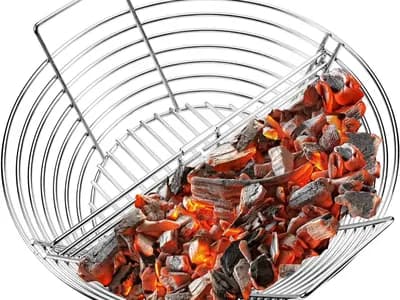
Stainless steel charcoal basket with divider for Kamado Joe Classic and BGE Large
Uneven lump behaves far better in a basket: it keeps the ash pit clear, improves airflow, and the divider lets you build a direct and an indirect zone from a single load.
€67
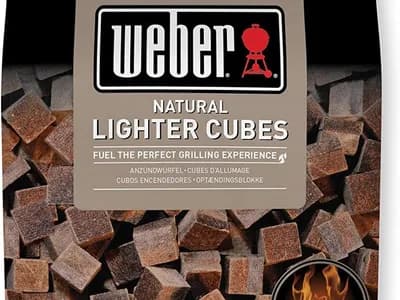
Weber Firelighter Cubes (17612): 48 odourless blocks
Light the load with two cubes and no fluid: in a closed ceramic any accelerant stays inside. Wait until the smoke runs clean before you bring the dome down over the food.
€5
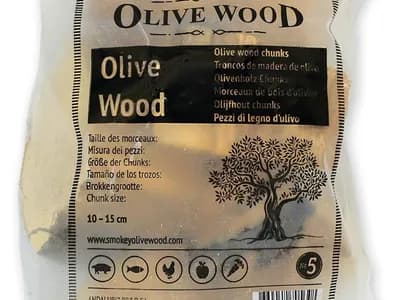
Smokey Olive Wood Olive Wood Chunks 1.5 kg
Holm oak gives embers, not aroma. To make a brisket or a rack of ribs genuinely smell of smoke, drop two olive chunks onto the coals once the temperature has settled.
€18
FAQ
Does holm oak charcoal work well in a ceramic kamado?
It is the format that fits best. With the dome shut and airflow restricted, a kamado returns to the plate everything that burns inside, so you want fuel with no binders or additives: the listing declares pure holm oak in lump form. Lump also lights sooner than briquettes and reacts quickly when you open or close the vents.
How long does one load last on a long cook?
The maker publishes no burn hours, so any precise figure would be invented. What is known: holm oak is dense wood and, in a kamado running 105-135 °C with the vents nearly shut, a full basket comfortably covers one of the long sessions. Consumption depends on gasket seal, wind and how often you lift the lid.
The listing says 'smokeless'. Is that literal?
That is the manufacturer's claim and it needs reading properly: it means little smoke once settled, not no smoke. All charcoal smokes for the first few minutes while it catches. The rule in ceramic never changes: wait until the smoke runs clean and almost clear before dropping the dome and adding food, or the flavour turns sooty.
How should I store the sack if I live near the sea?
On the coast charcoal behaves like a sponge: damp and salt air get in through an open sack, and then it is harder to light, it spits and it runs cooler. Keep it sealed, off the ground and under cover, ideally inside a lidded bin or box. A large sack only pays off if it does not go soggy mid-summer.
YOU MIGHT ALSO LIKE