Analysis by Valery Grin · · updated September 12, 2026
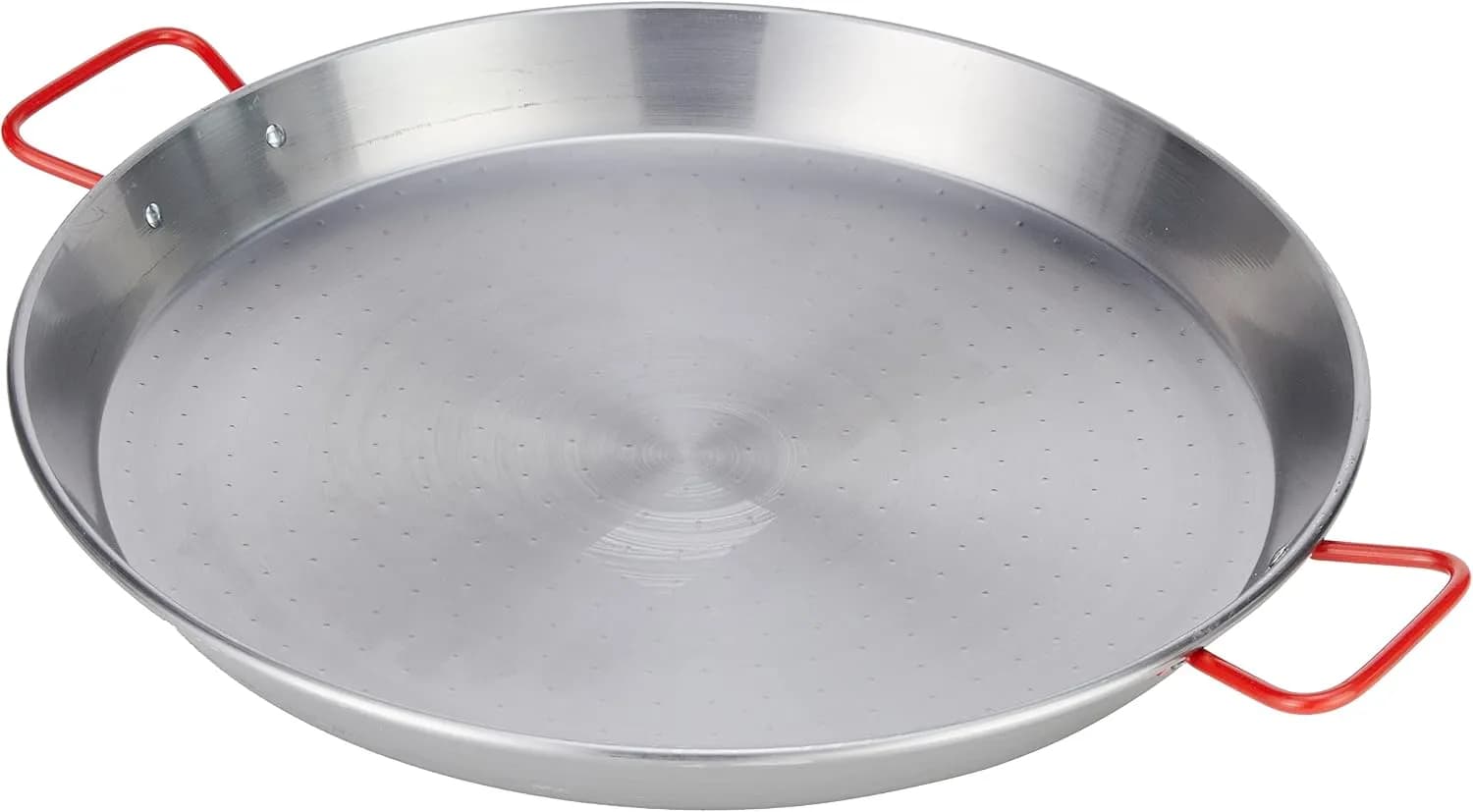
Lacor Steel Pro 63647: 46 cm carbon steel paella pan
The classic Spanish bare-steel paella pan, a six-diner size, for rice cooked direct on the kamado grate
From€23
Price verified on Amazon on September 12, 2026 · may change
As an Amazon Associate, mikamado.es earns from qualifying purchases. At no extra cost to you.
- Diameter
- 46 cm
- Weight
- 1.9 kg
- Material
- Uncoated carbon steel (sold in Spain as polished steel)
Quick answer
Yes, if your kamado is a big one. This is the traditional Spanish pan: bare carbon steel, 46 cm, 1.9 kg, and it makes socarrat because the metal toasts the starch with no coating in between. Handles included it runs to about 55 cm, so it is easy on an XL or a Big Joe; on a Classic or a Large you cook it resting on the top ring, lid open.
Carbon steel, 46 cm, 1.9 kg: the metal that makes socarrat and the size that feeds six. On a kamado it cooks direct with the lid open; on a Classic or a Large the dome will not close over it.
The Steel Pro 63647 is the Spanish paella pan exactly as it has always been: a sheet of uncoated carbon steel, two handles, nothing else. The listing confirms the 46 cm twice over — in the title and in the dimensions, 10 × 46 × 10 cm and 1.9 kg — and states it is made in Spain.
The material is the whole point. What Spain sells as polished steel is carbon steel: thin, bare sheet that conducts fast and toasts. It is neither non-stick nor stainless, and that is precisely why it makes socarrat, the caramelised crust of rice on the base. An enamelled or non-stick pan of the same size costs much the same and will never give you that golden floor, because the coating sits between the starch and the hot metal.
On a kamado, rice is the great exception to every house rule. You cook it [direct](/glosario#direct-cooking), no deflector, lid open, grate in its highest position: here the ceramic is not an oven, it is a paella burner with brutal, stable heat. [Our arroz a banda recipe](/recetas/arroz-a-banda-kamado-paellera) holds the chamber at 240 °C and finishes with the vents wide open for 90-120 seconds to set the socarrat. The real advantage over a gas ring is that a bed of coals spreads heat across the whole base, so the crust sets evenly instead of only in a crown at the centre.
And here comes the big caveat, best read before paying: 46 cm is the dish, plus the handles. The listing does not publish the overall width, but with the handles it lands around 55 cm, and that decides which kamado it fits. On an XL or a Big Joe, with a grate of roughly 61 cm, there is room to spare. On a Classic or a Large, whose grate measures exactly 46 cm, it will not drop to the cooking level: it sits on the top ring and cooks uncovered throughout. For rice that is no loss — dry rice is cooked uncovered anyway — but it does mean you cannot use the kamado as an oven with this pan inside. If yours is smaller, the size you want is 38 or 42 cm; the [sizing guide](/guias/que-tamano-kamado-pulgadas-comensales) helps place it.
A second warning, this one about handling: a kamado's fire is a circle considerably narrower than 46 cm, and the listing itself asks that the flame not exceed the diameter of the base. In practice the centre runs harder than the rim, so turn the pan half a rotation midway through, and check by eye that the stock sits level on the grate before you leave it alone.
Care is not optional, and the manufacturer spells it out: hand wash with a non-abrasive sponge, dry immediately with cloth or paper, and apply a thin film of cooking oil over the whole surface after every wash. No dishwasher, no bleach, no salt left sitting on the metal. Some reviews report rust after a single use, and that is entirely believable: it is what happens to bare steel put away wet. In a coastal house, with [salt in the air](/guias/proteger-kamado-salitre-humedad-clima-costero), that film of oil and a dry, ventilated cupboard are the difference between a lifetime pan and one ruined afternoon.
Two more honest notes about the listing. Amazon's metadata tags it as "cast iron", contradicting its own title; we read that as catalogue noise. And the average rating on show belongs to the whole family of sizes on the same listing, from 20 to 65 cm, so it says very little about this one.
The right pan — bare steel, 46 cm, a Spanish house brand — with one hard condition: either your kamado is big, or you accept cooking on the top ring with the lid open. And you dry and oil it every.
Editorial rating from spec sheet, measurements and kamado fit · not a hands-on test
Pros
- Bare carbon steel: the material that toasts starch into socarrat, with no coating in the way
- 46 cm is the six-diner size as a main course — exactly what the arroz a banda recipe calls for
- 1.9 kg: you can turn it half a rotation on the grate with one gloved hand, no drama
- Thin sheet reacts instantly to the vents: open them up and the socarrat starts within seconds
- A single pan from a Spanish catering-grade housewares brand, made in Spain per the listing
Cons
- Handles included it runs to about 55 cm, a figure the listing never publishes: on a Classic or a Large with a 46 cm grate the dome will not close
- Bare steel: put away damp or with salt on it, it rusts — and the reviews reporting rust after one use are entirely believable
- The listing contradicts itself: the title says carbon steel while Amazon's metadata tags it as cast iron
- The average rating covers every size on the same listing, from 20 to 65 cm, so it says next to nothing about the 46
- Lacor labels this size as twelve servings, meaning tapa-sized servings: as a main course it feeds six
Who it's for
For anyone with an XL or Big Joe who wants proper rice over coals, socarrat and all, without setting up a separate paella burner in the yard.
Not for
If your kamado is a Classic, a Large or smaller, 46 cm will not let the dome close. And if you are the sort who leaves pans to drip dry, bare steel is not for you.
Specifications
- Diameter
- 46 cm
- Weight
- 1.9 kg
- Material
- Uncoated carbon steel (sold in Spain as polished steel)
As an Amazon Associate, mikamado.es earns from qualifying purchases. At no extra cost to you.
Goes well with
FAQ
Will a 46 cm paella pan fit inside my kamado?
It depends on yours. The dish is 46 cm, but with the handles it comes to around 55 cm across, and the listing never publishes that figure, so check before ordering. On an XL or a Big Joe, with a grate of roughly 61 cm, there is room to spare. On a Classic or a Large, whose grate measures exactly 46 cm, it will not drop to the cooking level: it rests on the top ring and cooks with the lid open. For rice that is fine, since dry rice is cooked uncovered anyway, but it does mean you cannot close the dome over it.
Can you get socarrat on a kamado?
Yes, and remarkably evenly. Cook direct, no deflector, chamber steady at 240 °C, grate in its highest position. When the stock has almost gone and the grain is al dente, open the vents fully and give it 90-120 seconds without stirring. Go by ear and nose rather than by the clock: when it crackles and smells of toasted bread, pull it. The advantage of a coal bed over a gas ring is that heat reaches the whole base, so the crust does not form only at the centre. Toasted turns to bitter in seconds, so err on the cautious side your first time.
Lid open or closed for rice?
Open. This is the kamado's great exception: dry rice needs the stock to evaporate, and closing the dome turns the ceramic into an oven, traps moisture and leaves you with a claggy grain and no socarrat. The lid only goes down briefly between stages if you have lost chamber temperature and need it back. Through the eighteen minutes the rice cooks, it stays open and untouched.
How do I stop the steel rusting?
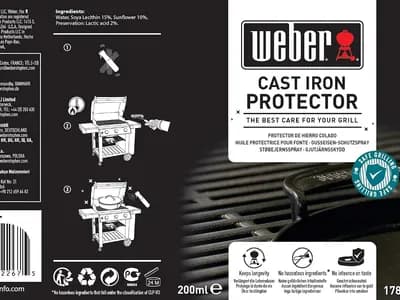
Hand wash with plenty of water, mild soap and a non-abrasive sponge; no dishwasher, nothing with chlorine in it. Then dry immediately with cloth or paper and wipe a thin film of cooking oil over the whole surface, outside included. Leave no salt or stuck rice behind, and store it somewhere dry and ventilated, out of direct sun. In a coastal home the ritual is not optional: the rust some reviews describe is exactly what happens to bare steel put away damp. A cast-iron protector spray such as Weber's does the same job as oil and makes less mess in the cupboard.
It says twelve servings — why is the recipe for six?
Because Lacor counts servings the Valencian way, with rice spread across a long meal or served as a tapa. As a main course, which is how it is eaten at home, a 46 cm pan feeds six comfortably: that is the 600 g of rice in the arroz a banda recipe, about 100 g a head. If you genuinely expect twelve people eating it as a main, the size you want is 50 cm and up — and at that point you are talking about a very large kamado, or cooking off it altogether.
YOU MIGHT ALSO LIKE