Analysis by Valery Grin · · updated September 12, 2026
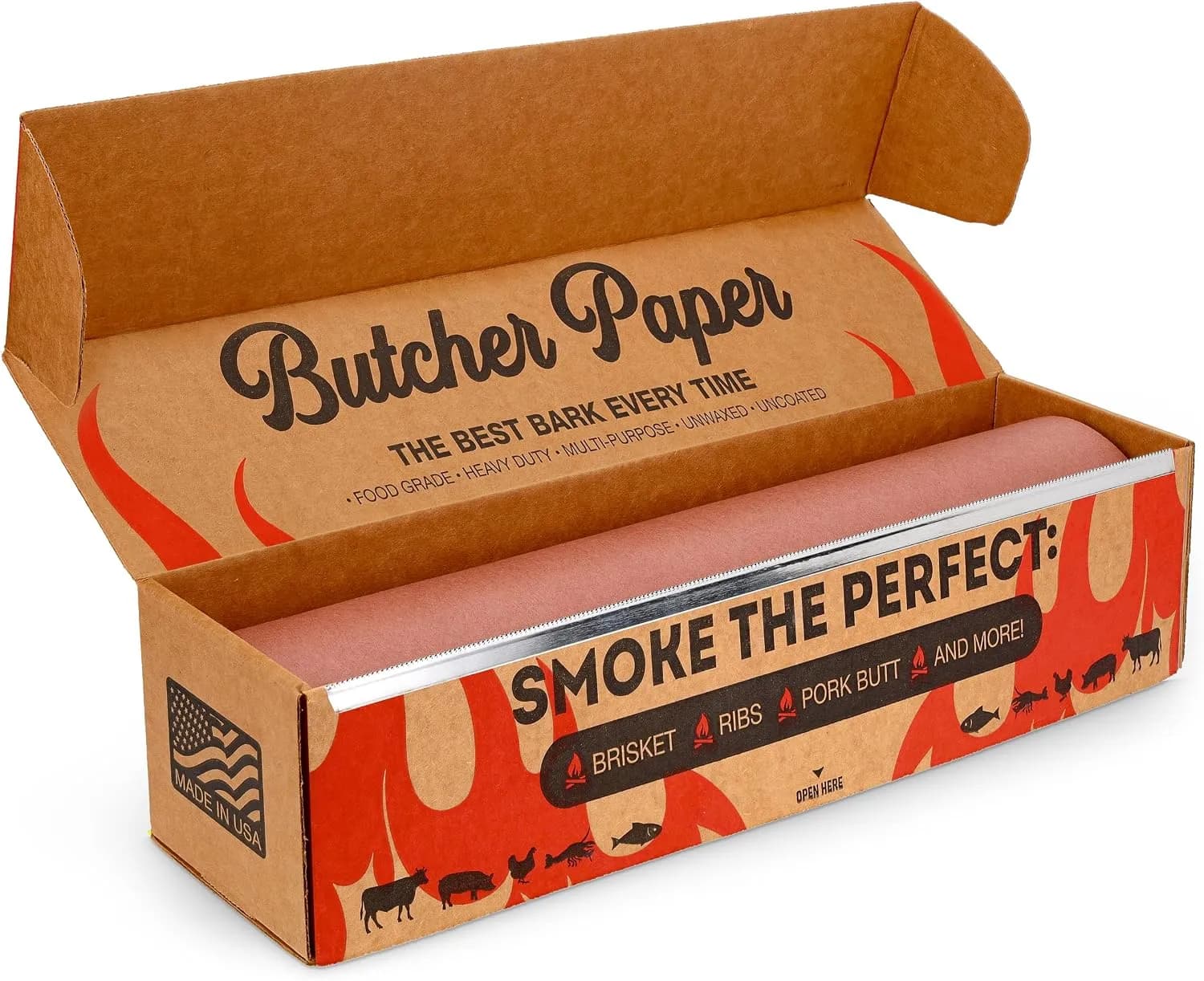
Bryco Goods: untreated pink butcher paper, 45.7 cm × 53.3 m with dispenser box
The 18-inch Texas width, no waxes and no bleaches, for wrapping a whole brisket
From€38
Price verified on Amazon on September 12, 2026 · may change
As an Amazon Associate, mikamado.es earns from qualifying purchases. At no extra cost to you.
- Material
- Unbleached virgin-pulp kraft paper, no wax and no coating, food-grade certified, with an internal wet-strength treatment
Quick answer
For wrapping a brisket, yes. The paper breathes: it holds back just enough steam to break the stall without softening the bark, which foil cannot do. The listing declares virgin pulp, no waxes or bleaches and food-grade certification; what it does not publish is the weight in g/m².
Pink butcher paper with no wax and no bleach, 45.7 cm wide by 53.3 m, in a dispenser box with a cutting edge. The 18" Texas width is enough to double-wrap a whole brisket.
Pink butcher paper — "peach paper" in Texas — exists for one very concrete, very measurable reason. When a [brisket](/recetas/brisket-ahumado-baja-temperatura) reaches 70-75 °C internal and parks there for an hour and a half, what is happening is that surface evaporation is cooling the meat at the same rate the kamado is heating it: that is [the stall](/glosario#stall). Wrapping cuts the evaporation and the temperature climbs again. The question is not whether to wrap, but what to wrap in.
With foil the brisket finishes sooner, but it finishes steamed. Foil lets no vapour out at all, the [bark](/glosario#bark) soaks through from the inside, and that black crust you spent ten hours building with the dome shut turns into soft skin. Untreated butcher paper does the opposite: it holds in the heat and the fat but lets vapour pass through the fibre. The brand sums it up in its own listing — it works better than aluminium because it traps the smoke while releasing the steam — and that is precisely the bargain of the [Texas crutch](/glosario#texas-crutch). The same applies to [Carolina pulled pork](/recetas/pulled-pork-ahumado-carolina), wrapped around 70 °C and pulled at 96 °C.
This roll is 18 inches wide, 45.7 cm, and that is not an arbitrary figure: it is the Texas standard because a whole five-and-a-half kilo packer needs exactly that to be double-wrapped with no corner of meat poking out of one side. The 30 and 40 cm rolls that fill the top of the search results fall short right there, and a wrap that does not close is no wrap at all. Length is 53.3 metres (175 feet), which is somewhere between twenty-five and thirty big-cut wraps.
The dispenser box with its cutting edge is the real difference in use, and you do not appreciate it until you are in the middle of the job. The wrap moment arrives with gloves on, hands greasy, five kilos of meat on the board and the kamado open and losing temperature. With a loose roll you need a third hand and a pair of scissors; with the box you pull the sheet and cut it in one movement against the serrated edge. The listing also declares an internal treatment that boosts the paper's wet strength so the sheet does not blow out once fat and juice soak through it: on a cut that will spend another three or four hours wrapped, that is not decoration.
What the brand declares is exactly what you should demand of this paper: virgin pulps, no waxes, no bleaches, no coatings, and food-grade certification. Wax is what disqualifies the pink-dyed gift kraft sold with near-identical photos: it melts onto the meat at 70 °C and has no business being there. What the listing does not publish is the paper weight in g/m², the one figure that genuinely lets you compare one butcher paper against another; if you are coming from another brand, you will not be able to line them up on paper.
Two closing notes. It is sold through Amazon Global Store, with import charges in the price and delivery times longer than a product held in Spanish stock. And a coastal-home tip: the box belongs in an indoor cupboard, not the shed and not the porch. Untreated paper absorbs damp, and a roll that has taken on salt air tears exactly as you are tightening it around the point, which is the worst possible moment. If this is your first brisket, [the Minion method guide](/guias/metodo-minion-snake-kamado-fuego-largo) explains how to get as far as the wrap without touching the kamado.
Real butcher paper — no wax, no bleach — in the 18-inch Texas width and with a dispenser box, which is exactly what you appreciate with greasy hands. It just needs to publish a paper weight.
Editorial rating from spec sheet, measurements and kamado fit · not a hands-on test
Pros
- 18" (45.7 cm) wide, the Texas standard: enough to double-wrap a whole packer with no corner of meat poking out
- It breathes: it holds in heat and fat but lets vapour escape, so it breaks the stall without softening the bark the way foil does
- No waxes, no bleaches and no coatings, with virgin pulp and food-grade certification declared on the listing
- Dispenser box with a cutting edge: you tear the sheet in one movement, gloved and greasy-handed, while the kamado is open
- Internal wet-strength treatment so the sheet does not blow out over the three or four hours the meat spends wrapped
Cons
- The listing does not publish the paper weight in g/m², the one figure that genuinely lets you compare one butcher paper against another
- Sold through Amazon Global Store: import charges in the price and longer delivery times than a product held in Spanish stock
- It breathes by design, so it does not seal: if what you want is maximum speed and tenderness — ribs, say — foil does that job better
- 53.3 metres is an enormous amount of paper for someone who smokes two or three times a year, and the box needs a dry cupboard: untreated paper takes on damp and tears when you tighten it
Who it's for
For anyone smoking brisket or pulled pork on a kamado who wants to break the stall without sacrificing the bark, and who smokes often enough to get through 53 metres of paper.
Not for
Not for anyone chasing maximum tenderness who does not care about bark: on ribs, foil is faster and softens more. Nor for anyone who smokes twice a year and has nowhere dry to keep the roll.
Specifications
- Material
- Unbleached virgin-pulp kraft paper, no wax and no coating, food-grade certified, with an internal wet-strength treatment
As an Amazon Associate, mikamado.es earns from qualifying purchases. At no extra cost to you.
Goes well with
FAQ
How is it different from parchment paper or cling film?
Parchment has a silicone treatment that repels fat and comes in narrow rolls: it neither absorbs the juices properly nor gives you the 45 cm a whole brisket needs. Cling film is simply dangerous at these temperatures. Untreated butcher paper is a porous kraft: it absorbs fat, lets vapour through and takes hours in a 110 °C chamber. They are not interchangeable, even if all three come on white rolls.
When is foil the better wrap?
When bark matters to you less than tenderness and speed. On ribs, foil seals tight, generates steam inside the parcel and softens collagen faster; you finish sooner and the meat pulls off the bone with less effort. The price is that soft bark. On a brisket, where the bark is half the dish, paper wins. Choose by what you are cooking, not by habit.
Is there any risk of the paper catching fire inside the kamado?
At smoking temperatures, no. Paper ignites well above 200 °C and brisket runs at a 110 °C chamber, with the wrap soaked in juice and fat besides, which is as far from burning as it gets. What you must not do is put it over direct coals or near a flame, and always wrap with the deflector in place: direct fire under paper is another story.
How long does a 53-metre roll last?
A whole brisket double-wrapped takes somewhere between a metre and a half and two metres, so you get roughly twenty-five to thirty big-cut wraps out of it. If you do pulled pork, which is more compact, it stretches considerably further. Translated: for someone smoking once a month, the roll lasts well over two years; for someone doing it twice a year, it is probably too much paper, and what will fail first is the storage, not the paper.
Can I also use it for serving and storing meat?
The brand presents it as multi-purpose paper for serving, storing, cooking and smoking, and as a serving liner it works very well: line the board, carve on top and the paper soaks up the juices without wetting the table. For fridge storage, bear in mind it does not seal — it breathes, which is the whole point — so the meat dries out more than it would in a tub. Wrapped in paper for the rest, yes; for three days in the fridge, use a sealed container.
YOU MIGHT ALSO LIKE