Analysis by Valery Grin · · updated September 12, 2026
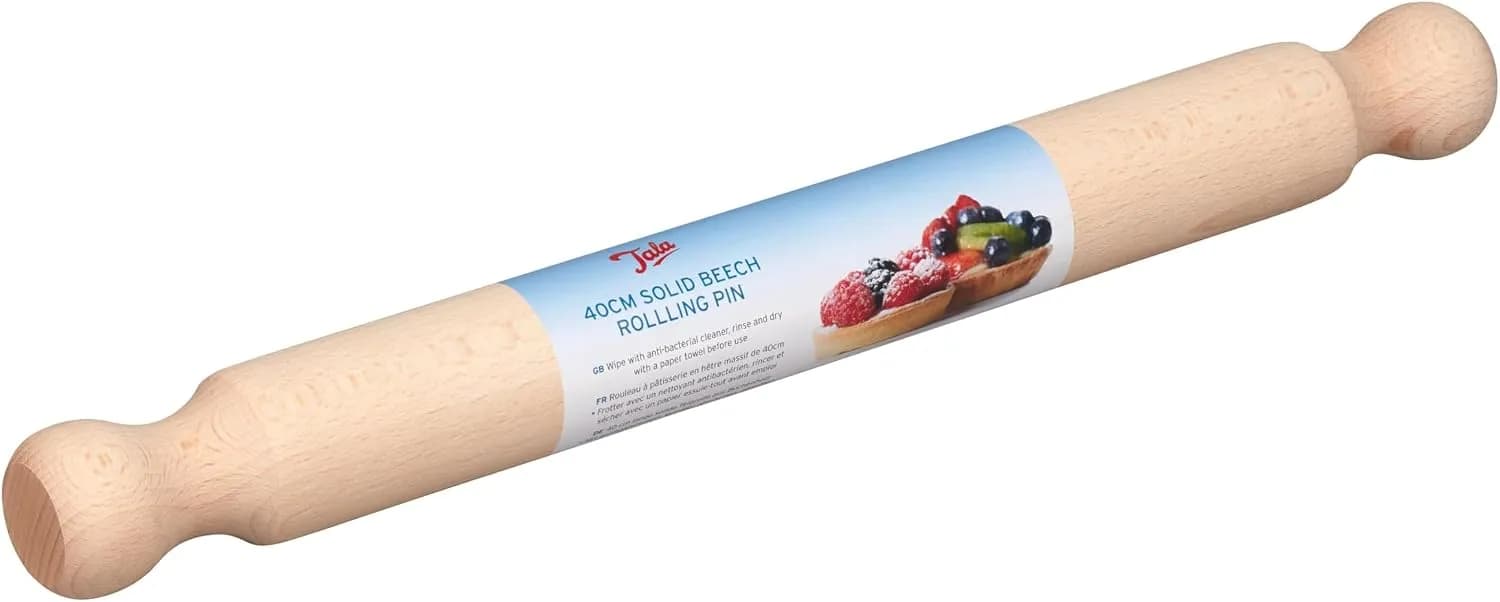
Tala solid beech rolling pin, 40 cm, straight cylinder with no handles
40 × 4 cm, 273 g and FSC-certified wood: the pin naan, pita and the samsa's laminated dough ask for
From€7
Price verified on Amazon on September 12, 2026 · may change
And what does running it cost? Work out your monthly cost →
As an Amazon Associate, mikamado.es earns from qualifying purchases. At no extra cost to you.
- Diameter
- 4 cm
- Weight
- 0.273 kg
- Material
- Solid beech, FSC certified
- Real capacity
- Feeds 2–3 people · 4 burgers · 1 whole chicken
Quick answer
Yes, if you bake flatbreads on a kamado. A straight 40 × 4 cm beech cylinder pushes from the centre without end caps pressing a ridge into the rim, and 40 cm spans a naan disc or a laminated-dough rectangle in one pass. Mind the variant: the same page also sells a two-pack and a 23 cm version, and the link must point at the single unit.
Solid beech, 40 cm long by 4 across, 273 g: a straight cylinder with no handles and no bearings. For naan, pita and the samsa's laminated dough; for Neapolitan pizza, no — and our recipe says so.
On a kamado a rolling pin is not there to stretch dough: it is there to even it out. The distinction looks like a nuance and it decides the result. When you drop a pita onto a [baking stone](/glosario#pizza-stone) at 300 °C, the bread puffs because the water inside flashes to steam and pushes both faces apart at once. If the disc is a uniform 3-4 mm, it inflates; if it has a 6 mm patch or a thick rim, the steam escapes wherever it can and you are left with a flat round. A kamado's ceramic delivers a brutal, very brief thermal shock, and that shock does not forgive uneven dough.
Which is why this format matters and not another. The Tala is a straight cylinder of solid beech — no handles, no bearings, no taper: 40 cm long by 4 across, 273 g. The listing confirms it twice, in the description and in the included component, and the wood carries FSC certification. With no end caps, pressure comes from your palms and reaches the dough through the cylinder itself: you feel where it is thick and where it is not, and you can leave the centre slightly higher and the ends thinner, which is exactly the shape a naan wants before it goes into the kamado.
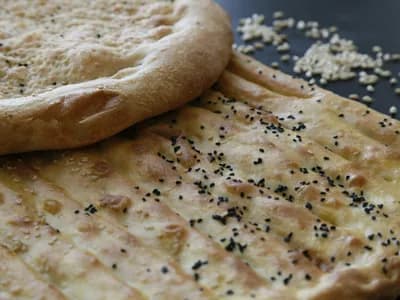
The length is not incidental either. Forty centimetres spans, in one pass, the oval of a [garlic and butter naan](/recetas/naan-ajo-mantequilla-kamado) or the 18-20 cm disc of a [pita](/recetas/pan-pita-kamado-piedra), and above all it reaches for the job that most rewards length: the two-to-three millimetre rectangle you have to roll out to laminate the dough of an [Uzbek samsa](/recetas/samsa-uzbeka-cordero-kamado) with butter. With a 30 cm pin that rectangle comes out in three sections and you can see it in the layering. The 50 and 60 cm pins, meanwhile, no longer fit on a normal kitchen worktop while you turn the dough.
Where not to use it, which matters just as much. Two of our pizza recipes explicitly advise against a rolling pin: the [Neapolitan](/recetas/pizza-napoletana-kamado) is opened by hand leaving the rim untouched, and the sourdough pizza a la pala is pressed with the fingertips, respecting the inflated edge. A pin crushes the gas out of the cornicione and that open crumb does not come back. Buy this pin for pizza and you will be disappointed; buy it for flatbreads and laminated doughs and it is precisely the right tool.
What to check before buying. The same page offers the single 40 cm unit, a two-pack and a 23 cm version: make sure the link points at the one you want. And the listing states it is not dishwasher safe, which is what you would expect of solid wood: scrape dried dough off with a bench scraper or the back of a knife, wipe with a damp cloth and dry it immediately. Never leave it soaking or attack it with a scourer, or the grain lifts and dough starts sticking where it never used to.
At 273 g it is light, which is an advantage when you roll twenty pieces in a row and a drawback with cold, dense doughs: for a chilled shortcrust you would want more weight and more diameter. For what a kamado does, you would not.
A straight 40 cm beech cylinder does exactly what a flatbread needs: uniform thickness and a rim with no marks. Hard to improve on, as long as you are not buying it for pizza.
Editorial rating from spec sheet, measurements and kamado fit · not a hands-on test
Pros
- Solid beech and 40 cm confirmed twice on the listing: in the description and in the included component
- Straight cylinder with no handles or bearings: pressure comes from the palms and no end caps mark the rim
- 40 cm spans a naan oval or the samsa's laminated-dough rectangle in a single pass
- 273 g: comfortable to handle through twenty pieces in a row
- FSC-certified wood, and 4.4 out of 5 across more than 1,500 ratings
Cons
- The same page also sells a two-pack and a 23 cm version: check the link points at the single 40 cm unit
- Not dishwasher safe, per the listing itself: clean it dry, scrape the dough off and dry it immediately
- 273 g and a 4 cm diameter fall short with cold, dense doughs such as a chilled shortcrust
- Two of our pizza recipes explicitly advise against a rolling pin, because it crushes the gas out of the rim
- Being untreated wood it needs flouring: with high-hydration dough it sticks sooner than a steel or marble pin
For you if…
For anyone baking flatbreads on a stone in the kamado — naan, pita, coca — and for anyone laminating dough with butter, as in a samsa.
Not for you if…
Not for Neapolitan or pala pizza: in those doughs a pin crushes the gas out of the rim and our recipes advise against it. Nor for cold shortcrust, where 273 g is not enough weight.
Specifications
| Diameter | 4 cm |
|---|---|
| Weight | 0.273 kg |
| Material | Solid beech, FSC certified |
How we make money (and why you can trust us)
- No manufacturer pays to appear here or to score better. Nobody buys their spot in a ranking.
- If you buy through our links, Amazon pays us a small commission that costs you nothing — you pay exactly the same.
- Every product is judged with the same published criteria — including the ones we dismissed, and why.
Amazon price history
The current price (€7.06) is the lowest we have recorded for this product.
- Lowest
- €7.06
- Highest
- €7.06
- Current
- €7.06
mikamado price tracking since Sep 12 · source: Amazon.es
As an Amazon Associate, mikamado.es earns from qualifying purchases. At no extra cost to you.
Essentials to get started
As an Amazon Associate, mikamado.es earns from qualifying purchases. At no extra cost to you.
FAQ
Straight pin, or one with handles and bearings?
For flatbreads, straight. A handled pin turns on an axle and you push from the ends: pressure arrives spread out and you cannot feel the thick spots. A straight cylinder rests along the dough and the pressure comes from your palms, so you can load one side, ease off on the other and leave the centre higher. On top of that, the end caps of a handled pin mark the rim exactly where a naan or a pita needs to be left alone.
Can I use it to open pizza for the kamado?
You can, but you should not, and we say so in the recipes themselves. In the Neapolitan the rim is left untouched because that is where the air lives that becomes the cornicione at 350 °C; a pin flattens it and that open crumb does not come back. The same goes for the sourdough pizza a la pala. Where a pin does make sense in pizza is in thin tray-baked Roman styles, which do not depend on an inflated rim.
How do I clean the wood without ruining it?
The listing says it is not dishwasher safe and that should be taken seriously. What works: let stuck dough dry a little, scrape it off with a bench scraper or the back of a knife, wipe with a barely damp cloth and dry immediately. What does not: soaking it, scrubbing it with a green scourer, or putting it away damp. Untreated beech is porous; lift the grain and dough will start sticking exactly where it used to release on its own.
Do I need a pin for naan, or will hands do?
Our recipe allows either, and there is a reason to prefer the pin. By hand it is easy to leave patches of different thickness, and on a stone at 250-280 °C those differences cost you: the thin part toasts before the thick part has puffed. With a straight cylinder you reach a uniform 3-4 mm in one pass and can still leave the centre a touch higher, which is what gives naan its chewy crumb.
Isn't 40 cm too much for a normal kitchen?
It is what the job needs and no more. A 30 cm pin forces you to roll the samsa rectangle in three sections, and every join shows later in the layering. The 50 and 60 cm pins on the market — also beech — solve that but no longer let you turn the dough comfortably on a domestic worktop, and storing them in an ordinary drawer is its own problem. Forty centimetres is the middle ground.
YOU MIGHT ALSO LIKE