Analysis by Valery Grin · · updated September 12, 2026
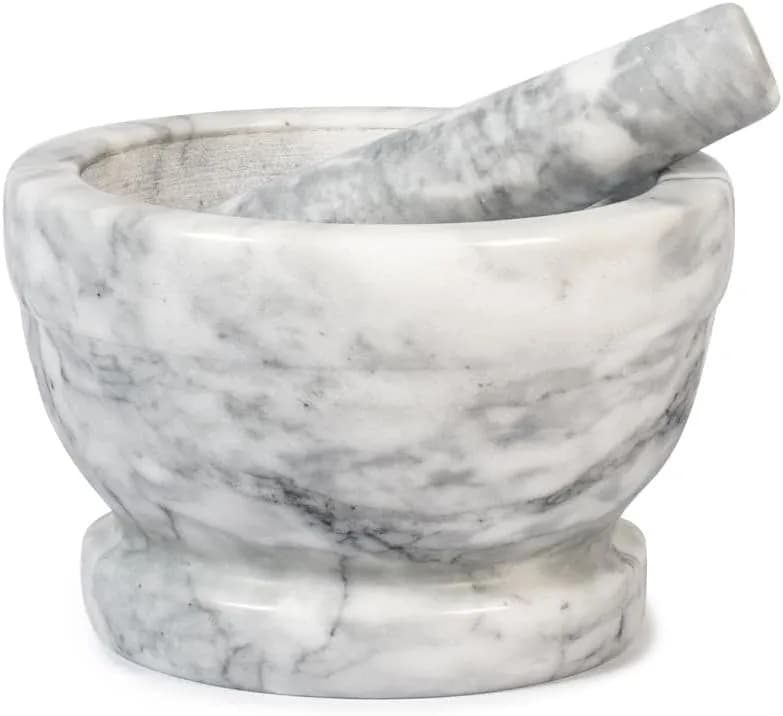
H&H Mortaio: 18 cm white marble mortar with pestle
Real marble and 4.69 kg that will not wander while you pound toasted hazelnuts for romesco
From€33
Price verified on Amazon on September 12, 2026 · may change
And what does running it cost? Work out your monthly cost →
As an Amazon Associate, mikamado.es earns from qualifying purchases. At no extra cost to you.
- Diameter
- 18 cm
- Weight
- 4.69 kg
- Material
- White marble (bowl and pestle)
- Real capacity
- Feeds 2–3 people · 4 burgers · 1 whole chicken
Quick answer
Yes, if you make the sauces that go with live fire by hand: romesco, allioli, pounded spice pastes. The marble and its 4.69 kg give an inertia a light mortar never has, and 18 cm is the ceiling of what stays comfortable at home. Real drawbacks: 4.1 out of 5 from just 43 ratings, and no listing publishes the bowl's inner diameter, only the outer one.
Real marble — not granite, not ceramic — 18 cm across and 4.69 kg that stay put on the worktop. The right heft for a calçotada's romesco and for cracking cumin seed before the samsa.
Almost everything that comes off a kamado is finished by hand. The tomatoes and the head of garlic roast twenty minutes on the grate, the hazelnuts and almonds arrive toasted, the bread browns in a pan over the coals — and then somebody has to pound all of it until it binds. That somebody is the mortar, and it is the piece most people get wrong: either with a blender that produces smooth cream where there should be texture, or with a small mortar that skids across the worktop on the first blow.
This 18 cm H&H solves the problem through sheer mass. It is 4.69 kg of marble according to the listing's attribute table — real marble, not granite and not painted ceramic — and that mass is half the job: when you are pounding toasted hazelnuts and almonds for the [romesco of a calçotada](/recetas/calcots-brasa-romesco-kamado), the mortar stays where you put it and the pestle strikes a still bowl instead of chasing it. The 18 cm is the top of the useful range at home: romesco for forty calçots goes in at once, and it is still comfortable for a teaspoon of cumin.
Marble versus granite is not a matter of taste. Marble is softer and polishes smooth; granite is harder and usually keeps an open, abrasive pore. That makes a marble mortar better at emulsifying — an allioli, a romesco, a picada — because the bowl neither drinks the oil nor keeps yesterday's aromas, and worse at grinding dry spice to fine powder, where granite's roughness helps. For what we cook here, marble wins: the [black-garlic allioli for the cuttlefish](/recetas/sepia-a-la-plancha-kamado-alioli) emulsifies without egg, on the garlic's own starch and patient pounding, and there a smooth surface is an advantage rather than a flaw.
Two jobs in particular earn this mortar its place in a kamado kitchen. One is the whole cumin for the [Uzbek samsa](/recetas/samsa-uzbeka-cordero-kamado): crushed with a sharp blow right before the filling is mixed, it smells like a different spice from the pre-ground jar. The other is the [saffron allioli for the whole cauliflower](/recetas/coliflor-entera-asada-kamado), where garlic and salt have to become a paste before a single drop of oil goes in. Neither works as well in a blender.
What it is not. H&H is decent Italian housewares but not a heavyweight name, and the record is thin: 4.1 out of 5 from 43 ratings, too few to judge consistency in a natural-stone product. The listing's extended copy is translated from Italian and recycled across the 12, 14 and 18 cm formats — it even discusses the 12 cm mortar on this page — so the measurement to trust is the one in the title and the attribute table. Nor is the inner diameter of the bowl published, only the outer one: the real capacity is something you assess when the box is open.
One care note that follows directly from the material: marble is calcium carbonate and reacts with acid. Romesco carries vinegar and allioli often carries lemon, so do not leave the sauce sitting in the bowl. Empty it, rinse with hot water, dry it. No dishwasher, no soaking in detergent, and the mortar will hold the same finish for decades.
Real marble, 18 cm and 4.69 kg of inertia: it does exactly what a mortar has to do with romesco and with cumin. What holds it back is a thin review record and a careless listing, not the object.
Editorial rating from spec sheet, measurements and kamado fit · not a hands-on test
Pros
- The attribute table states marble, not granite or ceramic: the right surface for emulsifying
- 4.69 kg of inertia: it does not shift while you pound toasted hazelnuts and almonds
- 18 cm across, the ceiling of what stays comfortable at home: romesco for a whole calçotada fits
- It ships with its own pestle, with nothing to source separately
- Polished marble absorbs neither oil nor aroma: today's allioli does not taste of yesterday's cumin
Cons
- 4.1 out of 5 from just 43 ratings: too thin a record to trust consistency in a natural-stone piece
- The extended copy is translated from Italian and recycled across the 12, 14 and 18 cm formats: it discusses the 12 cm mortar on the 18 cm page
- The bowl's inner diameter is not published, only the outer one, so real capacity is unknown until the box is open
- Marble is softer than granite: ample for emulsifying and cracking whole spice, but not the best surface for grinding to fine powder
- 4.69 kg gets put down and stays: this is not a mortar you carry to the table or up to the terrace each time
For you if…
For anyone who builds romescos, alliolis and pounded pastes by hand after lighting the kamado, and wants a bowl that neither moves nor absorbs aromas.
Not for you if…
Not for anyone after a spice grinder: polished marble is not the best surface for taking pepper or coriander down to fine powder. Nor for small kitchens, since 4.69 kg gets placed once and stays.
Specifications
| Diameter | 18 cm |
|---|---|
| Weight | 4.69 kg |
| Material | White marble (bowl and pestle) |
How we make money (and why you can trust us)
- No manufacturer pays to appear here or to score better. Nobody buys their spot in a ranking.
- If you buy through our links, Amazon pays us a small commission that costs you nothing — you pay exactly the same.
- Every product is judged with the same published criteria — including the ones we dismissed, and why.
Amazon price history
The current price (€32.65) is the lowest we have recorded for this product.
- Lowest
- €32.65
- Highest
- €32.65
- Current
- €32.65
mikamado price tracking since Sep 12 · source: Amazon.es
Buy on Amazon
€33
Price verified on Amazon on September 12, 2026 · may change
Buy on AmazonAs an Amazon Associate, mikamado.es earns from qualifying purchases. At no extra cost to you.
Essentials to get started
As an Amazon Associate, mikamado.es earns from qualifying purchases. At no extra cost to you.

FAQ
Marble or granite for a kitchen mortar?
It depends on what you pound. Marble polishes smooth, holds neither oil nor aroma and emulsifies better: that is what you want for allioli, romesco and picada. Granite is harder and rougher, and grinds dry spice to fine powder with less effort. If most of what you make accompanies live fire — sauces bound with oil — marble wins. If what you want is a spice grinder, granite is the more logical choice.
Will romesco for a whole calçotada fit?
At 18 cm outer diameter, yes: the 50 g of hazelnuts, 50 g of almonds and toasted bread in our recipe for forty calçots are pounded in one go without anything jumping out. The caveat is that the listing does not publish the inner diameter, only the outer one, and the difference between the two is the wall thickness. If you are making double the sauce, plan on two batches combined at the end.
How do I clean it, and does it need seasoning?
Seasoning, no: that belongs to unpolished porous stone mortars. Cleaning, with judgement. Marble is calcium carbonate and acid attacks it, so romesco with vinegar or allioli with lemon should come out of the bowl as soon as they are built and never be left sitting in it. After that: hot water, a soft brush, immediate drying. No dishwasher and no long soaks in detergent.
Is 18 cm too much for a normal kitchen?
It is the large end of the range and you should know it: at 4.69 kg, this mortar gets placed somewhere and stays there. In exchange, it handles the real quantities of a barbecue. The 12 and 13 cm mortars that fill the market are fine for a spoonful of spice and run out of room the moment a hundred grams of toasted nuts go in, which is exactly what romesco asks for.
Is it any good for cracking whole cumin?
Yes, and it is one of its best jobs. The cumin for Uzbek samsa is burst with two or three sharp blows right before the filling is mixed: you want the seed to open and release its essential oil, not to turn it into powder. Marble is more than enough for that, because impact does the work rather than abrasion. If what you want is fine, even ground cumin, a grinder or a granite mortar will cost you less effort.
YOU MIGHT ALSO LIKE