Analysis by Valery Grin · · updated September 26, 2026
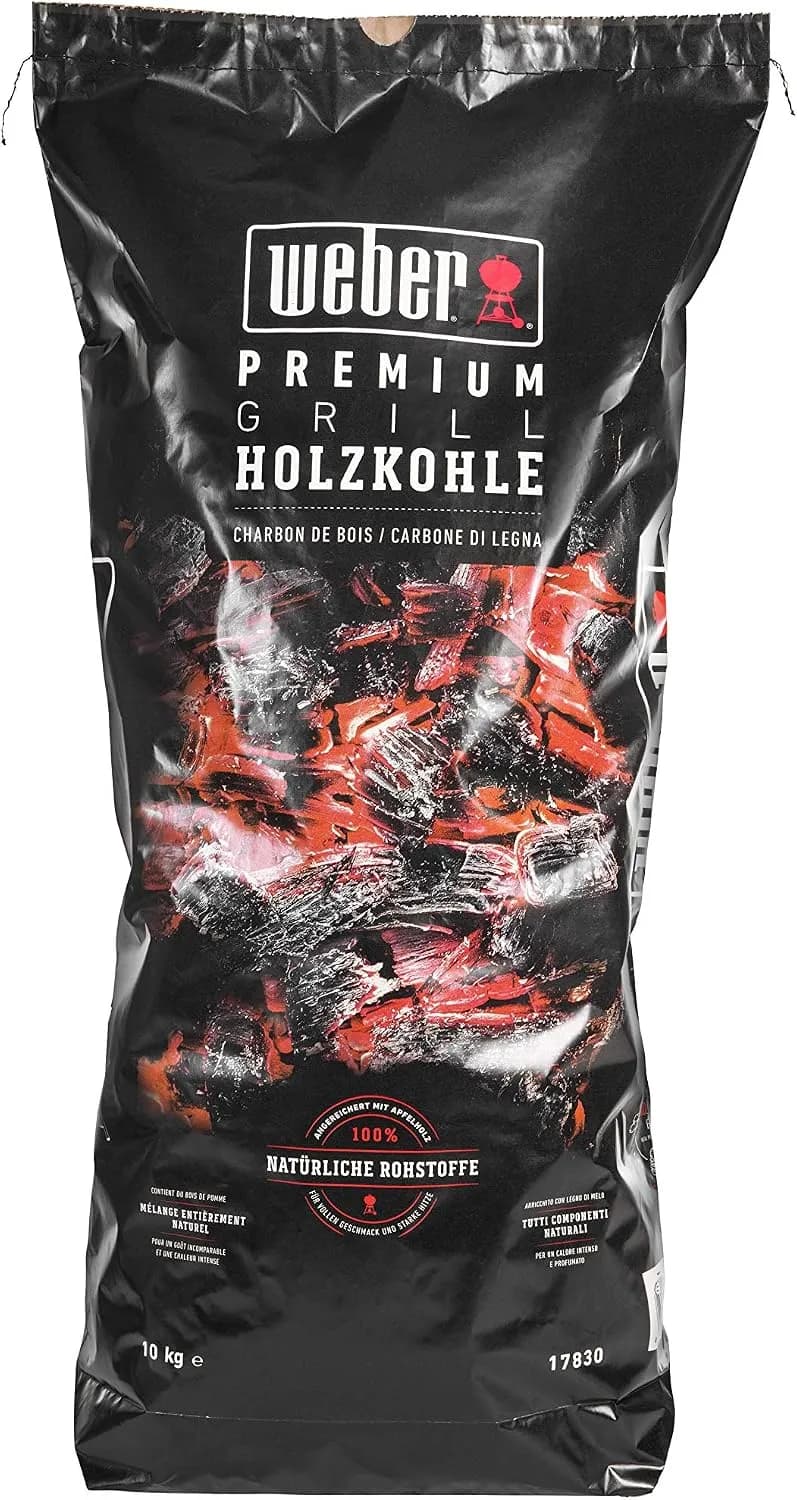
Weber Premium Holzkohle 17830: lump charcoal, 10 kg bag
Big-brand lump with a hint of apple wood for direct cooking and medium roasts in any size of kamado
From€29
Reference price on Amazon (June 2026) · subject to change
As an Amazon Associate, mikamado.es earns from qualifying purchases. At no extra cost to you.
- Weight
- 10 kg
- Material
- Charcoal from a blend of woods with apple wood, per the listing; lump by Weber's Holzkohle naming
Quick answer
Yes, if you want a recognisable brand of lump for direct cooking and two- or three-hour roasts in any kamado. It is lump charcoal (Holzkohle, not Briketts), 10 kg, a blend of woods with apple. The listing is short and half in German, with no origin or piece size, and mixed wood burns down sooner than quebracho. For all-night fires there are denser options.
Weber lump charcoal, not briquettes: 10 kg of mixed woods with apple, per the listing. It promises glowing coals in under 15 minutes and over 90 minutes of burn, without saying on which barbecue. In a closed kamado it lasts longer.
The Weber Premium Holzkohle 17830 is Weber's lump charcoal, in a 10 kg bag. The listing's title runs half in German and half in Spanish, and Holzkohle simply means charcoal; but in Weber's catalogue that name belongs to lump as opposed to Briketts, which is why we read this bag as lump: the listing itself says neither lump nor briquettes. [The 8 kg Weber briquettes](/accesorios/weber-carbon-8kg) are the brand's other bag, pressed and uniform. The listing declares a blend of woods enriched with apple wood, a weight of 10 kg and a package of roughly 75 x 32 x 18 cm.
For a kamado, lump charcoal is the default fuel, and our [guide to charcoal for kamados](/guias/que-carbon-para-kamado) explains why: it burns clean, leaves little ash and carries no binders to foul the ceramic or the flavour. Weber promises fully glowing coals in under 15 minutes and a burn of more than an hour and a half. The listing does not say which cooker those were measured on; from the house of the kettle, an open barbecue is the sensible guess. In a kamado with the vents trimmed down the same charcoal lasts considerably longer, and how much longer depends on how you run it: we are not going to invent a number the listing does not give.
It suits any diameter. On a 46 cm (Large, Classic) or a 61 cm (XL, Big Joe) the 10 kg bag covers several direct-cooking sessions and medium roasts of two or three hours, the sort of thing [beer chicken with crisp skin](/recetas/pollo-a-la-cerveza-piel-crujiente) calls for. On a 33 cm grate (MiniMax, Joe Jr) pick out medium pieces: the firebox is a good deal narrower than the grate, a fat lump crowds out the air and the dust from the bottom of the bag drops through the charcoal grate and chokes the draught. For a thick-cut steak cooked direct it is exactly what you want: lump that comes up to temperature fast and gives a lively flame. At that heat crack the lid a couple of inches and wait two seconds before lifting it: a rush of air onto oxygen-starved coals throws a flare, and long gloves are not optional. For a twelve-hour low and slow, mixed wood is less dense than quebracho or marabu and burns down sooner; it can be done, but you will fill the basket to the brim.
Now the listing's shortcomings. It does not say which woods make up the blend beyond apple, nor the origin, nor the size of the pieces, the figure that matters most in a lump charcoal. It gives two sets of bag dimensions (19 x 73 x 38 cm in the bullets, 18 x 32 x 75 cm in the details) that do not quite agree, and it carries a line about batteries, pure catalogue noise. The day we read it there was no price and no buy button, so availability comes and goes. The 4.5 out of 5 average from 576 reviews and 30th place in the Amazon.es charcoal category are good signs, but they say nothing about how it behaves in a closed kamado. And given the German title, expect the bag to arrive labelled in German.
Verdict in one sentence: a lump charcoal from a recognisable brand, with an apple aroma according to Weber, for direct cooking and medium sessions in any kamado; if what you want is an all-night fire, look at denser woods.
A decent lump charcoal from a familiar brand for direct cooking and medium roasts in any kamado, with a short listing half in German. For all-night fires, quebracho or marabu last longer.
Editorial rating from spec sheet, measurements and kamado fit · not a hands-on test
Pros
- Lump charcoal, not briquettes: no binders and little ash left in the ceramic
- Blend of woods with apple wood, per Weber, which promises a fruity aroma
- 10 kg bag from a brand you recognise without looking it up
- 4.5 out of 5 from 576 reviews and 30th in the Amazon.es charcoal category
Cons
- The listing names neither the woods in the blend, nor the origin, nor the piece size
- Title half in German: expect the bag to arrive labelled in German
- No price or buy button the day we read the listing: availability comes and goes
Who it's for
For anyone who wants a bag of lump from a brand they recognise, without researching origins, for thick steaks, chickens and two- or three-hour roasts in any size of kamado.
Not for
For anyone doing twelve-hour brisket or pulled pork who wants the longest burn per bag: an unspecified blend of woods like this one burns down sooner than quebracho or marabu.
Specifications
- Weight
- 10 kg
- Material
- Charcoal from a blend of woods with apple wood, per the listing; lump by Weber's Holzkohle naming
As an Amazon Associate, mikamado.es earns from qualifying purchases. At no extra cost to you.
Goes well with
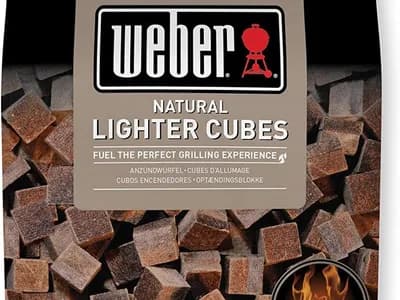
Weber Firelighter Cubes (17612): 48 odourless blocks
Odourless firelighters are the cleanest way to light lump charcoal in a kamado: two cubes among the pieces, lid open, and wait for the coals to catch; Weber quotes under 15 minutes for its charcoal. No liquids or paper to leave a smell in the ceramic. They are from the same brand, and a pack of 48 covers a good many bags.
€5
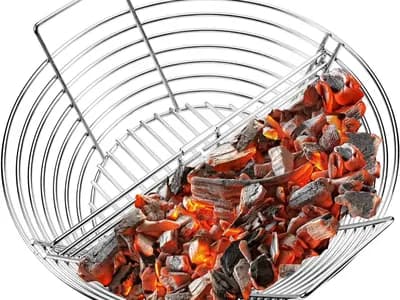
Stainless steel charcoal basket with divider for Kamado Joe Classic and BGE Large
A charcoal basket with a divider turns a bag of lump into an orderly fire: you shake the ash off used charcoal without throwing it away, load only half the basket for a quick direct cook and keep the other half for the next session. With a lump charcoal that burns down sooner than quebracho, making the most of every leftover piece pays off. It is for 46 cm Classic and Large models; check your diameter.
€67
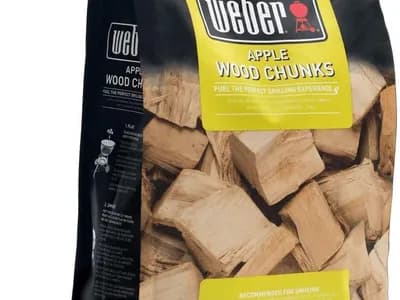
Weber Apple Wood Smoking Chunks 1.5 kg
The charcoal makes the fire and the chunks make the smoke. If you buy this bag for the apple promise on the listing, the same brand's apple wood chunks are the way to make sure of the aroma: two or three on top of the lit coals for a chicken or a pork loin. Carbonised charcoal keeps little of the original wood; wood that has not been carbonised is what does the flavouring.
€9
FAQ
Is it lump charcoal or briquettes?
Lump, going by the name Weber uses. The title says Holzkohle and charcoal, nothing more; Holzkohle is plain charcoal in German, but Weber reserves it for lump and calls its briquettes Briketts, the brand's other bag, the 8 kg one. For a kamado, lump is the usual choice: it burns without binders, leaves less ash and comes up to temperature faster. Briquettes give a more even bed of coals but dirty the ceramic more, and some carry lighting additives you do not want under your food.
How long does a bag last in a kamado?
The listing gives more than an hour and a half of burn, without saying which barbecue Weber measured it on. In a kamado with the vents trimmed down the charcoal lasts much longer, because the air is restricted, and when you finish you close both vents and the coals go out on their own, ready to reuse next day. How many sessions 10 kg gives depends on your kamado's size, the temperature and how well you shut it down. We will not give you a number the listing does not.
Does it work in a small kamado like the MiniMax or the Joe Jr?
Yes, with one precaution. The listing does not publish the size of the pieces, and a big bag always holds fat ones. On a kamado with a 33 cm grate the firebox is far smaller: an oversized piece takes up half of it and blocks the airflow, and the dust from the bottom of the bag drops through the charcoal grate and chokes the draught. When you open the bag set aside the medium pieces, keep the big ones for a larger kamado or break them up, and leave the dust out.
Can you actually taste the apple wood in the food?
Weber claims it in the first bullet of the listing and we have not tried it, so we are not going to confirm it for you. Charcoal that is already carbonised keeps little of the original wood's aroma: aromatic smoke comes from wood that has not been carbonised. If you want real apple on a chicken or a pork joint, add two or three Weber apple wood chunks on top of the lit coals. The charcoal makes the fire; the chunks make the smoke.